Julian Ungar-Sargon

  • Home
  • Theological Essays
  • Healing Essays
  • Podcast
  • Poetry
  • Daf Ditty
  • Deep Dive Ditty
  • Videos
  • Publications
  • Military Service
  • Dominican University
  • Home
  • Theological Essays
  • Healing Essays
  • Podcast
  • Poetry
  • Daf Ditty
  • Deep Dive Ditty
  • Videos
  • Publications
  • Military Service
  • Dominican University
Julian Ungar-Sargon copy 3.jpg

Daf Ditty

A wide-ranging commentary on the daily page of Talmud.

Menachot 93: בִּשְׁלָמָא חֵרֵשׁ שׁוֹטֶה וְקָטָן

jyungar April 14, 2026

For the source text click/tap here: Menachot 93

To download, click/tap here: PDF

Basically, personal sacrifices require one to lean on them and recite either his guilt or his thanksgiving to God. However, there are some people who are exempt from this requirement. Thus, a deaf-mute, a deranged person, and a minor don't have the requirement of leaning, because they are not legally competent.

In truth, since they cannot even consecrate an offering or bring it of their own free will, they are very rarely in a situation where leaning would be discussed.

There are also categories of people who can bring a sacrifice without leaning altogether, and these include a non-Jew, a slave, an agent, and a woman. The agent of a person cannot perform leaning, because it says "your hand" - and not your agent's hand. A woman is not required to lean on her sacrifice because the Torah said, "sons of Israel," to exclude "daughters of Israel" from the requirement of leaning.

We explore the legal ramifications of deafness in antiquity and after…

Tags 73rd
Comment

Menachot 92: אֵלּוּ וָאֵלּוּ מְכַפְּרִי בְּוִידּוּי שָׂעִיר הַמִּשְׁתַּלֵּחַ

jyungar April 13, 2026

For the source text click/tap here: Menachot 92

To download, click/tap here: PDF

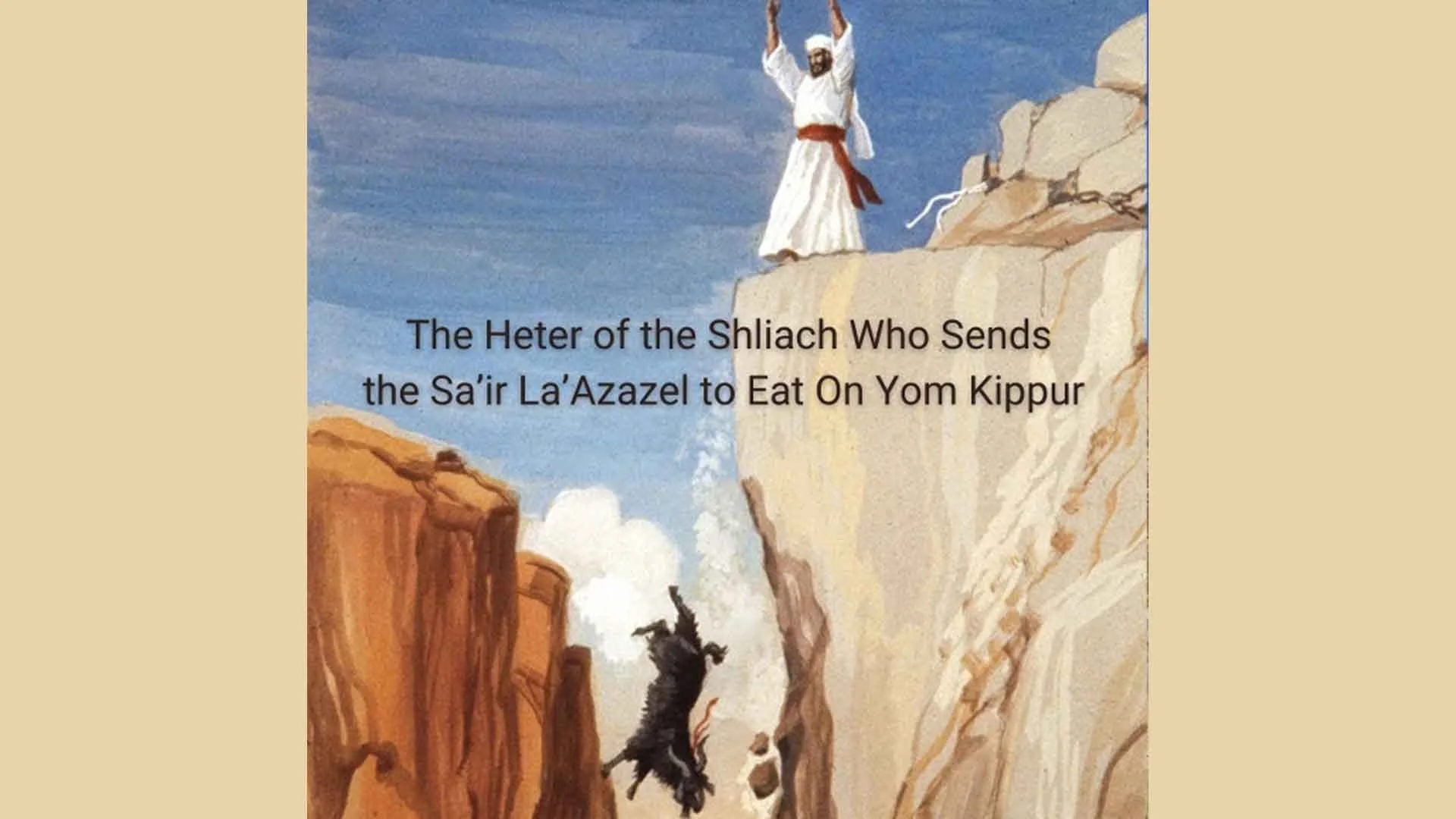
The second half of the tenth perek of Massekhet Menaḥot focuses on the laws of semikha – laying of hands on the sacrifice. The Mishna on our daf teaches that no communal sacrifices include semikha, except for the unique se’ir ha-mishtale’aḥ – the goat sent off to Azazel as part of the Yom Kippur service – and the par ha’alem davar shel tzibbur – the sacrifice brought by the Sanhedrin when they mistakenly misled the people with an erroneous ruling, leading the community to sin. Rabbi Shimon adds another communal sin offering – the one brought when a mistaken ruling leads the community to commit an act of avoda zara.

Our daf presents a deceptively compact Mishnaic debate concerning which sacrificial categories require semikhah — the laying of hands upon the offering's head — and which are exempt.

Among the exempted categories is the se'ir hamishtaleach, the Yom Kippur scapegoat sent into the wilderness to Azazel, carrying the accumulated transgressions of Israel. We analyze the position attributed to Rabbi Shimon regarding the unique liminal status of the scapegoat relative to communal offerings. We examine the theology of vicarious suffering in rabbinic thought, tracing Amoraic debates from Tannaitic antecedents through the major positions of the Babylonian and Palestinian Amoraic academies.

Tags 73rd
Comment

Menachot 91: ״אוֹ לָאַיִל״ – לְרַבּוֹת אֶת הַפַּלְגָּס

jyungar April 12, 2026

For the source text click/tap here: Menachot 91

To download, click/tap here: PDF

All sacrifices – both communal sacrifices and individual sacrifices – are accompanied by wine libations. The source for this is the passages in Sefer Bamidbar (15:1-16) that describes the various sacrifices and how each one comes together with a meal offering and a wine libation. The Gemara then quotes a baraita that examines these pesukim closely and derives a series of halakhot from them regarding the laws of the sacrifices.

One example is the way the Gemara examines the words o la-ayil – “or for a ram” (see pesukim 6-7). The word ayil – ram – is understood as including even the unique sacrifice brought by the kohen gadol on Yom Kippur, in the laws of libations. The word o – “or” – that introduces the ram, is understood as including a palges.

The source for the word palges is found in Greek, where it refers to someone who is no longer a child, but has not yet gained the status of an adult. In our case it refers to an animal that is an “in-between” stage of development. One the one hand, it is more than a year old, so it is no longer a keves – a lamb. On the other hand it is not yet an ayil – a ram – a status that it does not obtain until it is older than 13 months.

We explore the connections once more between Hebrew and Greek loan words.

Tags 73rd
Comment

Menachot 90: כׇּל הַבָּא בְּמוֹעֲדֵיכֶם טָעוּן נְסָכִים

jyungar April 11, 2026

For the source text click/tap here: Menachot 90

To download, click/tap here: PDF

Many of the sacrifices that were brought in the Temple were accompanied by wine libations. According to the Mishna on our daf all sacrifices, both communal sacrifices and individual sacrifices, are accompanied by wine libations, with the exception of:

bekhor, a first-born animal that is brought.

ma’aser, the animal that is tithed and brought as a sacrifice.

Pesaḥ, the Pascal sacrifice.

ḥatat, sin offerings.

asham, guilt offerings.

The exceptions to this list are the ḥatat and asham brought by a metzora – someone who suffers from biblical leprosy who recovers and brings sacrifices as part of his process of returning to society.

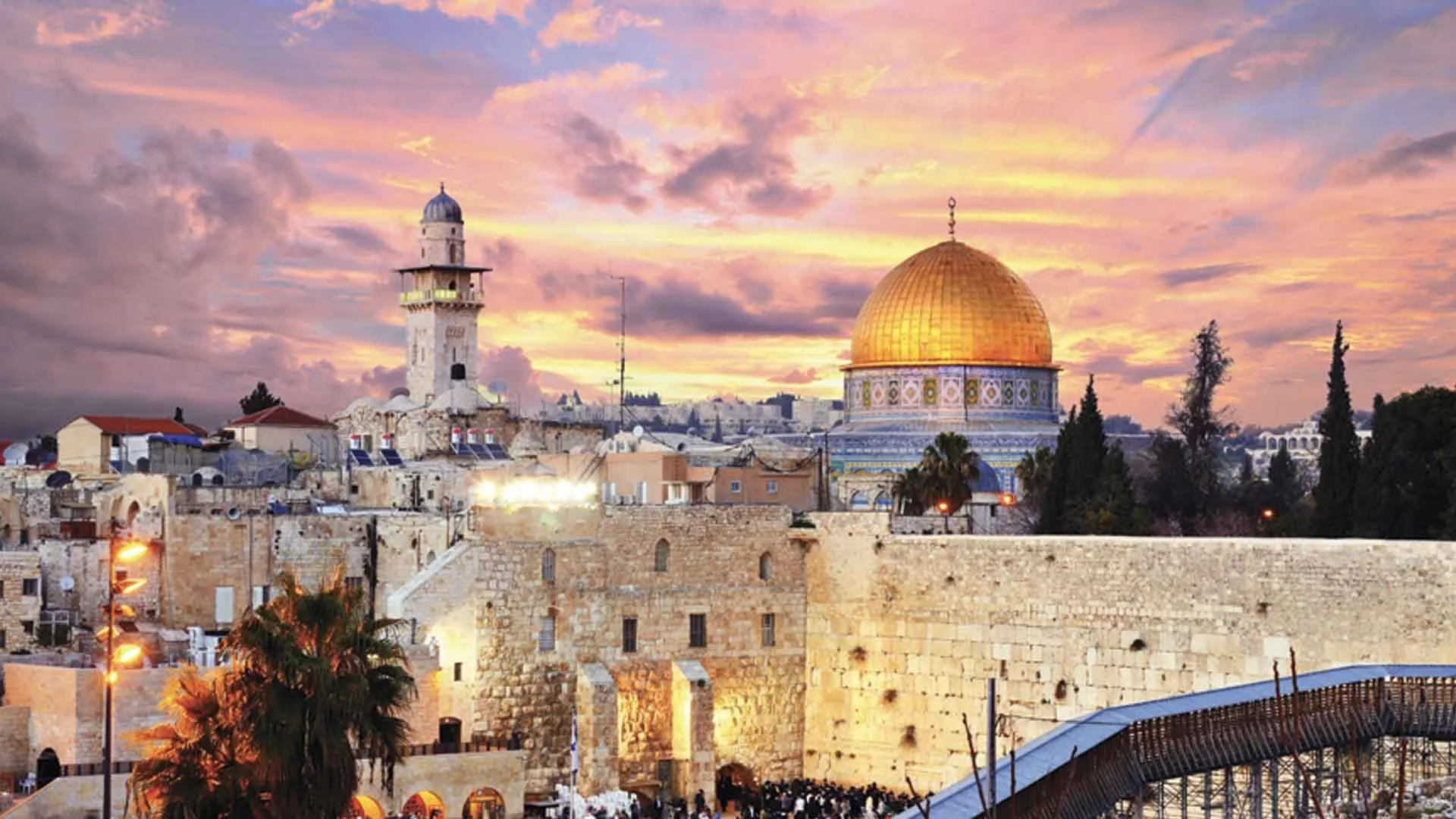
Since the miraculous victory of the Six Day War in 1967, there has been a great deal of interest in the subject of the halachic permissibility of entering the area popularly known as the Temple Mount. While much ink has already been spilled on this subject and the two sides are well known.

We explore the primary sources on the subject, to state the main opinions of the Rishonim, to chronicle the historical development of the Temple Mount and to clarify the archeological issues and debate.

Tags 73rd
Comment

Menachot 89: כְּתִיב ״וְנִסְכָּהּ״, וְקָרֵינַן ״וְנִסְכּוֹ״

jyungar April 10, 2026

For the source text click/tap here: Menachot 89

To download, click/tap here: PDF

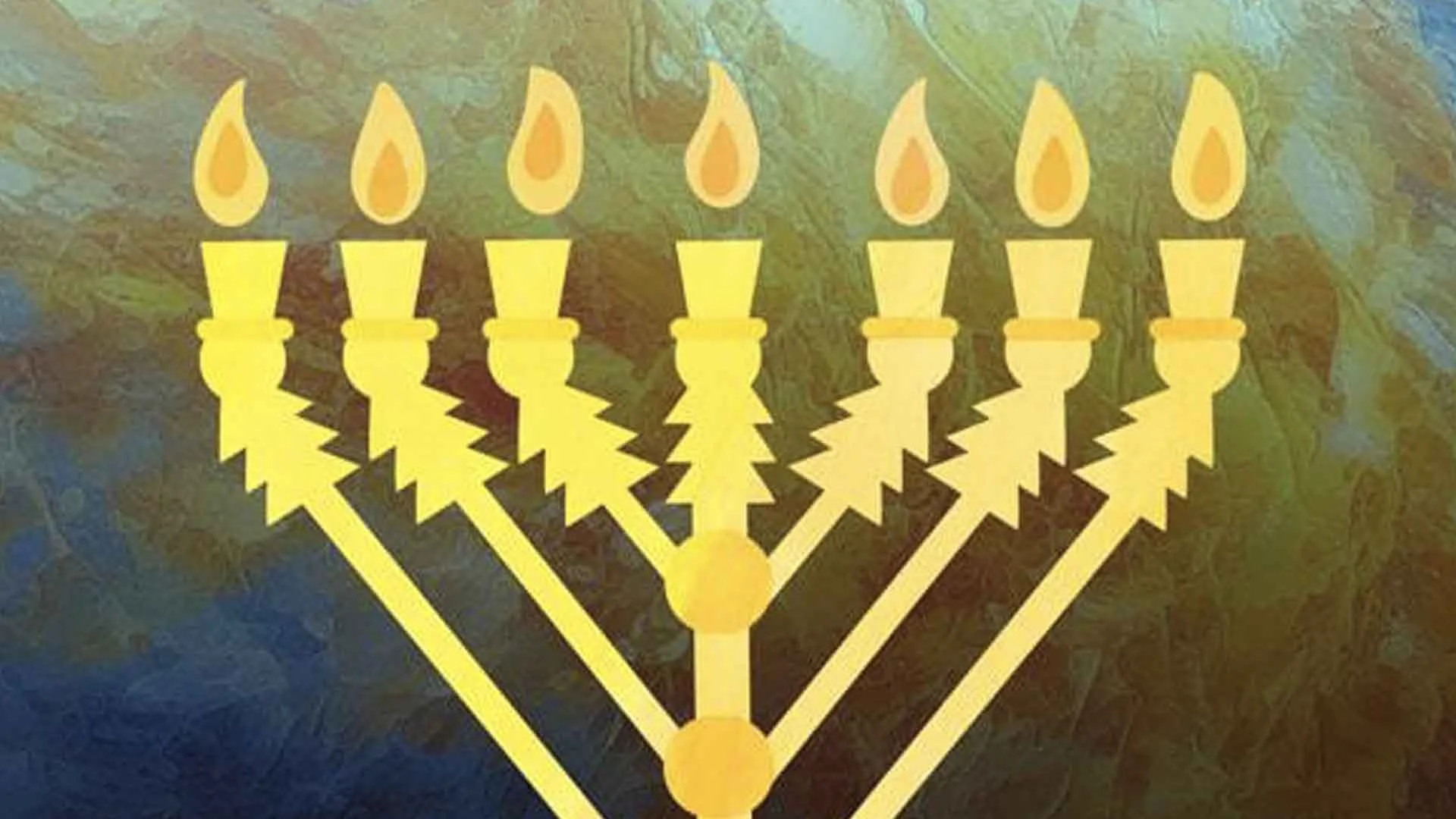
As we learned on yesterday’s daf, there were different measuring utensils in the Temple, which served different purposes. The Mishna (88a) teaches that three-and-a-half logim of oil were measured out every day in order to light the menora – the Temple candelabra – as there were seven candlesticks and each one received half of a log of oil.

The Gemara on our daf quotes a baraita that explains the source for this requirement. The Torah commands that the kohanim take oil to light the menora “from evening until morning” (Shemot 27:20-21). This is understood to mean that the amount of oil that should be prepared is enough so that it will burn through the entire night. The Sages then established the appropriate amount of oil to burn for that long is half a log.

The Gemara elaborates on the final proof in the baraita: What is the biblical derivation here? Rabbi Elazar says: There is an ambiguity as to whether the possessive pronoun in the term “and its libation” is referring to the lamb offering or the meal offering, both of which are mentioned previously in the verse. This is due to a disparity between the way the Hebrew word for the term is written and the way it is vocalized.

It is written as veniskah, with the possessive pronoun in the feminine form. This would be referring to the meal offering [minḥa], which is a feminine noun. Accordingly, this means: The libation of the meal offering, and it is referring to the oil that is intermingled in the meal offering. And we read it as venisko, with the possessive pronoun in the masculine form. This would be referring to the lamb offering itself [keves], which is a masculine noun. Accordingly, this means: The libation of the lamb offering, which is a reference to the wine libation that accompanies the lamb offering.

We explore kere/ketiv as a key to understanding masoretic transmission.

Tags 73rd
Comment

Menachot 88: מְנוֹרָה וְנֵרוֹתֶיהָ בָּאוֹת מִן הַכִּכָּר

jyungar April 9, 2026

For the source text click/tap here: Menachot 88

To download, click/tap here: PDF

§ Apropos the lamps of the Candelabrum, the Gemara relates that Rabbi Yoḥanan says that Rabbi Yehuda HaNasi says: If there is a lamp whose flame went out during the night, the oilin the lamp is halakhically rendered as ashes and the wick is rendered as ashes, and they may no longer be used. How should the priest act? He removes the ashes, i.e., the oil and wick, from the lamp, and puts new oil and a new wick into it and kindles it.

§ Rav Huna, son of Rav Yehuda, says that Rav Sheshet says: Each lamp of the Candelabrum in the Temple was movable, as the branches holding it were thin and flexible. They could therefore be bent over in order to tip out any ashes, remaining oil, or wicks from the lamps.

We explore the history of the Menorah structure from textual and archeological perspectives§ Apropos the lamps of the Candelabrum, the Gemara relates that Rabbi Yoḥanan says that Rabbi Yehuda HaNasi says: If there is a lamp whose flame went out during the night, the oilin the lamp is halakhically rendered as ashes and the wick is rendered as ashes, and they may no longer be used. How should the priest act? He removes the ashes, i.e., the oil and wick, from the lamp, and puts new oil and a new wick into it and kindles it.

§ Rav Huna, son of Rav Yehuda, says that Rav Sheshet says: Each lamp of the Candelabrum in the Temple was movable, as the branches holding it were thin and flexible. They could therefore be bent over in order to tip out any ashes, remaining oil, or wicks from the lamps.

We explore the history of the Menorah structure from textual and archeological perspectives.

Tags 73rd
Comment

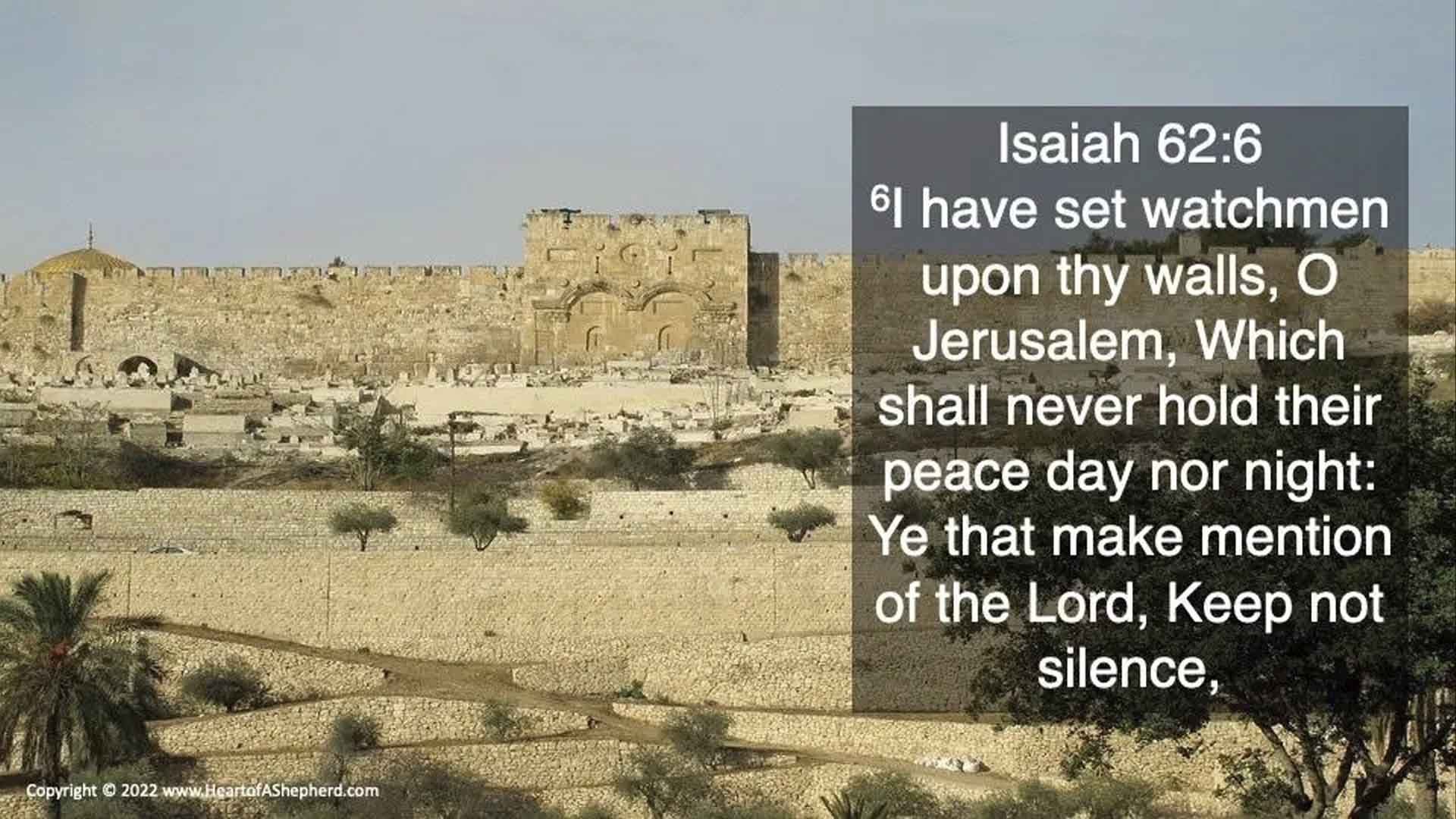
Menachot 87: עַל חוֹמֹתַיִךְ יְרוּשָׁלִַם

jyungar April 8, 2026

For the source text click/tap here: Menachot 87

To download, click/tap here: PDF

Our Perek concludes by quoting an additional prophecy of Isaiah concerning the rebuilding of Eretz Yisrael: It is written: “I have set watchmen upon your walls, Jerusalem; they shall never be silent day nor night; those who remind the Lord, take no rest” (Isaiah 62:6). This is referring to the angels appointed by God to bring the redemption. The Gemara asks: What do these watchmen say to remind the Lord? This is what Rava bar Rav Sheila said: They recite the verse: “You will arise and have compassion upon Zion; for it is time to be gracious to her, for the appointed time has come” (Psalms 102:14).

We examine the dialectical tension between catastrophe and hope in two foundational rabbinic texts: Eicha Rabbah (Lamentations Rabbah) and the concluding section of our perek which concerns the angelic watchmen appointed to remind God of the unredeemed condition of Zion.

The watchmen figure in our daf serves as the paradigmatic rabbinic response to catastrophe: an active, liturgically embodied refusal to permit silence in the face of unredeemed suffering, grounded in a theology of divine fidelity that is tested but never abandoned. Eicha Rabbah contributes a theology of divine mourning in which God Himself participates in the grief of Israel, thereby transforming catastrophe from a verdict of abandonment into a site of unexpected intimacy.

Tags 73rd
Comment

Art by Sefira LightstoneArt by Sefira Lightstone

Menachot 86: אֶלָּא עֵדוּת הוּא לְכׇל בָּאֵי עוֹלָם שֶׁהַשְּׁכִינָה שׁוֹרָה בְּיִשְׂרָאֵל

jyungar April 7, 2026

For the source text click/tap here: Menachot 86

To download, click/tap here: PDF

The Mishna in Menachot 86a explains that the oil used for the lighting of the ner tamid (menorah) must be from the first drops of oil that drip from the ripest of olives that are pounded.

The oil that emerges when the olives are pressed further with beams or with stones is a lower grade oil which is used for the menachot offerings but is not pure enough for the menorah.

The theological heart of the sugya's treatment of the Menorah lies in Rabbi Shmuel bar Nahmani's interpretation of the word lakh ("for yourself") in Leviticus 24:2. The divine command, "they shall take for yourself refined pounded olive oil," would more naturally be read as an instruction to Moses or Aaron — "take it [on my behalf]" or "take it [as I require]." Rabbi Shmuel bar Nahmani inverts this: the oil is to be brought "for yourself," meaning for Israel's benefit, because God has no need of its light.

Rabbi Zerika's teaching in the name of Rabbi Elazar extends the theological argument from the Menorah to the entire configuration of the sanctuary's furnishings. God declares: "I do not require the Table for eating, nor do I require the Candelabrum for its illumination.”

We explore the theological and mystical meaning of these radical claims.

Tags 73rd
Comment

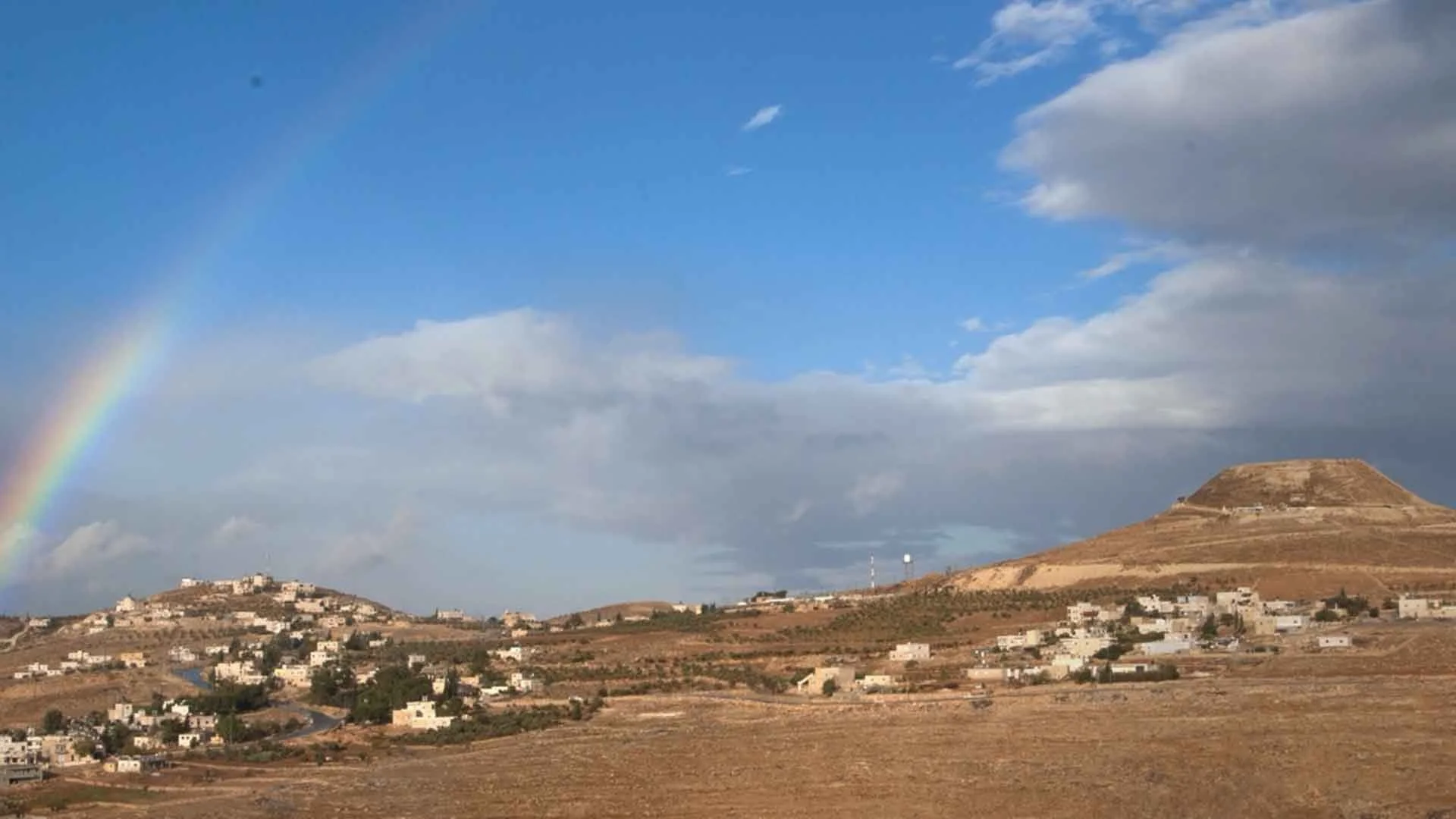
View of Herodium from Tekoa

Menachot 85: כָּאן בַּעֲבוּדָה, כָּאן בְּשֶׁאֵינָהּ עֲבוּדָה

jyungar April 6, 2026

For the source text click/tap here: Menachot 85

To download, click/tap here: PDF

The Talmudic sugya of Menachot 85b opens with an apparently technical discussion of the optimal quality of olive oil for Temple meal offerings (menachot), identifies Tekoa as the premier source of such oil, and then—in a characteristically digressive move—pauses to ask why Joab sent specifically to Tekoa to fetch a wise woman.

The answer, attributed to Rabbi Yochanan, is deceptively simple: because the people of Tekoa are habituated to olive oil, and olive oil engenders wisdom. This explanatory aside is not a detour from the halachic discussion; it is the sugya's mechanism for elevating the city of Tekoa from a geographical designation to a theological-epistemological category.

We explore the hermeneutical moves our daf takes in valorizing the wise woman from Tekoa in II Sam 14.

Tags 73rd
Comment

Menachot 84: כּוּלֵּיהּ בִּמְנָחוֹת, וְסֵיפָא דִּקְרָא אֲתָאן לְלַחְמֵי תוֹדָה

jyungar April 5, 2026

For the source text click/tap here: Menachot 84

To download, click/tap here: PDF

The Gemara on our daf quotes a Mishna from Massekhet Bikkurim (1:3) that teaches that bikkurim – first fruits brought to the Temple – are only brought from the seven species of fruit about which Israel is uniquely praised (wheat, barley, grapes, figs, pomegranates, olives and dates – see Devarim 8:8). Even these are limited to quality produce. The Mishna continues and teaches that dates growing in the mountains or produce growing in valleys also cannot be brought as bikkurim.

What if such lower quality fruits were set aside as bikkurim?

Rabbi Yoḥanan teaches that even if these fruits were brought they would not become sanctified; Reish Lakish rules that they would become sanctified, just as lower quality animals brought as sacrifices in the Temple would be acceptable, assuming that they met the basic requirements of a sacrifice.

We focus on the pivotal exegetical ruling attributed to Rav Ashi: כּוּלֵּיהּ בִּמְנָחוֹת, וְסֵיפָא דִּקְרָא אֲתָאן לְלַחְמֵיתוֹדָה—'the entire verse [Numbers 18:13] concerns meal offerings, and with the latter clause of the verse we come specifically to the loaves of a thanks offering.'

This declaration, far from being a mere technical resolution of a textual contradiction, constitutes a fundamental reconstitution of the halakhic architecture of Shavuot. Our sugya reveals how the Rabbis, through a layered system of derashot transformed the agricultural harvest festival into a temporal gateway through which the entire edifice of Temple sacrifice—meal offerings, first fruits, libations—must pass.

Tags 73rd
Comment

Menachot 83: וְהָכְתִיב ״רֵאשִׁית״? לְמִצְוָה

jyungar April 4, 2026

For the source text click/tap here: Menachot 83

To download, click/tap here: PDF

The ninth perek of Massekhet Menachot begins on our daf. Its focus is on the materials that are brought as offerings in the Temple that are not animals or fowl, that is, the grain brought in meal offerings, the oil and the wine used as libations. While the Torah does teach what all of these must come from, they lack specific requirements, e.g. whether they must be made from the produce of the Land of Israel or can be brought from imported raw materials.

According to the first Mishna, only the minḥat ha-omer and the shetei ha-leḥem (the offerings brought at the end of the barley harvest in Pesaḥ and the wheat harvest on Shavuot) must be brought from grain grown in Israel from the recent harvest.

We explore the way the oems and Shavuot is connected to Sinai as well as the notion of Ḥovot ha-Tzibbur (Communal Obligations) as Resources for Imagining Jewish Community.

Tags 73rd
Comment

Menachot 82: פֶּסַח כּוּלֵּיהּ חֲדָא מִילְּתָא הִיא

jyungar April 3, 2026

For the source text click/tap here: Menachot 82

To download, click/tap here: PDF

We learned only voluntary sacrifices whose meat is eaten by the owner of the offering can be purchased with money from redeemed ma’aser sheni. Such money cannot be used to purchase obligatory sacrifices – even those whose meat is eaten by the owner – since obligatory sacrifices can only come from ordinary money and not from sanctified money.

The Mishna on our daf searches for a source for this law. The passage that is suggested says that the korban Pesaḥ must be brought from tzon u’bakar – “the flock and the herd”, i.e. cattle (see Devarim 16:2). We know, however, that only certain types of cattle can be used for the korban Pesaḥ – specifically a lamb or a goat (see Shemot 12:5).

The Mishna concludes that the purpose of using a broader term – “cattle” – is to connect other sacrifices to the korban Pesaḥ so that we can conclude that just as the korban Pesaḥ is brought from personal funds and not sanctified money (since at the time when the first korban Pesaḥ was brought the laws of sanctified money did not yet exist), similarly, all other obligatory sacrifices must come from personal funds and not from sanctified money.We learned only voluntary sacrifices whose meat is eaten by the owner of the offering can be purchased with money from redeemed ma’aser sheni. Such money cannot be used to purchase obligatory sacrifices – even those whose meat is eaten by the owner – since obligatory sacrifices can only come from ordinary money and not from sanctified money.

The Mishna on our daf searches for a source for this law. The passage that is suggested says that the korban Pesaḥ must be brought from tzon u’bakar – “the flock and the herd”, i.e. cattle (see Devarim 16:2). We know, however, that only certain types of cattle can be used for the korban Pesaḥ – specifically a lamb or a goat (see Shemot 12:5).

The Mishna concludes that the purpose of using a broader term – “cattle” – is to connect other sacrifices to the korban Pesaḥ so that we can conclude that just as the korban Pesaḥ is brought from personal funds and not sanctified money (since at the time when the first korban Pesaḥ was brought the laws of sanctified money did not yet exist), similarly, all other obligatory sacrifices must come from personal funds and not from sanctified money.We learned only voluntary sacrifices whose meat is eaten by the owner of the offering can be purchased with money from redeemed ma’aser sheni. Such money cannot be used to purchase obligatory sacrifices – even those whose meat is eaten by the owner – since obligatory sacrifices can only come from ordinary money and not from sanctified money.

The Mishna on our daf searches for a source for this law. The passage that is suggested says that the korban Pesaḥ must be brought from tzon u’bakar – “the flock and the herd”, i.e. cattle (see Devarim 16:2). We know, however, that only certain types of cattle can be used for the korban Pesaḥ – specifically a lamb or a goat (see Shemot 12:5).

The Mishna concludes that the purpose of using a broader term – “cattle” – is to connect other sacrifices to the korban Pesaḥ so that we can conclude that just as the korban Pesaḥ is brought from personal funds and not sanctified money (since at the time when the first korban Pesaḥ was brought the laws of sanctified money did not yet exist), similarly, all other obligatory sacrifices must come from personal funds and not from sanctified money.

Tags 73rd
Comment

Menachot 81: כּוֹפִין אוֹתוֹ, וּמֵבִיא תּוֹדָה וְלַחְמָהּ

jyungar April 2, 2026

For the source text click/tap here: Menachot 81

To download, click/tap here: PDF

The new Mishna establishes several rules governing how a person who vows to bring a thanks offering may designate the source of the funding—whether from non-sacred money (chulin) or second-tithe money (ma'aser sheni). The fundamental principle is that a sincere vow (neder) creates a personal obligation, and obligations may not be fulfilled using second-tithe money, which carries its own consecrated status and is designated for consumption in Jerusalem rather than for the satisfaction of independently incurred debts to the Temple.

We explore the controversy between Beit Shammai and Beit Hillel concerning the retraction or dissolution of vows (nedarim), with particular focus on the dispute recorded in our daf regarding one who vows to bring a thanks offering without its obligatory loaves, or an animal sacrifice without its libations.

The Shammaite principle—that when a declaration contains internally contradictory elements, one attends exclusively to the first utterance—is examined through multiple passages in the Talmudic corpus including Tractate Nazir, Tractate Nedarim, and the legal discussion preserved in the Gemara on our daf.

Tags 73rd
Comment

Menachot 80: חָמֵשׁ חַטָּאוֹת מֵתוֹת

jyungar April 1, 2026

For the source text click/tap here: Menachot 80

To download, click/tap here: PDF

If one separated an animal to be used as a purification offering, but then lost it, and he brought another animal in its place, and then found the first one, it should die. If one separates coins to be used [to purchase] a purification offering, then lost them, and bought an offering with [other coins], and then found the [original] coins, they should be brought [i.e., thrown into] the Salt Sea.

Tractate Temurah deals with substitutions—what happens when one animal is brought to the Temple in place of another as a sacrifice? The first animal has already been designated for sacred service and cannot simply be used for normal needs. Yet if the sacrifice was a chatat (purification offering), and the owner has already been purified, what should be done with the first animal? This mishnah says that no benefit can come from an animal or coins once they are designated for God.

We explore these areas like the salt sea and how they function in Halacha and as a conceptual repository for sacred objects that have become legally irresolvable.

Tags 73rd
Comment

Menachot 79: כל הָעוֹמֵד לִזְרוֹק כְּזָרוּק דָּמֵי

jyungar March 31, 2026

For the source text click/tap here: Menachot 79

To download, click/tap here: PDF

What if the sacrifice was found to have a mum – a blemish? According to Rabbi Meir this question is the subject of disagreement between Rabbi Eliezer, who says that the loaves become sanctified, and Rabbi Yehoshua who rules that they do not.

The Gemara searches for an explanation for the position of Rabbi Eliezer, according to Rabbi Meir. If an animal was a tereifa we recognize that the sacrifice is invalid and the loaves do not become sanctified; why should the case of a blemish be different?

The Gemara answers that this follows the opinion of Rabbi Akiva who permits certain types of mumim to be brought on the altar, or at least that the sacrifice is not removed from the altar if it had already been brought to it.

The case discussed is when the blemish was dukin she-ba-ayin. Since dukin she-ba-ayin is a relatively minor condition – in fact, it is not considered a blemish if it is found in a sacrifice brought from fowl – an animal with such a blemish is permitted, if it found its way to the altar.

Dukin she-ba-ayin is some kind of an eye condition; Rashi explains that it is a cataract on the eye. Another possible explanation presented by Rashi is that it is a blemish on the eyelid.

We explore both this condition as well as the status of the fetus from the Mishnah.

Tags 73rd
Comment

Menachot 78: חוּץ לְחוֹמַת בֵּית פָּאגֵי

jyungar March 30, 2026

For the source text click/tap here: Menachot 78

To download, click/tap here: PDF

On our Daf a Mishna discusses the thanksgiving sacrifice – the korban toda. That korban is made up of an animal sacrifice brought together with 40 hallot matzot – non-hametz loaves. The Mishna teaches that if the sacrifice is slaughtered inside the azara – the Temple courtyard, as is proper – but the hallot were outside the wall at that time, then the hallot do not become holy; since at the time of the shechita they were in a place where they could not be eaten, they therefore cannot become part of the korban. A question was raised with regard to this mishna: What is the meaning of the phrase outside the wall? Rabbi Yohanan said: It means outside the wall of Beit Pagei, the outermost wall around Jerusalem, but if the bread was merely outside the wall of the Temple courtyard, it has been sanctified, as we do not require that the bread, described as “with” the offering, be next to it in order to be sanctified.

There are many opinions, but it appears that Beit Pagei represented the “third wall” that surrounded the “new city” of Jerusalem. Some say that Beit Pagei is from the Latin root meaning “to eat.” According to this opinion, it was so named because within that wall was still considered Jerusalem with regard to the mitzva of eating korbanot that had to be consumed within the city walls. There also was a small village just outside of Jerusalem that was called Beit Pagei – perhaps because of the figs (pagim) that grew there. According to some opinions that is the Beit Pagei referred to by Rabbi Yohanan.

We explore both the rishonim as well as archeological views of the walls around the Mikdash over time.

Tags 73rd
Comment

Menachot 77: אֵין מוֹסִיפִין עַל הַמִּדּוֹת יוֹתֵר מִשְּׁתוּת

jyungar March 29, 2026

For the source text click/tap here: Menachot 77

To download, click/tap here: PDF

The eighth perek of Massekhet Menaḥot begins on today’s daf. Its focus is the korban toda – the thanksgiving offering – which is a type of korban shelamim (peace offerings) discussed in Massekhet Zevaḥim with the other animal sacrifices.

Nevertheless its unique character brings it into Massekhet Menaḥot, as well, since every korban toda was accompanied by four meal offerings, some made of matza and some made of ḥametz (see Sefer Vayikra 7:11-15).

This chapter is dedicated to explaining the laws pertaining to these menaḥot, how they are made, their size, and so forth.

Among the unique halakhot connected with these meal offerings was the requirement to offer teruma – a gift to the kohen – from them (see Vayikra 7:14).

We explore the notion of thanksgiving and gratitude.

Tags 73rd
Comment

Menachot 76: הַתּוֹרָה חָסָה עַל מָמוֹנָן שֶׁל יִשְׂרָאֵל

jyungar March 28, 2026

For the source text click/tap here: Menachot 76

To download, click/tap here: PDF

Our daf quotes a baraita that derives other laws from the passage quoted by Rabbi Shimon. Based on this pasuk the baraita suggests that the solet for the leḥem ha-panim could be purchased as either prepared flour – as was the case for all other meal offerings – or in their raw form as wheat. Rabbi Elazar explains that this stems from the Torah’s desire to be frugal with money belonging to the Jewish people.

Since the volume of flour required to prepare the 12 loaves of leḥem ha-panim on a weekly basis was quite large in comparison to the amount needed for the once-a-year minḥat ha-omer or shetei ha-leḥem, the Torah permitted its purchase in raw form, which made it cheaper.

According to the Gemara, Rabbi Elazar’s source for the idea that God is concerned about the finances of the Jewish people comes from the story in Sefer Bamidbar (Chapter 20) when there was no water to drink, and God supplied a miracle whose purpose was to allow the people – and their cattle – to drink.

Clearly, according to the Torah, the possessions belonging to the Jewish people merited a miracle, as well.

We explore the notion of the Torah being worried for our finances in performing Mitzvot.

Tags 73rd
Comment

First century BCE Greek inscription from Jerusalem's Temple Mount forbidding the entry of Gentiles to the Temple precinct, reading “..no foreigner shall enter…”

Menachot 75: אוֹתָהּ לִפְתִיתִים, וְלֹא פְּתִיתָה לִפְתִיתִים

jyungar March 27, 2026

For the source text click/tap here: Menachot 75

To download, click/tap here: PDF

The Mishnah (74b) teaches that when the Kohen performs Meshichah with Rekikin, he smears the oil on the loaves (after they are baked) in the shape of a "Ki." The Gemara here quotes Rav Kahana who explains that this refers to the Greek letter, "Xi" (see TOSFOS DH k'Min Ki, for various opinions about the exact shape).

Why is the oil supposed to smeared on the Rekikin specifically in the shape of a Greek letter?

The Mishnah in Shekalim (8a) similarly says that the letters Alef, Beis, and Gimel were written on the three boxes used for the Terumas ha'Lishkah to denote which box was separated first. Rebbi Yishmael notes that the three letters on the boxes were written in Greek -- Alpha, Beta, and Gamma.

The presence of Greek language and script in rabbinic literature — from the smearing of oil kemein ki (in the form of the Greek letter Xi) described in tractate Menachot, to the Alpha, Beta, and Gamma inscribed on the Temple treasury chests in tractate Shekalim — signals far more than incidental cultural borrowing. We argue that these instances represent a coherent and theologically motivated strategy of selective appropriation: a disciplined openness to Hellenistic aesthetic forms precisely insofar as they could be consecrated to divine service.

Tags 73rd
Comment

Yigal Shiloh Archeologist 1978- 1987

Menachot 74: וְהָא אִיכָּא נְסָכִים! לְשִׁיתִין אָזְלִי

jyungar March 26, 2026

For the source text click/tap here: Menachot 74

To download, click/tap here: PDF

Cases where the altar receives the entire offering are:

Minḥat kohen – The meal offering brought by a kohen, whether it was voluntary or obligatory

Minḥat kohen mashi’aḥ – The daily meal offering brought by the kohen gadol in the morning and afternoon (see Vayikra 6:15).

Minḥat nesakhim – The meal offering that accompanied libations

The Gemara points out that it appears that there are other sacrifices, as well, where the entire offering remains on the altar with none given to the kohanim. In each example brought, however, the Gemara argues that the altar does not receive everything. Thus, for example, regarding an ola – a burnt offering – the kohanim do receive the skin of the animal. Regarding libations, which are poured on the altar and the kohanim receive nothing, the Gemara explains that they are not actually poured on the altar, rather they are poured into the shittin under the altar.

The shittin were pipes and hollow spaces in and beneath the altar. They opened as two small holes on the south-west corner of the altar and the blood and wine libations would run from them to the water tunnel under the Temple Mount and from there to the Kidron Valley. According to a tradition of the Ge’onim, the shittin were a cubit in width and 600 cubits in depth. Based on this tradition, when the Gemara in Massekhet Sukka (49a) describes how once every 70 years young kohanim would descend and remove the solidified remnants of wine, it is clear that they did not descend to the very bottom of the pipe, rather they went as far down as they could or used special implements to clean the passageway.

Tags 73rd
Comment
  • Daf Ditty
  • Older
  • Newer

Julian Ungar-Sargon

This is Julian Ungar-Sargon's personal website. It contains poems, essays, and podcasts for the spiritual seeker and interdisciplinary aficionado.​