
For the source text click/tap here: Menachot 97
To download, click/tap here: PDF
Gemara on our daf discusses how the shulḥan which was made of wood that was plated with gold, should be viewed.
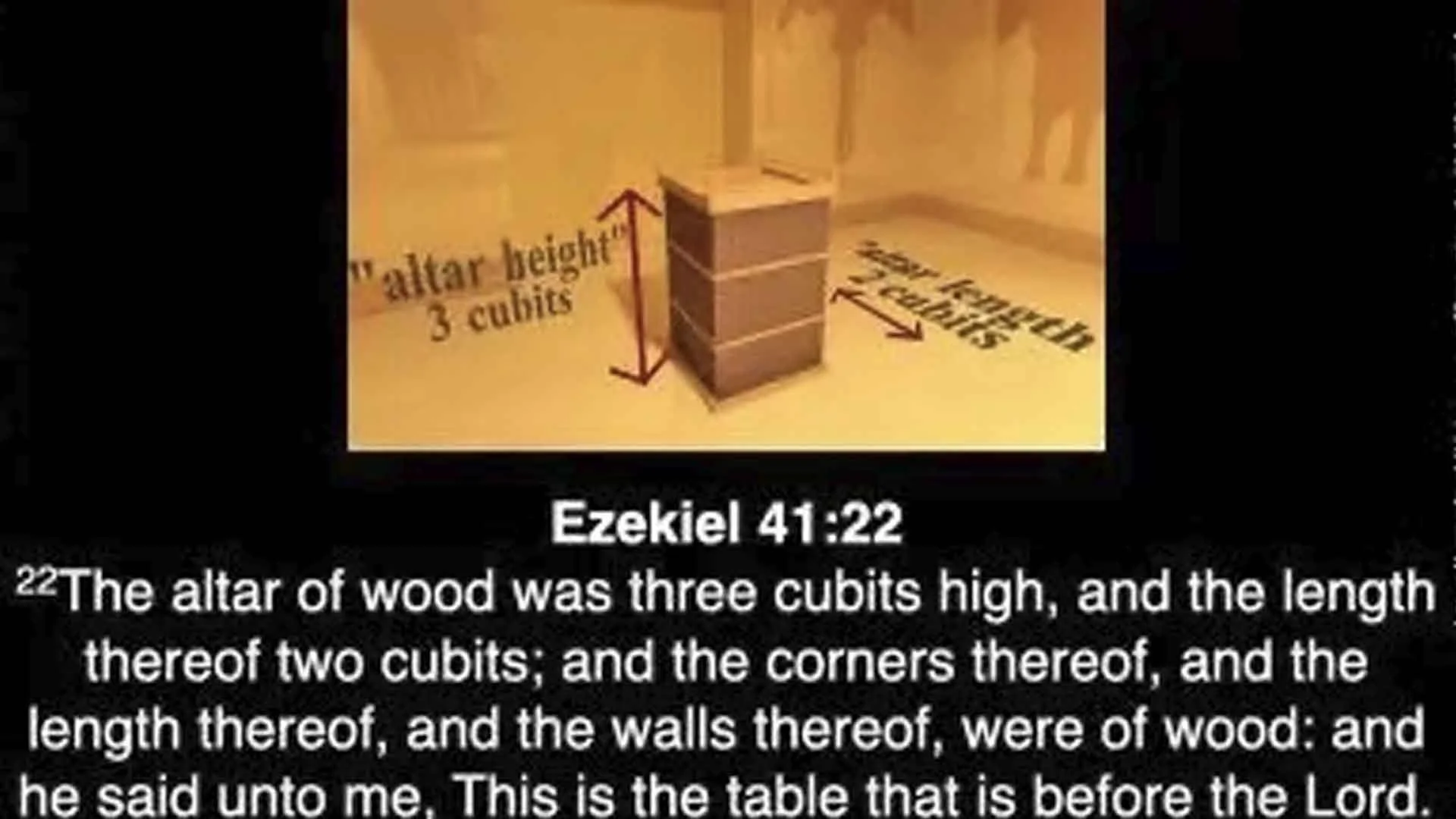
To answer this question, the Gemara quotes a passage from the book of Yeḥezkel (41:22) where we find the following description:
“The altar, three cubits high, and the length thereof two cubits, was of wood, and so the corners thereof; the length thereof, and the walls thereof, were also of wood; and he said unto me: ‘This is the table that is before the LORD.'”
This is understood to clarify that the table was viewed as a wooden utensil, even though the wood was not visible.
Having quoted the passage from Sefer Yeḥezkel, the Gemara asks why he began his description by talking about the altar and then finished by talking about the table. In response, both Rabbi Yoḥanan and Rabbi Elazar suggest that this teaches that just as the altar served as the place of atonement when the Temple stood, so our tables serve that purpose today, after the destruction of the Temple.
We explore the use of Ezekiel’s dimensions of the temple and then a dazzling exposition by the Meor Eynayim of שׁוּלְחָנוֹ שֶׁל אָדָם מְכַפֵּר עָלָיו.