
For the source text click/tap here: Menachot 95
To download, click/tap here: PDF
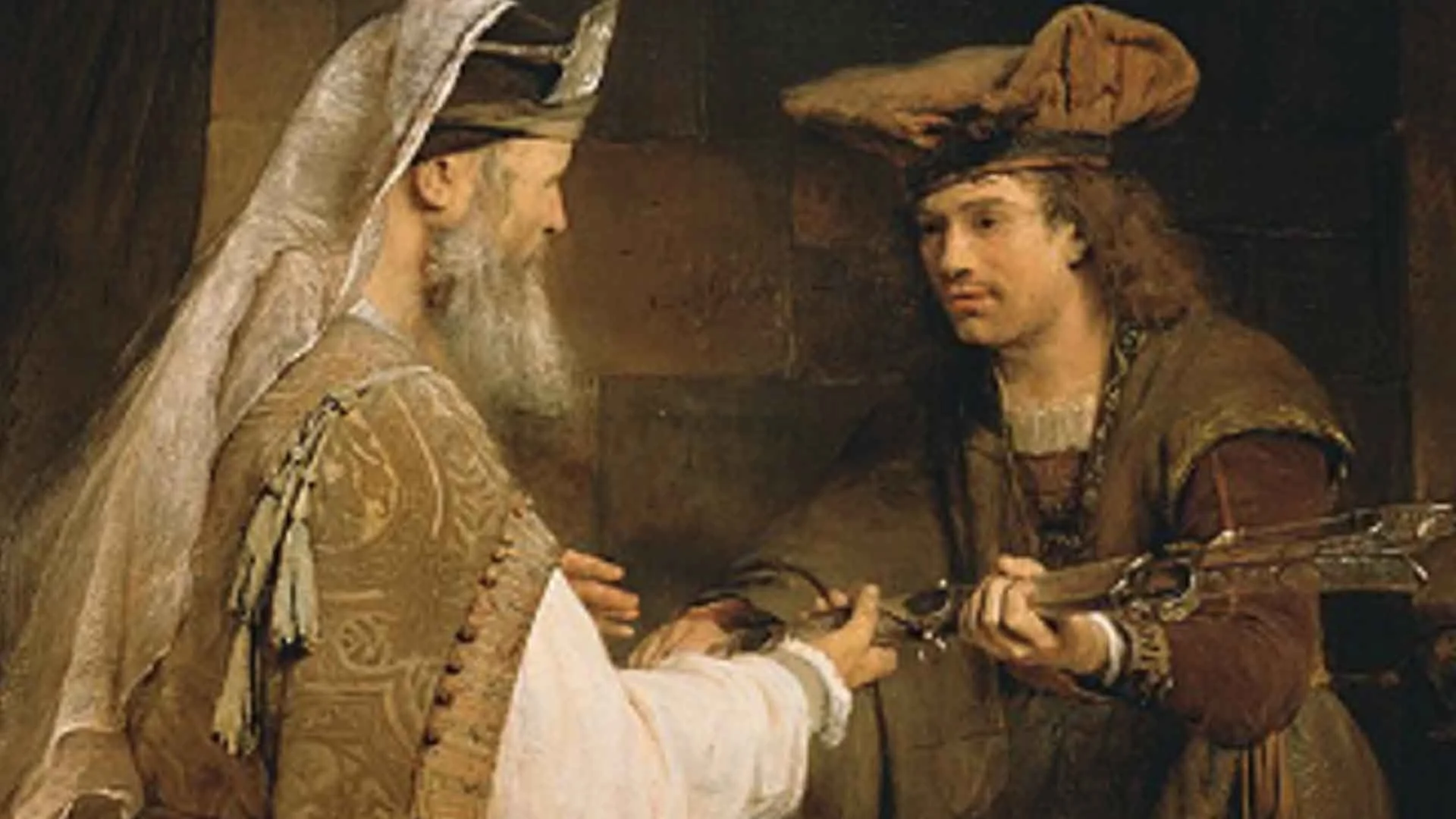
The bread of vision (Lechem hapanim) was kneaded outside the Temple - because vessels did not sanctify the flour - and baked inside the Temple before Shabbat. Rabbi Yehudah disagrees: it was kneaded and baked inside the Temple, on Shabbat, to protect the bread from staying overnight. Rabbi Shimon maintains that both ways are valid. Their proofs are not based on the story of King David and the priestly bread -suffering from- extreme hunger - fleeing from King Saul, he arrives at the priestly city of Nob and requests the shewbread (lechem ha-panim) from Ahimelech the High Priest.
From this charged narrative moment, we follow the reception history of this episode through the Yalkut Shimoni on Samuel and into the sugya of our daf where Rabbis Yehudah and Shimon deploy the same verse from I Samuel to derive diametrically opposed halakhic conclusions regarding whether the oven or the Table constitutes the locus of consecration for the shewbread.. We examine how a narrative about radical need, priestly authority, and sacred transgression becomes the exegetical ground for a fundamental dispute in Temple law.