
For the source text click/tap here: Menachot 92
To download, click/tap here: PDF
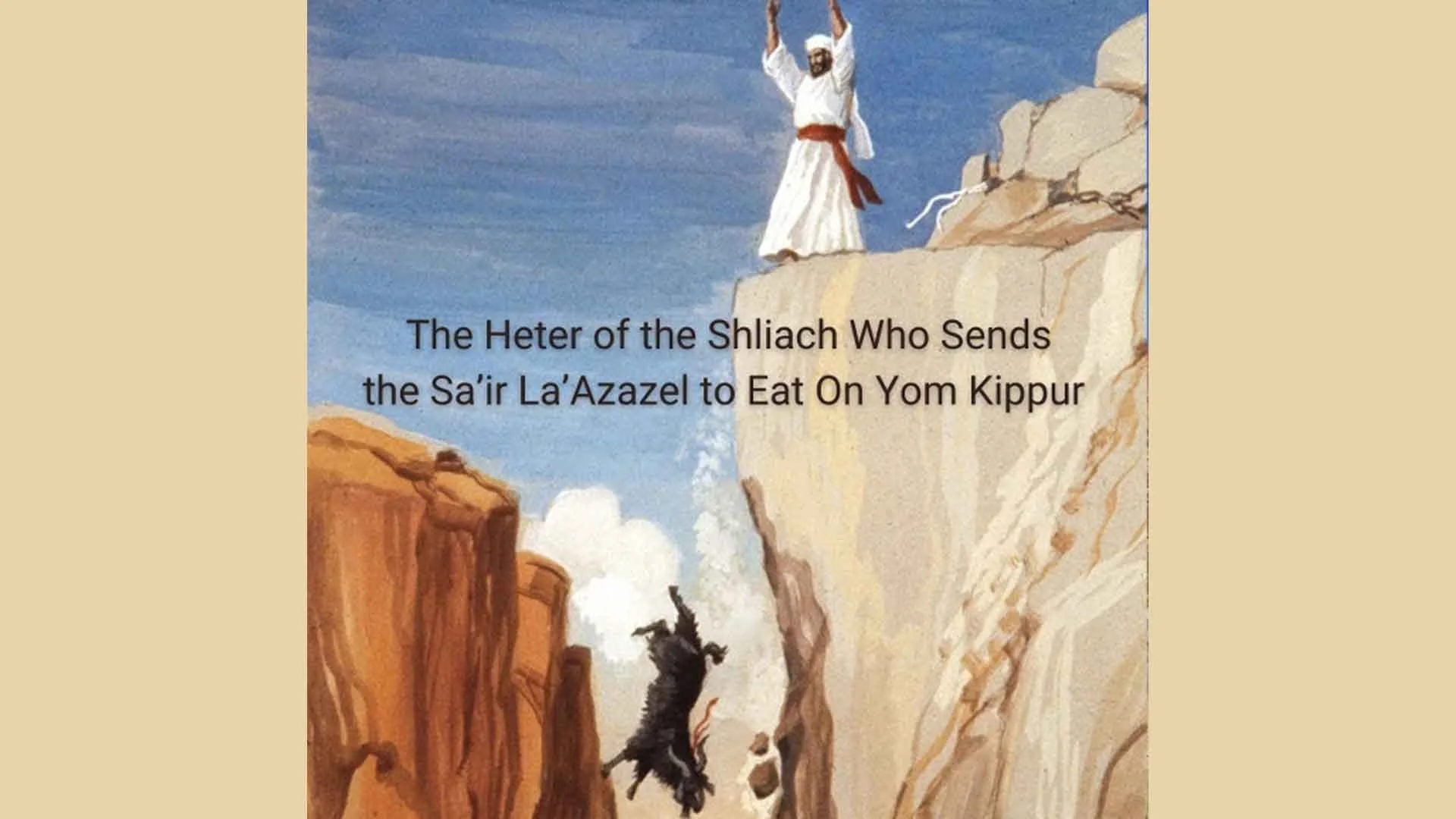
The second half of the tenth perek of Massekhet Menaḥot focuses on the laws of semikha – laying of hands on the sacrifice. The Mishna on our daf teaches that no communal sacrifices include semikha, except for the unique se’ir ha-mishtale’aḥ – the goat sent off to Azazel as part of the Yom Kippur service – and the par ha’alem davar shel tzibbur – the sacrifice brought by the Sanhedrin when they mistakenly misled the people with an erroneous ruling, leading the community to sin. Rabbi Shimon adds another communal sin offering – the one brought when a mistaken ruling leads the community to commit an act of avoda zara.
Our daf presents a deceptively compact Mishnaic debate concerning which sacrificial categories require semikhah — the laying of hands upon the offering's head — and which are exempt.
Among the exempted categories is the se'ir hamishtaleach, the Yom Kippur scapegoat sent into the wilderness to Azazel, carrying the accumulated transgressions of Israel. We analyze the position attributed to Rabbi Shimon regarding the unique liminal status of the scapegoat relative to communal offerings. We examine the theology of vicarious suffering in rabbinic thought, tracing Amoraic debates from Tannaitic antecedents through the major positions of the Babylonian and Palestinian Amoraic academies.