
For the source text click/tap here: Menachot 94
To download, click/tap here: PDF
The eleventh perek of Massekhet Menaḥot begins on our daf and its focus is on two offerings –
Shetei ha-leḥem – the two loaves brought on Shavuot, celebrating the new wheat harvest (see Vayikra 23:17)
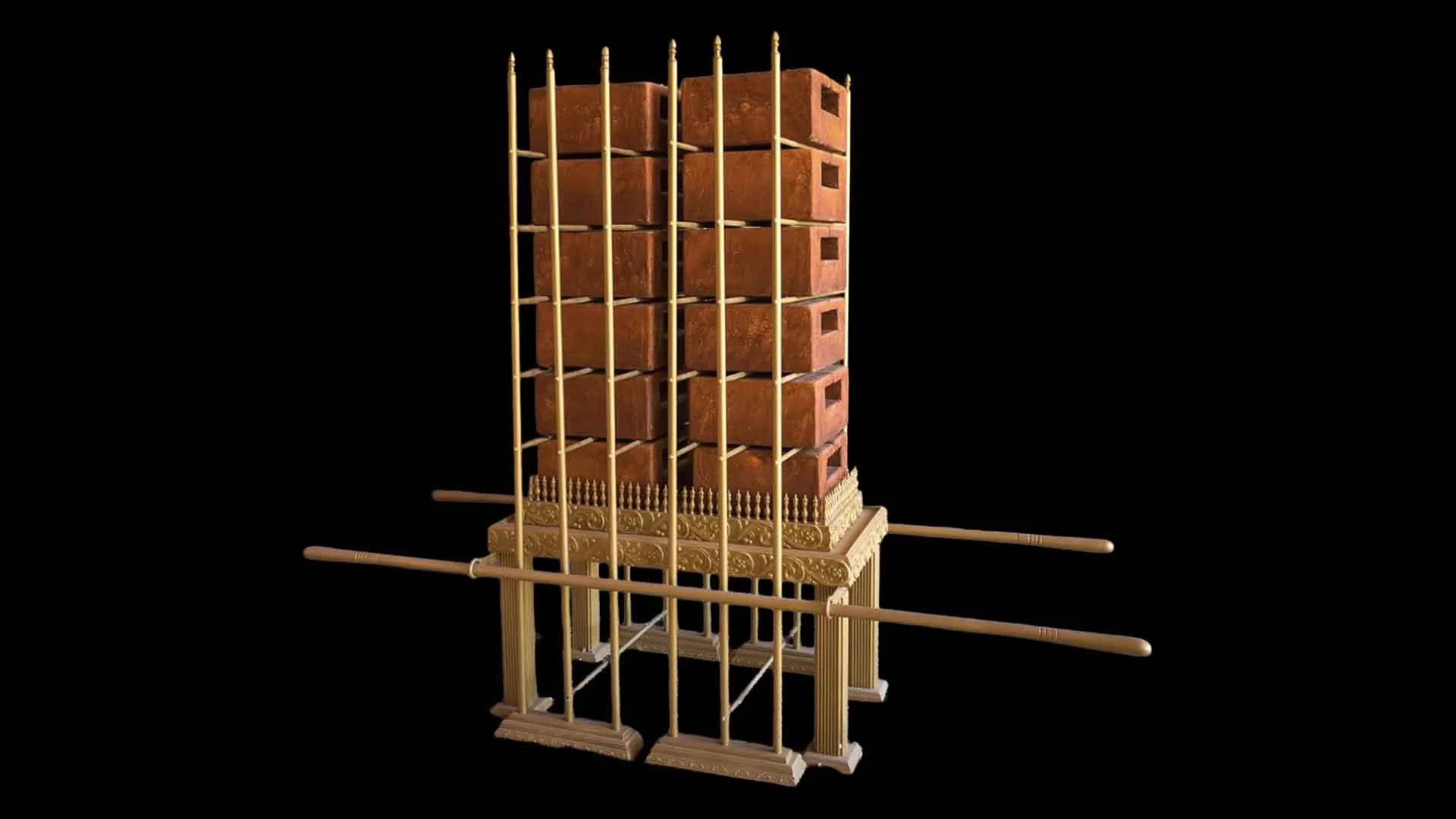
Leḥem ha-panim – Shewbread, the 12 loaves placed on the table in the Temple on a weekly basis (see Vayikra 24:5-8)
These two offerings differ from all other menaḥot inasmuch as they are baked in a pan that gives them a specific form and are eaten whole by the kohanim. The majority of the perek is dedicated to the leḥam ha-panim that has many details, both with regard to the loaves themselves as well as the table on which they are placed in the Temple.
The Torah does not describe how they were to be kneaded and baked, nor does it specify what their actual shape should be. Although there is some description of the table, its details are unclear, and we have little information about the utensils that are attached to it.
We explore the connection with Shabbat ChallahThe eleventh perek of Massekhet Menaḥot begins on our daf and its focus is on two offerings –
Shetei ha-leḥem – the two loaves brought on Shavuot, celebrating the new wheat harvest (see Vayikra 23:17)
Leḥem ha-panim – Shewbread, the 12 loaves placed on the table in the Temple on a weekly basis (see Vayikra 24:5-8)
These two offerings differ from all other menaḥot inasmuch as they are baked in a pan that gives them a specific form and are eaten whole by the kohanim. The majority of the perek is dedicated to the leḥam ha-panim that has many details, both with regard to the loaves themselves as well as the table on which they are placed in the Temple.
The Torah does not describe how they were to be kneaded and baked, nor does it specify what their actual shape should be. Although there is some description of the table, its details are unclear, and we have little information about the utensils that are attached to it.
We explore the connection with Shabbat Challah.