Julian Ungar-Sargon

  • Home
  • Theological Essays
  • Healing Essays
  • Podcast
  • Poetry
  • Daf Ditty
  • Deep Dive Ditty
  • Videos
  • Publications
  • Military Service
  • Home
  • Theological Essays
  • Healing Essays
  • Podcast
  • Poetry
  • Daf Ditty
  • Deep Dive Ditty
  • Videos
  • Publications
  • Military Service
Julian Ungar-Sargon copy 3.jpg

Daf Ditty

A wide-ranging commentary on the daily page of Talmud.

Consecration of the Levites (detail and colorized), Jan Luyken, 1683. Rijksmuseum.nl

Bechorot 4: חַיָּיב אָדָם לוֹמַר בִּלְשׁוֹן רַבּוֹ

Eliyahu Ungar-Sargon September 22, 2026

For the source text click/tap here: Bechorot 4

To download, click/tap here: PDF

The Rambam interprets Shemot (13:11) as saying that the firstborn is sanctified if they were alive at the time of the Exodus. This celebrated that they were saved while the Egyptian firstborn was killed in the final plague. Regardless, the obligation to apply this sanctification to future generations did not take effect until after the journey into the desert had ended.

Rabbi Yochanan debates: a baraita state that before the Tabernacle was built, the sacrificial service in the desert took place on private altars by the firstborn. Reish Lakish retorts that this only refers to the firstborn who were already alive at the time of the Exodus.

Steinsaltz teaches us that the sacrificial service in the desert performed by the firstborn was based on a passage in Shemot (24:5) where we learn that when Torah was given on Sinai, there were a group of "young men" who brought sacrifices.

We explore how the tribes of Israel are counted twice, in chapters 1 and 2 of Parashat Bemidbar, and the Levites are counted twice, in chapters 3 and 4, in Parashat Bemidbar–Naso. What is the purpose of each such double census?

Comment

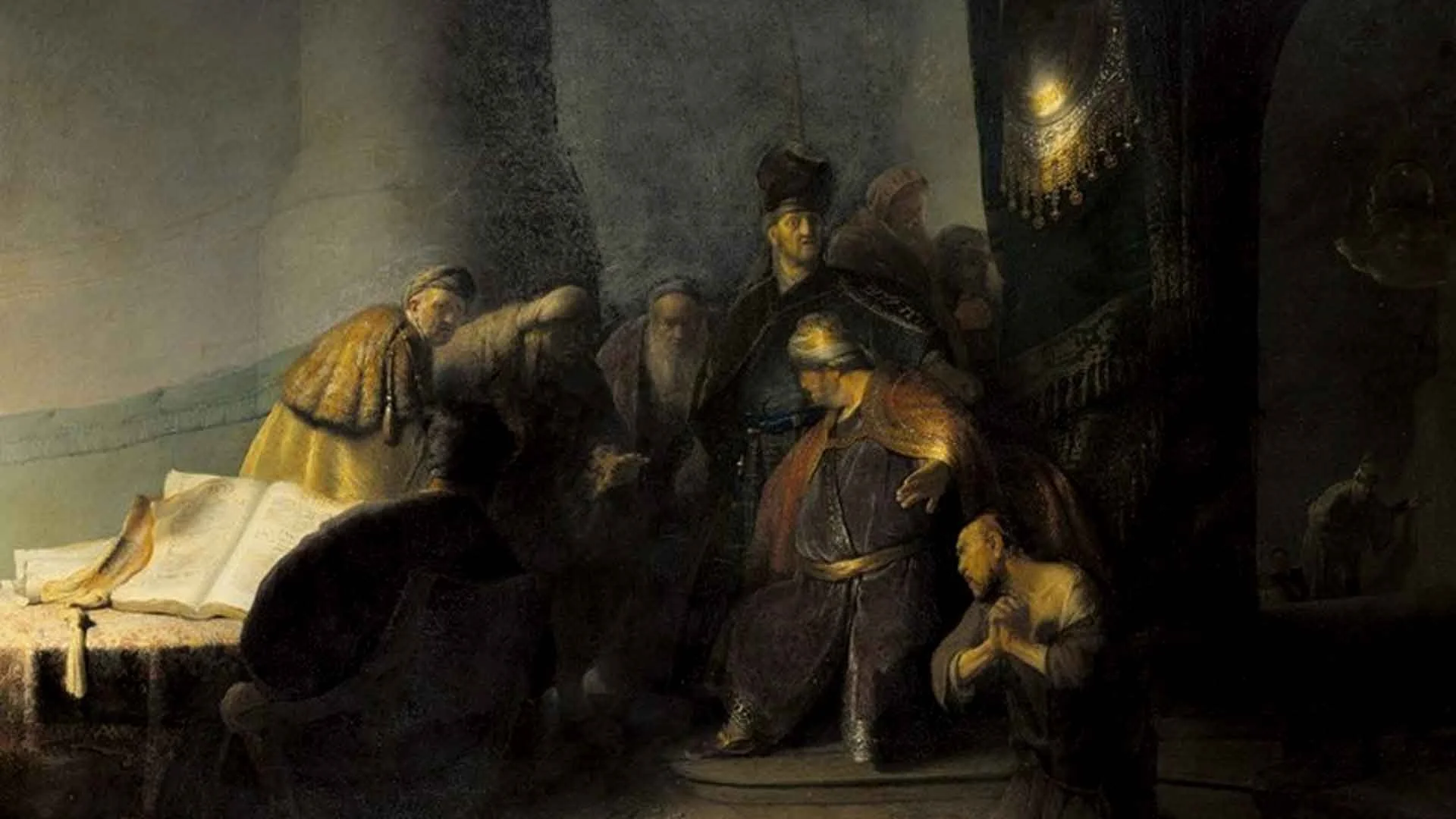
Judas Returning the Thirty Pieces of Silver (1629), Rembrandt

Bechorot 3: דִּלְמָא אָתֵי בְּהוּ לִידֵי תַקָּלָה

Eliyahu Ungar-Sargon September 21, 2026

For the source text click/tap here: Bechorot 3

To download, click/tap here: PDF

From the verse, “Consecrate to Me every firstborn, whatever is the first to open every womb among the children of Israel, both of man and of animal; it is Mine” (Exodus 13:2), the Sages derived that the law of the firstborn animal applies only to an animal owned by an Israelite and not to an animal owned by a gentile.

The Tannaim disagreed regarding the status of an animal jointly owned by an Israelite and a gentile: according to Rabbi Yehudah, such an animal is subject to the law of the firstborn, whereas according to the Sages, only a firstborn animal that is wholly owned by an Israelite is subject to this obligation.

The more interesting development comes with Tosafot. The Gemara appears uncomfortable with intentionally selling a piece of the fetus to a gentile simply to escape kedushat bekhor.

We explore ha ‘aramah, engineered around a halakhic category, yet its purpose is not merely convenience. It prevents a more serious halakhic failure. The artificiality of the mechanism is tolerated because the underlying concern is genuine.

Comment

Bechorot 2: כִּ֣י לִי֮ כׇּל־בְּכוֹר֒

Eliyahu Ungar-Sargon September 20, 2026

For the source text click/tap here: Bechorot 2

To download, click/tap here: PDF

The first perek of Massekhet Bekhorot focuses on the laws of a firstborn donkey, which must be exchanged for a lamb and given to the kohen (see Ex 13:13, 34:20).

Even though we might expect that the tractate should begin with the laws of the firstborn of a kosher animal that has intrinsic sanctity and is brought as a sacrifice, the Gemara explains that the laws of the firstborn donkey are short and relatively uncomplicated, and by placing them first, the other cases can be discussed at greater length without interruption.

The first Mishna discusses how non-Jewish ownership of a donkey would affect this law, teaching that the emphasis of the Torah on the Israelite in the context of these laws (see Num 3:13) frees such animals from the requirements of bekhor. Thus, someone who purchases a firstling from a non-Jew prior to its birth does not need to redeem it with a lamb. This halakha would also be true in a case where the fetus is sold to a non-Jew, although the Mishna comments that it is forbidden to make such a sale.

We explore the use of numbered pagination and why masechtot begin always with Daf Bet...

Comment

Chullin 142: שְׁלוּחֵי מִצְוָה אֵינָן נִזּוֹקִים

Eliyahu Ungar-Sargon September 19, 2026

For the source text click/tap here: Chullin 142

To download, click/tap here: PDF

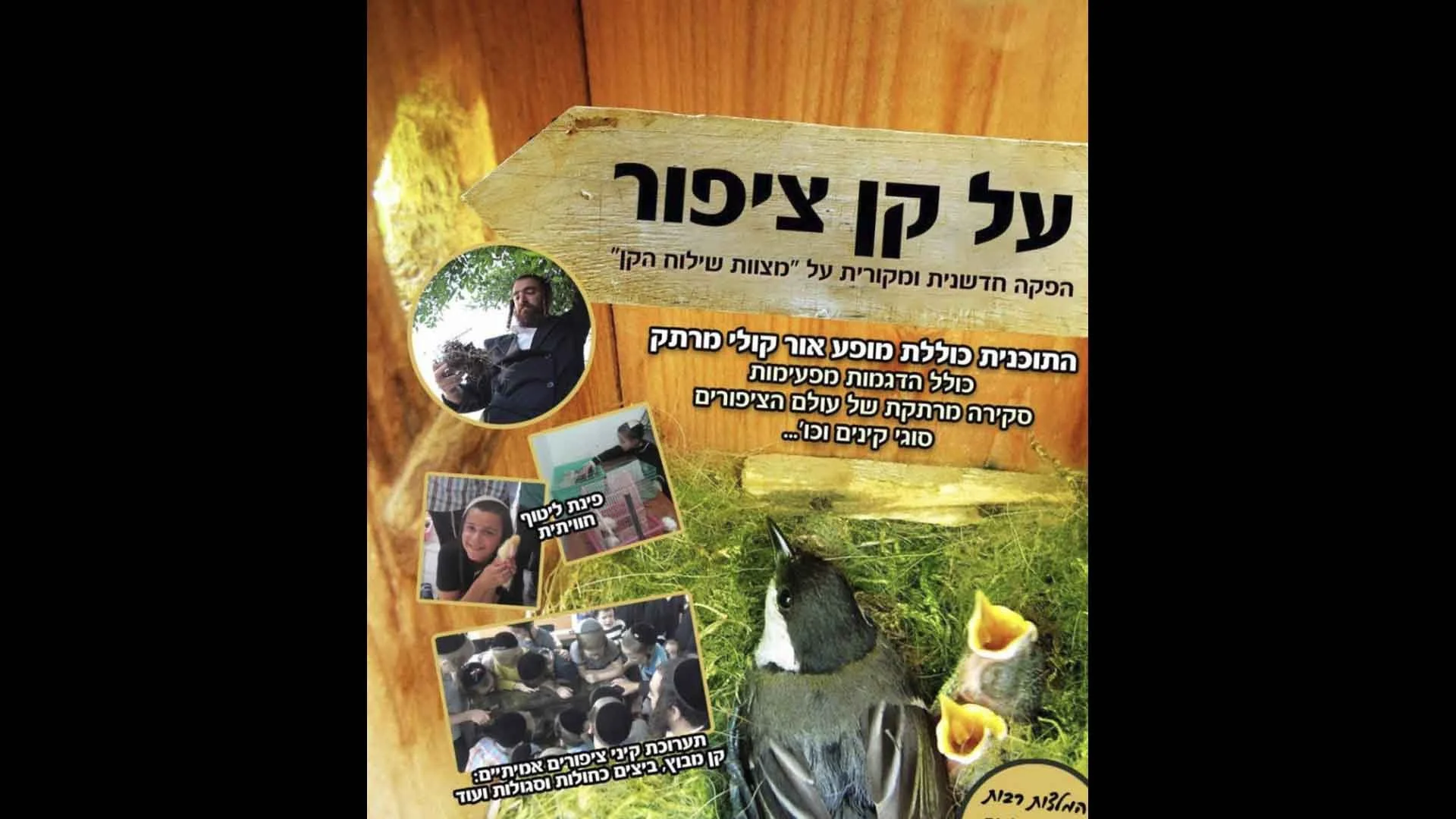
Massekhet Ḥullin closes with a Mishna that relates how the passage regarding the mitzva of shilu’aḥ ha-ken teaches that fulfilling this simple commandment guarantees a good and lengthy life (see Devarim 22:7.)

In fact, there is another mitzva that offers a similar promise – kibbud av va-em (respecting one’s parents – see Devarim 5:15) also includes a clause guaranteeing that “your days may be long, and that it may go well with you.” Rabbi Ya’akov, however, argues that in making these statements the intention of the Torah is to guarantee a share in the World-to-Come.

This teaching was based on his own personal experience. Once he saw a child who was sent by his father to perform the mitzva of shilu’aḥ ha-ken, and during performing both this mitzva and the mitzva to honor one’s parents, the child fell and died.

We have discussed this story elsewhere so today we explore the writings of R Kook vs Hegel and Zizek and Rav Shagar comments to their theory of nihilism and heresy.

Comment

Chullin 141: כֹּל מַתְנִיתָא דְּלָא תַּנְיָא בֵּי רַבִּי חִיָּיא וּבֵי רַבִּי אוֹשַׁעְיָא מְשַׁבַּשְׁתָּא הִיא

Eliyahu Ungar-Sargon September 18, 2026

For the source text click/tap here: Chullin 141

To download, click/tap here: PDF

What if someone did not fulfill the commandment of shilu’aḥ ha-ken?

The Mishna on our daf teaches that if someone took the mother bird together with her young, Rabbi Yehuda says that he has transgressed a negative commandment from the Torah and he is liable to receive lashes, but he need not now let her go. The Sages disagree, arguing that he must let her go, but he does not incur lashes. They conclude with the general rule that leads them to this ruling – one does not receive lashes for the transgression of any negative precept which can be remedied by the subsequent fulfillment of a positive commandment.

The Gemara then relates the following story:

A man once clipped the wings of the mother bird before letting it go; let it go and then caught it again. Rav Yehuda had him flogged and ordered him: ‘Go, keep it until it grows its wing feathers again and then let it go.’

The problem with this story is that Rav Yehuda’s ruling does not seem to follow either of the two opinions in the Mishna.

We explore the metaphor of the mother bird hovering over the nest used in the Zohar as mother Schechina/Rachel.

Comment

Chullin 140: הָיְתָה מְעוֹפֶפֶת, אֲפִילּוּ כְּנָפֶיהָ נוֹגְעוֹת בַּקֵּן – פָּטוּר

Eliyahu Ungar-Sargon September 17, 2026

For the source text click/tap here: Chullin 140

To download, click/tap here: PDF

If the mother bird was hovering over the eggs or fledglings in the nest, when its wings are touching the eggs or fledglings in the nest, one is obligated to send away the mother. When its wings are not touching the eggs or fledglings in the nest, one is exempt from sendingaway the mother. Even if there is only one fledgling or one egg, one is obligated to sendaway the mother, as it is stated:

“If a bird’s nest happens before you” (Deuteronomy 22:6), indicating that one is obligated to send away the mother bird from the nest in any case. If there were fledglings capable of flying, or unfertilized eggs from which a fledgling will not hatch, one is exempt from sending away the mother bird from the nest, as it is stated in the same verse: “And the mother is resting upon the fledglings or upon the eggs.”

From the juxtaposition of the fledglings and the eggs one derives: Just as the fledglings are living, so too, the eggs must be capable of producing living fledglings. This excludes unfertilized eggs, which cannot produce a living fledgling.

We explore the mitzvah from the Minchat Chinukh who discusses together the positive and negative commandments involved here, and at the beginning of his remarks clarifies their precise definitions.

If a person takes the mother bird but sends away the young, does he violate the prohibition of “you shall not take,” or does he merely fail to fulfill the positive commandment of “you shall surely send away”?

The Minchat Chinukh maintains that the plain meaning of the verse indicates that the prohibition applies only when one takes the mother together with the young.

Comment

Chullin 139: אֶסְתֵּר מִן הַתּוֹרָה מִנַּיִן

jyungar September 16, 2026

For the source text click/tap here: Chullin 139

To download, click/tap here: PDF

The people of Papunia asked Rav Mattana: “Where is Esther alluded to in the Torah?” He said to them: “And I will surely hide [haster astir] My face” (Chullin 139b).

The early commentators already noted two striking features in which the Book of Esther differs from all the other books of Scripture. The first is that there is no explicit mention of the Name of Heaven anywhere in the Megillah; the second is that there is no mention of the Land of Israel.

In truth, these omissions are not incidental or secondary. They touch upon the very inner essence of the Megillah.

The name of the Holy One, blessed be He, seems deliberately submerged, withheld from mention even at moments when the language of the verse almost calls for it. Thus Mordechai says, “Relief and deliverance will arise for the Jews from another place,” where the expression “from another place” clearly points heavenward.

We review rav Chanan Porat’s view which is doing something considerably deeper than a conventional “Purim was a hidden miracle” reading. His essay is really a theology of how one reads history when God is not visible.

Comment

Chullin 138: לְאֵתוֹיֵיהּ לְבֵי דִינָא וְקַיּוֹמֵי בֵּיהּ ״וּבִעַרְתָּ הָרַע מִקִּרְבֶּךָ״

jyungar September 15, 2026

For the source text click/tap here: Chullin 138

To download, click/tap here: PDF

Once we have decided that the commandments indeed have reasons, and that it is appropriate to discuss those reasons, a new question arises: What kind of reasons do the commandments have?

The commandments may have social, ritual, mystical, psychological, and other kinds of reasons. Obviously, we cannot discuss here all the different approaches to the nature of the reasons for the commandments, but we will try to identify several central questions. It is also quite reasonable to distinguish among different types of commandments: some may have reasons of one kind and others reasons of another.

Ramban states “‘If a bird’s nest happens to be before you.’ This commandment, too, is explained by ‘You shall not slaughter an animal and its offspring on the same day’ (Leviticus 22:28). For the reason for both is that we should not develop a cruel heart and become devoid of compassion; or perhaps Scripture does not permit us to engage in destruction that would eradicate a species, even though it permits slaughtering members of that species. Thus, one who kills the mother and the young on the same day, or takes them when they are free to fly away, is as though he were destroying the species.

We explore the rationale behind mitzvoth vs them as decrees.

Comment

Chullin 137: ״רְחֵלִים מָאתַיִם״

jyungar September 14, 2026

For the source text click/tap here: Chullin 137

To download, click/tap here: PDF

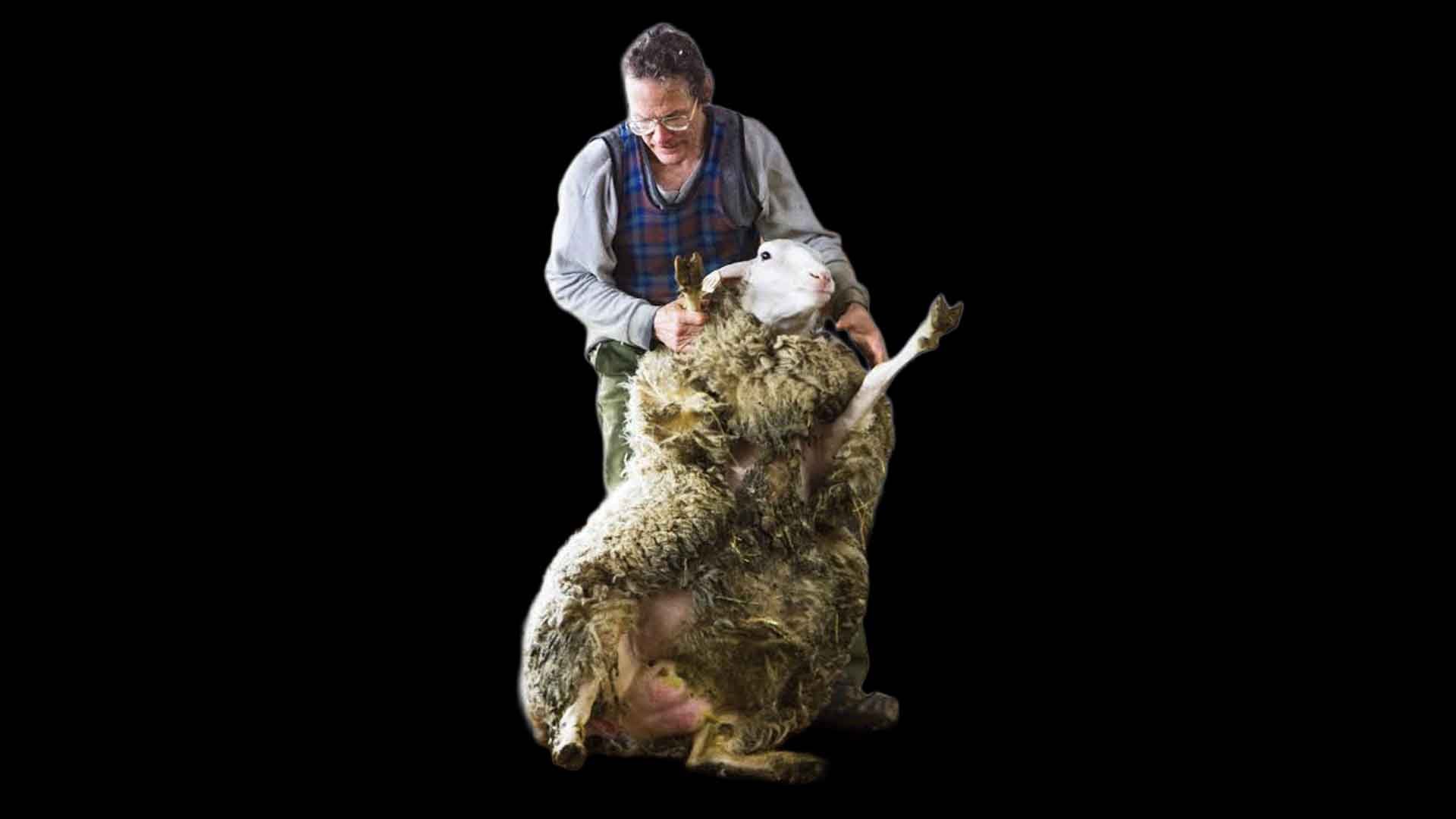
How many sheep must be sheared for the law of Reishit HaGez – offering the first shearing to a kohen – to apply?

In the Mishna (daf 135a) we learn that this was the subject of a dispute between Beit Shammai and Beit Hillel. Beit Shammai points to the passage in Sefer Yeshayahu (7:21) to conclude that there must be a minimum of two sheep; Beit Hillel brings a passage from Sefer Shmu’el (I 25:18) from which he learns that there must be at least five sheep for the obligation to take effect.

Issi bar Hini and his son were travelling from Bavel to Eretz Yisroel. They met R’ Yochanan who overheard Issi teaching his son our Mishnah, that wool of sheep is obligated in the mitzvah of the first shearings. Issi used the word “רחלים “for sheep, which is the masculine form of the plural for sheep.

In our text, the precise wording appears as “רחלות, “in the feminine form. R’ Yochanan corrected him and instructed him to teach the Mishnah with the text as we have it. Issi resisted and claimed that he was using the masculine form of the word, as it appears in the Torah, in Bereshis (32:15) when describing the two hundred sheep sent by Yaakov to Eisav. R’ Yochanan then explained that the wording used by the Torah and that used by the sages is not necessarily the same.

We explore the commentaries on Gen 32:15 as well as the gifts to the priests.

Comment

Chullin 136: אָדָם, פָּשׁוּט, לִפְנֵי הַדִּבּוּר

jyungar September 13, 2026

For the source text click/tap here: Chullin 136

To download, click/tap here: PDF

The obligation of the priestly gifts applies only to a behemah—a domesticated animal such as an ox or sheep—and not to a chayah, a wild animal such as a gazelle or deer.

The Minchat Chinuch (§4), following the Talmudic discussions, considers a case that is not scientifically possible but raises fascinating theoretical questions: the offspring of a gazelle and a female goat, or of a male goat and a female gazelle.[1]

In Chullin 80a, the Talmud raises a halakhic uncertainty concerning whether “chayshinan le-zera ha-av”—whether the father’s seed is considered. In other words, does halakhah recognize paternal lineage among animals, so that the offspring is regarded as related to both parents? Or, in animals, does the offspring follow the mother alone?

We claim that Halakhic identity is domain relative. When the question is one of issur — species, prohibition, mixture, the permissibility of an act — halakhah tends toward an ontology of emergence: two sources generate a third thing that is not the sum of them. When the question is one of mamon — who owes what to whom — halakhah tends toward an ontology of partition.

Comment

Chullin 135: ״צֹאנְךָ״, וְלֹא צֹאן שֶׁל הֶקְדֵּשׁ

jyungar September 12, 2026

For the source text click/tap here: Chullin 135

To download, click/tap here: PDF

The eleventh perek of Chulin discusses the mitzvah of reishit ha'gez. Broadly speaking, this mitzvah obligates one to give the first of the shearing from a flock of sheep to a kohen. Consequently, we find that reishit ha'gez is one of the many gifts given to the kohanim. We shall probe its classification by determining exactly what type of gift it is.

Two different understanding of reishit ha'gez come to the fore in the first Mishnah. The Mishnah teaches that reshit ha'gez applies both inside and outside Israel. The Bartenura notes that R' Ilay disagrees, arguing that it only applies in Israel. The Gemara (135a) explains that R' Ilay has a tradition of a gezeira shava that connects reishet ha'gez with teruma; the Torah uses the language of netina when describing both mitzvot. Consequently, since the teruma only applies in Israel, the same is true for reishit ha'gez. Whether reishet ha'gez is simply another gift or is compared to terumah touches on the essence of this mitzvah.

One explanation offered for this mitzva is suggested by the Rambam (see Mishneh Torah, Hilkhot Bikkurim 10:5) who argues that since kohanim did not receive a share in the land of Israel, the Torah obligates the community to concern itself with their welfare.

We explore the word “reishis” as a leitwort on other contexts especially Gen 1:1.

Comment

Chullin 134: סְפֵק אִיסּוּרָא לְחוּמְרָא, סְפֵק מָמוֹנָא לְקוּלָּא

jyungar September 11, 2026

For the source text click/tap here: Chullin 134

To download, click/tap here: PDF

Our Daf cites Rabbi Shimon’s view that a tereifah is exempt from reishit ha-gez — the obligation to give the first shearing of one’s sheep to a kohen:

As it was taught Rabbi Shimon exempts tereifot from reishit ha-gez… What is Rabbi Shimon’s reason? He derives “flock” from “flock” in connection with tithing: just as with animal tithes a tereifah is excluded, so too with reishit ha-gez a tereifah is excluded. And how do we know it there? Because it is written, “Whatever passes beneath the staff” — excluding a tereifah, which does not pass.

If an animal is alive, one cannot determine with absolute certainty that it is not a tereifah. According to most of the Rishonim, therefore, the basis for presuming that it is kosher is the principle of rov — majority. This emerges explicitly from the Gemara in Chullin 11a, which states that the presumption that an animal is not a tereifah is itself one of the sources for the principle that we follow the majority.

We explore this ruling.

Comment

Chullin 133: כׇּל הַשּׁוֹנֶה לְתַלְמִיד שֶׁאֵינוֹ הָגוּן – נוֹפֵל בְּגֵיהִנָּם

jyungar September 10, 2026

For the source text click/tap here: Chullin 133

To download, click/tap here: PDF

A teacher must first ascertain the character of a student to determine if he is worthy of learning Torah before teaching him. The Rambam rules that if a student is found to be lacking in his religious and/or ethical behavior, the teacher would be obligated to first bring him to repentance. Only after he is found worthy will he be welcomed into the traditional house of study to learn Torah (see Mishneh Torah, Hilkhot Talmud Torah 4:1).

This ruling notwithstanding, the Ba’al HaTanya writes in the Shulḥan Arukh HaRav that if it appears impossible to lead the student in the path of repentance, if he still desires to study Torah the teacher must “push him away with his left while drawing him near with his right,” in contrast with the behavior of Rabbi Yehoshua ben Peraḥyah who “pushed away” Yeshu HaNotzri with both hands (see Hilkhot Talmud Torah 4:17).

This idea comes up in the Gemara in the following context:

Rabbi Zeira said in the name of Rav: Anyone who teaches Torah to an unworthy student is like one who throws a stone to Markulis, for it is written: “As a small stone in a heap of stones, so is he that gives honor to a fool” (Mishle 26:8).

We explore the type of methodology employed in talmudic education in comparison to modern theory of education.

Comment

Chullin 132: מַכִּין אוֹתוֹ עַד שֶׁתֵּצֵא נַפְשׁוֹ

Eliyahu Ungar-Sargon September 9, 2026

For the source text click/tap here: Chullin 132

To download, click/tap here: PDF

The Mishnah states that when a Bechor becomes mixed with a herd of cows and all of them are slaughtered by a single Shochet, Zero'a, Lechayayim, and Keivah must be given from all the cows except for one. RASHI (DH v'Im Echad) explains that Matnos Kehunah are not given from a Bechor, because "Ein Kedushah Chal Al Kedushah" -- one form of Kedushah (Kedushas Matnos Kehunah) cannot take effect on an object that already has Kedushah (Kedushas Bechor).

Ulla used to give kohen's gifts to a kohenet - a daughter of a kohen. Why? When the Torah told to give the gifts to a kohen, we understand that a kohenet is excluded.

However, when it said the word "kohen" again, this is a double exclusion, which always means an inclusion, and a kohenet is now included. Rav Pappa was married to a kohenet, and people would bring him kohen's gifts.

We explore the levitical status and gifts thereof,,,,

Comment

Chullin 131: הָהוּא לֵיוָאָה דַּהֲוָה חָטֵף מַתְּנָתָא

Eliyahu Ungar-Sargon September 8, 2026

For the source text click/tap here: Chullin 131

To download, click/tap here: PDF

Our daf elaborates upon the halachos listed in a Baraisa.

“Four of the gifts for the kohen apply to vineyards, three of the halachos apply to grain, and two of the halachos apply to trees.”

The two halachos which apply to trees are שכחה ( the law of “forgetting”) and פאה (the law of “corner”). D’vei R’ Yishmael learns these halachos from the verse in Devarim (24:20), “When you beat your olive tree do not remove the splendor behind you. It shall be for the resident convert, the orphan and the widow.”

We compare the tone and temperament of the Levitical vs Deuteronomical texts regarding the gifts of the vineyard.

Comment

Chullin 130: חוּלִּין, שֶׁחַיָּיבִין בְּמַתָּנוֹת, אֵינוֹ דִּין שֶׁחַיָּיבִין בְּחָזֶה וָשׁוֹק

Eliyahu Ungar-Sargon September 8, 2026

For the source text click/tap here: Chullin 130

To download, click/tap here: PDF

Just as Jewish farmers are commanded to offer tithes to the kohanim from their produce, similarly sections of animals are to be given to them, as well. According to the Torah (Devarim 18:3), whenever an animal is slaughtered for food, the owner must give to the kohen three sections of the animal – the zero’a (foreleg), leḥayayim (jaw) and kevah (maw, or stomach).

Although the Torah is clear about the types of animals involved in this mitzva, as well as what must be given and to whom it is given, nevertheless there are many questions that need to be clarified. These issues are the focus of the tenth perek of Massekhet Ḥullin, which begins on our daf.

The first Mishna opens by teaching that the requirement to give the zero’a, leḥayayim and kevah to the kohen applies in both Israel and the Diaspora, whether the Temple is standing and is limited only to ordinary animals, not to sanctified ones.

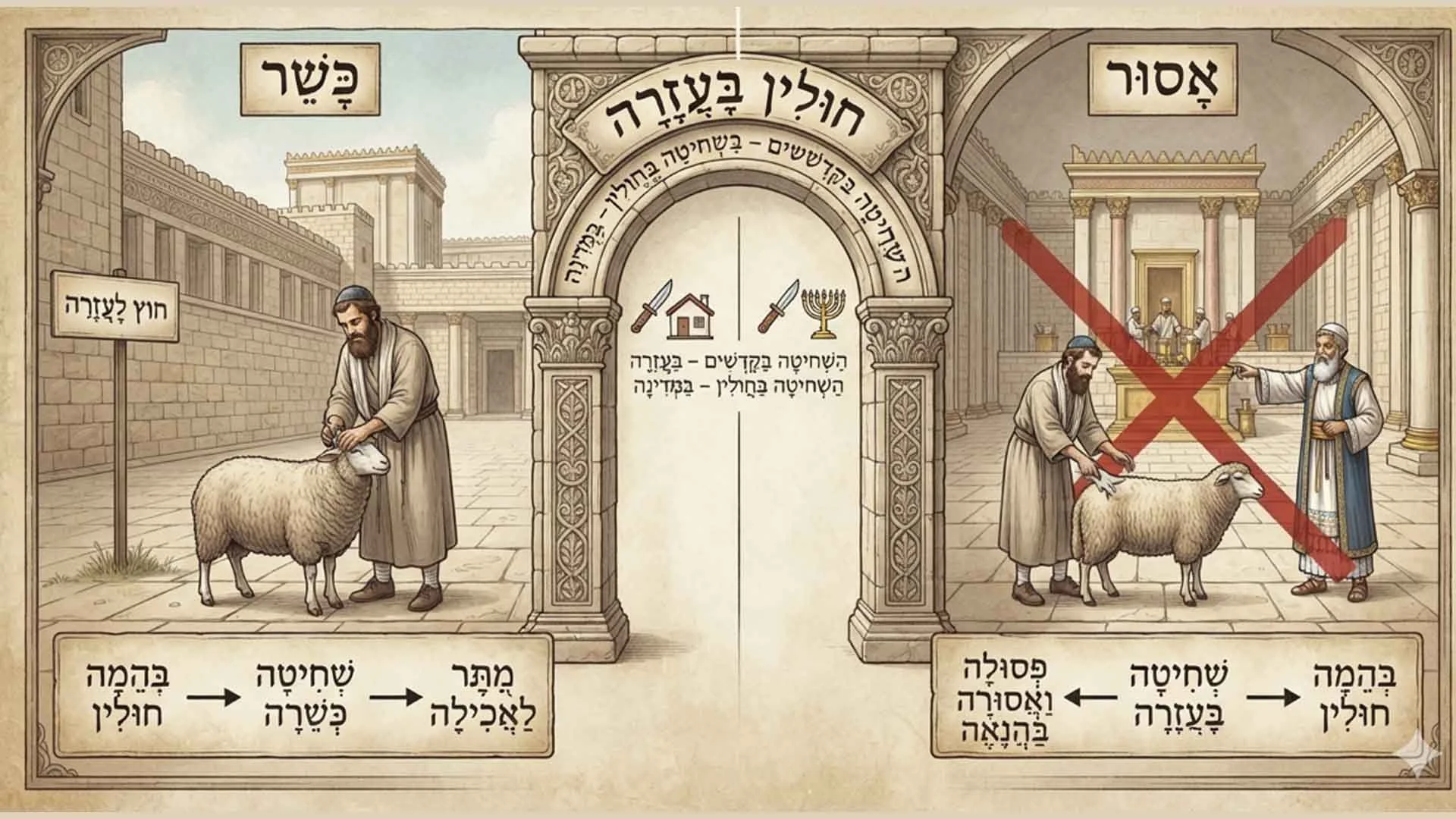
We explore the notion of Chullin be’azara.

Comment

Chullin 129: ״פִּסְחָא זְעִירָא דְּלָא לְמִסְפַּד״

Eliyahu Ungar-Sargon September 6, 2026

For the source text click/tap here: Chullin 129

To download, click/tap here: PDF

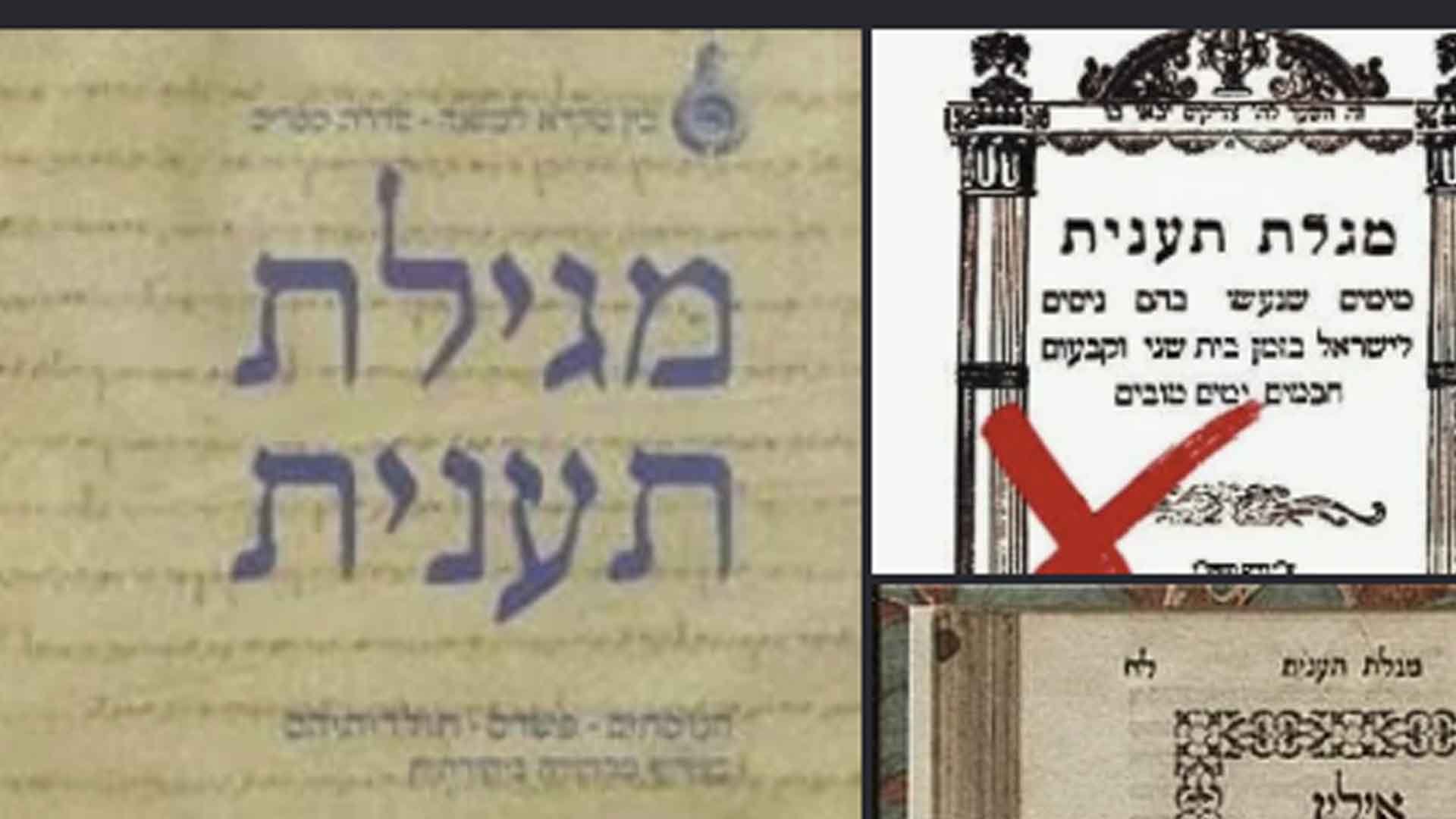
To prove his point regarding a question of ritual defilement, Rabbi Yehoshua points to a rule that appears in Megillat Ta’anit.

In Megillat Ta’anit we find the tradition taught that on “Minor Passover” – that is, on the 14th day of Iyyar when the Passover sacrifice was brought by those who were impure or were situated such that they could not bring the sacrifice on the 14th of Nisan as required (see Bamidbar Chapter 9) – no mourning or eulogies were permitted. Rabbi Yehoshua concludes by means of an a fortiori argument that on the Pesaḥ holiday itself there is no question that eulogies are forbidden.

We explore how does halakhah merely regulate the objects of the world, or does it partly constitute what those objects are? Posed that way it invites a clean answer, and the cleanest answers on offer are both wrong.

The instrumentalist answer — law is a management system laid over a finished world — cannot account for the way the Talmud talks about meat that has become something, about taste that carries, about a vessel that acquires a handle it did not have a moment before.

The maximalist answer — halakhic speech reweaves matter — cannot account for why the same tractate spends hundreds of columns worrying about volumes, ratios, doubts, and the precise physical mode by which flavor moved from one pot to another. If the loom were really a loom, why the ledger?

Comment

Chullin 128: חֵלֶב שְׁחוּטָה בַּכְּפָרִים

Eliyahu Ungar-Sargon September 5, 2026

For the source text click/tap here: Chullin 128

To download, click/tap here: PDF

As we have noted, the laws of tum’at okhalin – ritual defilement of food – will only apply if two basic requirements are met:

The item must be perceived as food appropriate for human consumption, and

The item must have been made wet with one of seven liquids, e.g. water or blood (see Vayikra 11:37-38).

Our Gemara quotes a Tosefta from Massekhet Okatzin (3:1) where Rabbi Yehuda relates that Rabbi Akiva taught:

The ḥelev – forbidden fat – of a slaughtered animal, in villages, needs intention to be used for food, but does not need to be made susceptible to impurity, since it has already been made susceptible by the blood of the slaughtering.

The two explanations cited by Rashi express diametrically opposed assessments of the status of ḥelev. According to the first explanation, ḥelev is an inferior food, eaten only in circumstances of need, in places where there is insufficient ordinary meat. According to the second explanation, however, ḥelev is a luxury food, consumed only by the wealthy.

These two explanations may serve as the basis for two different understandings of the essential nature of the Torah’s prohibition against eating ḥelev.

Comment

Chullin 127: הַמְדוּלְדָּלִין בִּבְהֵמָה וּמְעוֹרִין בְּחוּט הַשַּׂעֲרָה

Eliyahu Ungar-Sargon September 4, 2026

For the source text click/tap here: Chullin 127

To download, click/tap here: PDF

A new Mishnah states The limb of an animal, with flesh, sinews, and bones, and the flesh of an animal, that werepartially severed and remain hanging from the animal do not have the halakhic status of a limb severed from a living animal, which imparts impurity like an unslaughtered carcass, or of flesh severed from a living animal, which is ritually pure, respectively. If one had intent to eat the limb or the flesh, the limb or flesh becomes impure if it comes in contact with a source of impurity, and they impart impurity as food to other foods and liquids, although they remain in their place attached to the animal. But in order for them to become impure, they need to be rendered susceptible to impurity through contact with one of the seven liquids that facilitate susceptibility.

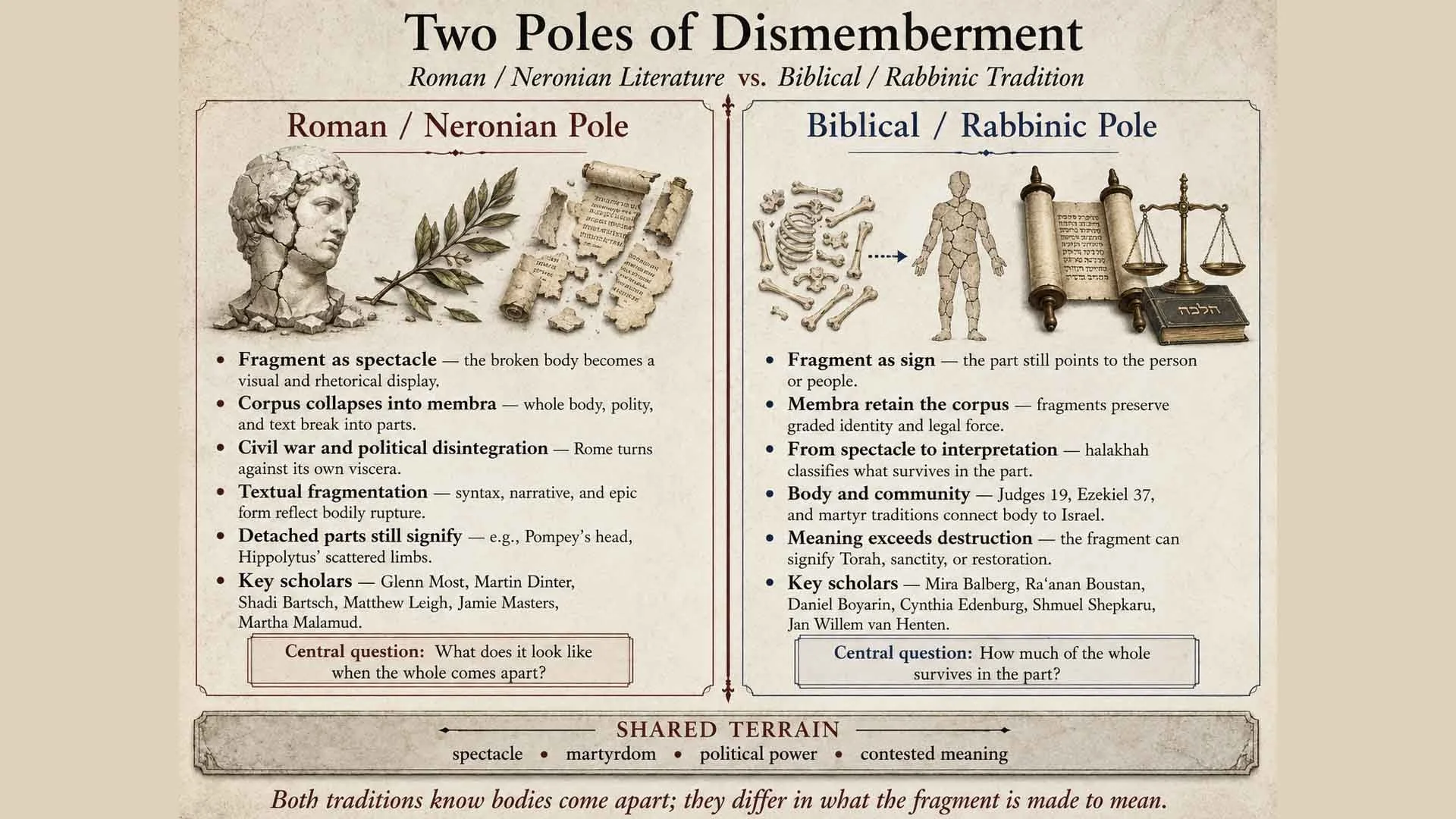
We explore differences between Roman and Rabbinic views on dismemberment as expressed in poetry and prose claiming it moves the discussion from a “rhetoric of dismemberment” to what I would call a rabbinic hermeneutics of the fragment: the persistent Jewish insistence on asking how much of the whole survives in the part.

Comment

Chullin 126: כֹּל שֶׁשְּׁמוֹ עַכְבָּר, אָבִיא עַכְבָּר שֶׁחֶצְיוֹ בָּשָׂר וְחֶצְיוֹ אֲדָמָה

jyungar September 3, 2026

For the source text click/tap here: Chullin 126

To download, click/tap here: PDF

While discussing the laws of impurity imparted by creeping creatures (sheratzim), our sugya cites a passage from the Torat Kohanim dealing with animals belonging to the turtle family. In the middle of the baraita, Rabbi Akiva expresses his wonder at the marvels of creation:

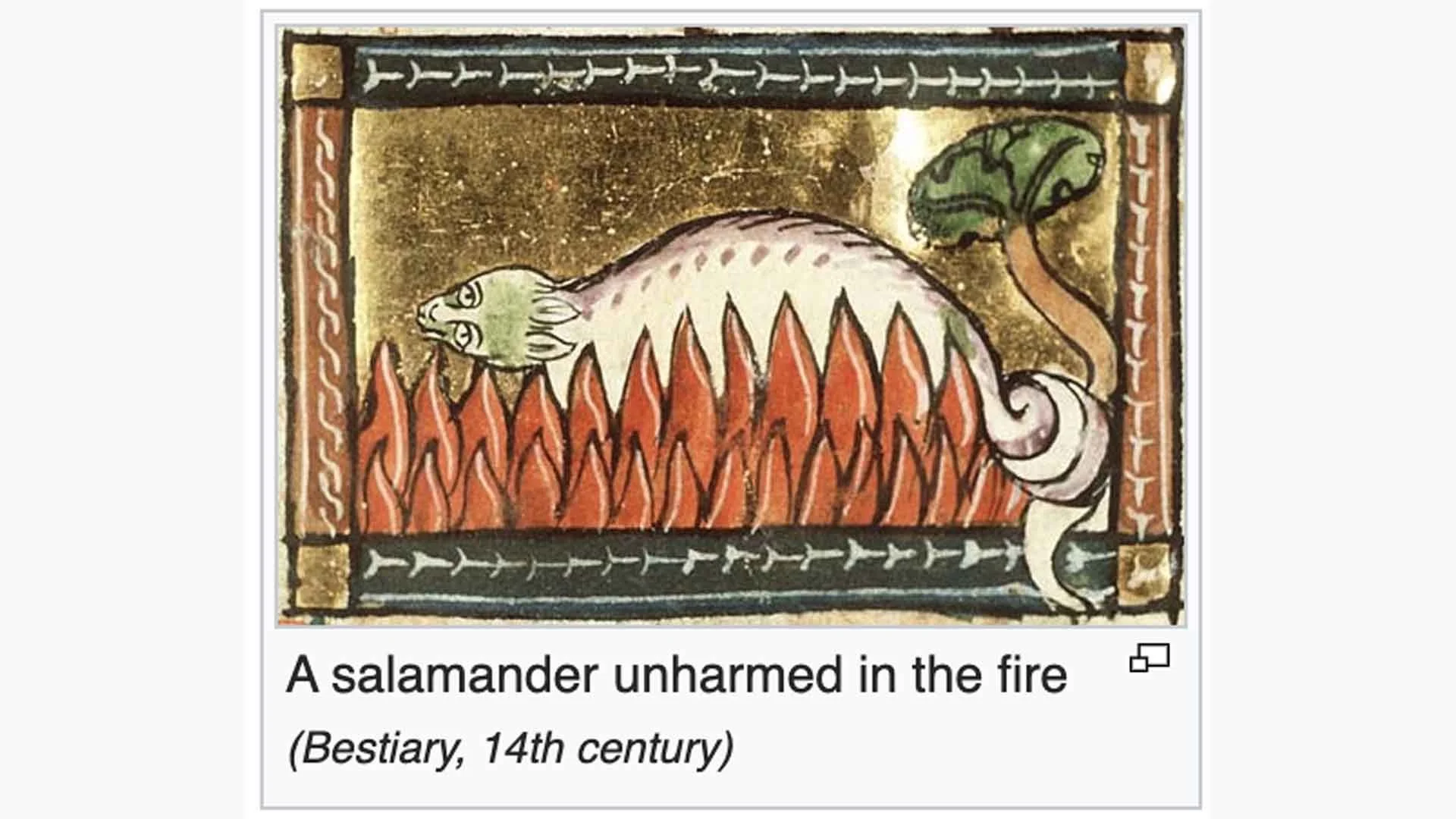
“When Rabbi Akiva would reach this verse, he would say: ‘How manifold are Your works, O Lord!’ You have creatures that grow in the sea and creatures that grow on dry land. Those of the sea—were they to come up onto land, they would immediately die; those of the land—were they to descend into the sea, they would immediately die. You have creatures that grow in fire and creatures that grow in the air. Those of the fire—were they to come up into the air, they would immediately die; those of the air—were they to descend into the fire, they would immediately die. ‘How manifold are Your works, O Lord!’”

Rashi explains that Rabbi Akiva’s amazement is focused primarily upon the salamander, which is mentioned in the baraita together with several other species of the turtle family:

The salamander therefore does not need to have existed as the Rabbis imagined it for the passage to remain intellectually significant. Its historical importance lies precisely in seeing how an ancient culture takes what it believes nature to be and makes that nature exegetically meaningful.

And that, perhaps, makes Rabbi Akiva's mah rabbu ma'asekha Hashem even more interesting after historical criticism, not less.

For the modern reader, the wonder is no longer only the diversity of God's creatures.

It is also the astonishing diversity of ways human beings have made the natural world speak Torah.

Comment
  • Daf Ditty
  • Older
  • Newer

Julian Ungar-Sargon

This is Julian Ungar-Sargon's personal website. It contains poems, essays, and podcasts for the spiritual seeker and interdisciplinary aficionado.​