
For the source text click/tap here: Chullin 126
To download, click/tap here: PDF
While discussing the laws of impurity imparted by creeping creatures (sheratzim), our sugya cites a passage from the Torat Kohanim dealing with animals belonging to the turtle family. In the middle of the baraita, Rabbi Akiva expresses his wonder at the marvels of creation:
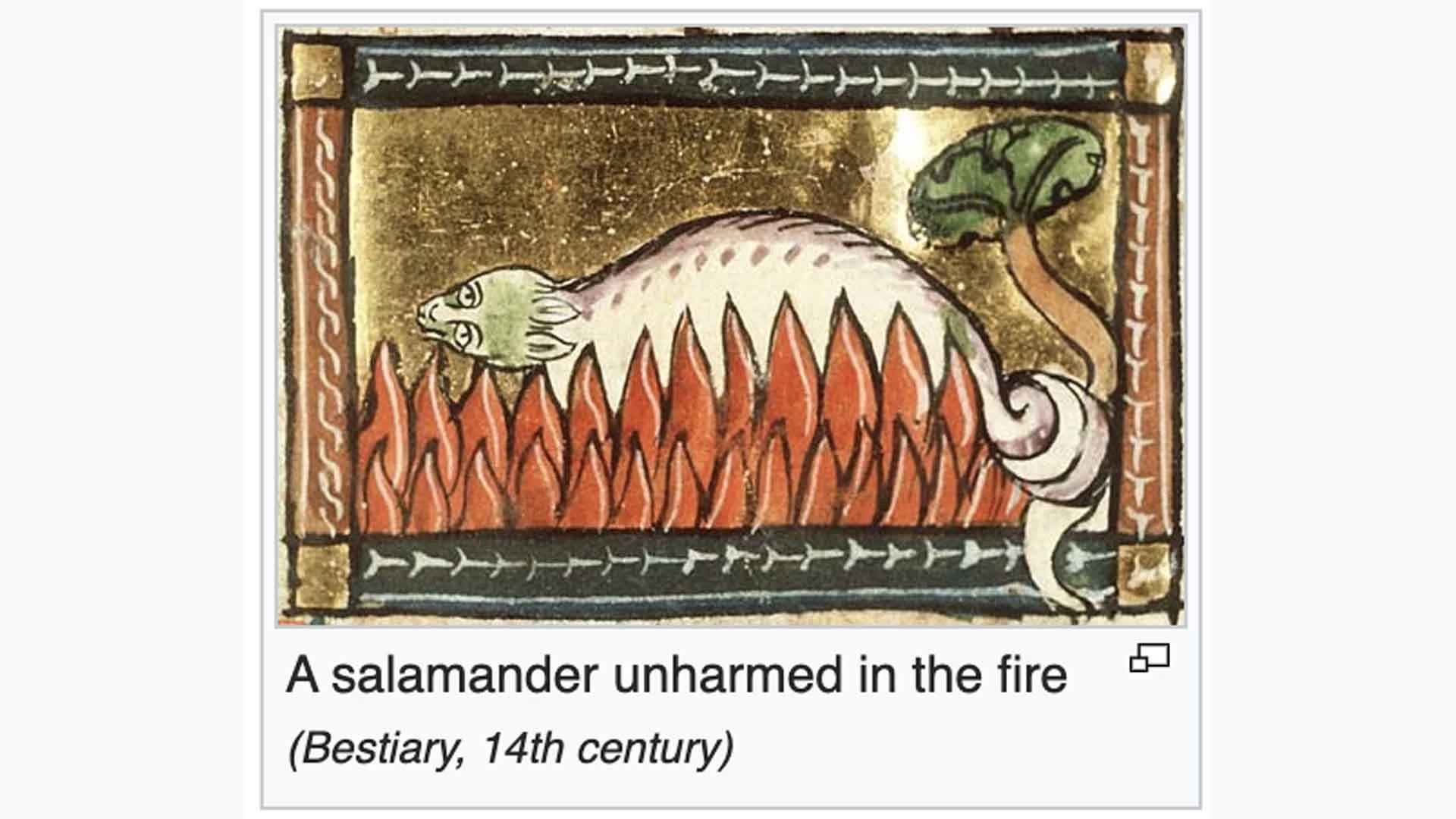
“When Rabbi Akiva would reach this verse, he would say: ‘How manifold are Your works, O Lord!’ You have creatures that grow in the sea and creatures that grow on dry land. Those of the sea—were they to come up onto land, they would immediately die; those of the land—were they to descend into the sea, they would immediately die. You have creatures that grow in fire and creatures that grow in the air. Those of the fire—were they to come up into the air, they would immediately die; those of the air—were they to descend into the fire, they would immediately die. ‘How manifold are Your works, O Lord!’”
Rashi explains that Rabbi Akiva’s amazement is focused primarily upon the salamander, which is mentioned in the baraita together with several other species of the turtle family:
The salamander therefore does not need to have existed as the Rabbis imagined it for the passage to remain intellectually significant. Its historical importance lies precisely in seeing how an ancient culture takes what it believes nature to be and makes that nature exegetically meaningful.
And that, perhaps, makes Rabbi Akiva's mah rabbu ma'asekha Hashem even more interesting after historical criticism, not less.
For the modern reader, the wonder is no longer only the diversity of God's creatures.
It is also the astonishing diversity of ways human beings have made the natural world speak Torah.