
For the source text click/tap here: Chullin 127
To download, click/tap here: PDF
A new Mishnah states The limb of an animal, with flesh, sinews, and bones, and the flesh of an animal, that werepartially severed and remain hanging from the animal do not have the halakhic status of a limb severed from a living animal, which imparts impurity like an unslaughtered carcass, or of flesh severed from a living animal, which is ritually pure, respectively. If one had intent to eat the limb or the flesh, the limb or flesh becomes impure if it comes in contact with a source of impurity, and they impart impurity as food to other foods and liquids, although they remain in their place attached to the animal. But in order for them to become impure, they need to be rendered susceptible to impurity through contact with one of the seven liquids that facilitate susceptibility.
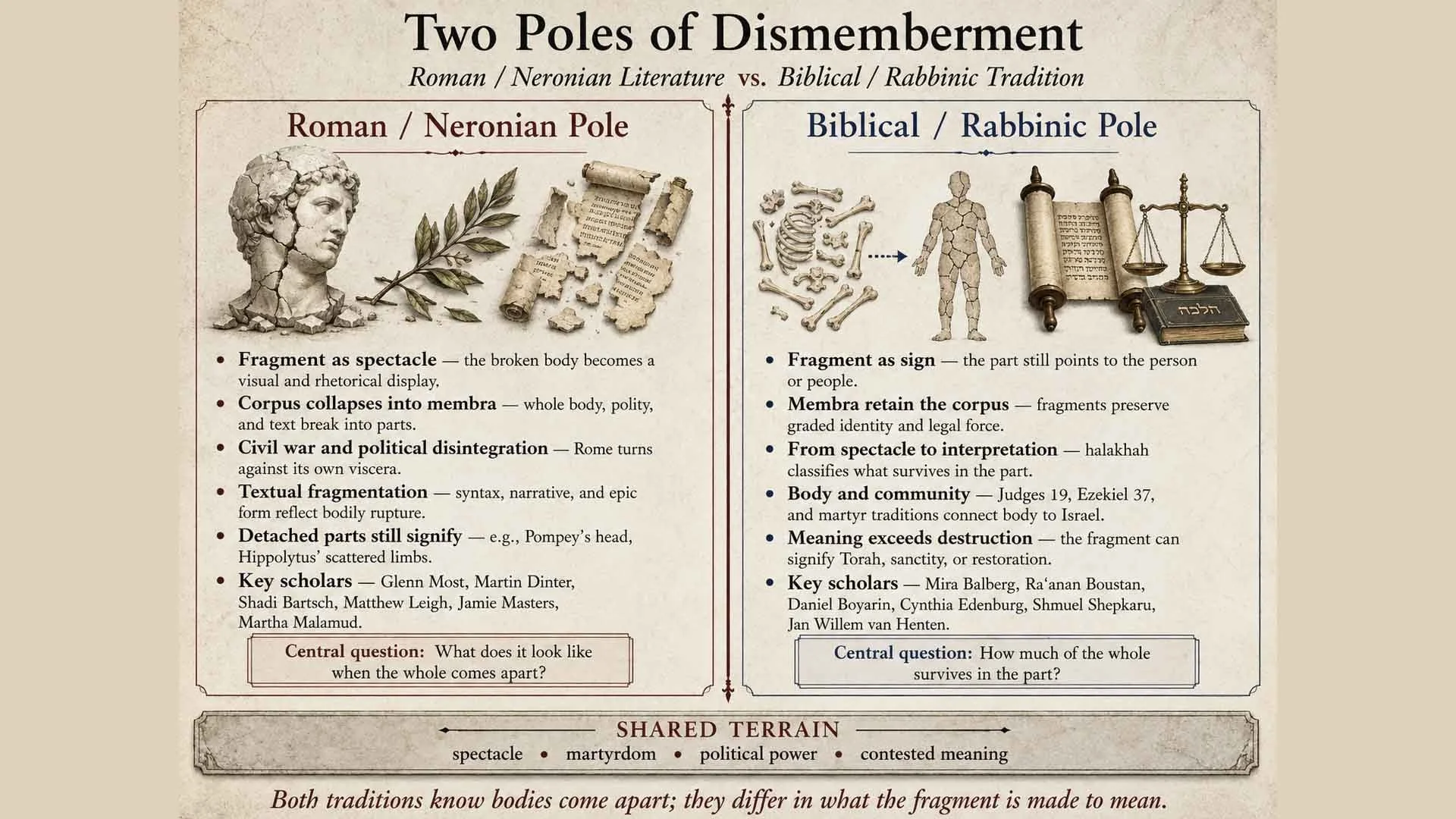
We explore differences between Roman and Rabbinic views on dismemberment as expressed in poetry and prose claiming it moves the discussion from a “rhetoric of dismemberment” to what I would call a rabbinic hermeneutics of the fragment: the persistent Jewish insistence on asking how much of the whole survives in the part.