Julian Ungar-Sargon

  • Home
  • Theological Essays
  • Healing Essays
  • Podcast
  • Poetry
  • Daf Ditty
  • Deep Dive Ditty
  • Videos
  • Publications
  • Military Service
  • Home
  • Theological Essays
  • Healing Essays
  • Podcast
  • Poetry
  • Daf Ditty
  • Deep Dive Ditty
  • Videos
  • Publications
  • Military Service
Julian Ungar-Sargon copy 3.jpg

Daf Ditty

A wide-ranging commentary on the daily page of Talmud.

Chullin 125: מוֹחַ מִבִּפְנִים מַעֲלֶה אֲרוּכָה מִבַּחוּץ

jyungar September 2, 2026

For the source text click/tap here: Chullin 125

To download, click/tap here: PDF

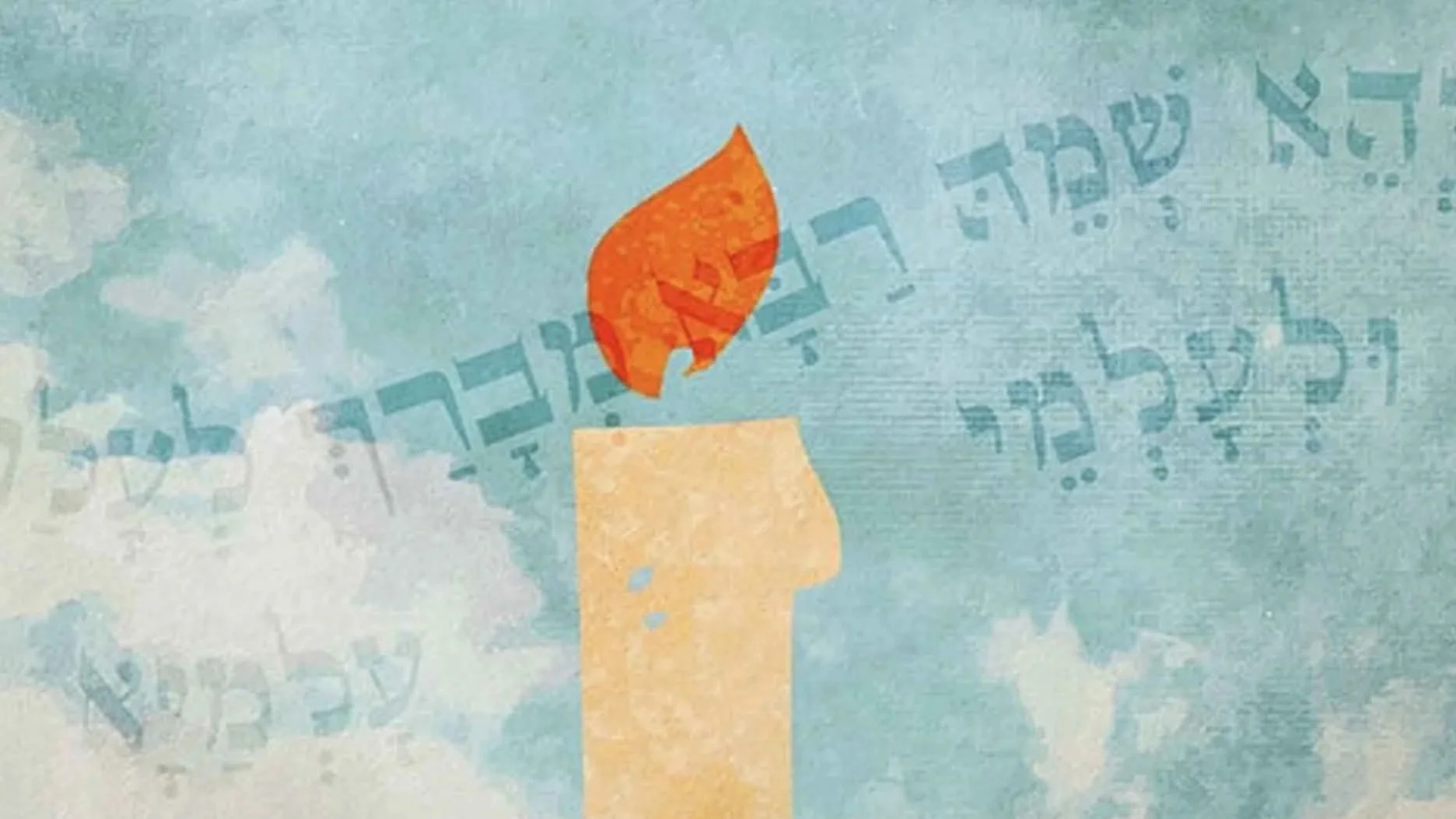
Although the word kulit refers specifically to the thighbone, in fact the same rule would apply to any marrow bone, since the marrow is deemed edible, which changes our view of the bone from “bone” to “meat” about the laws of ritual defilement. Furthermore, while the Mishna groups the cases of a human corpse and that of a consecrated animal together, their rules are not the same. In the case of a human bone, the bone itself becomes tameh on a biblical level based on the passage in Sefer Bamidbar (19:16). This stands in contrast to the case of a consecrated animal that only becomes tameh on a rabbinic level (see Pesaḥim daf 120b), and whose bones only impart impurity if they contain marrow.

We explore how Noam describes Qumran law as a kind of historical waystation between Bible and Mishnah.

Comment

Art by Rivka Korf Studio

Chullin 124: אֵין נוֹגֵעַ וְחוֹזֵר וְנוֹגֵעַ

jyungar September 1, 2026

For the source text click/tap here: Chullin 124

To download, click/tap here: PDF

Not all situations of tum’ah are created equal.

Depending on the source of the tum’ah, bones may or may not transfer ritual defilement. For example, according to the Mishna, someone who touches the bones of a dead person or of defiled sacrifices will always become ritually defiled; someone who touches the bones of a neveila (see above, daf 73) or of a sheretz (see above, daf 122) will become ritually defiled only if the bone contains edible marrow and the bone has a crack or opening in it.

This is because human bones are deemed tameh (see Bamidbar 19:16) while regarding animals only edible flesh – including bone marrow – will give off tum’ah (see Vayikra 11:36, 39).

The Gemara relates that there are also differences between ways that ritual defilement can be contracted. For example, aside from coming into physical contact with the dead animal, tum’ah can also be transferred by carrying the animal, even if one does not touch it (see Vayikra 11:40).

We continue our exploration of different scholars regarding the purity legislation in bible and talmud.

Comment

Chullin 123: שֶׁהֲרֵי קַרְקִפְלוֹ שֶׁל רַבִּי יִשְׁמָעֵאל מוּנָּח בְּרֹאשׁ מְלָכִים

jyungar August 31, 2026

For the source text click/tap here: Chullin 123

To download, click/tap here: PDF

The Gemara on our daf quotes a Tosefta that teaches:

Our Rabbis taught: If a Roman legion which passes from place to place enters a house, the house is impure, for there is not a legion that does not carry with it several scalps. And you should not be surprised at this; for Rabbi Yishmael’s scalp was placed upon the head of kings.

Rabbi Yishmael ben Elisha served as one of the last High Priests during the Second Temple period. As one of the Ten Martyrs murdered by the Romans, he was taken to be killed together with his friend and colleague Rabban Shimon ben Gamliel the Elder.

According to the Rabbinic tradition, when he was taken to be killed the Caesar’s daughter was smitten with his beauty and asked that the skin of his face be removed while he was still alive. The Romans preserved his skin in Persimmon oil, and it was worn on occasion as a mask during Roman festivals.

We explore the history of rabbinic martyrology and roman military dismemberment.

Comment

Chullin 122: גְּזֵירָה שֶׁמָּא יַעֲשֶׂה אָדָם עוֹרוֹת אָבִיו וְאִמּוֹ שְׁטִיחִין

jyungar August 30, 2026

For the source text click/tap here: Chullin 122

To download, click/tap here: PDF

Our Mishnah states that the ritual impurity of human skin is more stringent than that of the skins of other animals: its impurity does not disappear even if the skin has undergone tanning or other processing. The Gemara explains that, according to the strict letter of biblical law, human skin should have had a more lenient status than other skins. The Sages, however, imposed a special decree upon it:

Ulla said: “By Torah law, human skin is pure. Why, then, did they declare it impure? It was a decree lest a person make the skins of his father and mother into carpets.”

Ulla’s statement raises several questions. The main one concerns the meaning of the extraordinary case he describes, in which a person makes carpets from the skins of his father and mother.

We explore this reading against modern sensibilities — the law of property in human tissue, museum and anatomical collections and their repatriation, plastination and display, the twentieth-century history of artefacts made from human skin, and the contemporary technologies of retained presence, from memorial jewellery to synthetic reanimation of the dead.

Comment

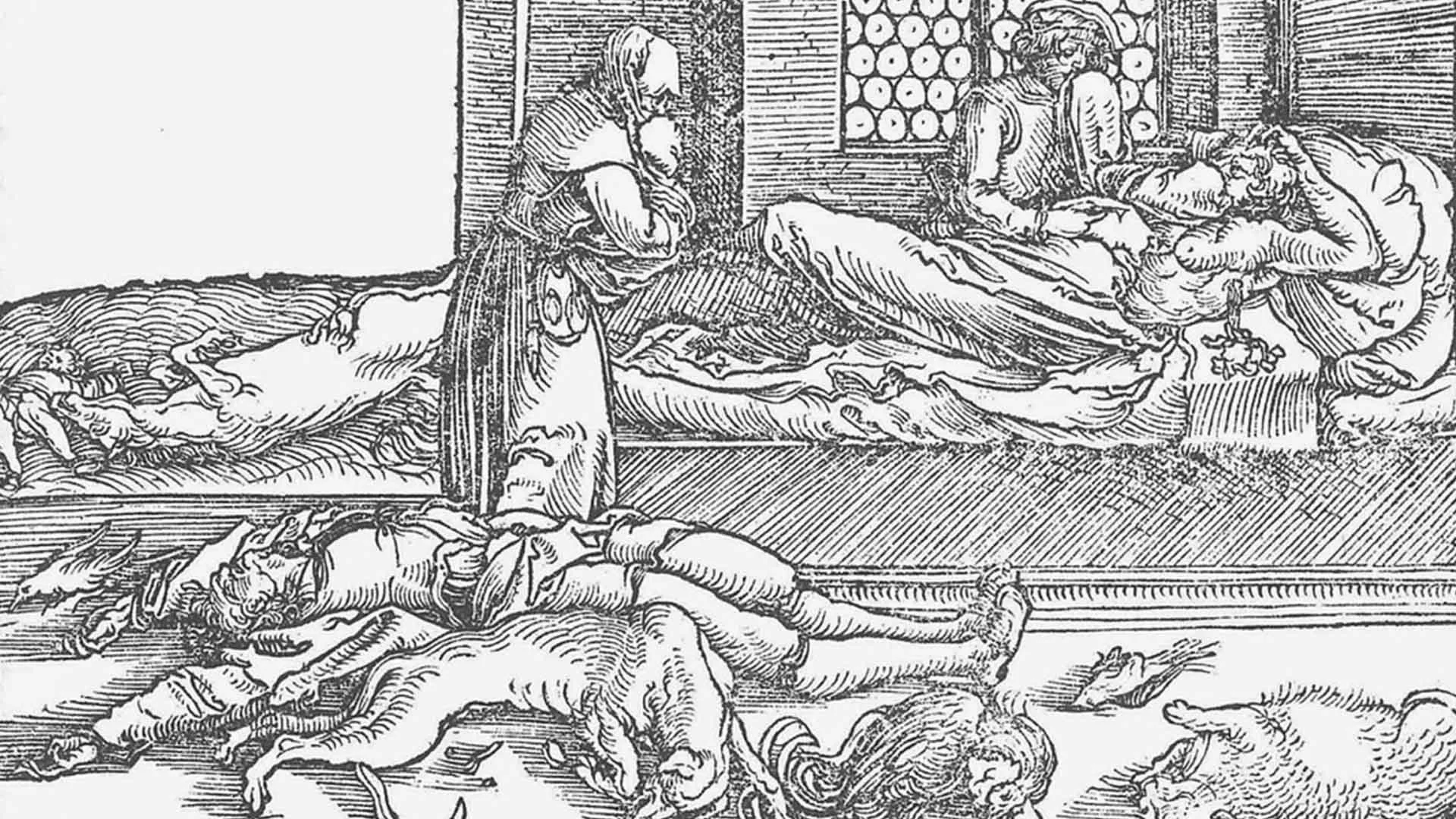
In his account of the 1348 plague outbreak in Florence, Italian author Giovanni Boccaccio described the deaths of two pigs who had been exposed to the clothes of a plague victim

Chullin 121: יָצְתָה מִכְּלַל חַיָּה, וְלִכְלַל מֵתָה לֹא בָּאת

jyungar August 29, 2026

For the source text click/tap here: Chullin 121

To download, click/tap here: PDF

If a Jew slaughters a non-kosher animal, then while it is convulsing, it cannot be eaten by anybody: by a Jew, because it is non-kosher, and by a non-Jew, because slaughter does not make it permitted for him, and he must wait till the animal completely dies. Nevertheless, if a Jew slaughters a non-kosher on behalf of a non-Jew, then, since the Jew's intention is to prepare it as food for the non-Jew, it, too, is susceptible to ritual impurity of foods while it is convulsing. Thus, paradoxically, it cannot be eaten, but it is already considered food. The same would be if a non-Jew slaughters a kosher animal.

We discuss the halachic vs pathologic definitions of death:

Biologically, dying is a continuum; ontologically, halakhah recognizes a real transition from living organism to corpse; juridically, however, different areas of halakhah may locate their operative thresholds at different points in that transition.

Hence the mefarkeset is neither simply alive nor simply dead for every purpose. It is the paradigmatic demonstration that a single biological reality can sustain multiple, non-identical halakhic predicates without reducing those predicates to arbitrary legal fiction.

Comment

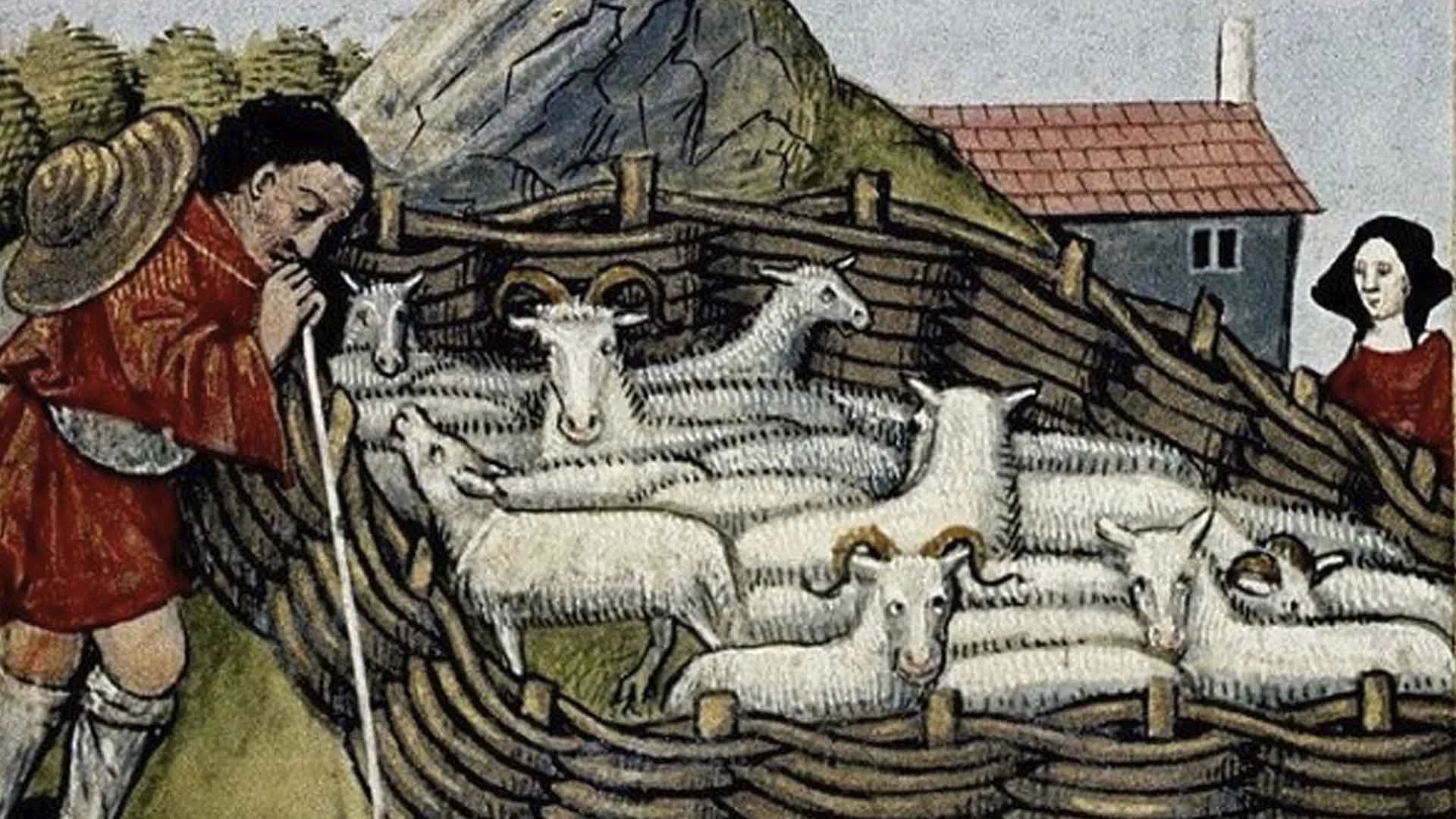
Illustration image: ‘Shepherd with sheep in woven hurdle pen’ (Medieval France, 15th century, MS Douce 195)

Chullin 120: בְּכֹל דְּהוּ מְיַתְּבָא דַּעְתֵּיהּ

jyungar August 28, 2026

For the source text click/tap here: Chullin 120

To download, click/tap here: PDF

The Gemara on our daf teaches that the prohibition on both blood and forbidden fats remains in force even if the form is changed. Thus, even if blood was processed so that it became solid, or even if the forbidden fat was melted so that it became liquid, nevertheless the same rules apply.

Regarding solidified blood, the Gemara recognizes that the prohibition should remain in force, since now the blood would be considered a food, and the prohibition to eat blood (see, for example, Vayikra 3:17) applies. Forbidden fats in liquid form, however, appear to the Gemara to present a problem, for the Torah specifically forbids eating these fats, and there is no clear source prohibiting them from being drunk. Ultimately, Reish Lakish suggests a source that would include drinking in the prohibition, as well.

We explore the history of tallow.

Comment

Chullin 119: בִּמְלַאי שֶׁבֵּין הַמְּלָאִים

jyungar August 27, 2026

For the source text click/tap here: Chullin 119

To download, click/tap here: PDF

The opening sugya of Ha-Or Veha-Rotev is therefore far more than a technical discussion of stems, husks, bones, and peels.

It asks what constitutes an object before the law.

The categories of yad and shomer demonstrate that the halakhic boundary of a thing need not coincide with the boundary of its edible material. Function and protection can extend legal identity outward.

Yet that extension is not limitless.

Rav insists upon thresholds. Rabbi Yoḥanan grants greater independence to the underlying relation. Rashi and Ramban sharpen the disagreement by revealing that protection and handling need not obey identical principles.

The intervention of beriah then destabilizes a purely quantitative account.

Comment

A niddah hut (mergem gogo) at the Jewish village of Ambober in northern Ethiopia, 1976

Chullin 118: וְטוּמְאָה יוֹצְאָה מִגּוּפָהּ

jyungar August 26, 2026

For the source text click/tap here: Chullin 118

To download, click/tap here: PDF

Our Mishna contrasts between two different kinds of ritual defilement. While the laws of tuma’t okhlin (ritual defilement of food) will allow parts of the animal that are related to the meat but are not themselves meat (e.g., skin, solidified meat juice, bones, sinews, horns or hooves) to supplement its bulk so that it reaches the minimum size required to become ritually defiled, the laws of tum’at neveila (ritual defilement of an animal that was killed by a predator or died on its own) do not allow these parts of the animal to be included.

The Gemara on our daf quotes a Mishna in Massekhet Okatzin (1:1) that teaches the concept of yad (literally “hand,” in this case a handle) and shomer (“protection”). If meat or food has connected to it something that serves as a handle, or something that is necessary because it protects the food, then it may be viewed as an integral part of the food, even though it is separate from it.

The handle, which serves to allow the object to be picked up or used, may not supplement the volume of the meat, but if someone were to pick up a neveila by means of its bones, sinews, horns or hooves, they would be viewed as coming into contact with the ritually defiled meat.

Comment

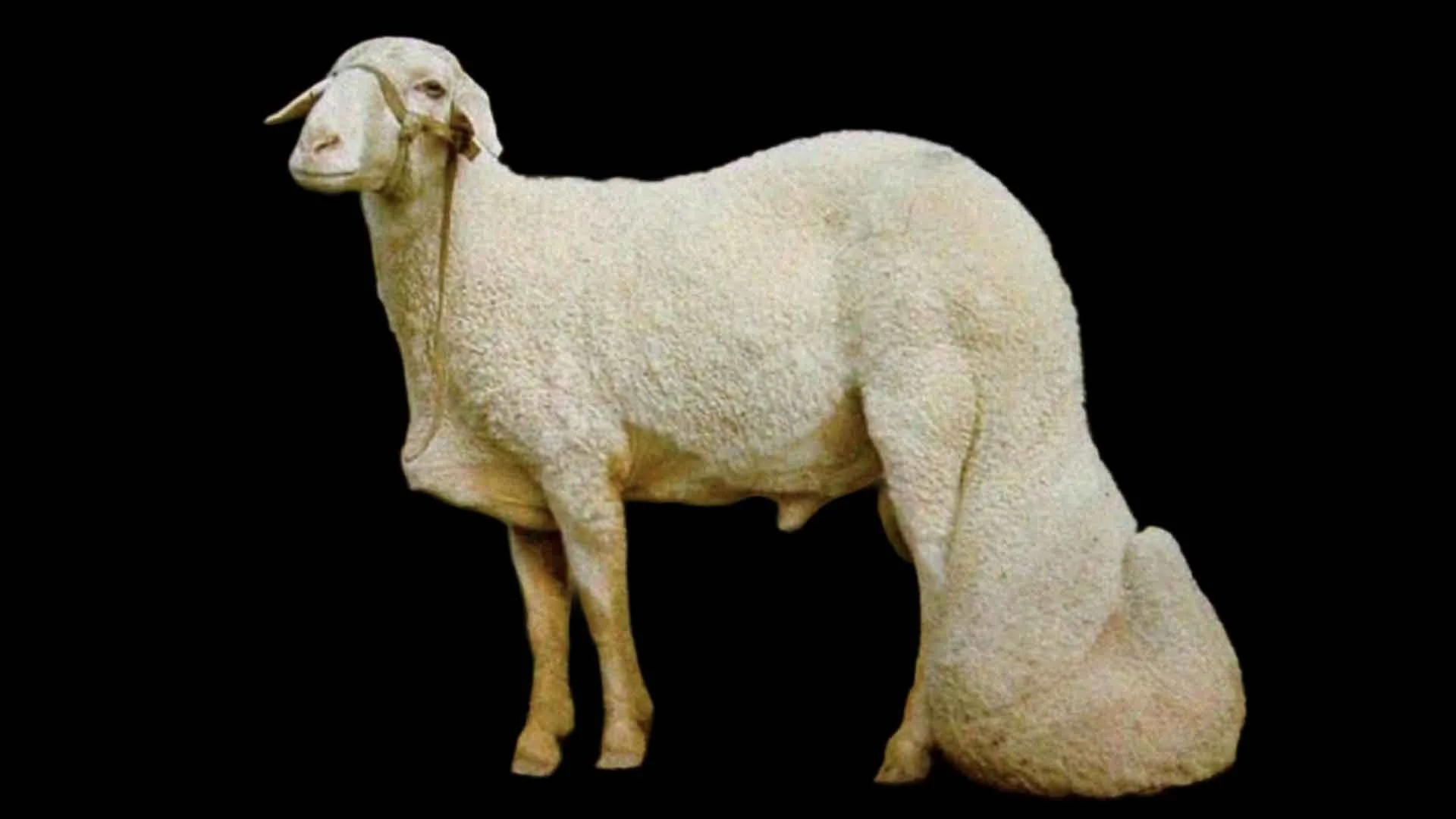
Sheep naturally have long tails as fat deposits for harsh climates. For millennia we bred them to have longer and fatter tails, but eventually this practice was considered too unpractical. Now tail docking has become the standard. Still, around 25% of the world's sheep are fat-tailed varieties.

Chullin 117: וְכׇל שְׁנֵי כְּתוּבִים הַבָּאִין כְּאֶחָד אֵין מְלַמְּדִין

jyungar August 25, 2026

For the source text click/tap here: Chullin 117

To download, click/tap here: PDF

The command Leviticus 7:22–27 opens with a doubled formula of speech— “The Lord spoke to Moses, saying: Speak to the children of Israel, saying.” This suggests that the command had been given to Moses at some point and was incorporated here because of its connection with eating the peace offering. This point must be remembered, because one of the heated questions surrounding the interpretation of these verses concerns precisely this issue: does the prohibition of ḥelevpresented here apply only to sacrificial animals, or is it a general prohibition applying to all animals of species that may be offered as sacrifices—even when the individual animal has never actually been consecrated?

The Sages interpreted the verses as prohibiting the consumption of ḥelev—and blood—from all kosher domesticated animals.

We explore the implications of blood and fat in today’s Daf.

Comment

Chullin 116: אֵין מַעֲמִידִין בָּעוֹר קֵבַת נְבֵלָה

jyungar August 24, 2026

For the source text click/tap here: Chullin 116

To download, click/tap here: PDF

Our Mishnah discusses the laws of milk that is found in the stomach of an animal that is shechted.

Rashi and Meiri understand that the question is regarding milk that has congealed and contains the enzyme rennin, and the issue is whether it is permissible to use this to culture cheese.

The Mishnah rules that congealed milk found in the stomach of an animal of a non-Jew (even shechted) or in a neveilah is prohibited. This substance has the status of the animal in which it is found.

The rennin found in the stomach of a kosher, shechted animal may be used to process cheese, but only as long as the meat of the stomach is outnumbered and does not contribute its taste into the milk or cheese.

We explore the halachot of rennet and its history in cheese production.

Comment

Chullin 115: לֹא אָמְרָה תּוֹרָה ״שַׁלַּח״ לְתַקָּלָה

jyungar August 23, 2026

For the source text click/tap here: Chullin 115

To download, click/tap here: PDF

Aside from the prohibition against cooking meat and milk together, there is also a prohibition against eating them once they were cooked or deriving any benefit from the mixture whatsoever. 

An approach is offered by Rav Ashi, who says that we learn that it is forbidden to eat meat cooked with milk from the passage in Sefer Devarim (14:3) that prohibits eating “any abominable thing.” Rav Ashi interprets that to mean that anything considered “abominable” by the Torah – i.e. anything produced from an activity that the Torah prohibits – may not be eaten.

Based on this logic the Gemara wonders why other prohibited activities do not forbid what they produce. The Gemara even offers a mnemonic list of such actions including:

‘Sending the mother bird away from the nest’ refers to the law forbidding someone from taking the eggs or hatchlings from a nest without first chasing away the mother bird (see Deut 22:6-7).

We explore this paradoxical commandment including Rabbi Forman’s dazzling interpretation as “Parent Trap.”

Comment

Chullin 114: כֹּל שֶׁתִּעַבְתִּי לָךְ הֲרֵי הוּא בְּבַל תֹּאכַל

jyungar August 23, 2026

For the source text click/tap here: Chullin 114

To download, click/tap here: PDF

In reference to neveilah, the Torah (Devarim 14:21) says that it may not be eaten, but, instead, it should be “given to an alien resident or sold to a stranger.”

The alien resident in the verse is a person who is not fully Jewish, so he is not observant of the entire Torah, but he has accepted upon himself to fulfill the seven Noachide laws.

There is a disagreement regarding how to understand the Torah’s directives regarding the meat of a neveilah. R’ Meir holds that the meat may be either given as a gift or sold to either an alien resident or to a stranger. R’ Yehuda says that the verse is specific in its categorization.

The mitzvah is that if it is provided for the alien resident, it must be given as a gift, for free. If the meat is furnished to the stranger, it should be sold to him.

We explore Deut 14:3 and the definition of “toevah” abomination.

Comment

Chullin 113: בְּעָלְמָא אִיסּוּר חָל עַל אִיסּוּר

jyungar August 21, 2026

For the source text click/tap here: Chullin 113

To download, click/tap here: PDF

Shmuel explains that the repetition of the word "Gedi" in the verses of the prohibition against cooking meat with milk teaches that the Isur applies also to cooking Chelev with milk, and to cooking Neveilah with milk. The principle of "Ein Isur Chal Al Isur" does not apply, because Shmuel does not agree with that principle; he maintains that "Isur Chal Al Isur" (according to the Gemara's first version).

However, even according to the opinion that maintains "Ein Isur Chal Al Isur," it should be prohibited to cook Neveilah with milk. The Isur of meat and milk includes an Isur Hana'ah; it is prohibited to benefit from a mixture of meat and milk. Accordingly, the Isur of Basar b'Chalav is an "Isur Mosif" which adds an element of Isur to the existing Isur of Neveilah, because the Isur of Neveilah only prohibits the meat to be eaten, while the Isur of meat with milk prohibits deriving benefit from it.

We explore the galactic ramifications of this principle.

Comment

Chullin 112: עַד שֶׁיִּכְלֶה כׇּל מַרְאֵה אַדְמוּמִית שֶׁבּוֹ

jyungar August 20, 2026

For the source text click/tap here: Chullin 112

To download, click/tap here: PDF

The Mishnah explicitly indicates that the prohibition of blood divides into two categories: organ blood (dam eivarim), for which one violates a negative commandment, and lifeblood (dam ha-nefesh), for which one incurs karet.

At first glance, one might understand these as two separate prohibitions: the prohibition of organ blood, punishable by lashes, and the prohibition of lifeblood, punishable by karet. Yet all the enumerators of the commandments count the prohibition of organ blood and that of lifeblood as a single prohibition. We must therefore investigate the relationship between organ blood and lifeblood.

Comment

Chullin 111: וְלִיטְעֲמֵיהּ קַפִּילָא אֲרַמָּאָה

jyungar August 19, 2026

For the source text click/tap here: Chullin 111

To download, click/tap here: PDF

After discussion about the matter the Gemara cites Chizkiyah in the name of Abaye who rules that one may eat fish with dairy even after the fish had been placed on a meat plate while yet hot.

This is called “nosen ta’am bar nosen ta’am” or “nat bar nat” and refers to a circumstance in which a taste has been transferred twice. In the Gemara’s case it refers to the meat taste that was transferred to the plate and then from the plate to the fish.

Tosafos (1) relates that Rivan explained in the name of Rashi that if the fish was cooked in a pot that had been used for meat one may not eat the fish with dairy.

The reason to distinguish between fish placed hot on a meat plate and fish cooked in a meat pot assumes that cooking transfers more taste than contact between a hot food and a cold pot.

Comment

Chullin 110: אַיְיתוֹ לֵיהּ כַּבְדָּא שְׁלִיקָא

jyungar August 18, 2026

For the source text click/tap here: Chullin 110

To download, click/tap here: PDF

The Liver as a Special Halakhic Category

The laws of liver are unusually revealing because they demonstrate that halakhah does not simply attach a prohibition to a chemically identifiable substance called “blood.” Rather, it distinguishes between blood according to its location, state, movement, and halakhic history. The same material may be permitted while incorporated within one structure and prohibited after it emerges from that structure.

“It is all blood, yet the Torah permitted it”

That is quite different from ordinary meat. With ordinary meat we tend to say that blood contained in the tissue has not yet acquired the operative status of prohibited dam; once it separates—* פירש*—the prohibition takes effect. Liver presents almost the reverse phenomenon: according to Rabbeinu Tam and the authorities following his conceptual direction, what is inside the liver was already identifiable as blood, yet the Torah specifically permitted it. Consequently, its subsequent emergence creates the difficult question: how can something that was permitted as blood suddenly become forbidden simply because it moved?

Comment

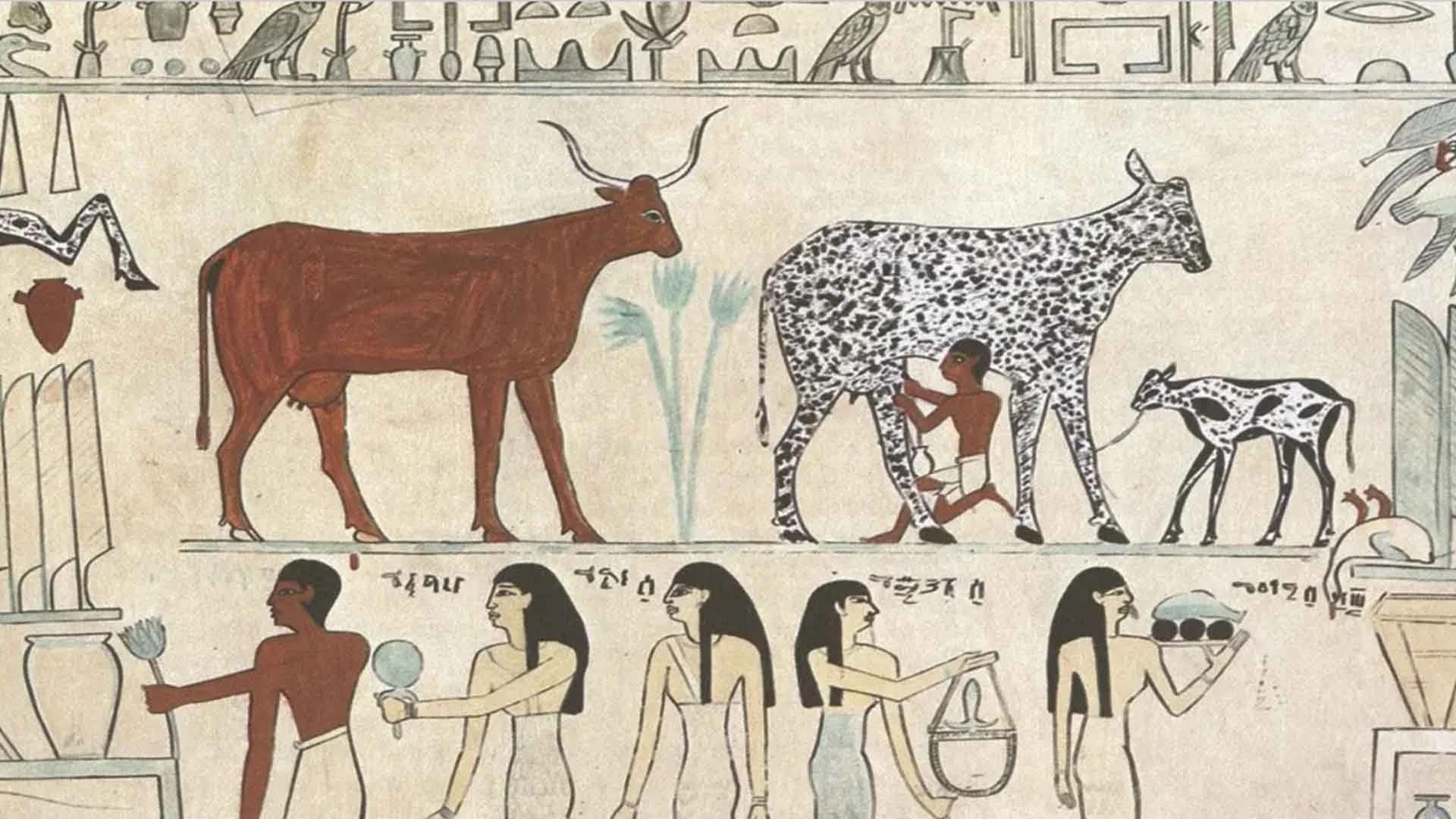
Old Egyptian hieroglyphic painting showing an early instance of a human milking a domesticated cow

Chullin 109: אֲמַרָה לֵיהּ יַלְתָּא לְרַב נַחְמָן

jyungar August 17, 2026

For the source text click/tap here: Chullin 109

To download, click/tap here: PDF

The Mishna teaches that to prepare udder for eating; it must be opened so that the milk can be removed. In the Gemara Rav Yehuda teaches that the requirement is for the udder to be cut crosswise and pressed against the wall.

The Gemara follows this by relating a story about Yalta, Rav Naḥman’s wife:

Yalta once said to Rav Naḥman: ‘Observe, for everything that the Divine Law has forbidden us it has permitted us an equivalent:

it has forbidden us blood but it has permitted us liver;

it has forbidden us intercourse during menstruation but it has permitted us the blood of purification;

it has forbidden us the fat of cattle but it has permitted us the fat of wild beasts;

it has forbidden us swine’s flesh but it has permitted us the brain of the shibuta fish;

it has forbidden us the married woman but it has permitted us the divorcee during the lifetime of her former husband;- it has forbidden us the brother’s wife but it has permitted us the levirate marriage;

it has forbidden us the non-Jewess but it has permitted us the beautiful woman taken in war.

I wish to eat flesh in milk, where is its equivalent?’

To satisfy her request, Rav Naḥman asked the butchers to prepare roasted udders for her. The Gemara asks how he could do so, given the requirement to cut it crosswise and press it against the wall and explains that that requirement is limited to situations where the udder was to be cooked, but that it does not apply when the udder was roasted.

Rav Naḥman’s wife, Yalta, was a member of the family of the Exilarch. From the stories related in the Gemara about her, she was a strong-willed woman, who expected to be treated with respect by her husband and by the other Sages. Furthermore, the stories show that she was learned in her own right and that she participated in the discussions that Rav Naḥman had with his contemporaries and peers.

Comment

Chullin 108: גְּדִי אָסְרָה תּוֹרָה וְלֹא חָלָב

jyungar August 16, 2026

For the source text click/tap here: Chullin 108

To download, click/tap here: PDF

As we have learned (daf 97), if a small amount of non-kosher food fell into a large amount of kosher food, the mixture will remain kosher if the ratio is 60:1 such that the taste of the non-kosher food is nullified. This same rule applies to meat and milk. Thus, if a small amount of milk falls into a large amount of meat, if the ratio of meat to milk is at least 60:1 the milk is considered nullified and the mixture is kosher.

The Mishna on our daf distinguishes between two different cases where a small amount of milk becomes mixed into a pot of meat. According to the Mishna, if the milk fell on a single piece of meat, we gauge the possibility of nullification solely on the relationship between the milk and that piece of meat. If, however, the milk fell into the pot and then the pot was mixed up, the question will be whether the entire mixture has a 60:1 ratio of meat to milk.

We explore the role of milk in antiquity with specific reference to Galenic medicine, known the Rabbis.

Comment

Art by Sefira Lightstone

Chullin 107: כׇּל הַסְּרִיקִין אֲסוּרִין

jyungar August 15, 2026

For the source text click/tap here: Chullin 107

To download, click/tap here: PDF

There is a moment near the bottom of our daf (Ḥullin 107b) where the Talmud produces, almost casually, one of the most disquieting inversions in the entire halakhic corpus [1]. Two brothers wish to eat at one table. One has meat before him, the other cheese. The question is whether the rabbinic decree against a shared table applies to them. And the answer turns — or seems about to turn — on whether they love one another.

If they are estranged, if each guards his portion and would not tolerate the other's hand reaching across, the concern that animates the decree evaporates. Nothing will pass between them. The decree exists to prevent transfer, and where there is no affection there is no transfer. The law should therefore be lenient with the brothers who hate each other.

However the halakhah appears to reward estrangement and penalize intimacy.

It appears to say: your generosity toward your brother is a legal liability; your coldness is a legal asset. Which we will explore.

Comment

Chullin 106: וְכׇל דָּבָר שֶׁחוֹצֵץ בִּטְבִילָה בַּגּוּף – חוֹצֵץ בִּנְטִילַת יָדַיִם לְחוּלִּין

jyungar August 14, 2026

For the source text click/tap here: Chullin 106

To download, click/tap here: PDF

While the Gemara on yesterday’s daf discusses ritual hand washing during and after the meal, on today’s daf the Gemara turns to the question of ritual hand washing that must be done before the meal begins.

In the Gemara, Ḥizkiyya is quoted as prohibiting the use of hot water for ritual hand washing before meals, as well as the use of water from the hot springs in Tiberias – although he can dip them in the water as in a mikveh.

Rabbi Yoḥanan disagrees with both of these statements.

With regard to hot water, Rabbi Yoḥanan testifies that he asked Rabbi’s son, Rabban Gamliel, who said that all of the Sages of the Galilee use it for ritual hand washing. Regarding the hot springs of Tiberias, Rabbi Yoḥanan rules that it can be used as a mikveh for the entire body, but not to wash one’s face, hands and feet.

According to Torah law, ritual impurity cannot take effect upon only one of a person’s limbs. Nevertheless, the Sages determined that there are circumstances in which a person’s hands become impure, and that, in order to touch sacred food or terumah, one must purify them through washing or immersion.

Because it is possible, by rabbinic law, for the hands alone to become impure, the Sages established that hands are always to be regarded as impure.

Comment
  • Daf Ditty
  • Older
  • Newer

Julian Ungar-Sargon

This is Julian Ungar-Sargon's personal website. It contains poems, essays, and podcasts for the spiritual seeker and interdisciplinary aficionado.​