Julian Ungar-Sargon

  • Home
  • Theological Essays
  • Healing Essays
  • Podcast
  • Poetry
  • Daf Ditty
  • Deep Dive Ditty
  • Videos
  • Publications
  • Military Service
  • Home
  • Theological Essays
  • Healing Essays
  • Podcast
  • Poetry
  • Daf Ditty
  • Deep Dive Ditty
  • Videos
  • Publications
  • Military Service
Julian Ungar-Sargon copy 3.jpg

Daf Ditty

A wide-ranging commentary on the daily page of Talmud.

Chullin 5: ״אָדָם וּבְהֵמָה״ מְעַלְּיוּתָא הִיא

jyungar May 5, 2026

For the source text click/tap here: Chullin 5

To download, click/tap here: PDF

We learned on daf 3) Abayye understands the Mishnah as teaching that shehitah – ritual slaughter – performed by a Kuti is valid.

According to him, the Mishnah follows the opinion that accepted the conversion of the Kutim, even though they did not keep all of the mitzvot that were not clearly stated in the Torah. Since shechita was one of the commandments that they did accept, they can be relied upon.

On our daf we learn that Rabban Gamliel and his court voted about the trustworthiness of the Kutim and decided that shechita performed by a Kuti is forbidden.

We explore the social typology of the Schochet and how in the last century the historical strife between schochetim and the rabbinate devolved in the US.

Tags 74th
Comment

Chullin 4: מְשׁוּמָּד לַעֲבוֹדָה זָרָה הֲוֵי מְשׁוּמָּד לְכׇל הַתּוֹרָה כּוּלָּהּ

jyungar May 4, 2026

For the source text click/tap here: Chullin 4

To download, click/tap here: PDF 

Previously we learned that a Jew who habitually eats non-kosher meat can still be trusted with kosher slaughter, since, given the choice, he will expend the minimal effort required, and the kosher slaughter is still significant in his eyes.

Rav Anan said that even a Jew who worships idols - which is considered as an abandonment of the whole Torah - can still do shechitah. We know this because Yehoshaphat, the righteous king of Judah, partook of the feast of idol worshiping Ahab, who thus enticed him to join forces in battle.

Our daf constructs the figure of the mumar (transgressor, apostate) through a remarkable juridical proof that draws not from precedent or principle but from the narrative of Ahab's banquet for Jehoshaphat (II Chronicles 18:2).

We trace the rabbinic typology of apostasy across its biblical antecedents and tannaitic-amoraic developments, arguing that the Bavli's surprising leniency regarding the meshumad la-avodah zarah — that one may eat from his slaughter — emerges not as a doctrinal claim but as a hermeneutic position generated through narrative exegesis.

Tags 74th
Comment

Chullin 3: מוּמְחִין וְאַף עַל פִּי שֶׁאֵין מוּחְזָקִין

jyungar May 3, 2026

For the source text click/tap here: Chullin 3

To download, click/tap here: PDF

"All may slaughter and their slaughter is valid" was explained by Rav Ashi as referring to a non-observant Jew. If he eats non-kosher meat to satisfy his appetite or to save money, but will eat kosher meat when it is available, then if he is handed a sharpened knife that was properly examined and found free of nicks, he will presumably not squander the opportunity to make the meat kosher.

However, if he does not have an examined knife, then he cannot be trusted, for he will not bother to sharpen it. If he went ahead and slaughtered with his knife - which he should not have done - one can examine the knife afterwards, and if the knife was found to be fine, one can eat from his shechitah.

Ravina said that "all" refers to those who take upon themselves to do shechitah, because most of them know the laws - provided that they already did shechitah a few times without fainting.

We explore how non sacrificial slaughter in Devorim allowed for meat consumption.

Tags 74th
Comment

Chullin 2: מֵבִיא סַכִּין אֲרוּכָּה וְשׁוֹחֵט בָּהּ

jyungar May 2, 2026

For the source text click/tap here: Chullin 2

To download, click/tap here: PDF

Performing shechita – ritually slaughtering an animal for the purpose of eating it – is fulfillment of a Biblical commandment (see Devarim 12:21 with Rashi‘s commentary).

The first Mishna in Masechet Chullin teaches that this mitzvah can be performed by anyone, excluding people who are viewed as incompetent, like a cheresh (a deaf-mute, who was considered to be uneducable in the time of the Mishnah), shoteh (an “imbecile”) and a minor, who has not yet reached the age of maturity.

We explore a number on introductions to our new masechta.

Tags 74th
Comment

Menachot 110: אֶעֱשֶׂה רְצוֹנוֹ וְיַעֲשֶׂה רְצוֹנִי

jyungar May 1, 2026

For the source text click/tap here: Menachot 110

To download, click/tap here: PDF

In the closing daf of Massekhet Menaḥot, the Gemara discusses the state of Diaspora Jewry and quotes a passage from Sefer Malakhi (1:11) where the prophet discusses how God’s Name is known throughout the world, where

We end the Masechta with some “pure offerings” are presented to Him in all places.

The “pure offering” mentioned is interpreted by the Gemara as referring metaphorically to a man who first marries and then studies Torah. Since he is married, he is not disturbed by sinful thoughts.

We end the masechta with different views of God’s love, free will and the magisterial transcribed lecture of the Rav on Jewish sovereignty.

Tags 74th
Comment

Menachot 109: אִי סַגִּיא בְּבֵית חוֹנְיוֹ – טָרַחְנָא

jyungar April 30, 2026

For the source text click/tap here: Menachot 109

To download, click/tap here: PDF

Aside from the first and second Temples in Jerusalem, the only other Jewish Temples where sacrifices were brought were built by Jewish priests in Egypt.

The Mishna on today’s daf teaches that someone who pledged to bring a sacrifice must bring it in the Temple in Jerusalem, and not in Beit Honyo – the Temple of Onias. Even if the person specifically committed to bringing the sacrifice there he cannot do so, rather he must bring it in Jerusalem.

The Gemara quotes a baraita that brings two opinions about the Temple of Onias. According to Rabbi Meir, that temple was a place of pagan idol worship; Rabbi Yehuda rules that only Jewish sacrifices to God were brought there.

According to Josephus, the Temple of Onias was built in Leontopolis in Egypt by the son of the High Priest Onias III, sometime around the year 155 BCE. This temple was modeled after the Temple in Jerusalem.

At Leontopolis, in the wake of the Seleucid persecution, the exiled Zadokite priest Onias founded a functioning sacrificial sanctuary that operated until the Roman closure.

Tags 74th
Comment

Menachot 108: רַבִּי אַכּוּלַּהּ מִילְּתָא פְּלִיג

jyungar April 29, 2026

For the source text click/tap here: Menachot 108

To download, click/tap here: PDF

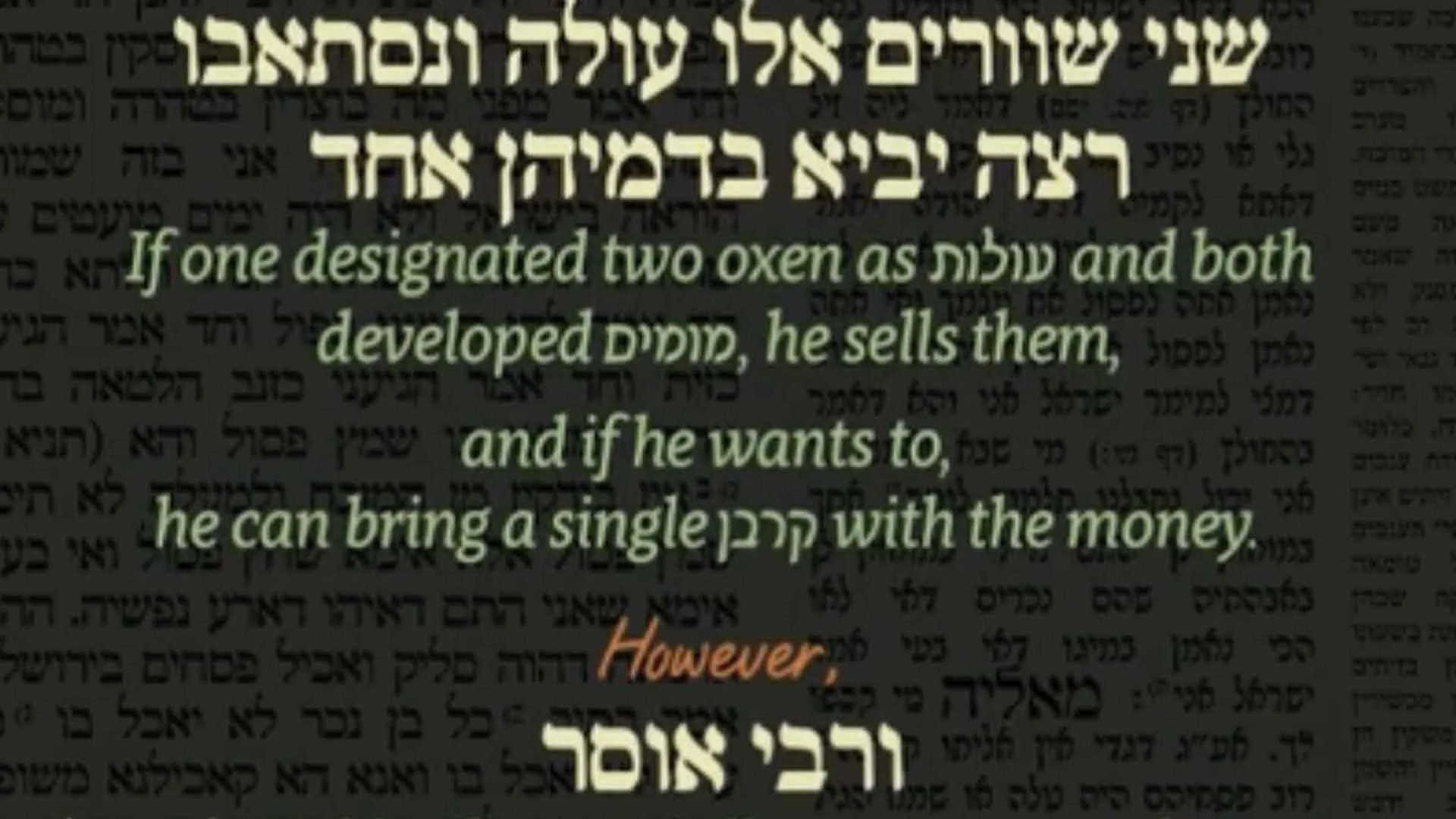
In the first case of the Mishnah here, when one pledges one of his sheep or bulls to Hekdesh, and he has only two sheep or two bulls, he must give the larger one to Hekdesh. The reason for this presumably is that one who is Makdish an item does so "b'Ayin Yafah," generously, and therefore it is assumed that he meant to give the larger animal.

The Gemara asks that if the person must give the larger animal because of "b'Ayin Yafah Makdish," then what is the reasoning behind the law of the next case of the Mishnah? The Mishnah states that when the person has three animals, the middle animal is Hekdesh. Why is it not assumed that he meant to be Makdish the largest animal because of the principle of "b'Ayin Yafah Makdish"?

Shmuel answers that the Mishnah, in the second case, does not mean that the second animal is certainly Hekdesh. Rather, the Mishnah is saying that we must suspect that the middle animal is the one which the owner meant. We are unsure about whether he meant the largest animal because it is considered "b'Ayin Yafah Makdish," or he meant the middle-sized animal because it is larger than the smallest animal and thus is also considered "b'Ayin Yafah Makdish."

Accordingly, Rebbi Chiya explains, the owner of the animals should wait until the middle animal develops a blemish and transfer the Kedushah that it may have onto the largest animal and bring the largest animal as the Korban.

How does this transferal of Kedushah take place?

We explore this enigmatic notion that Keisha may be transferred somehow.

Tags 74th
Comment

Menachot 107: וְאֵינִי יוֹדֵעַ מָה פֵּירַשְׁתִּי״

jyungar April 28, 2026

For the source text click/tap here: Menachot 107

To download, click/tap here: PDF

How do we interpret the intention of someone who commits to bringing a sacrifice, but isn’t clear about his plans?

The Mishna on our daf offers answers to that question, as well as to the question of how to deal with someone who says that he made a commitment to bring a specific sacrifice but now does not remember what he said at that time. In this second case, the Mishna tries to work out how to be sure that all possibilities are covered; in the first case, the Mishna tries to work out how we understand what the person most likely meant.

We explore the approach to pledges with an interesting article on the Jewish bankers under the Czar.

Tags 74th
Comment

Menachot 106: וְהַגּוֹרָלוֹת הִפַּלְנוּ עַל קֻרְבַּן הָעֵצִים

jyungar April 27, 2026

For the source text click/tap here: Menachot 106

To download, click/tap here: PDF 

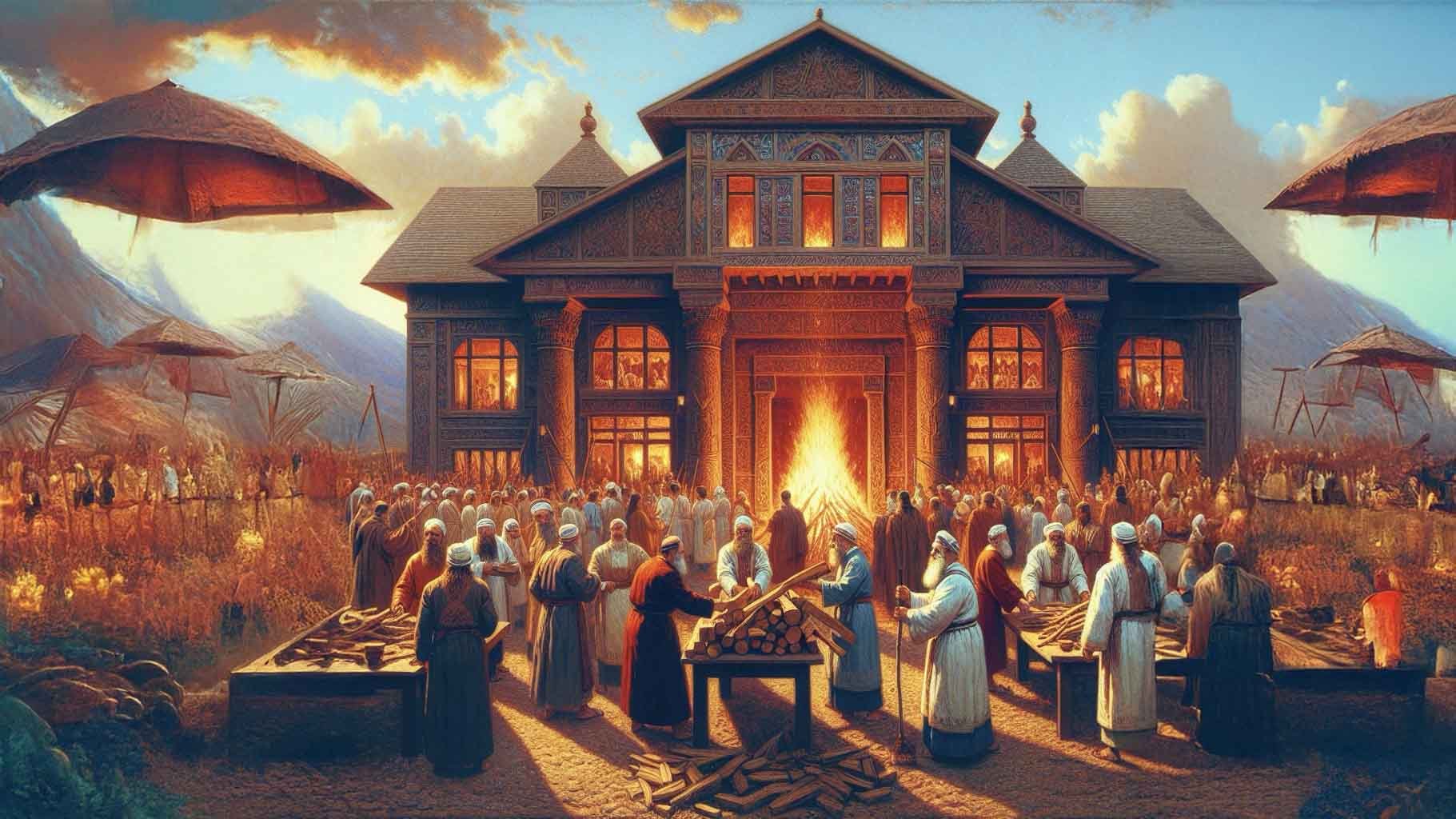
The Mishna on our daf teaches that if someone obligates himself to bring wood to the Temple, he must bring at least two pieces of wood, as are usually placed on the altar together every morning and afternoon.

The Gemara quotes a baraita that teaches that contributing wood to the Temple is considered like committing oneself to bringing an actual sacrifice. This is derived from an extra word korban that appears in the Torah (either, according to Rashi, in Vayikra 2:1, or, according to Rabbeinu Gershom, in Vayikra 1:2) and is supported by a passage in Sefer Nehemiah (10:35) that specifically talks about “the sacrifice of wood.”

We explore the unique aspects of the wood sacrifice.

We argue that the wood offering dissolves the categorical boundary between instrument and end, between fuel for the sacred and the sacred itself, and that this dissolution bears directly on the theology of sacred brokenness, the phenomenology of embodied material worship, and the clinical reading of the therapeutic encounter. 

Tags 74th
Comment

Menachot 105: מִנְחַת הַסּוֹלֶת קָאָמַר, סִימָנָא בְּעָלְמָא

jyungar April 26, 2026

For the source text click/tap here: Menachot 105

To download, click/tap here: PDF

Isn’t it taught in the baraita that Rabbi Yehuda says that one must bring a fine-flour meal offering since the verse opens with it first? The Gemara answers: This is what the baraita is saying: Which meal offering is the most notable of the meal offerings, as it has no modifier? It is this, i.e., the fine-flour meal offering, with which the verse opens first. The reason that Rabbi Yehuda holds that one must bring a fine-flour meal offering is not because the verse opens with it, but because it has no modifier.

The Gemara challenges: If so, the explanation of the baraita is unnecessary; isn’t it obviousthat Rabbi Yehuda is referring to the fine-flour meal offering, as he says so explicitly? The Gemara answers: The baraita explains that the reference to the meal offering with which the passage opens merely serves as a mnemonic, so one should not forget which type of meal offering Rabbi Yehuda is referring to.

A mnemonic device is a memory trick or memory device employing any learning technique that aids information retention or retrieval in the human memory, often by associating the information with something that is easier to remember.

It makes use of elaborative encoding, retrieval cues and imagery as specific tools to encode information in a way that allows for efficient storage and retrieval. It aids original information in becoming associated with something more accessible or meaningful—which in turn provides better retention of the information.

Tags 74th
Comment

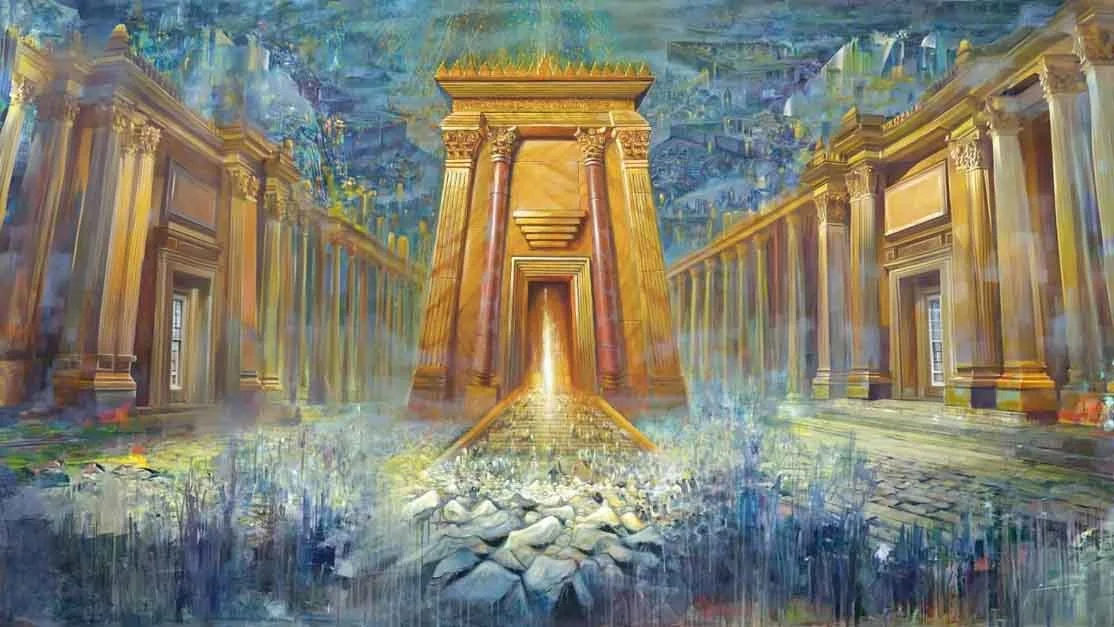
Blue Beit Hamikdash Painting, Abstract Judaica, Third Temple Spiritual Emotive, Western Wall, Beis Hamikdash Giclée Canvas Print

Menachot 104: הָנָךְ לְנִדְבַת צִבּוּר אָזְלִי

jyungar April 25, 2026

For the source text click/tap here: Menachot 104

To download, click/tap here: PDF

In general, when a person makes a statement that indicates that he accepts upon himself the obligation to bring a sacrifice, through the power of his stated intention the object referred to becomes sanctified. Nevertheless, since it is his statement that sanctification takes effect, we must clarify what must be said and how to deal with situations where someone’s intentions are not clearly expressed.

We explore halakhic architecture of designation: the categories, the mechanics of peh (utterance), yad(incomplete utterance requiring inference), and maḥshavah (silent intention); the problem of under-specification represented by the Menaḥot Mishnah; and the special case of hafrashah in agricultural gifts.

Tags 74th
Comment

Menachot 103: אֲפִילּוּ הָכִי תְּפוֹס לָשׁוֹן רִאשׁוֹן

jyungar April 24, 2026

For the source text click/tap here: Menachot 103

To download, click/tap here: PDF

As we have learned throughout Massekhet Menaḥot, a standard meal offering is made up of solet – fine wheat-flour – mixed with oil and frankincense that is prepared in one of a number of different ways. There are meal offerings that are made differently – e.g., the minḥat ha-omer, brought on the second day of Passover that is made from barley or the minḥat sota, brought by a woman who was suspected of an extra-marital affair, which does not include oil and frankincense – but those are not voluntary meal offerings.

What if someone decided to bring a meal offering, but specifically stated that he wanted to bring it in a manner that was unusual?

The Mishna on our daf deals with that question. According to the Tanna Kamma, whatever statement was made must be corrected so that a proper meal offering will be brought. Thus, if someone says “I accept upon myself a meal offering of barley” he must bring a minḥa of wheat. If he said “I accept upon myself a meal offering from ordinary flour” he must bring a minḥa made of solet. If he said that he would bring a meal offering that did not include oil and frankincense, the minḥa that he brings must include them. If he said that i would bring it with solet measuring half an isaron, he must bring a full isaron, which is the normal amount of flour that is brought.

We explore the prophetic response to sacrifices and added review of the Hassidic approach to various korbanot.

Tags 74th
Comment

Menachot 102: כֹּל שֶׁיֵּשׁ לָהּ שְׁעַת הֶיתֵּר לַכֹּהֲנִים אֵין מוֹעֲלִין בָּהּ

jyungar April 23, 2026

For the source text click/tap here: Menachot 102

To download, click/tap here: PDF

When someone donates an animal to the Temple as a sacrifice, it immediately becomes fully sanctified and cannot be redeemed, that is, it cannot be exchanged for money and used for mundane purposes, since it must be brought on the altar. If, however, it developed a blemish that will not allow it to be sacrificed, the Torah permits it to be redeemed, and another animal must be purchased as a replacement (see Vayikra 27:11-12).

The Mishna that opens the twelfth perek of Massekhet Menaḥot deals with questions of redeeming other sanctified items. We learn that meal offerings and libations can be redeemed so long as they were not placed in a keli sharet – a Temple vessel that would give them full sanctity.

Once they were placed in a keli sharet, however, they cannot be redeemed even if they became ritually defiled and cannot be brought as an offering. Similarly, sacrifices brought from fowl, or wood sanctified for use on the altar or frankincense or a keli sharet that became ritually defiled and cannot be brought or used in the Temple, cannot be redeemed.

Tags 73rd
Comment

Menachot 101: פִּיגֵּל בְּמִנְחָה – מְטַמֵּא טוּמְאַת אֳכָלִין

jyungar April 22, 2026

For the source text click/tap here: Menachot 101

To download, click/tap here: PDF

The Mishna that opens the twelfth perek of Massekhet Menaḥot deals with questions of redeeming other sanctified items. We learn that meal offerings and libations can be redeemed so long as they were not placed in a keli sharet – a Temple vessel that would give them full sanctity.

Once they were placed in a keli sharet, however, they cannot be redeemed even if they became ritually defiled and cannot be brought as an offering. Similarly, sacrifices brought from fowl, or wood sanctified for use on the altar or frankincense or a keli sharet that became ritually defiled and cannot be brought or used in the Temple, cannot be redeemed.

These items will have to be destroyed, since the concept of redemption appears in the Torah only with regard to animal sacrifices that cannot be brought on the altar.

The Gemara on our daf teaches that the restriction on redeeming the last three examples – wood, frankincense and Temple vessels – is Rabbinic in origin, and that on a Biblical level they can be redeemed, even if they did not become defiled and were fully usable.

Tags 73rd
Comment

Menachot 100: וּמִתּוֹךְ שֶׁשּׂוֹנְאִין אֶת הַבָּבְלִיִּים – קוֹרְאִין אוֹתָן עַל שֵׁם בָּבְלִיִּים

jyungar April 21, 2026

For the source text click/tap here: Menachot 100

To download, click/tap here: PDF

According to the Mishna on yesterday’s daf when Yom Kippur fell out on a Friday – something that cannot happen today, with the establishment of a set calendar – there was a difficult situation regarding the sin offering that was ordinarily eaten by the kohanim immediately after Yom Kippur ended. Since a sin offering can be eaten only on the day that it was brought and the evening that follows, it had to be eaten on Friday night. Since it was Shabbat, however, and the Yom Kippur sin offering was not a Shabbat sacrifice, the meat could not be cooked. This problem was solved thanks to the Babylonian priests who were not so particular about their food and were willing to eat the meat of the sacrifice when it was still raw.

On our daf, Rabba bar Bar Ḥana quotes Rabbi Yoḥanan as teaching that the people who were willing to eat raw meat in the Temple were not, in fact, Babylonians, rather they were from Alexandria in Egypt. The Mishna refers to people who were lacking in basic niceties of behavior “Babylonians,” since the Babylonians were hated by the Sages of the Mishna. Upon hearing this explanation – as well as a baraita that supported this clarification – Rabbi Yehuda, whose family roots were in Bavel commented that he was comforted by hearing this approach.

We use this pericope to explore the rivalries between Egypt Bavel and Palestine.

Tags 73rd
Comment

Menachot 99: מְלַמֵּד שֶׁהַלּוּחוֹת וְשִׁבְרֵי לוּחוֹת מוּנָּחִין בָּאָרוֹן

jyungar April 20, 2026

For the source text click/tap here: Menachot 99

To download, click/tap here: PDF

Replacement of the loaves was essential because the Torah commands that the loaves be placed before God tamid – “always” – (see Ex 25:30).

Rabbi Yosei disagrees with this understand of tamid, arguing that even if the loaves were removed in the morning and replaced in the evening, it would still fulfill the requirement of tamid, which should be understood as teaching that a night should not pass without Shewbread on the table.

Rabbi Ami infers from Rabbi Yosei’s teaching that the concept of tamid – “always” – need not be understood as requiring 24 hour vigilance, and applies it to other situations, as well.

Specifically, he says that Torah study, which is a requirement “day and night” (see Yehoshua 1:8) can be fulfilled by studying a chapter in the morning and a chapter at night.

Reish Lakish teaches that one who forgets even one thing from his learning transgresses the Torah prohibition of, "Rak Hishamer Lecha... Pen Tishkach Es ha'Devarim" -- "Guard yourself... lest you forget these things" (Devarim 4:9).

The Gemara clearly understands that this verse refers to forgetting Torah. However, the straightforward meaning of the verse is a reference to the giving of the Torah at Har Sinai, when Hashem commanded the Jewish people not to forget the things they saw there.

Tags 73rd
Comment

Menachot 98: חַד אָמַר: כְּדֵי שֶׁיֵּדְעוּ מֵהֵיכָן בָּאוּ, וְחַד אָמַר: כְּדֵי שֶׁתְּהֵא אֵימַת מַלְכוּת עֲלֵיהֶן

jyungar April 19, 2026

For the source text click/tap here: Menachot 98

To download, click/tap here: PDF

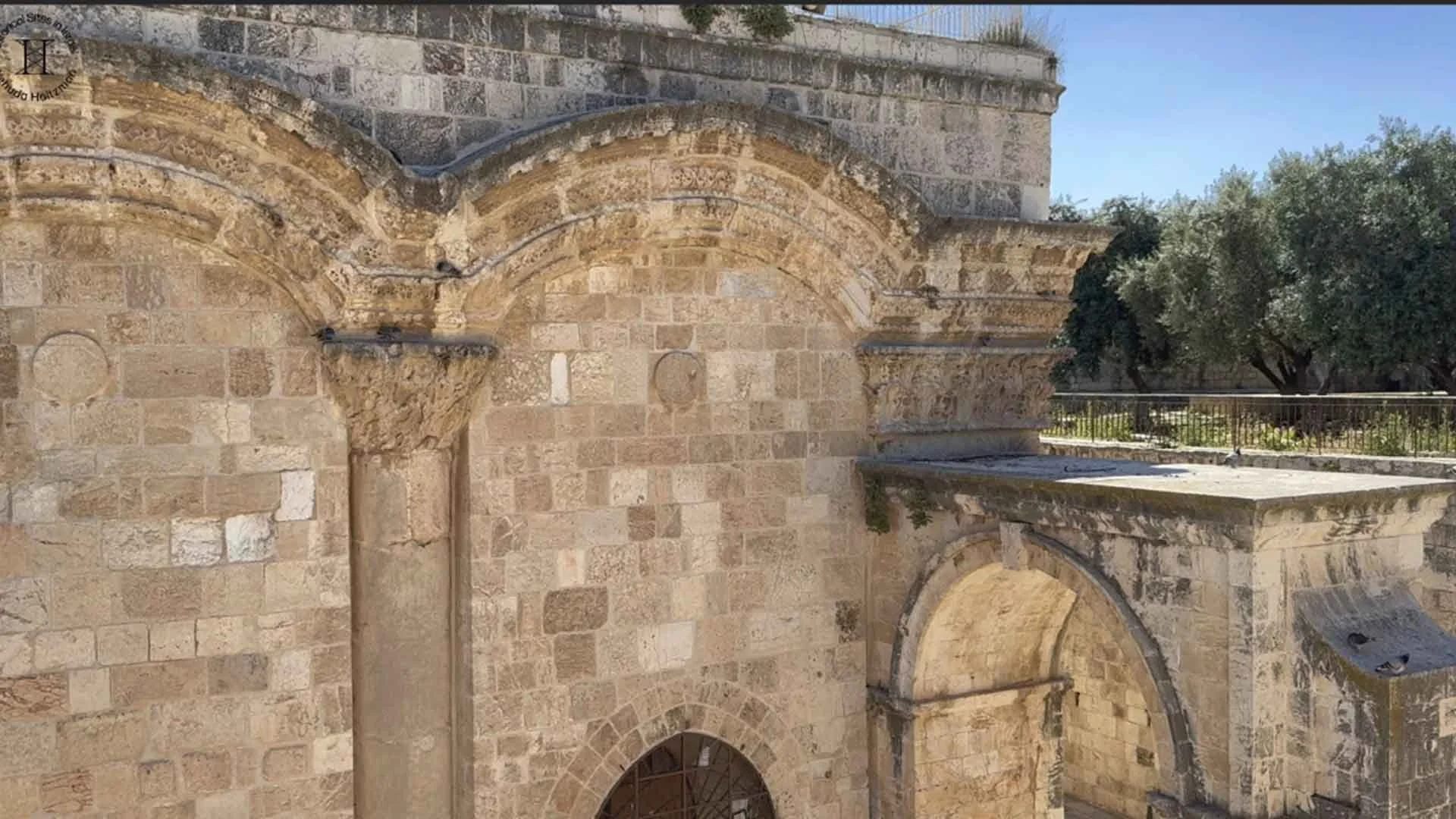
During the Second Temple period, there were five gates leading to the Temple Mount, two on the Southern Wall and one each on the Western, Eastern and Northern walls. The Mishna in Massekhet Middot (1:3) teaches that the gate on the Eastern side was called “The gate of Shushan” and it was decorated with an engraving of the Persian capital, Shushan.

Two opinions are offered in the Talmudic Sages on our daf to explain why Shushan appeared there. Rav Ḥisda and Rav Yitzḥak bar Avdimi weighed in on this question. According to one it was so that the people would know from whence they came; according to the other it was so that the fear of the ruling government should be upon the people.

We explore the history and archeology of the Shushan gate.

Tags 73rd
Comment

Menachot 97: שׁוּלְחָנוֹ שֶׁל אָדָם מְכַפֵּר עָלָיו

jyungar April 18, 2026

For the source text click/tap here: Menachot 97

To download, click/tap here: PDF

Gemara on our daf discusses how the shulḥan which was made of wood that was plated with gold, should be viewed.

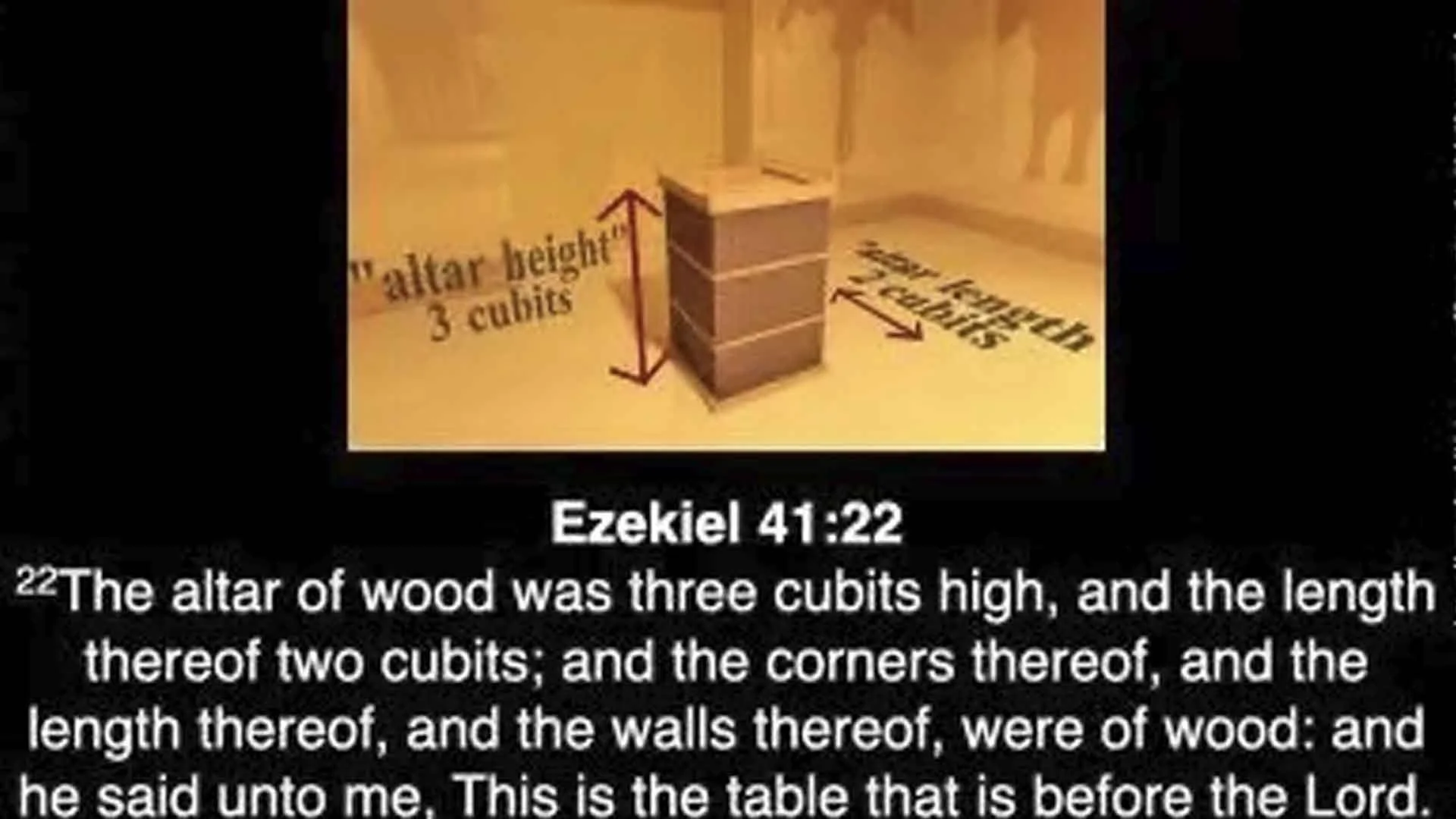
To answer this question, the Gemara quotes a passage from the book of Yeḥezkel (41:22) where we find the following description:

“The altar, three cubits high, and the length thereof two cubits, was of wood, and so the corners thereof; the length thereof, and the walls thereof, were also of wood; and he said unto me: ‘This is the table that is before the LORD.'”

This is understood to clarify that the table was viewed as a wooden utensil, even though the wood was not visible.

Having quoted the passage from Sefer Yeḥezkel, the Gemara asks why he began his description by talking about the altar and then finished by talking about the table. In response, both Rabbi Yoḥanan and Rabbi Elazar suggest that this teaches that just as the altar served as the place of atonement when the Temple stood, so our tables serve that purpose today, after the destruction of the Temple.

We explore the use of Ezekiel’s dimensions of the temple and then a dazzling exposition by the Meor Eynayim of שׁוּלְחָנוֹ שֶׁל אָדָם מְכַפֵּר עָלָיו.

Tags 73rd
Comment

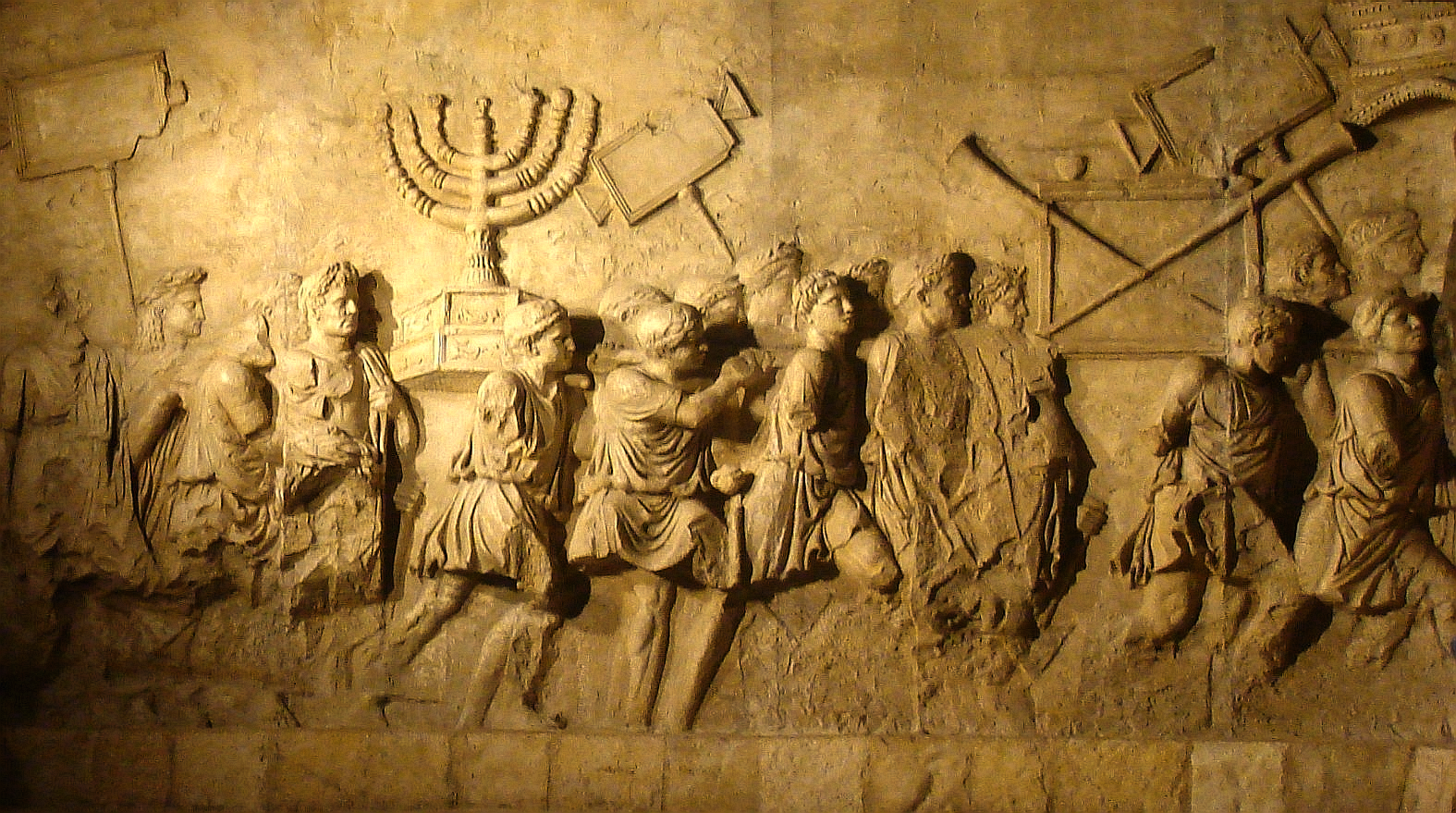
The spoils of the Temple, relief from the Arch of Titus, Rome, 81 CE. Public domain, via Wikimedia Commons.

Menachot 96: וְהָאִיכָּא קְרָנוֹת

jyungar April 17, 2026

For the source text click/tap here: Menachot 96

To download, click/tap here: PDF

The table in the Temple served to hold the 12 loaves of the leḥem ha-panim – the Shewbread. On our daf Reish Lakish teaches that the table, together with its loaves, served a unique purpose in the Temple.

Reish Lakish teaches that when the Torah talks about the “pure” table in the Temple (see Vayikra 24:6), it implies that the table could become ritually defiled. This demands explanation, since vessels that cannot be moved are not subject to the laws of ritual purity. He explains that the table was, in fact, moved, since the priests would take the table out of the Temple to show it to the pilgrims who came bringing sacrifices during the holidays. The table was shown to them based on Rabbi Yehoshua ben Levi’s teaching that the table showed God’s direct love of the Children of Israel inasmuch as it represented an ongoing miracle – the loaves that were placed on the table at the beginning of the week remained warm and fresh when they were removed and eaten at the end of the week.

With regard to the two loaves, their length is seven handbreadths, their width is four handbreadths, and they have hornlike protrusions made of dough that is attached to each of their corners, which are four fingerbreadths high. With regard to the loaves of shewbread, their length is ten handbreadths, their width is five handbreadths, and each loaf’s hornlike protrusions is seven fingerbreadths high.

We  explore the “horns of the altar” especially in Psalm 118 .״אִסְרוּ חַג בַּעֲבוֹתִים עַד קַרְנוֹת הַמִּזְבֵּחַ״.

Tags 73rd
Comment

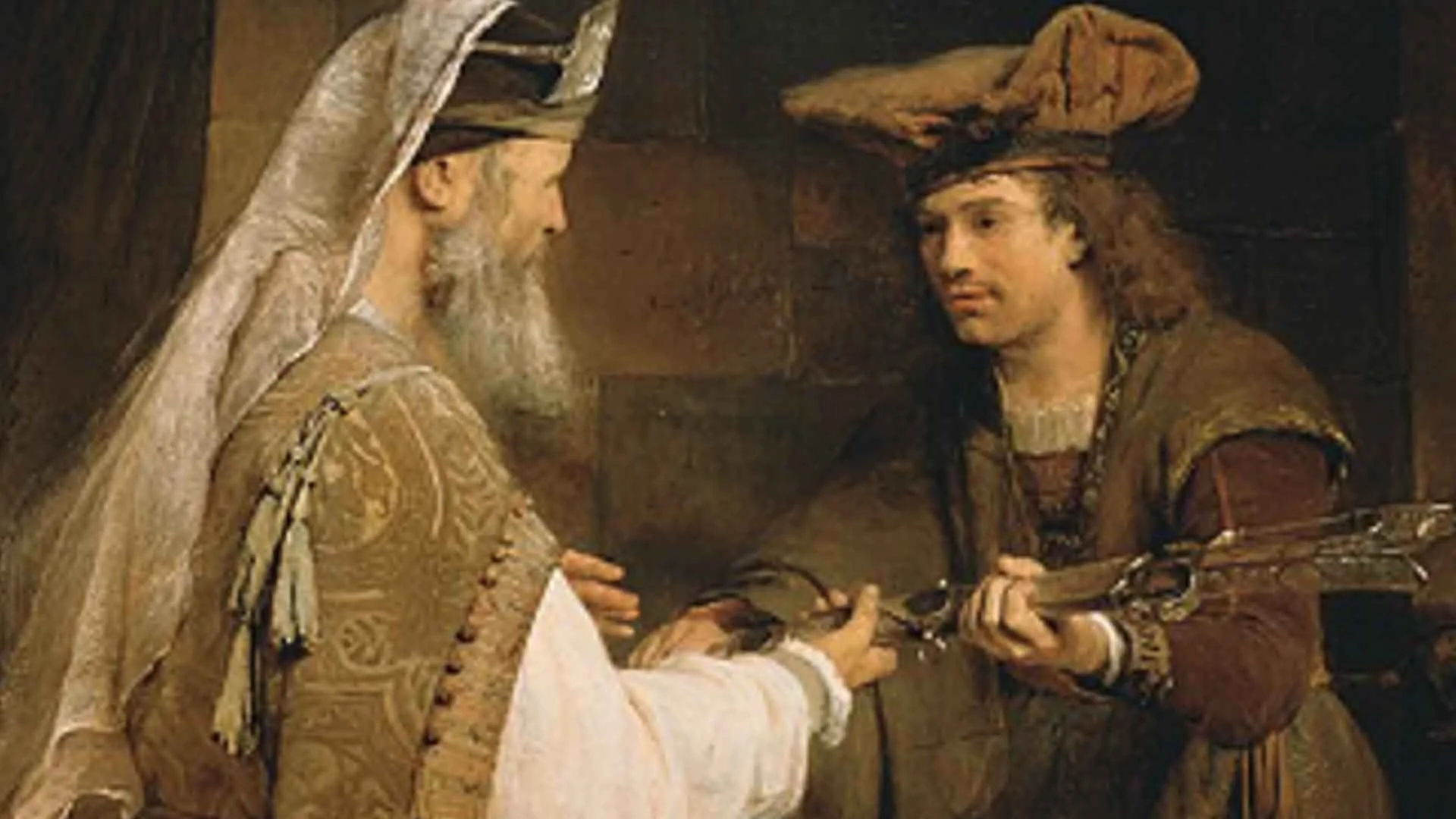
"Ahimelech gives the sword of Goliath to David"Arent de Gelder (1680s)

Menachot 95: לֶחֶם הַפָּנִים הַמּוּסָרִים מִלִּפְנֵי ה׳

jyungar April 17, 2026

For the source text click/tap here: Menachot 95

To download, click/tap here: PDF

The bread of vision (Lechem hapanim) was kneaded outside the Temple - because vessels did not sanctify the flour - and baked inside the Temple before Shabbat. Rabbi Yehudah disagrees: it was kneaded and baked inside the Temple, on Shabbat, to protect the bread from staying overnight. Rabbi Shimon maintains that both ways are valid. Their proofs are not based on the story of King David and the priestly bread -suffering from- extreme hunger - fleeing from King Saul, he arrives at the priestly city of Nob and requests the shewbread (lechem ha-panim) from Ahimelech the High Priest.

From this charged narrative moment, we follow the reception history of this episode through the Yalkut Shimoni on Samuel and into the sugya of our daf where Rabbis Yehudah and Shimon deploy the same verse from I Samuel to derive diametrically opposed halakhic conclusions regarding whether the oven or the Table constitutes the locus of consecration for the shewbread.. We examine how a narrative about radical need, priestly authority, and sacred transgression becomes the exegetical ground for a fundamental dispute in Temple law.

Tags 73rd
Comment
  • Daf Ditty
  • Older
  • Newer

Julian Ungar-Sargon

This is Julian Ungar-Sargon's personal website. It contains poems, essays, and podcasts for the spiritual seeker and interdisciplinary aficionado.​