
For the source text click/tap here: Menachot 106
To download, click/tap here: PDF
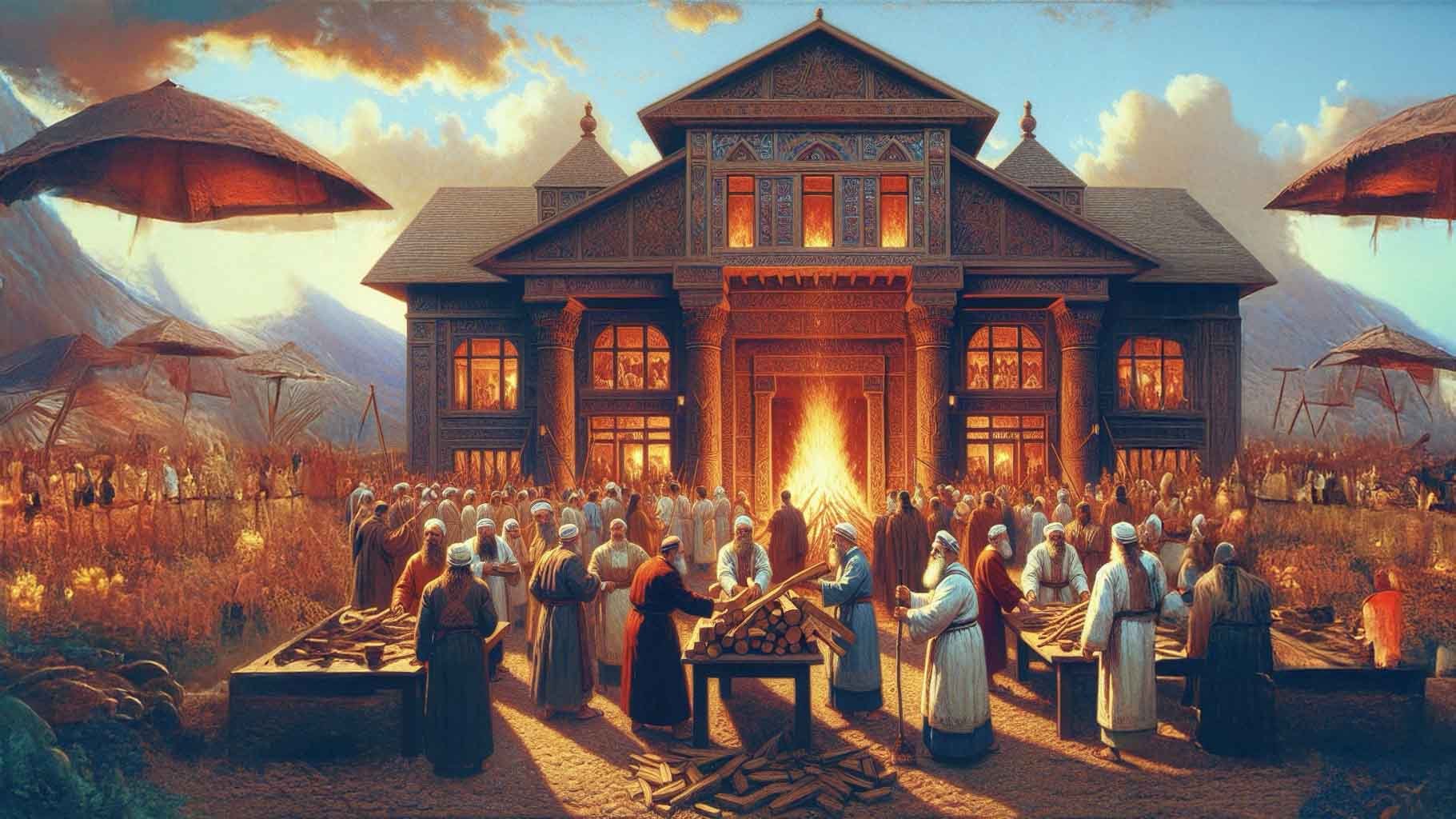
The Mishna on our daf teaches that if someone obligates himself to bring wood to the Temple, he must bring at least two pieces of wood, as are usually placed on the altar together every morning and afternoon.
The Gemara quotes a baraita that teaches that contributing wood to the Temple is considered like committing oneself to bringing an actual sacrifice. This is derived from an extra word korban that appears in the Torah (either, according to Rashi, in Vayikra 2:1, or, according to Rabbeinu Gershom, in Vayikra 1:2) and is supported by a passage in Sefer Nehemiah (10:35) that specifically talks about “the sacrifice of wood.”
We explore the unique aspects of the wood sacrifice.
We argue that the wood offering dissolves the categorical boundary between instrument and end, between fuel for the sacred and the sacred itself, and that this dissolution bears directly on the theology of sacred brokenness, the phenomenology of embodied material worship, and the clinical reading of the therapeutic encounter.