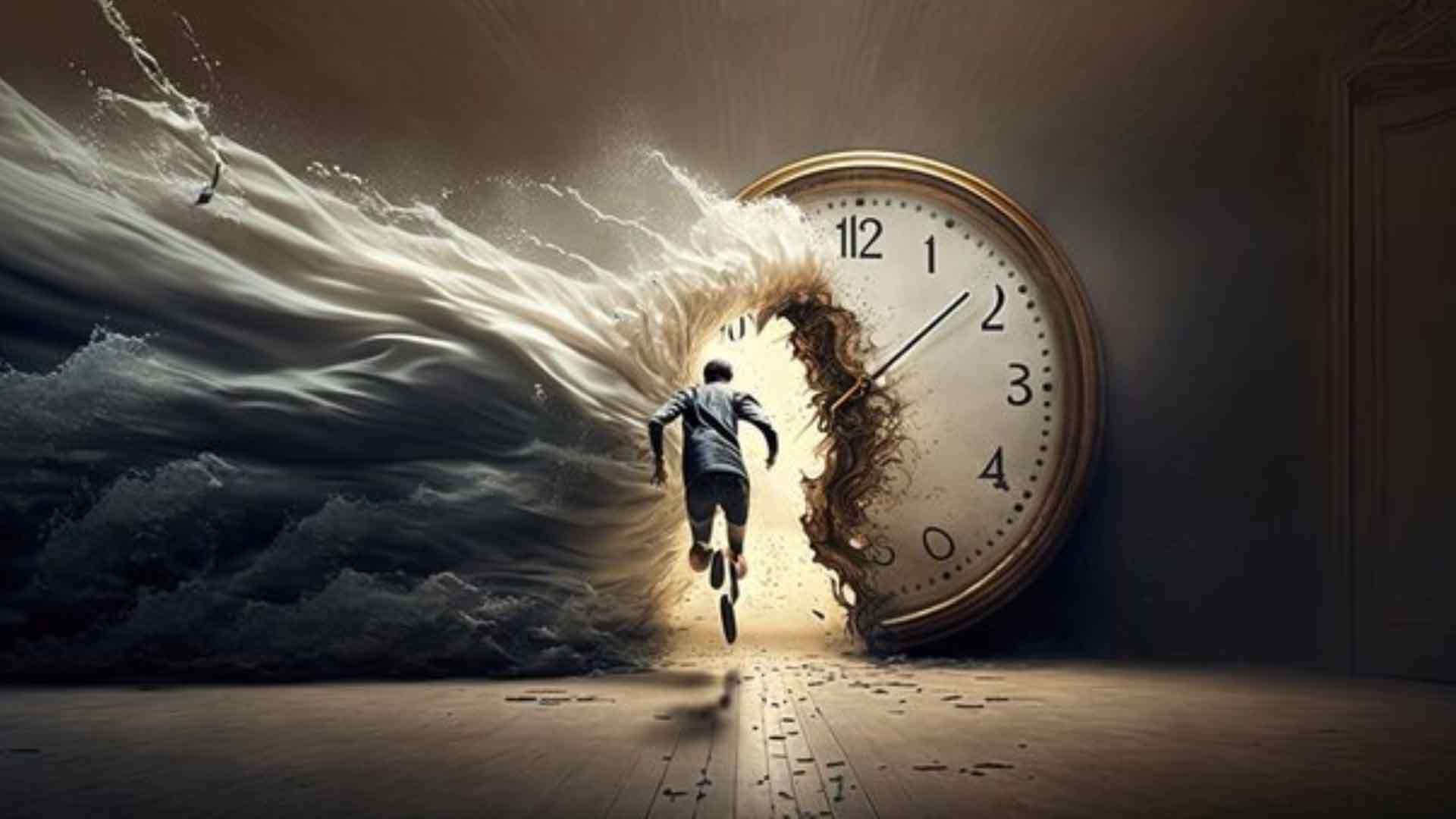
I have begun to hear time differently.
Not the ordinary ticking
of clocks on the wall
or the quiet calendar turning
in bureaucratic months.
But time in the body.
A more ancient metronome.
The incision beneath my ribs
still whispers its ache.
A reminder that the flesh is temporary architecture,
a house whose beams
have begun to creak.
Only weeks ago
I lay beneath surgical lights,
my body opened
like a question.
Organs removed,
stones taken away,
the fragile machinery of digestion
rearranged by careful hands.
I woke with the strange awareness
that something essential
had been subtracted.
The body does not age all at once.
It erodes.
First a small organ disappears.
Then a function dims.
The memory of strength
becomes a story we tell ourselves.
The future shortens
in ways that no calendar admits.
I walk more slowly now
not only because of the incision
but because time itself
feels narrower.
The horizon approaches.
Yet the strange thing about time
is that it did not begin
when we think it did.
Genesis says
“In the beginning…” בְּרֵאשִׁ֖ית בָּרָ֣א אֱלֹהִ֑ים אֵ֥ת הַשָּׁמַ֖יִם וְאֵ֥ת הָאָֽרֶץ׃
But the mystics whisper
that even this is not the beginning.
Before Bereshit
before the first syllable of creation
before the separation of light from darkness
there was the Infinite—
Ein Sof.
An endless fullness
without before or after.
And then—
the unimaginable moment.
A fracture within infinity.
A cosmic unbearable pain of contraction.
Tzimtzum.
The Infinite withdrew from itself
just enough
to allow something that was not infinite
to appear.
A moment before time.
A silence
in which chronology itself
had not yet learned how to count.
The first wound of existence.
Creation began
not with expansion
but with absence.
And so every life
repeats that original contraction.
We begin with the illusion
of endless horizons.
Childhood feels like infinity.
But gradually
space withdraws.
Time folds inward.
Possibilities contract
the way the Infinite once contracted
to make room for the world.
What begins as boundless
becomes measured.
Years become seasons.
Seasons become moments.
Moments become breath.
The present itself
is a fragile illusion.
The future does not exist
except as that which will soon
become the past.
We stand on a narrow ridge: כָּל הָעוֹלָם כֻּלוֹ גֶשֶׁר צַר מְּאֹד
between two infinities—
what has vanished
and what has not yet appeared.
A brief luminous edge
we call now.
The Greeks understood something of this.
For them time had two faces.
One was Chronos—
the devourer.
A god who swallowed his children
because he feared being replaced.
Every second consumed
the moment before it.
Time eating its own offspring.
The relentless march
toward disappearance.
But there was another time.
A deeper rhythm.
Cycles.
Return.
The wisdom of Metis,
whose intelligence dissolves into the cosmos itself—
the idea that what disappears
is never entirely gone.
That time is not merely a line
but a turning.
Seasons return.
Stars repeat their paths.
Life folds back into the same mysteries
from which it emerged.
And still
the body reminds me
that my own time moves forward.
Not in circles.
But in a narrowing corridor.
I feel the subtraction of strength.
The quiet loss of functions
once taken for granted.
The body speaks now
in the language of limits.
Every scar
is a clock.
Every recovery
a negotiation with mortality.
Yet Jewish prayer ends
with a strange vision of the future.
In Adon Olam we say:
וְאַחֲרֵי כִּכְ֒לוֹת הַכֹּל
לְבַדּוֹ יִמְלֹךְ נוֹרָא
After everything has ended
He alone will reign.
A future beyond history.
Beyond cycles.
Beyond Chronos.
A moment when time itself
exhausts its purpose.
When the cosmos folds back
into the same solitude
from which it emerged.
The Infinite alone again.
As if the universe were
a temporary conversation
spoken inside eternity.
And perhaps that is why
running out of time
is not only tragedy.
It is also participation
in the oldest story.
The body contracts.
The future narrows.
Life becomes more precise.
Until finally
everything we are
is concentrated
into a single point of presence.
The way the Infinite once
concentrated itself
to make room for the world.
Tonight I sit quietly
aware of the incision beneath my ribs
and the slower rhythm of my steps.
Time is running out.
But perhaps
it always was.
And perhaps that is the secret.
That life is not measured
by how much time remains
but by how intensely
we inhabit the narrowing space
between infinity
and its return.