Julian Ungar-Sargon

  • Home
  • Theological Essays
  • Healing Essays
  • Podcast
  • Poetry
  • Daf Ditty
  • Deep Dive Ditty
  • Videos
  • Publications
  • Military Service
  • Home
  • Theological Essays
  • Healing Essays
  • Podcast
  • Poetry
  • Daf Ditty
  • Deep Dive Ditty
  • Videos
  • Publications
  • Military Service
Julian Ungar-Sargon copy 3.jpg

Daf Ditty

A wide-ranging commentary on the daily page of Talmud.

Menachot 54: יָבֹא יָדִיד בֶּן יָדִיד, וְיִבְנֶה יָדִיד לְיָדִיד בְּחֶלְקוֹ שֶׁל יָדִיד

jyungar March 6, 2026

For the source text click/tap here: Menachot 54

To download, click/tap here: PDF

The Gemara records that Avraham was called yadid – “God’s beloved” – and then continues by offering a midrashic interpretation of the passages in Sefer Yirmiyahu (11:15-16) where we find a conversation between God and the yadid.

Rabbi Yitzḥak said, At the time of the destruction of the Temple the Holy One, blessed be He, found Avraham standing in the Temple. Said He, ‘What is My beloved doing in My house?’ Avraham replied, ‘I have come concerning the fate of my children.’

and so the dialogue continues….

we explore this divine love that survives catastrophe and its implications for future tragedies.

Tags 72nd
Comment

Menachot 53: אֵין לְךָ הַקָּשָׁה לִקְמִיצָה יוֹתֵר מִמִּנְחַת חוֹטֵא

jyungar March 5, 2026

For the source text click/tap here: Menachot 53

To download, click/tap here: PDF

The Gemara records that Avraham was called yadid – “God’s beloved” – and then continues by offering a midrashic interpretation of the passages in Sefer Yirmiyahu (11:15-16) where we find a conversation between God and the yadid.

Rabbi Yitzḥak said, At the time of the destruction of the Temple the Holy One, blessed be He, found Avraham standing in the Temple. Said He, ‘What is My beloved doing in My house?’ Avraham replied, ‘I have come concerning the fate of my children.’

and so the dialogue continues….

we explore this divine love that survives catastrophe and its implications for future tragedies.

Tags 72nd
Comment

Menachot 52: אַף הִיא אֵינָהּ מִן הַמּוּבְחָר

jyungar March 5, 2026

For the source text click/tap here: Menachot 52

To download, click/tap here: PDF

The fifth chapter of Menachos begins by informing us that all minchah offerings were brought as matzah, unleavened, except for two cases.  Ten of the forty loaves brought with a todah were chametz, and the two loaves brought on Shavuos, the shtei halechem, were chametz. How was this leavening process conducted?  

Rabbi Meir explains that sourdough, an agent used to ferment the dough, was selected from within the dough itself rather than using an external pieced of sourdough, thus ensuring that the required volume of the dough will not be exceeded.  

We examine the Matza/Chametz directives. 

Tags 72nd
Comment

Menachot 51: שִׁבְעָה דְּבָרִים הִתְקִינוּ בֵּית דִּין

jyungar March 3, 2026

For the source text click/tap here: Menachot 51

To download, click/tap here: PDF

Rabbinic hermeneutics represents one of the most sophisticated and aesthetically compelling systems of textual interpretation ever devised by human civilization. We examine the art and beauty of the rabbinic practice of "dancing between verses"—the deliberate, disciplined oscillation between scriptural passages to extract, construct, and validate halakhic practice.

Drawing upon our daf and its treatment of the High Priest's minhat havitin offering, as well as broader methodological sources from the Sifra, Midrash halakha, and contemporary scholarship in rabbinic hermeneutics, we argue that the rabbinic interpretive dance is neither arbitrary creative play nor mechanical deduction, but rather a form of sacred choreography—a structured, aesthetically governed practice in which legal meaning emerges through the tension, resonance, and dialogue between scriptural texts.

Tags 72nd
Comment

Menachot 50: הוֹרָאַת שָׁעָה הָיְתָה

jyungar March 2, 2026

For the source text click/tap here: Menachot 50

To download, click/tap here: PDF

If the korban tamid was not brought in the morning, the Tanna Kamma permits the afternoon korban tamid to be offered at its proper time. Rabbi Shimon only allows the kohanim to bring the korban tamid in the afternoon if it had been neglected in the morning by accident. If, however, they had purposefully neglected to bring it in the morning, they cannot bring the afternoon sacrifice.

On our daf, Rava explains Rabbi Shimon’s position as meaning that the kohanim who neglected the morning korban tamid are punished, but the sacrifice is still brought, albeit by other kohanim.

we focus on the claim לֹא הִקְטִירוּ קְטֹרֶת בַּבֹּקֶר, יַקְטִירוּ בֵּין הָעַרְבָּיִם, דְּכֵיוָן דְּלָא שְׁכִיחָא, וּמְעַתְּרָא, חֲבִיבָא לְהוּ וְלָא פָּשְׁעִי.

By contrast, if the priests acted intentionally and did not burn the incense in the morning, even those same priests may burn it in the afternoon. The reason for this is that since burning the incense is uncommon and causes those who do so to become wealthy, it is dear to the priests, and they will not be negligent in the performance of this rite.

and assess greed motivation vs sacred duty.

Tags 72nd
Comment

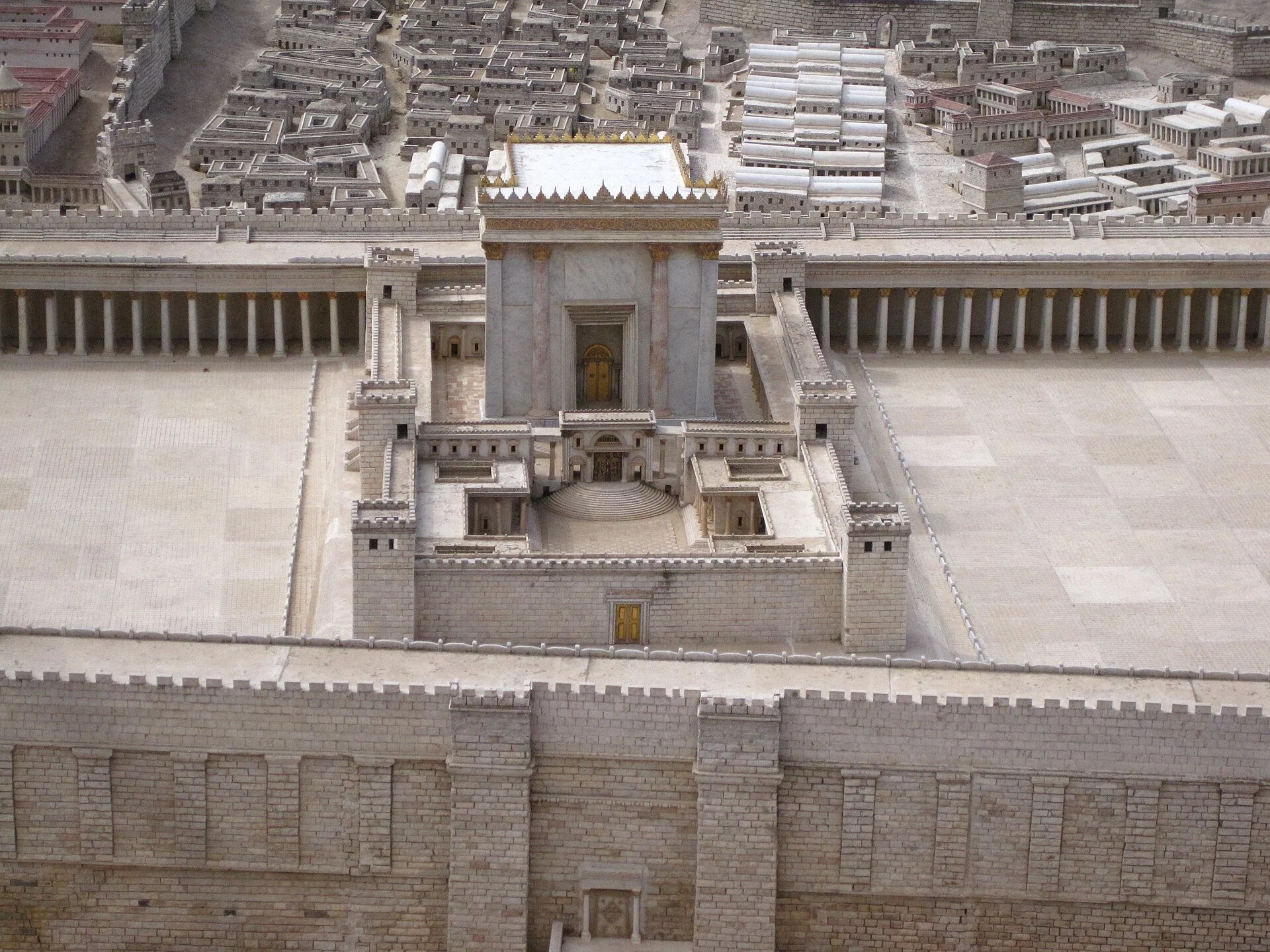
Model of the Second Temple, Israel Museum, Jerusalem. Photo: Leah Jones, CC BY 2.0, via Wikimedia Commons.

Menachot 49: הַתְּמִידִין אֵין מְעַכְּבִין אֶת הַמּוּסָפִין, וְלֹא הַמּוּסָפִין מְעַכְּבִין אֶת הַתְּמִידִין

jyungar March 1, 2026

For the source text click/tap here: Menachot 49

To download, click/tap here: PDF

According to the Mishna on our daf, on Shabbat or a holiday when a special korban musaf – an additional sacrifice – was brought, the korban musaf and the korban tamid – the daily sacrifice – were independent of one-another, and if one was not brought, it did not keep the other one from being offered on the altar.

One of the issues raised in the Gemara regarding this ruling is the fact that the morning korban tamid is the sacrifice that opens the Temple service in the morning and that no other sacrifice can be brought before it. Thus, it would certainly appear that if the korban tamid is not brought it will keep the korban musaf from being sacrificed, inasmuch as no sacrifice can precede the korban tamid.

We explore the koran mussaf and its transition into liturgy with the help of the scholarship of Prof Reuven Kimelman.

Tags 72nd
Comment

Menachot 48: תְּנָא אַ״זֹּאת תּוֹרַת הָעֹלָה״ רִיבָּה סְמִיךְ לֵיהּ

jyungar February 28, 2026

For the source text click/tap here: Menachot 48

To download, click/tap here: PDF

The Gemara quotes a Beraisa which states that if four loaves were prepared for the Shtei ha'Lechem instead of two loaves, two are taken in order to perform the Tenufah (waving the loaves together with the Kevasim, when the Kevasim are alive and after they are slaughtered), and two are "redeemed" and eaten by the Kohanim. The Gemara suggests that the Beraisa may be consistent even with the view of Rebbi, who maintains that it is the Shechitah of the Kevasim which sanctifies the Shtei ha'Lechem.


The Gemara asks that the Beraisa does not seem to follow the view of Rebbi. If, as Rebbi maintains, the loaves become Kadosh with Kedushas ha'Guf at the time of the Shechitah of the Kevasim, then how can the extra two loaves be redeemed? 

The Beraisa cannot mean that they may be redeemed outside of the Beis ha'Mikdash, because it is forbidden to bring them outside ("Yotzei") since they are Kadosh. On the other hand, the Beraisa cannot mean that they may be redeemed inside the Beis ha'Mikdash, because they would then become Chulin in the Azarah, and one may not bring Chulin into the Azarah. The Gemara answers that Rebbi maintains there is no prohibition against redeeming an object of Kedushah which is already inside the Azarah and making it Chulin. The prohibition applies only to bringing a Chulin object into the Azarah

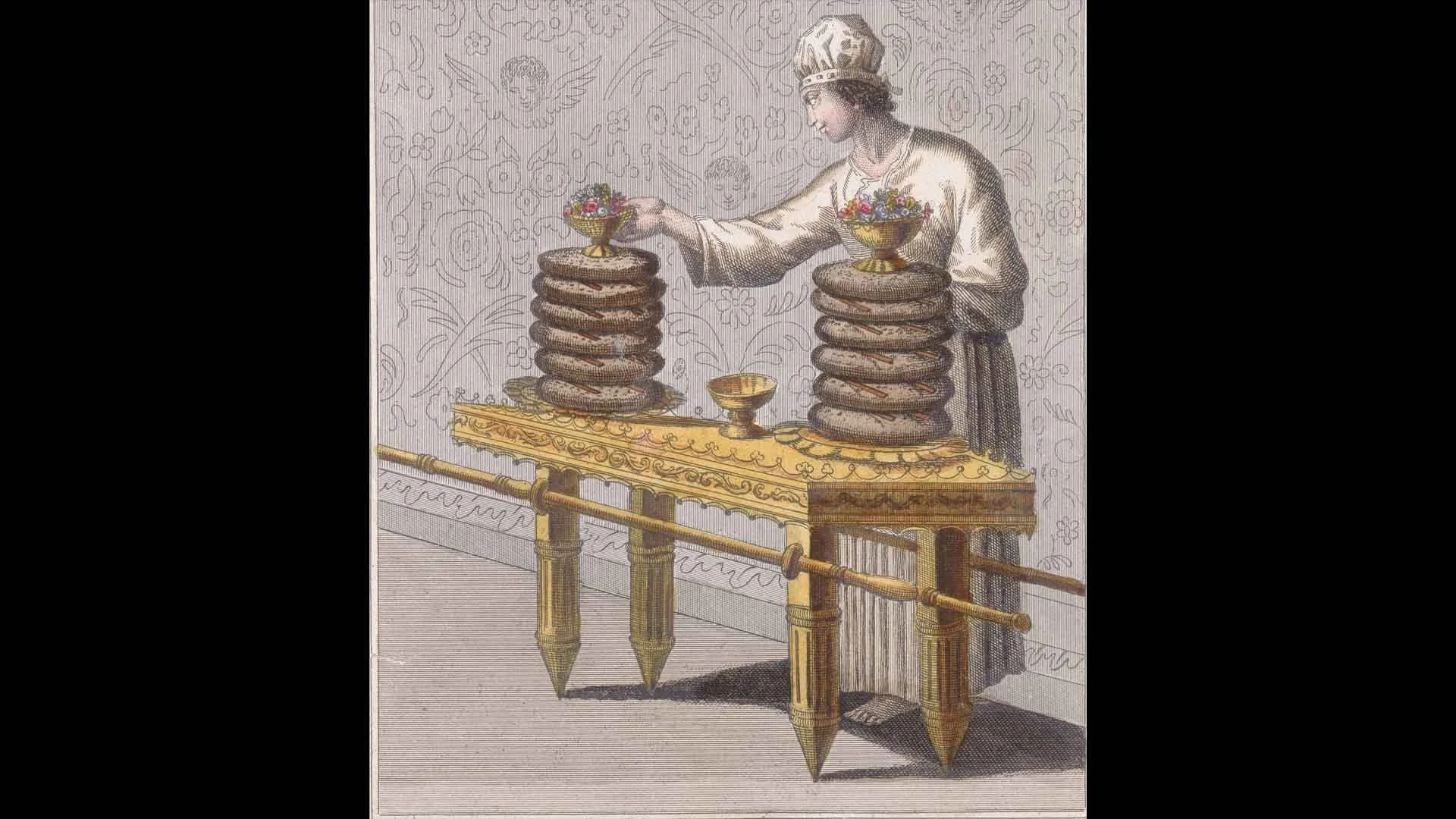
We continue our exploration of the showbread in bible vs rabbinics.

Tags 72nd
Comment

La Table d'or des Pains de Propositions (The Golden Table of Shewbread), Jacques Louis Constant Lecerf, France 19th century, The Jewish Museum.

Menachot 47: זְרִיקָה מוֹעֶלֶת לַיּוֹצֵא

jyungar February 27, 2026

For the source text click/tap here: Menachot 47

To download, click/tap here: PDF

The Gemara on our daf quotes a baraita that teaches that the kivsei atzeret do not sanctify and thereby permit the shtei ha-leḥem to be eaten until they are slaughtered. Thus, if they were properly slaughtered and their blood was properly collected and sprinkled, the shtei ha-leḥem can be eaten.

What if the preparatory sacrifice and subsequent sprinkling of the blood was not completed properly?

Rabbi Yehuda HaNasi rules that if the animals were slaughtered properly but the blood was not sprinkled with the proper intentions, then the shtei ha-leḥem is kadosh ve-eino kadosh – it is only partially sanctified (Abaye and Rava disagree about the defining the level of sanctification). Rabbi Elazar b’Rabbi Shimon argues, ruling that the shtei ha-leḥem will only become sanctified if both the slaughter and the sprinkling of the blood is done properly.

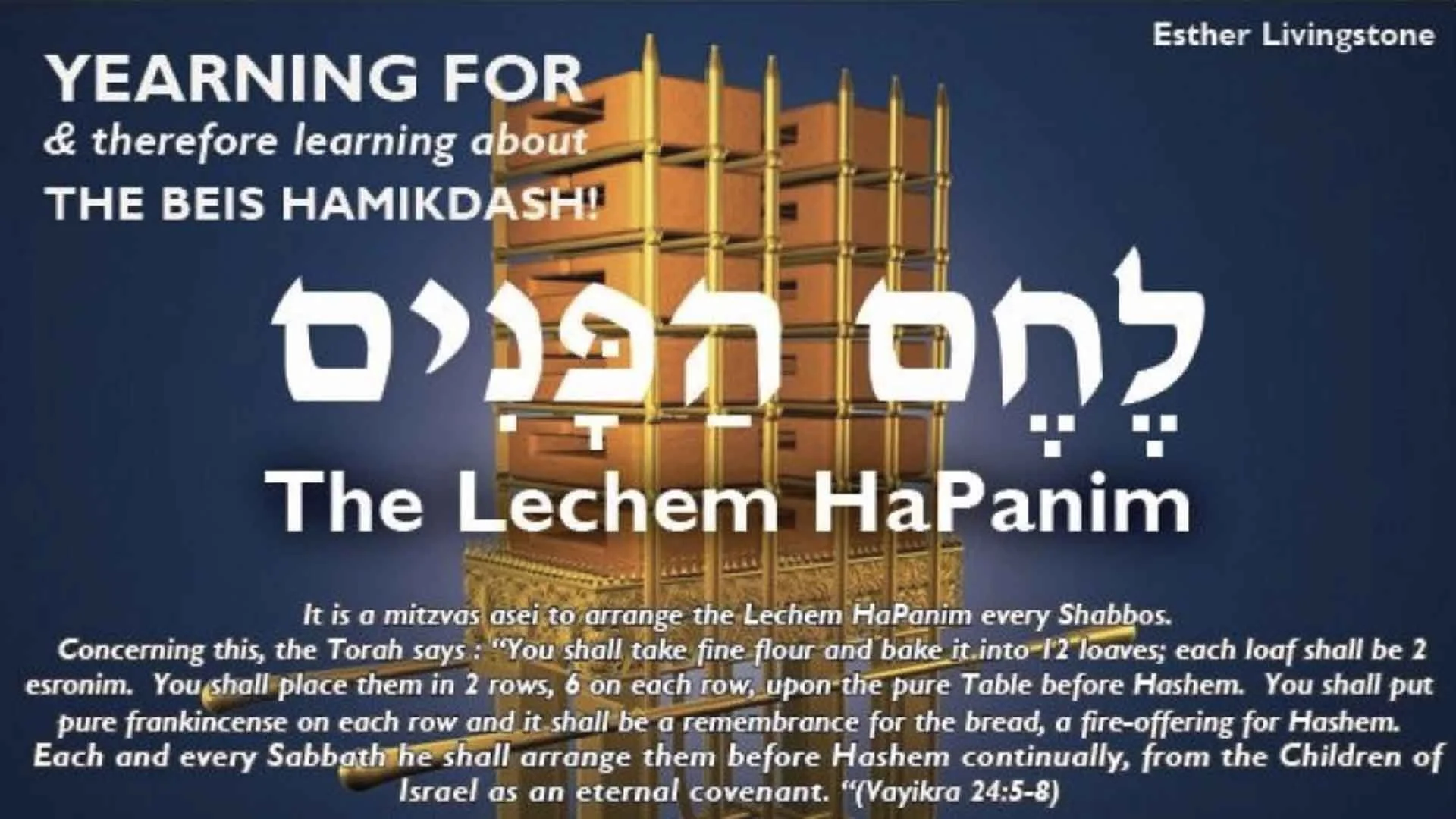
We continue our exploration of the lechem hapanim.

Tags 72nd
Comment

Menachot 46: שָׁאנֵי תּוֹדָה, דְּרַחֲמָנָא קַרְיַיהּ ״שְׁלָמִים״

jyungar February 26, 2026

For the source text click/tap here: Menachot 46

To download, click/tap here: PDF

Our daf teaches us that each of these offerings was offered independently excepting the loaves and the burnt offerings which are meant to be brought together. Some rabbis argue whether or not the loaves must be brought with other offerings. We learn that the loaves could not be eaten until the slaughters were completed and the blood was collected and sprinkled.

The rabbis discuss what to do if the sacrifices and/or sprinkling of blood were not done properly. Rabbi Yehuda HaNasi says that sprinting with the wrong intention means that the animal has been only partially sanctified. Abaye and Rava argue about how to define the level of sanctification. Rabbi Elazar b'Rabbi Shimonarguies rules that the loaves are sanctified only if the slaughter and the sprinkling of the blood are both done properly. A number of different proof texts are presented to defend each opinion.

We explore the Shavuot offerings and the interdependence of the loaves and the lambs.

Tags 72nd
Comment

Ezekiel’s Vision Bernard Picart, 1693 – 1783 Rijksmuseum.nl

Menachot 45: אִלְמָלֵא הוּא נִגְנַז סֵפֶר יְחֶזְקֵאל

jyungar February 25, 2026

For the source text click/tap here: Menachot 45

To download, click/tap here: PDF

Following the Gemara’s interpretation of a series of difficult passages from Sefer Yeḥezkel, Rav Yehuda quoted Rav as saying:

That man is to be remembered for good, and Ḥanina ben Ḥizkiyya is his name; for were it not for him the Book of Yeḥezkel would have been suppressed, since its sayings contradicted the words of the Torah. What did he do? He took up with him three hundred jugs of oil and remained there in the upper chamber until he had explained away everything.

Ḥanina (or Ḥananya) ben Ḥizkiyya ben Garon (or Guryon) was one of the important scholars who lived in the generation following Hillel and Shammai. Ḥanina’s attic served as an important meeting place for the Sages of that time, where significant issues were discussed and decided. Among his most noteworthy works was Ḥanina’s collection of Megillat Ta’anit, the first time Rabbinic oral traditions were set into writing. In this effort he was assisted by his son, Rabbi Eliezer, who may, in fact, have done most of the work in organizing and producing that material.

We explore the canonization of the Tanach and how this story fits in.

Tags 72nd
Comment

Menachot 44: בָּאוּ אַרְבַּע צִיצִיּוֹתָיו וְטָפְחוּ לוֹ עַל פָּנָיו

jyungar February 24, 2026

For the source text click/tap here: Menachot 44

To download, click/tap here: PDF

The Gemara relates one concluding story about the power of fulfilling the commandment of tzitzit.

Once a man, who was very scrupulous about the precept of tzitzit, heard of a certain harlot in one of the towns by the sea who accepted four hundred gold dinars for her hire. He sent her four hundred gold dinars and made an appointment with her.

we explore just how repentance based on love of God can successfully turn sins into merits to the extent that the sinner can reach the heights of holiness.

We cite Rav Dr Feintuch essay in comparing our daf with the midrash Sifre Bamidbar, showing subtle differences in the tale produced different theological messages.

Tags 72nd
Comment

Menachot 43: שֶׁנִּכְנַס דָּוִד לְבֵית הַמֶּרְחָץ וְרָאָה עַצְמוֹ עוֹמֵד עָרוֹם

jyungar February 23, 2026

For the source text click/tap here: Menachot 43

To download, click/tap here: PDF

Seeing brings to remembering, and remembering brings to doing. Rabbi Shimon ben Yochai says: Whoever is quick to do this mitzvah will merit meeting the Shechinah. The verse here states, and you will see it and it says elsewhere, Hashem your G-d you should fear and Him you should serve. (Rashi explains that regarding tzitzis the word “him” is used for “it,” similar to the word Him used in the second verse regarding Hashem. 

This teaches that one who serves Him will see Him through keeping the mitzvah of tzitzis.) The braisa states: The Jewish people are clearly loved by Hashem, as He surrounded them with mitzvos. He put tefillin on their heads and arms, tzitzis on their clothes, and mezuzos on their doorposts. Regarding these (King) David said, Seven (two tefillin, four tzitzis, and one mezuzah) a day I have praised You on your charitable laws. 

We explore the use of the techelies color in distinguishing the light of day to pray and how modern science has altered the way we measure time.

Tags 72nd
Comment

Pliny The Elder Roman Scholar

Menachot 42: וּבְיִשְׂרָאֵל צָרִיךְ לְבָרֵךְ

jyungar February 22, 2026

For the source text click/tap here: Menachot 42

To download, click/tap here: PDF

Rav Ḥinnana the son of Rava from Pashronya taught: A Sefer Torah, Tefillin and Mezuzot that were written by a min (heretic), kuti, goy, eved (non-Jewish slaves), ishah (women), katan (minors) and Yisrael meshummad (apostate) are invalid, based on the passage in Sefer Devarim (6:8-9) that connects laying tefillin and writing mezuzot. This passage is understood to teach that only those obligated in laying tefillin can be involved with writing them.

The Ritva explains that this teaching is applied to tefillin and mezuzot about which the passage is speaking, as well as Sefer Torah which has a higher level of sanctity.

We continue our exploration of the techeiles dye.

Tags 72nd
Comment

Menachot 41: מִי סָבְרַתְּ חוֹבַת גַּבְרָא הוּא? חוֹבַת טַלִּית הוּא

jyungar February 21, 2026

For the source text click/tap here: Menachot 41

To download, click/tap here: PDF

Generally speaking, there is no Biblical punishment for neglecting to perform a positive commandment; only transgressing negative commandments are grounds to be punished according to the Torah.

With regard to tzitzit it would appear that there should be no punishment if someone did not choose to wear them. In this context the Gemara relates the following story:

An angel once found Rav Ketina wearing a linen wrap, and he exclaimed, ‘Ketina, Ketina, a wrap in summer and a cloak in winter (apparently, neither of these had four corners, and so they were not obligated in tzitzit), and what is to happen to the law of tzitzit?’ ‘And do you punish’, asked Rav Ketina, ‘a person who neglects to perform a positive precept?’ ‘In a time of divine anger and judgment’, replied the angel, ‘we do’.

We explore divine anger in the bible.

Tags 71st
Comment

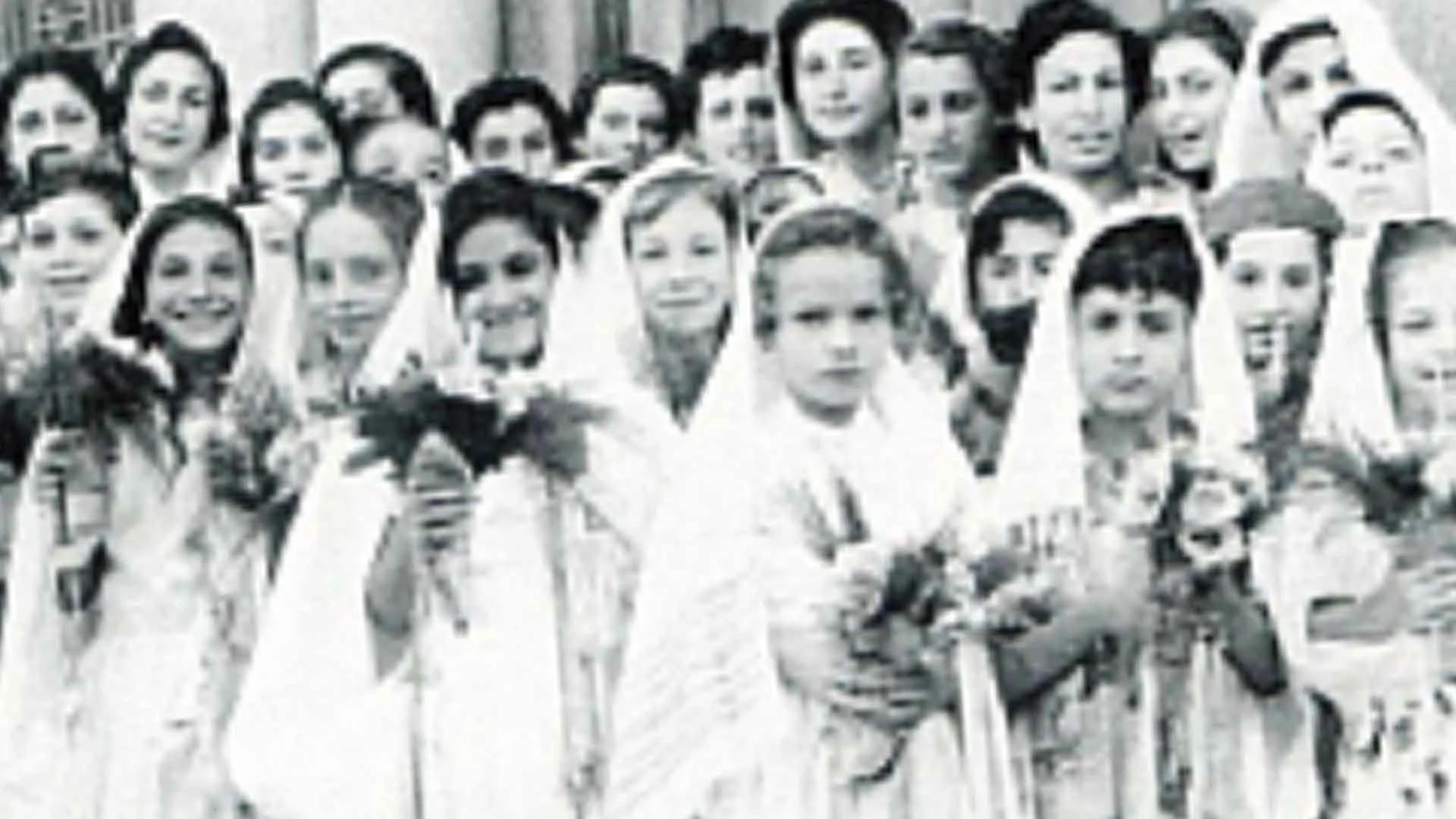
Young Egyptian Karaite women, notice that they are holding their tsisioth in their hands

Menachot 40: אֶלָּא גְּזֵירָה מִשּׁוּם טְעִימָה

jyungar February 20, 2026

For the source text click/tap here: Menachot 40

To download, click/tap here: PDF

We learned earlier that the forbidden mixture of wool and linen, or shaatnez, is allowed in tzitzit, because the two commandments follow each other in the Torah, forming a "this is prohibited, [but] this is allowed" pattern. However, this is only the opinion of Beit Hillel. Beit Shammai, who do not derive conclusions from the proximity of phrases, consequently, do not allow Shaatnez in the tzitzit.

But practically, anybody who would put a blue woolen thread in his linen tzitzit, aroused astonishment in Jerusalem of old. Jerusalem was the place of especially pious people, and they did not use the Beit Hillel's permission. Why not? Must be that in practice Beit Hillel also forbade this.

The sugya in our daf presents what appears, at first glance, to be a deceptively technical debate. A baraita records a dispute between Beit Shammai and Beit Hillel concerning whether a linen garment (sadin) is obligated in the mitzvah of tzitzit. The crux of the disagreement is straightforward: the tekhelet (sky-blue) thread required for tzitzit must be made of wool, and attaching wool threads to a linen garment would produce shaatnez—a prohibited mixture of wool and linen (Deut. 22:11). Beit Shammai, sensitive to this prohibition, exempt the linen garment from tzitzit entirely. Beit Hillel, by contrast, obligate it, invoking the principle that the positive commandment of tzitzit overrides the prohibition of shaatnez. The halakha is declared in accordance with Beit Hillel.


Tags 71st
Comment

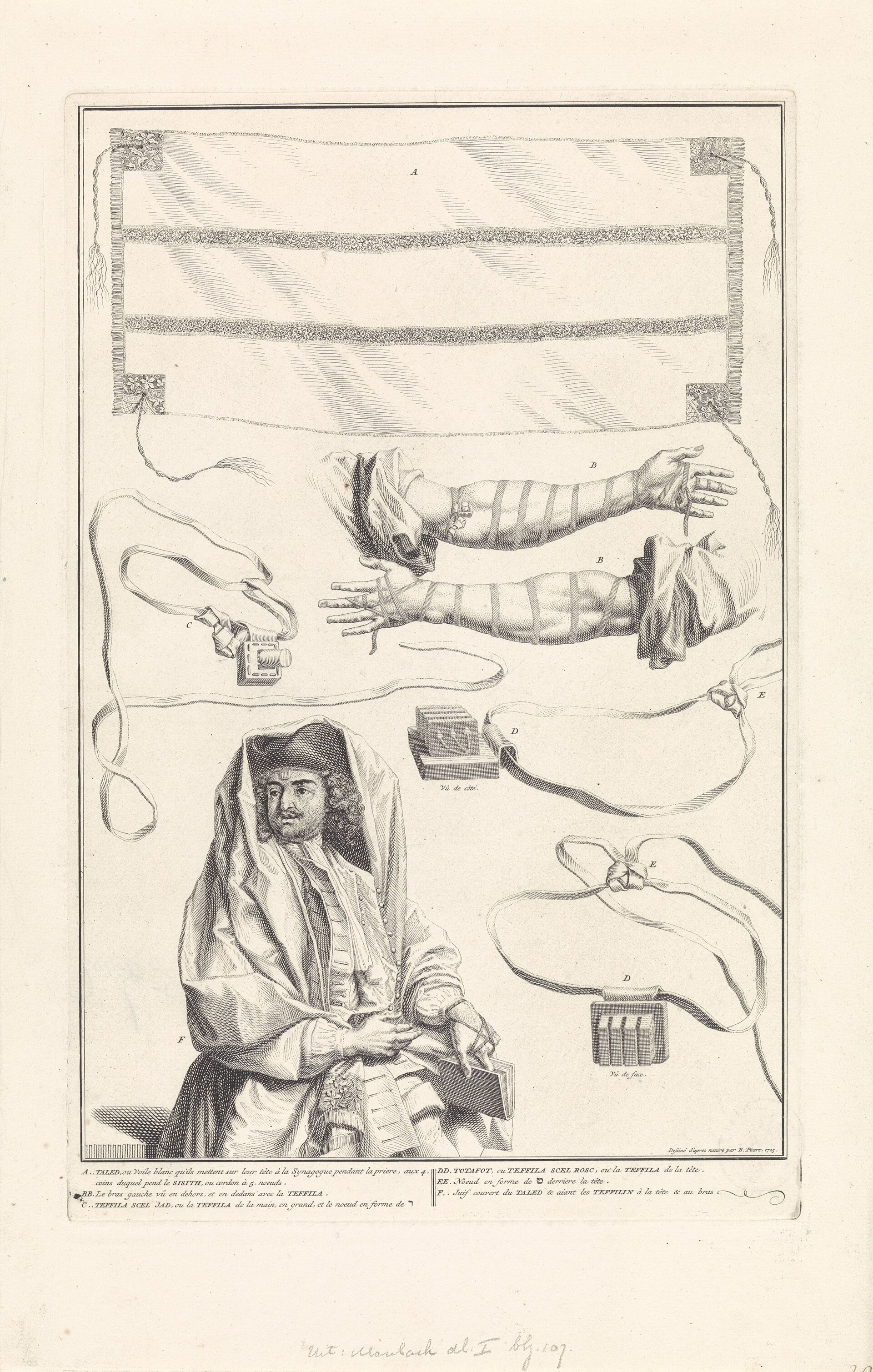
Jewish prayer straps and prayer shawl, with the tzitzit at the corners. Etching, Rijksmuseum, Amsterdam (RP-P-OB-51.710). CC0, via Wikimedia Commons.

Menachot 39: לֹא יִפְחוֹת מִשֶּׁבַע, כְּנֶגֶד שִׁבְעָה רְקִיעִים

jyungar February 19, 2026

For the source text click/tap here: Menachot 39

To download, click/tap here: PDF

The standard method of tying tzitzit today is to take four strings, placing them through the hole at the bottom of each corner of the four-cornered garment so that they are eight strands, with one strand longer than the rest. Five knots are made, with the longer strand twisted around the rest between each of the knots.

Rabba argues that one of the knots is a Torah obligation – the kesher elyon, or “uppermost knot.” His proof for this is that the Torah offers specific dispensation that allows woolen tzitzit with tekehlet (see yesterday’s daf) to be placed on a linen garment, the prohibition of sha’atnez (which prohibits the mixing of wool and linen) notwithstanding. Were there no requirement to actually knot the tzitziyot onto the garment, then this could be done by simply inserting the woolen tzitziyot which by itself would not be prohibited according to the laws of sha’atnez.

We explore the paradox of shaatnez and tzitzit.

Tags 71st
Comment

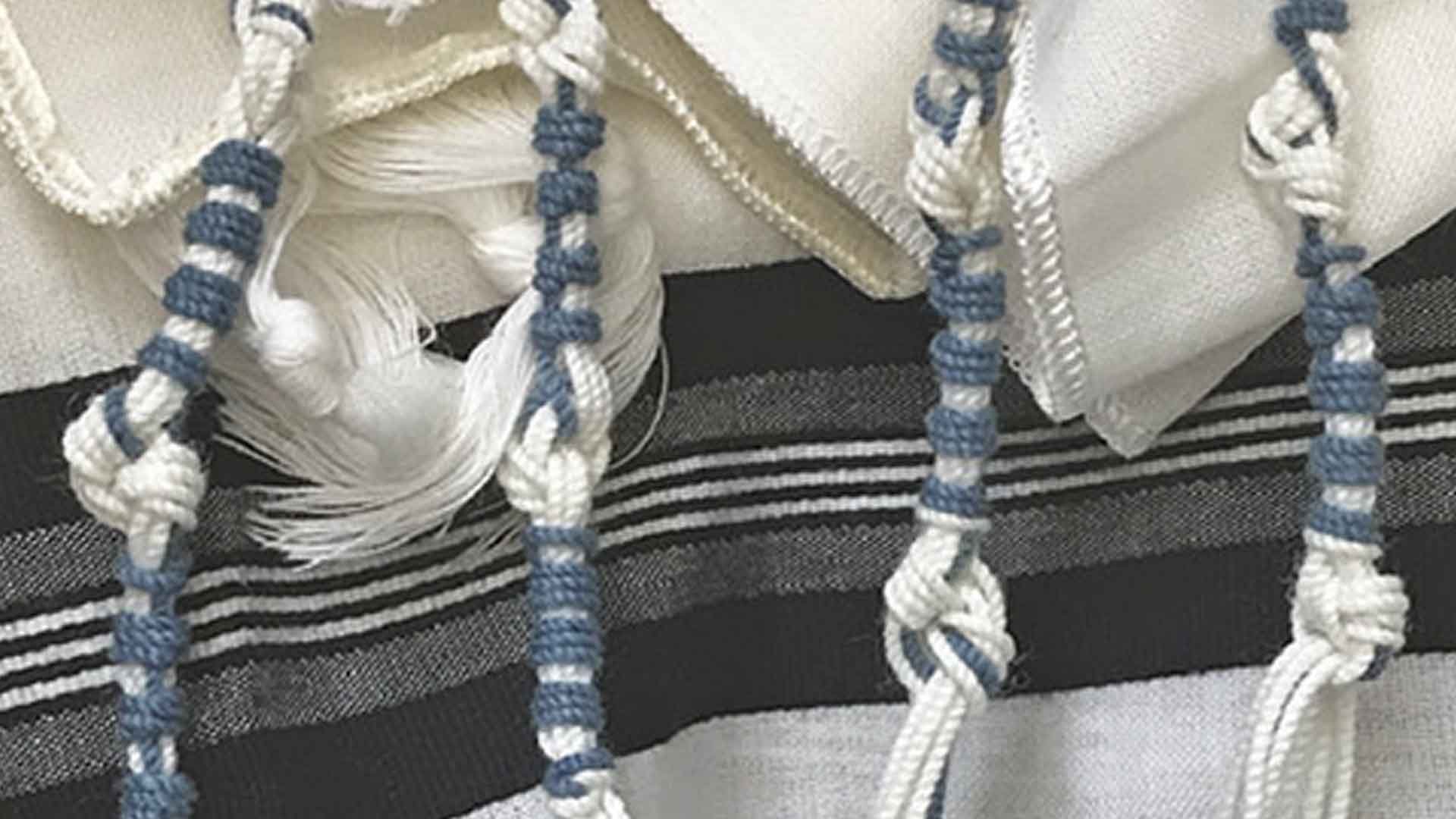
Tzitzit produced from a blue dye derived from Hexaplex trunculus and tied according to the opinion of the Sefer ha- Chinuch

Menachot 38: מִצְוָה לְהַקְדִּים לָבָן לַתְּכֵלֶת

jyungar February 18, 2026

For the source text click/tap here: Menachot 38

To download, click/tap here: PDF

The fourth perek of Massekhet Menaḥot, Perek HaTekhelet, which begins on today’s daf continues discussing a number of loosely related commandments that have two or more parts.

Unlike the previous perek, which dealt with commandments whose different parts depend on one another, (e.g. the four parshiyot in tefillin or the four tzitziyot on a four-cornered garment) this perek focuses on mitzvot that do not depend on each other, so that each part is viewed as a separate commandment that can be fulfilled in-and-of itself (e.g. the tefillin of the arm and the tefillin of the head, or the tekhelet of tzitzit and the tzitzit themselves).

We explore the controversial emergence of the use of techelet in modern times

Tags 71st
Comment

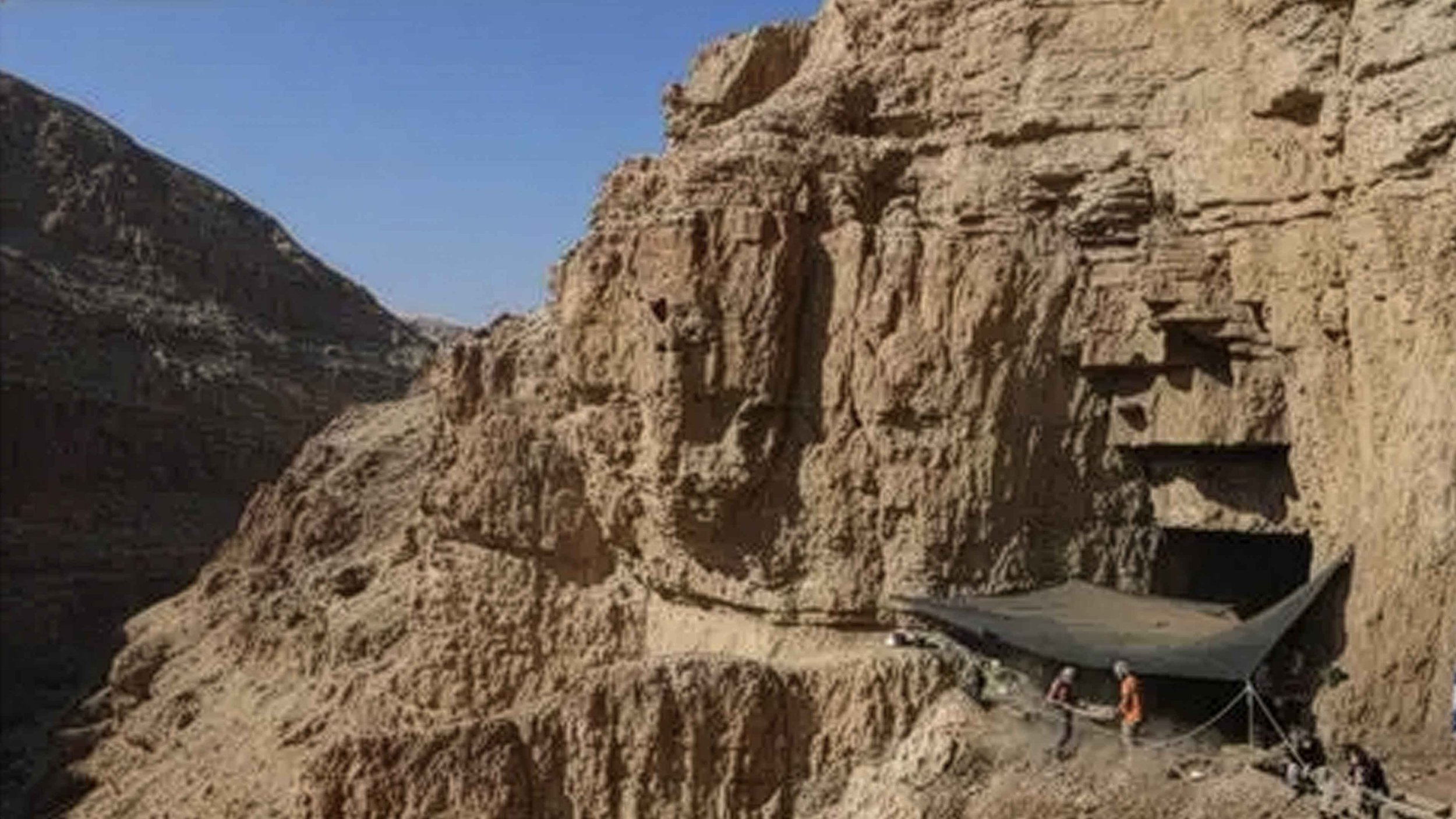
Wadi Mubbarrat Wadi Murabba'at, also known as Nahal Darga, is a ravine in the West Bank, cut by a seasonal stream which runs from the Judean Desert east of Bethlehem past the Herodium down to the Dead Sea 18 km south of Khirbet Qumran. It was here that Jewish fighters hid out in caves during the Bar Kochba revolt, leaving behind documents that include some letters signed by Simon Bar Kochba.

Menachot 37: שָׁאנֵי הָכָא דִּבְגוּלְגּוֹלֶת תְּלָא רַחֲמָנָא

jyungar February 17, 2026

For the source text click/tap here: Menachot 37

To download, click/tap here: PDF

According to the Torah tefillin are worn on the “hand” and “between the eyes” (see Shemot 13:9). The Gemara defines the tefillin of the “hand” as being placed on the kiboret – the bicep, the muscle between the elbow and the shoulder – and the tefillin “between the eyes” as being placed on the skull on the location of the fontanel, the soft area of a baby’s head.

Various derivations are offered explaining why halakha rules that neither “hand” nor “between the eyes” are understood literally by the Sages. When the Gemara suggests that perhaps “tefillin of the hand” should be actually placed on the hand, and that “between the eyes” should be understood literally, it is not only a theoretical discussion. According to the Mishna in Massekhet Megilla (24a) during the time of the Mishna there were Jewish sects that disagreed with the traditional interpretations of the Sages and actually performed the commandmentof tefillin in a literal manner. Among these sects, apparently, were early Christians.

We explore the inter-testamental evidence for proto-tefillin in Wadi Muraba’at Qumran.

Tags 71st
Comment

Menachot 36: חַיָּיב אָדָם לְמַשְׁמֵשׁ בַּתְּפִילִּין בְּכל שָׁעָה

jyungar February 16, 2026

For the source text click/tap here: Menachot 36

To download, click/tap here: PDF

The general approach of the Gemara is that tefillin are a mitzvat aseh she-hazeman gerama – a positive time-bound commandment. When do we refrain from wearing tefillin?

Rabbi Yosei HaGelili points to the passage that commands that tefillin be worn mi-yamim yamimah – from day to day (see Ex 13:10).

He suggests that we can learn from here that it is only appropriate to wear tefillin during the day, and only on some of the days – excluding Shabbat and holidays.

Rabbi Akiva argues that the basic source to limit the commandment of tefillin to weekdays is the previous passage about tefillin “…and they shall be a sign (ot) on your hand and a remembrance between your eyes” (Shemot 13:9), which he understands to mean that tefillin are only necessary when there is a need for an ot – a sign. On days that are considered in and of themselves an ot, there is no need to don tefillin.

Our passage, ostensibly concerned with the practical halakhot of tefillin—donning order, timing of the blessing, endpoint of the mitzvah, and status during nighttime and Shabbat—discloses, upon closer analysis, a series of irreducible conceptual tensions regarding the nature of covenantal signification itself.

Tags 71st
Comment

Menachot 35: שֶׁהֶרְאָה לוֹ הַקָּדוֹשׁ בָּרוּךְ הוּא לְמֹשֶׁה קֶשֶׁר שֶׁל תְּפִילִּי

jyungar February 15, 2026

For the source text click/tap here: Menachot 35

To download, click/tap here: PDF

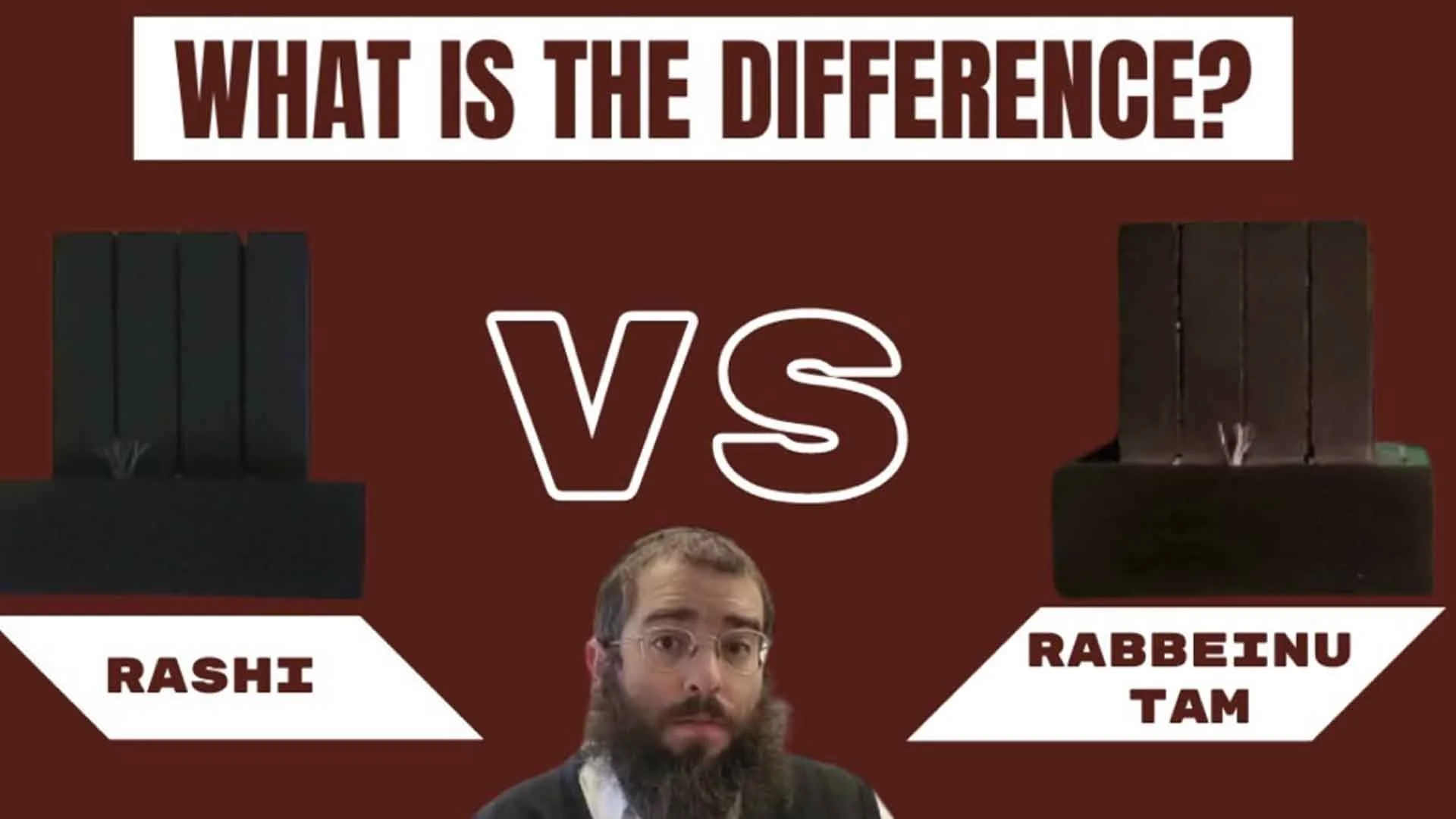
Although the requirement that tefillin be made square is clearly presented by the Gemara as a halakha le-Moshe mi-Sinai, nevertheless, it appears from the discussion of the rishonim that this was only viewed as a necessity with regard to the tefillin shel rosh, but that the single parchment of the tefillin shel yad – tefillin worn on the arm – could be placed in a cylindrical leather covering if placed on a square base. Evidence of this practice can be found by examining the tefillin found in the Cairo geniza and in other illustrated manuals from the Medieval period.

We explore further the Halacha and especially the most arresting anthropomorphic images in rabbinic literature is the claim that God wears tefillin—and more radically, that God showed Moses the knot of His tefillin. In Menachot35b, the Gemara reads the enigmatic verse “Va-hasiroti et kappi v’ra’ita et achorai” (Exod. 33:23) not as a metaphysical abstraction but as a concrete pedagogical act: God reveals to Moses the acherai, His “back,” identified specifically as the knot of the head-tefillin.

Tags 71st
Comment
  • Daf Ditty
  • Older
  • Newer

Julian Ungar-Sargon

This is Julian Ungar-Sargon's personal website. It contains poems, essays, and podcasts for the spiritual seeker and interdisciplinary aficionado.​