
For the source text click/tap here: Menachot 48
To download, click/tap here: PDF
The Gemara quotes a Beraisa which states that if four loaves were prepared for the Shtei ha'Lechem instead of two loaves, two are taken in order to perform the Tenufah (waving the loaves together with the Kevasim, when the Kevasim are alive and after they are slaughtered), and two are "redeemed" and eaten by the Kohanim. The Gemara suggests that the Beraisa may be consistent even with the view of Rebbi, who maintains that it is the Shechitah of the Kevasim which sanctifies the Shtei ha'Lechem.
The Gemara asks that the Beraisa does not seem to follow the view of Rebbi. If, as Rebbi maintains, the loaves become Kadosh with Kedushas ha'Guf at the time of the Shechitah of the Kevasim, then how can the extra two loaves be redeemed?
The Beraisa cannot mean that they may be redeemed outside of the Beis ha'Mikdash, because it is forbidden to bring them outside ("Yotzei") since they are Kadosh. On the other hand, the Beraisa cannot mean that they may be redeemed inside the Beis ha'Mikdash, because they would then become Chulin in the Azarah, and one may not bring Chulin into the Azarah. The Gemara answers that Rebbi maintains there is no prohibition against redeeming an object of Kedushah which is already inside the Azarah and making it Chulin. The prohibition applies only to bringing a Chulin object into the Azarah
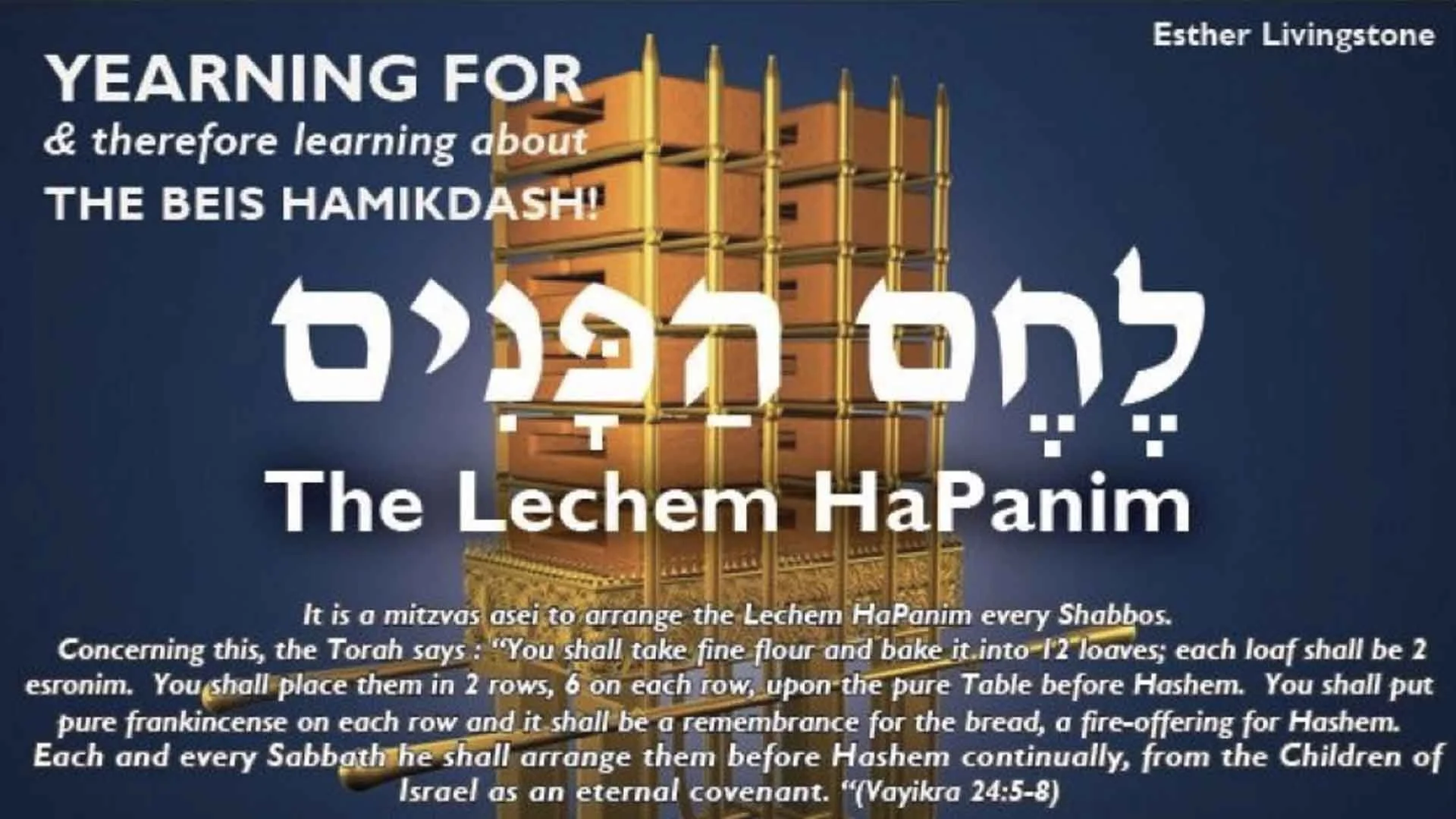
We continue our exploration of the showbread in bible vs rabbinics.