
For the source text click/tap here: Menachot 39
To download, click/tap here: PDF
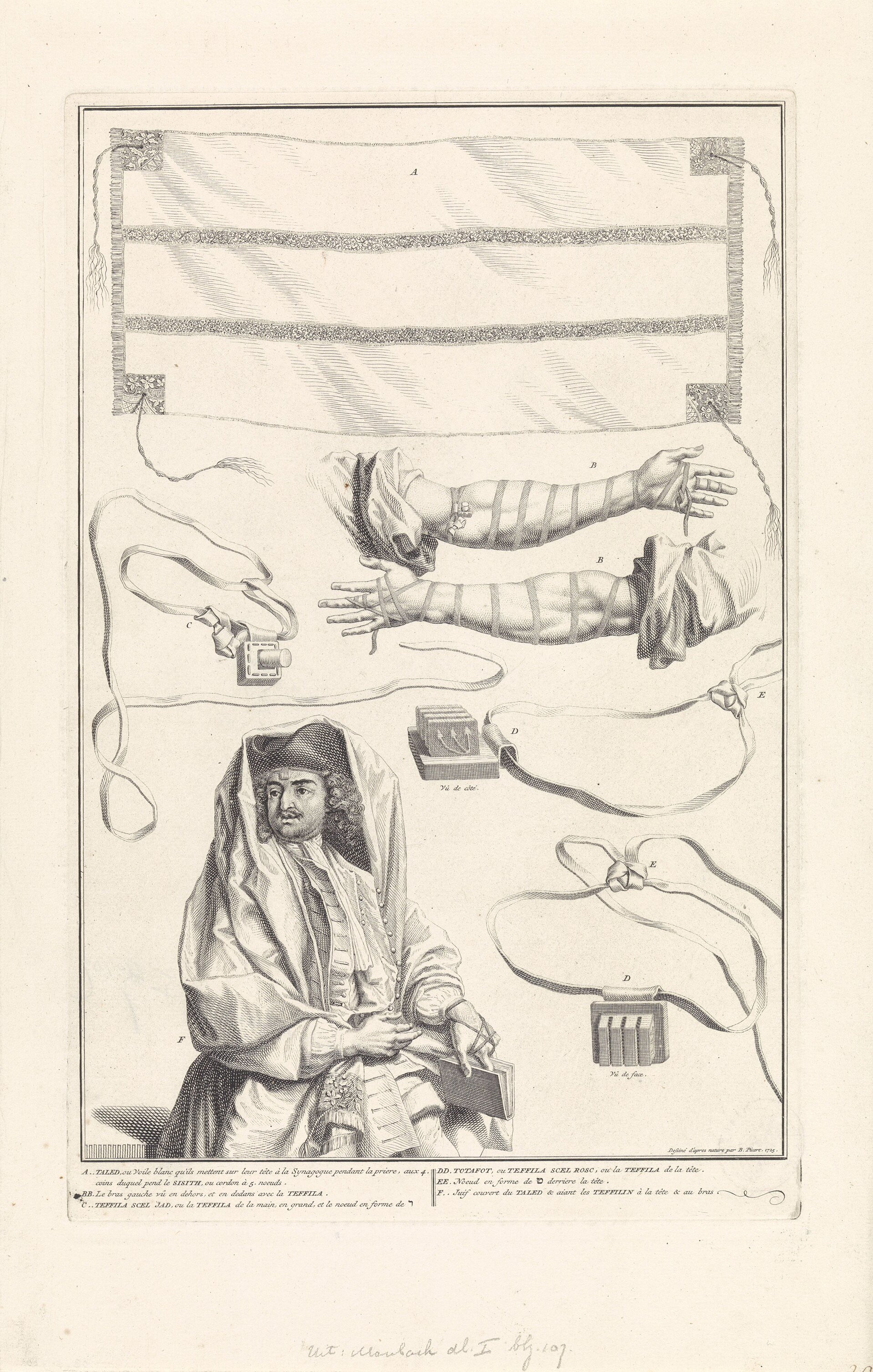
The standard method of tying tzitzit today is to take four strings, placing them through the hole at the bottom of each corner of the four-cornered garment so that they are eight strands, with one strand longer than the rest. Five knots are made, with the longer strand twisted around the rest between each of the knots.
Rabba argues that one of the knots is a Torah obligation – the kesher elyon, or “uppermost knot.” His proof for this is that the Torah offers specific dispensation that allows woolen tzitzit with tekehlet (see yesterday’s daf) to be placed on a linen garment, the prohibition of sha’atnez (which prohibits the mixing of wool and linen) notwithstanding. Were there no requirement to actually knot the tzitziyot onto the garment, then this could be done by simply inserting the woolen tzitziyot which by itself would not be prohibited according to the laws of sha’atnez.
We explore the paradox of shaatnez and tzitzit.