Julian Ungar-Sargon

  • Home
  • Theological Essays
  • Healing Essays
  • Podcast
  • Poetry
  • Daf Ditty
  • Deep Dive Ditty
  • Videos
  • Publications
  • Military Service
  • Dominican University
  • Home
  • Theological Essays
  • Healing Essays
  • Podcast
  • Poetry
  • Daf Ditty
  • Deep Dive Ditty
  • Videos
  • Publications
  • Military Service
  • Dominican University
Julian Ungar-Sargon copy 3.jpg

Daf Ditty

A wide-ranging commentary on the daily page of Talmud.

Zevachim 117: לְעוֹלָם כּוּלְּהוּ תְּלָתָא הָווּ

jyungar January 9, 2026

For the source text click/tap here: Zevachim 117

To download, click/tap here: PDF

We have already learned the opinion of Rabbi Shimon, who ruled that upon entering the Land of Israel and erecting the Tabernacle temporarily in Gilgal, the people could not bring obligatory sacrifices until the Tabernacle was established in Shiloh in a more permanent manner (see above, daf 114). This position was disputed by other Sages, as we learn on our daf.

The Ḥakhamim rule that all sacrifices that were brought in the desert were brought on the altar in Gilgal as well, and in both places individual sacrifices were limited to a korban ola (a burnt-offering) or a korban shelamim (a peace-offering).

We explore further the transition of the three camps...
Tags 70th
Comment

Zevachim 116: יְהֵא מָחוּל לִי בִּשְׂכַר חֶבֶל חַלּוֹן וּפִשְׁתִּים

jyungar January 8, 2026

For the source text click/tap here: Zevachim 116

To download, click/tap here: PDF

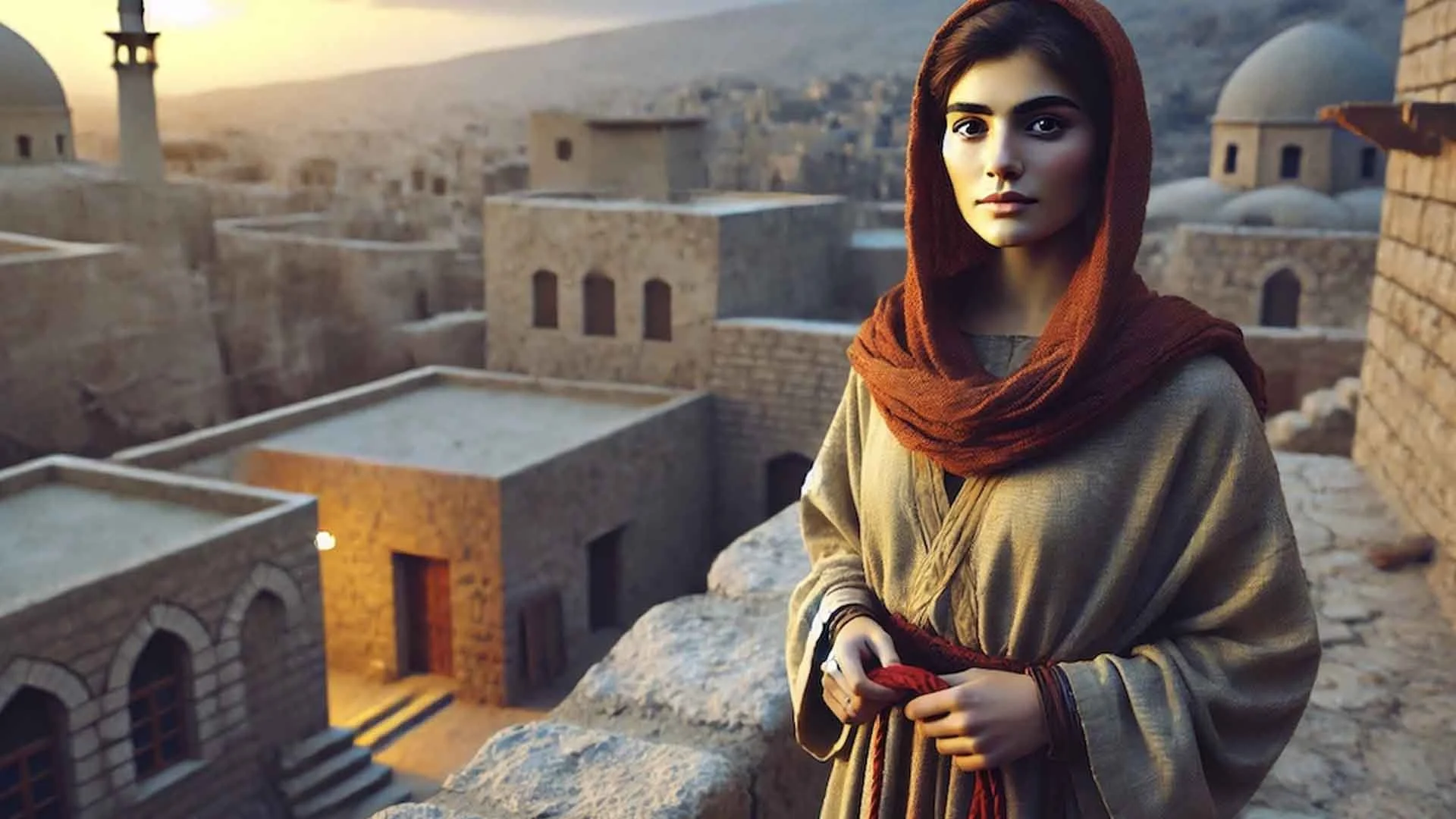
According to our daf the revelation at Sinai produced cosmic trembling. The nations of the world, perceiving the extraordinary character of this event, gathered before Balaam to inquire about its meaning. Balaam explains that God is giving Torah to Israel, and the nations, reassured that the upheaval does not signal a second flood, pronounce a blessing upon Israel. This narrative framework establishes the theological context within which Rahab's testimony will be situated: she speaks as a representative of those nations who have witnessed, from the outside, the power of Israel's God…

We explore her role in Pshat, Midrash and modern voices.

Tags 70th
Comment

Zevachim 115: כְּלָלוֹת וּפְרָטוֹת נֶאֶמְרוּ בְּסִינַי

jyungar January 7, 2026

For the source text click/tap here: Zevachim 115

To download, click/tap here: PDF

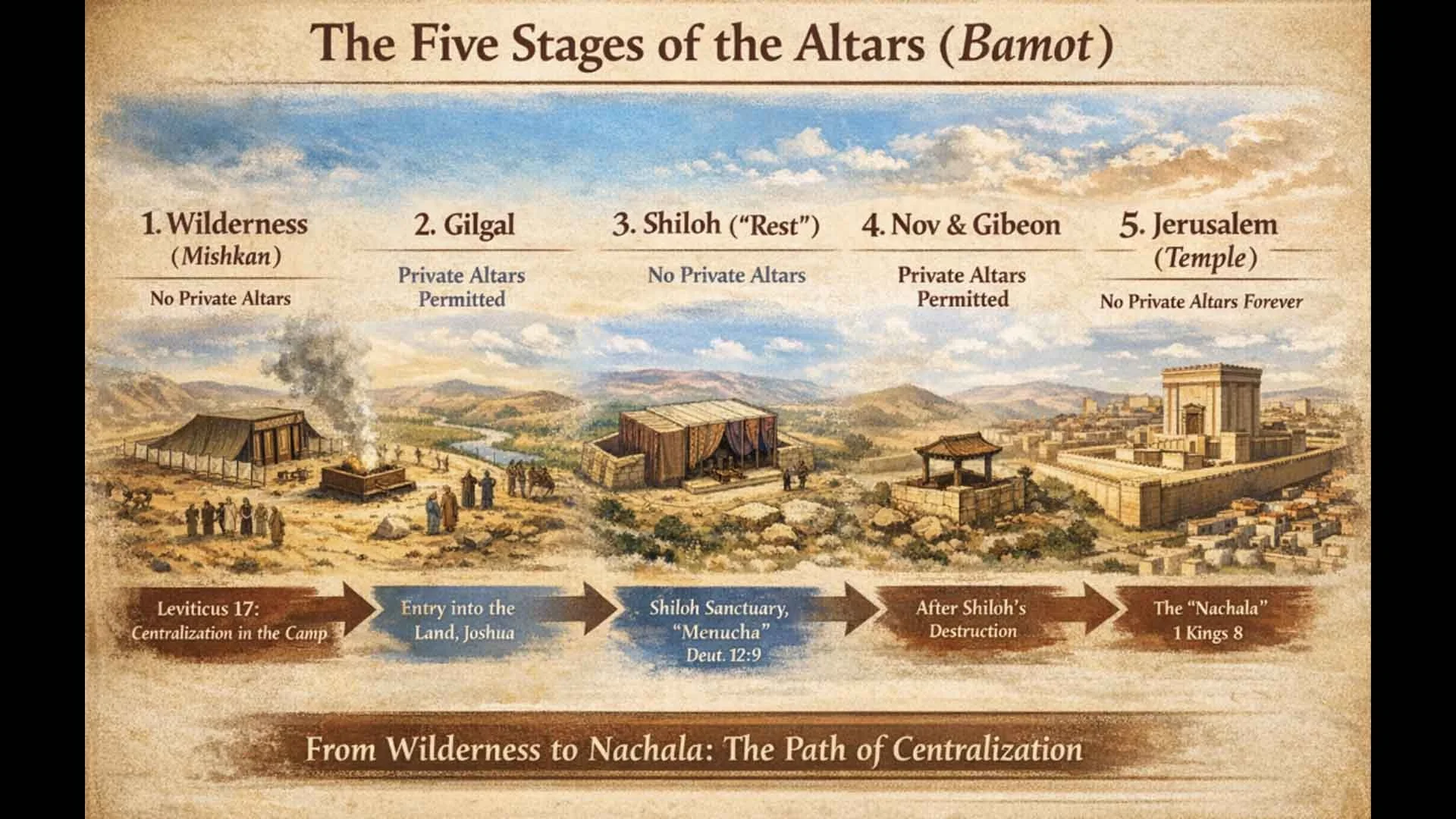
According to the Mishna (112b) until the Tabernacle was established in the desert, sacrifices were brought on bamot – private altars – and the sacrificial service was performed by the bekhorim, the firstborn.

After the Tabernacle was erected sacrifices could only be brought there and the sacrificial service was performed by the kohanim – descendants of Aharon HaKohen.

According to the Mishna, the commandment to sanctify the firstborn was given at the time of the Exodus from Egypt (see Ex 13:2), and the firstborn redeemed themselves from Temple service later on, as described in Num (3:12).

According to the Talmud Yerushalmi, the reason for this was the participation of the firstborn in sacrificing to the Golden Calf, something that the members of the Tribe of Levi did not do.

We explore the transition from Firstborns to priesthood.

Tags 70th
Comment

Zevachim 114: אֶלָּא שֶׁלֹּא לִזְמַנּוֹ

jyungar January 6, 2026

For the source text click/tap here: Zevachim 114

To download, click/tap here: PDF

The Gemara looks back to our last Mishna and examines on of its points: what was the status of the sacrifices brought to the Temple when the Israelites first entered the land?

We learned that people were not liable if they brought sacrifices at the wrong time - turtledoves that were too young; pigeons that were already too grown. But Rabbi Shimon argues that a sacrifice brought at the wrong time should receive malkot, lashes.

Rabbi Shimon boosts his argument by explaining that the Torah forbids bringing sacrifices in the same way that they were brought in the desert once the people reach Israel. The people could only bring voluntary and not communal offerings once entering the land. Voluntary sacrifices could be brought in the Tabernacle erected in Gilgal. Once the people arrived at Shiloh and Jerusalem, the obligatory sacrifices could be brought again as they were in the desert.

The Mishna discusses various cases of premature sacrifices and cites a dispute between the Sages and Rabbi Shimon whether there is a violation of slaughtering outside the Temple when at the moment it is unfit to be brought as a sacrifice inside. The implication is that if one were to consecrate an animal that is premature (either before the eighth day or the day that the mother was slaughtered) or a bird that is premature (turtledoves before they mature), the hekdesh status would be binding.

We explore time and space in korbonot and rabbinic culture.

Tags 70th
Comment

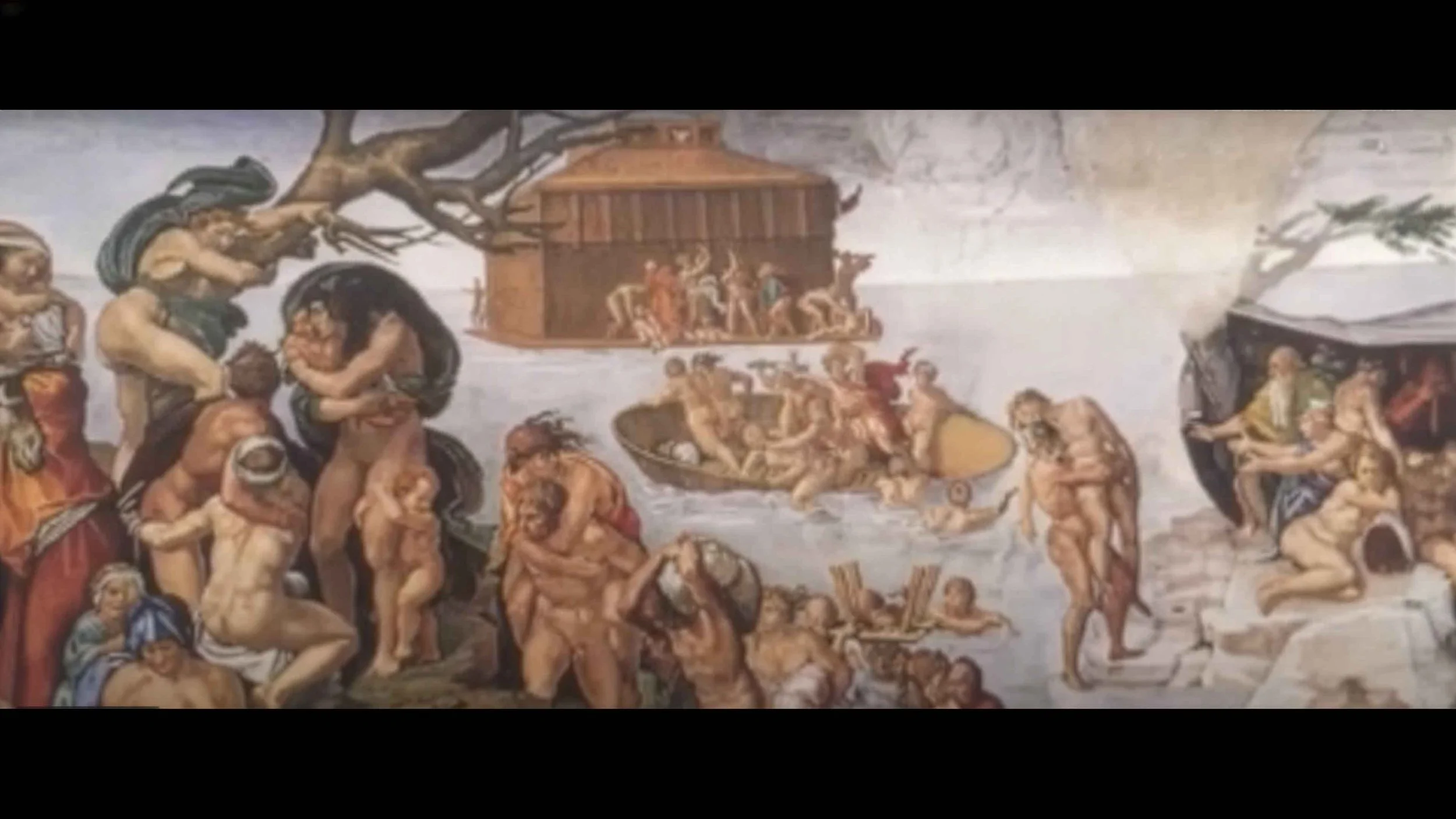
The Flood Scene, The paintings by Michelangelo in the Sistine Chapel all have a strong religious theme. In the central section of the ceiling, Michelangelo painted nine panels with each one showing a scene from the Book of Genesis

Zevachim 113: וַהֲלֹא כׇּל אֶרֶץ יִשְׂרָאֵל בְּדוּקָה הִיא

jyungar January 5, 2026

For the source text click/tap here: Zevachim 113

To download, click/tap here: PDF

The Gemara on our daf asks what is special about the place that was set aside for preparing the para aduma. Although the Mishna in Massekhet Para (4:2) teaches that there is a specific place that it should be prepared, the Torah makes no mention of such a requirement. Reish Lakish taught that this was a special place that had been certified as containing nothing that might ritually defile the para aduma. Rabbi Yoḥanan objects to this teaching, arguing that all the land of Israel has been checked and found to be pure of such defilement.

The Gemara explains this disagreement as being based on how these Sages viewed the destruction of the Flood.

According to Rabbi Yoḥanan, the land of Israel was not affected by the flood, so there is no fear that there are bones buried in unmarked and unknown graves. Reish Lakish believes that the Flood reached the land of Israel, as well, so only places that had been scrupulously checked could be certified as pure.

Tags 70th
Comment

Zevachim 112: וְאֵלּוּ קָדָשִׁים קְרֵבִין בַּמִּשְׁכָּן

jyungar January 4, 2026

For the source text click/tap here: Zevachim 112

To download, click/tap here: PDF

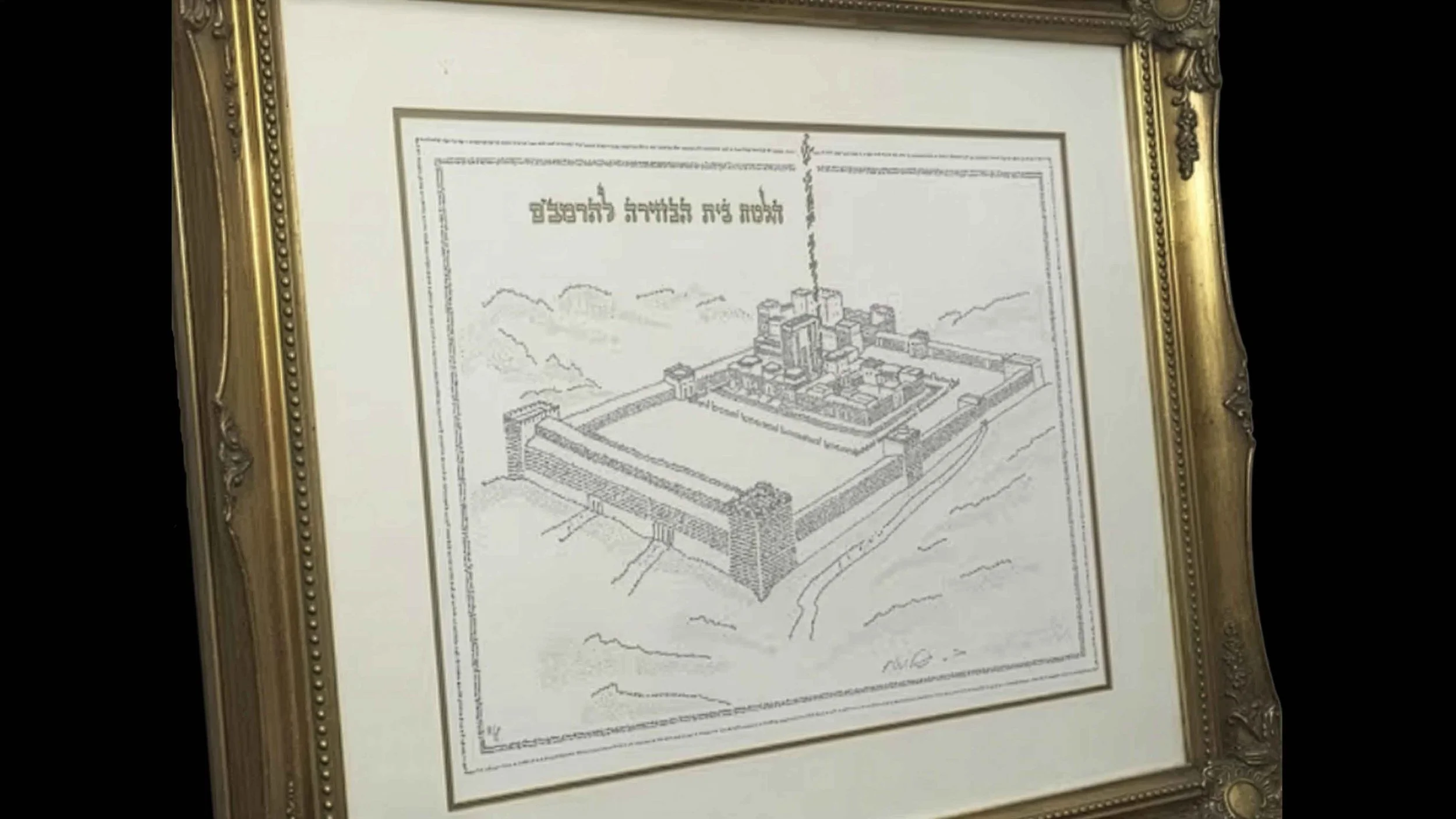
We analyze the Talmudic description of the five cultic transitions—Wilderness, Gilgal, Shiloh, Nov/Gibeon, and Jerusalem—as presented in Mishnah Zevachim, comparing it with the biblical narrative and the historiography of Josephus. The study demonstrates that the Talmud is not merely recording history but constructing a legal topology of sanctity. Biblical peshat presents a linear theological story of divine presence migrating toward permanence; Josephus offers apologetic-national historiography designed to present Jewish religion as venerable and rational to Roman audiences; the Talmud constructs a jurisprudential map governing liability, legitimacy, and the ontology of sacred space. By examining how each source treats the transitions between cultic centers, this essay illuminates the distinct hermeneutical purposes animating these textual traditions.

Tags 70th
Comment

Zevachim 111: לְמָה הַדָּבָר דּוֹמֶה? לְמַפְרִישׁ חַטָּאתוֹ וְאָבְדָה

jyungar January 3, 2026

For the source text click/tap here: Zevachim 111

To download, click/tap here: PDF

The Gemara analyzes the Mishnah in order to understand the disagreement between Tanna Kamma and R’ Shimon.

Zeiri explains that the case in which they disagree is where the animal was slaughtered at night inside the Mikdash, and the animal was then removed and offered outside the courtyard of the Mikdash. Tanna Kamma is the view of R’ Yehuda (84a) who holds that an animal slaughtered at night inside the Mikdash is not valid at all, and it may not be brought as an offering.

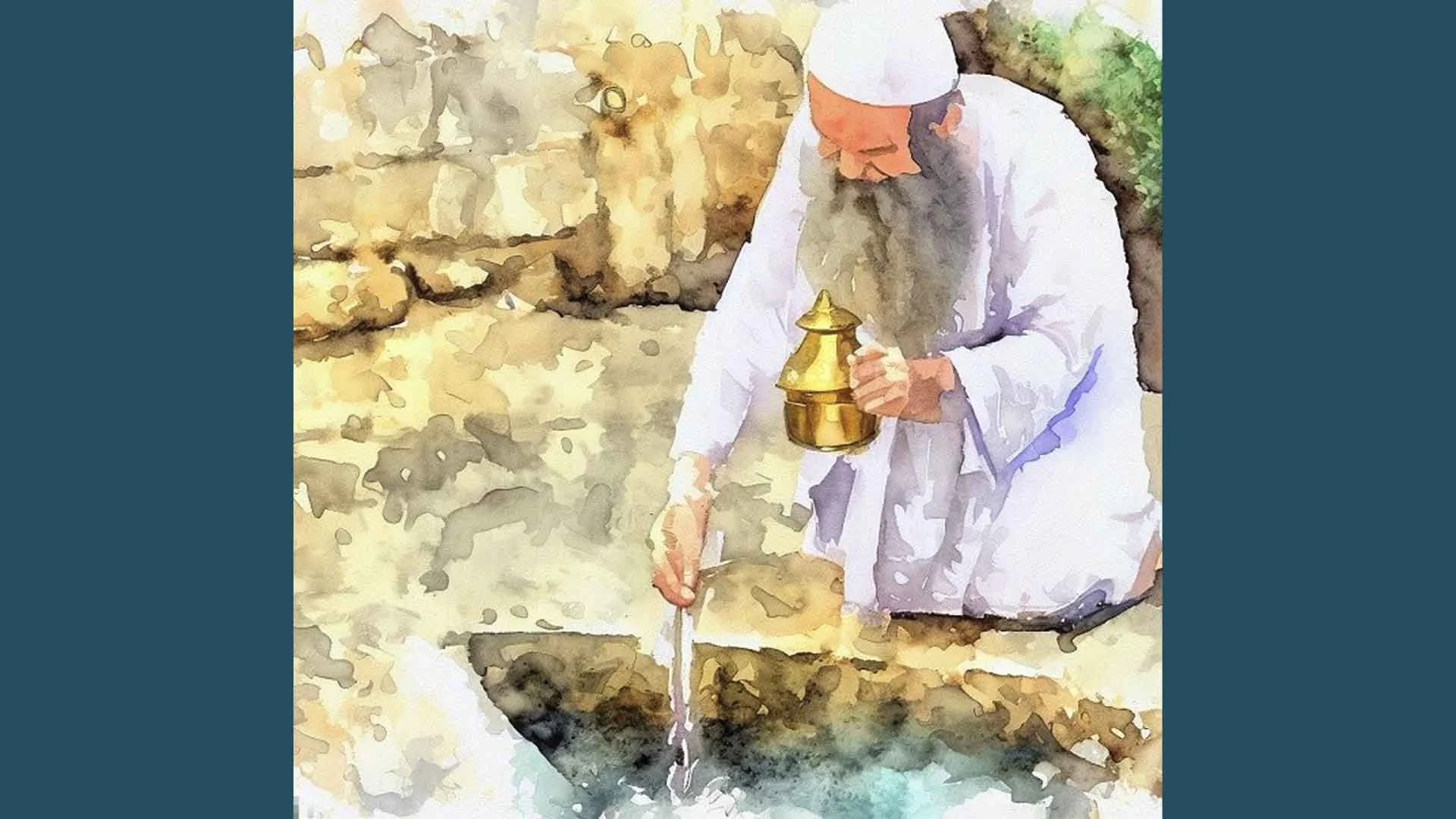
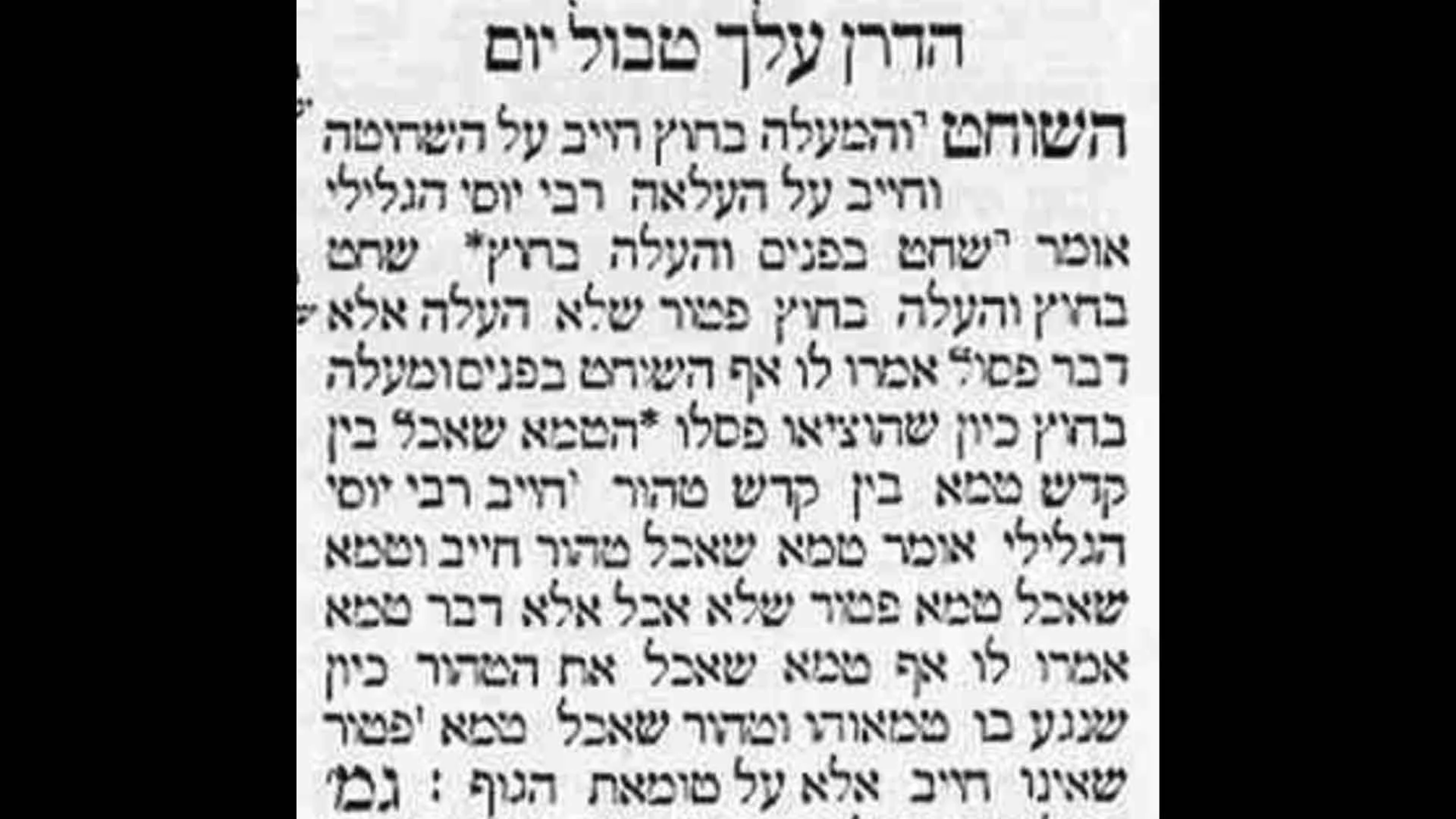
The last daf in the The chapter HaShochet VeHaMa'aleh (Zevachim ch. 13) develops the Torah's prohibition against slaughtering or offering sacrifices outside the Temple (sheḥutei ḥutz and ha'alot ḥutz) into a dense halakhic system that specifies liability, minimum measures, the status of disqualified offerings, and the treatment of composite rites such as kometz, ketoret, and libations.

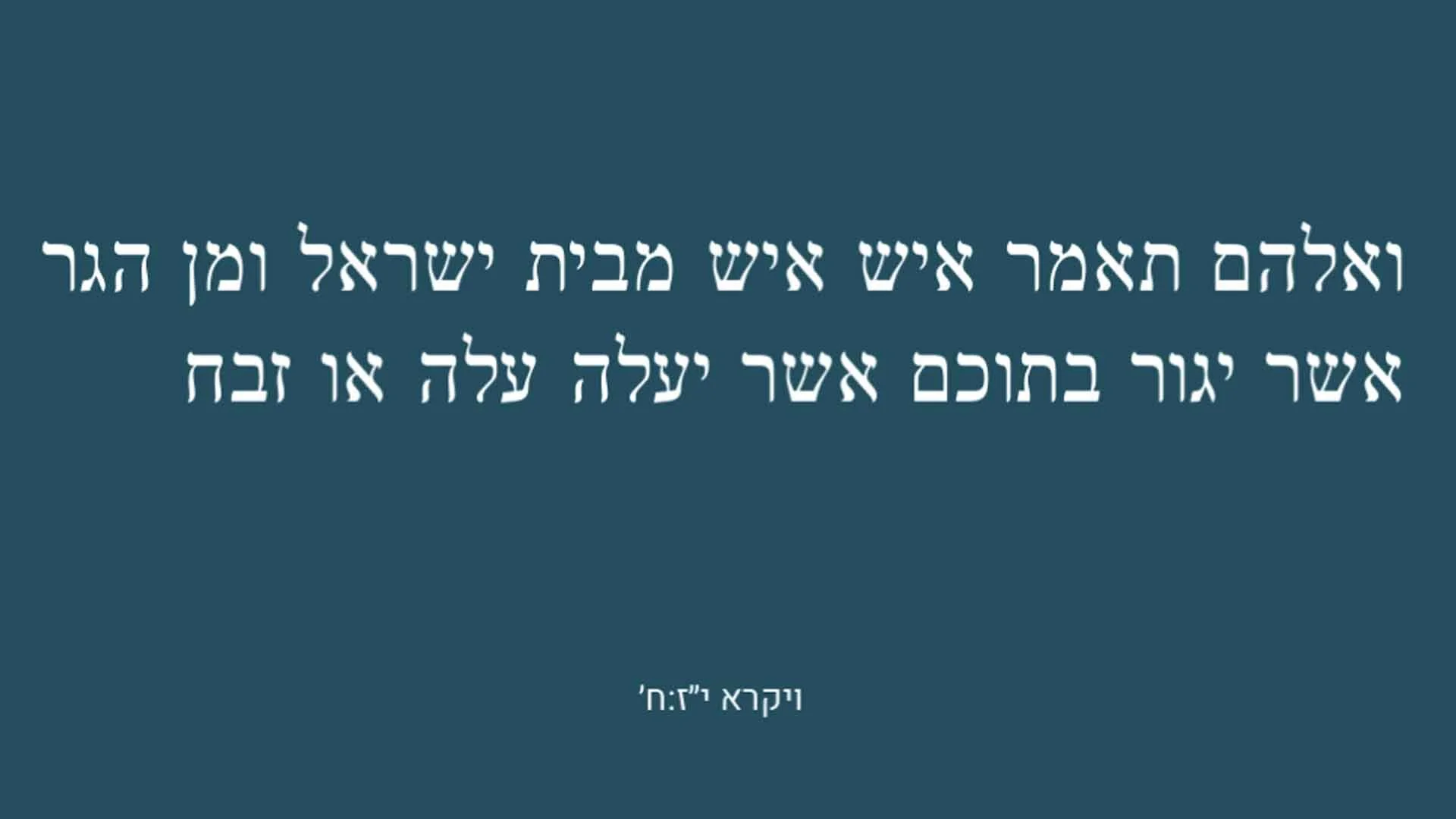
Read at the level of peshat, Leviticus 17 appears to address a historically situated problem—centralizing sacrificial slaughter to curb idolatrous practice and to locate blood-ritual within the sanctuary

The Bavli, however, generalizes and operationalizes the text through midrashic rules (ribbuy/mi'ut, gezerah shavah, semantic expansions, and systemic analogies), creating a jurisprudence that often moves beyond what a plain reading would naturally yield.

Tags 70th
Comment

Zevachim 110: מִמָּקוֹם שֶׁפָּסַק הוּא מַתְחִיל

jyungar January 2, 2026

For the source text click/tap here: Zevachim 110

To download, click/tap here: PDF

As we have learned (daf 107), this perek focuses on the prohibition against bringing sacrifices outside of the Temple. In fact, not only are sacrifices forbidden outside of the Temple, but all services unique to the Temple cannot be performed outside of it. In the Mishna on our daf Rabbi Elazar teaches that someone who pours a water libation on the holiday of Sukkot outside of the Temple is liable for performing a Temple service inappropriately. (See Daf Ditty Sukkah 48)

The sugya in our daf stands at a critical intersection of ritual law, hermeneutics, and rabbinic authority. Ostensibly addressing liability for sacrificial acts performed outside the Temple courtyard, the passage becomes a sustained meditation on what constitutes an act of avodah, how partial ritual performances acquire full legal status, and—most strikingly—how the Talmud legislates binding law for a rite whose biblical basis is obscure or absent: nissukh ha-mayim, the water libation of Sukkot.

Tags 70th
Comment

Zevachim 109: דְּמָר סָבַר: ״מְלֹא חׇפְנָיו״ דַּוְקָא

jyungar January 2, 2026

For the source text click/tap here: Zevachim 109

To download, click/tap here: PDF

The Mishnayot on our daf discuss different types of Temple services for which those who perform them outside of the Beit HaMikdash will be held liable.

The first Mishna on the page concludes with a ruling that if a ka-zayit – an olive size piece of the sacrifice – is brought outside the Temple, that would be sufficient to be considered a sacrifice that took place outside, with all of the associated repercussions.

In the second Mishna on the page we learn that other types of Temple services also cannot be performed outside of the Beit HaMikdash. Therefore, if a ka-zayit from one of the various types of meal-offerings were sacrificed outside of the Temple, the individual who performed the service would be held liable. In this case, however Rabbi Eliezer rules that a ka-zayit would not be enough, and only if the entire meal offering were brought outside would the service be considered to be significant.

Tags 70th
Comment

Zevachim 108: שְׁנַיִם שֶׁאָחֲזוּ בְּסַכִּין

jyungar December 31, 2025

For the source text click/tap here: Zevachim 108

To download, click/tap here: PDF

The thirteenth perek of Massekhet Zevaḥim focuses on the prohibition against bringing sacrifices outside of the Temple. The Mishna on our daf discusses the question of whether a sacrifice that is brought outside the Temple must be brought on an altar in order for the person who brought the sacrifice to be deemed liable. According to Rabbi Yosei, without an altar there is no sacrifice, and it cannot be considered a korban that is brought in a forbidden manner. Rabbi Shimon disagrees, arguing that even if the sacrifice was brought on a rock or a stone it is considered an attempt to bring a korban, and the person who performed that service would be held liable.

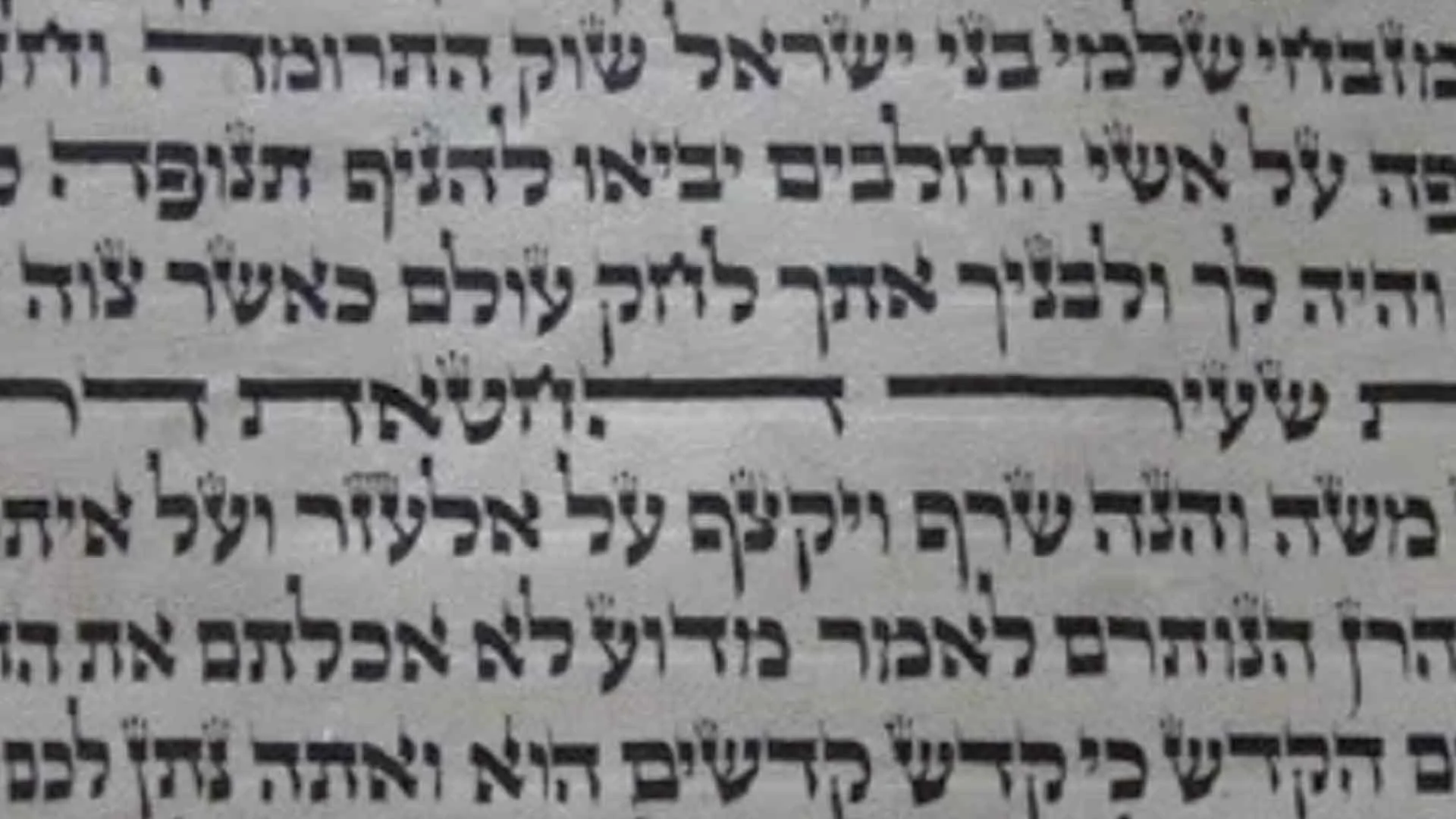
Much of our daf centers on the interpretation of ish ish in “Any man [ish ish] of the house of Israel…that offers up a burnt offering” (Leviticus 17:8).

We explore the hermeneutic divide as to interpreting merely one repetitive word in the biblical text and the Halachic consequences thereof.

Tags 70th
Comment

Zevachim 107: שְׁלֹשִׁים וְשֵׁשׁ כָּרֵיתוֹת בְּתוֹרָה

jyungar December 30, 2025

For the source text click/tap here: Zevachim 107

To download, click/tap here: PDF

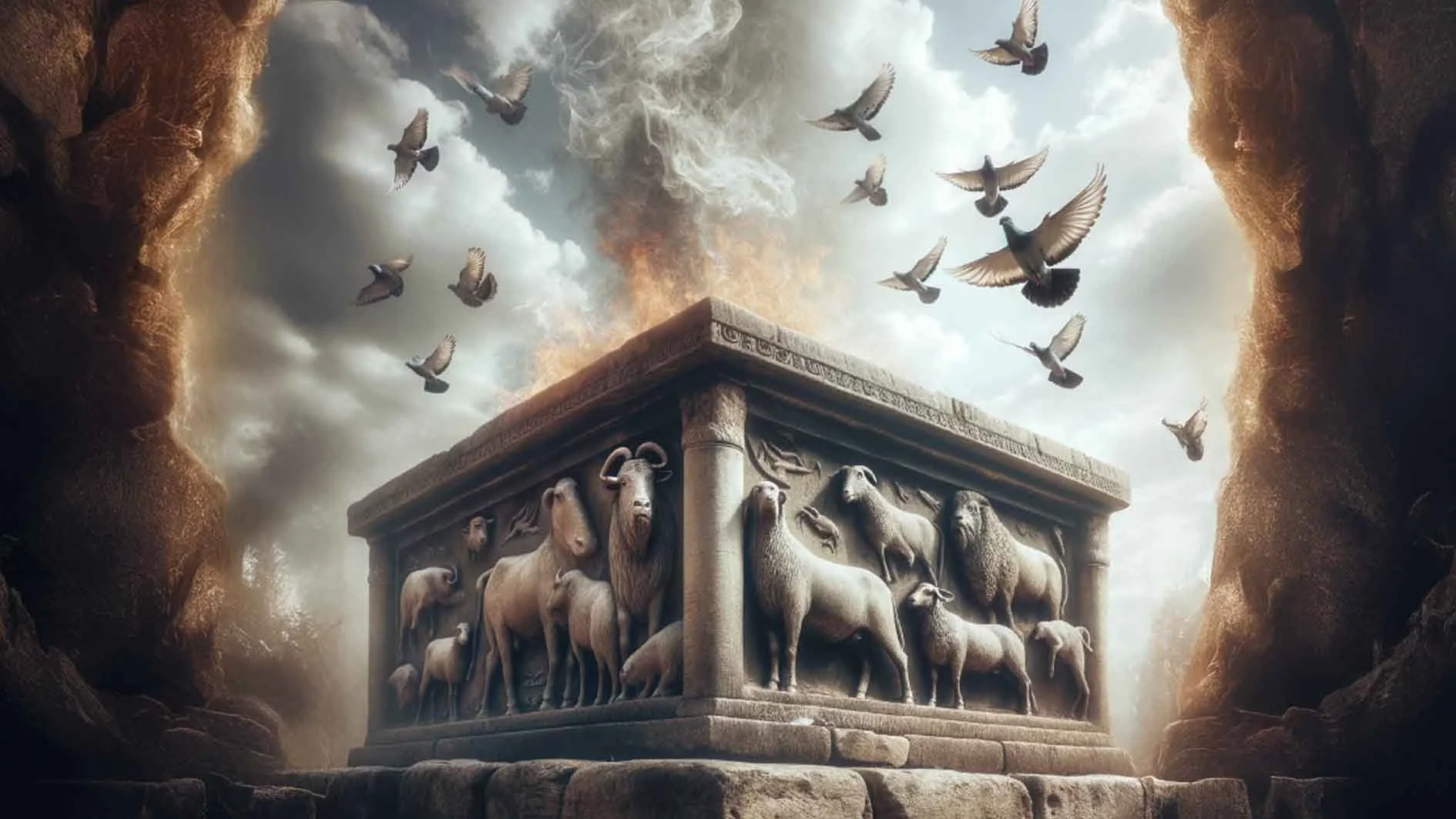
Sacrifices must be brought only in the Temple. The thirteenth perek of Massekhet Zevaḥim, which began on yesterday’s daf focuses on the prohibition against bringing sacrifices outside of the Temple.

This prohibition is not connected with idol worship, for even sacrifices whose intent is to serve God can only be brought in the Temple. Slaughtering or sacrificing an animal outside of the Temple is considered to be a very severe violation of Torah law (see Lev 17:3-9), and carries with it the punishment of karet – “excision” – which is generally understood to mean premature death.

In our day, when the Temple is no longer standing, what is the status of someone who brings a sacrifice?

Tags 70th
Comment

Zevachim 106: מִכָּאן וְאֵילָךְ – בִּזְבָחִים שֶׁהִקְדִּישָׁן בִּשְׁעַת הֶיתֵּר הַבָּמוֹת וְהִקְרִיבָן בִּשְׁעַת אִיסּוּר הַבָּמוֹת

jyungar December 29, 2025

For the source text click/tap here: Zevachim 106

To download, click/tap here: PDF

The Mishnah taught that if someone unintentionally slaughters and offers an animal outside the courtyard of the Mikdash, he is liable for a chattas for slaughtering and a separate chattas for offering that animal.

The Gemara immediately identifies the source in the Torah where we find both a warning (Devarim 12:13) and a statement of punishment (Vayikra 17:8-9) for one who offers such an animal.

The Gemara then notes that although the punishment of kareis for slaughtering an animal outside the courtyard is found in Vayikra (17:3-4), it is not clear where the warning for this offense is mentioned. Rashi explains that there cannot be a chattas obligation without the Torah warning that such an act is prohibited.

We further explore the parameters of shechutei chutz.

Tags 70th
Comment

Zevachim 105: הֵיכָן נִשְׂרָפִין? לִצְפוֹן יְרוּשָׁלַיִם

jyungar December 28, 2025

For the source text click/tap here: Zevachim 105

To download, click/tap here: PDF

The Gemara on our daf discusses the source for this halakha and quotes a baraita that explains that regarding the sacrifices brought on Yom Kippur the Torah sounds as if they must be removed and burned outside of a single encampment (see Lev 16:27), while regarding other such sacrifices the requirement is to burn them outside of three camps (the inner camp of the Tabernacle, the middle camp of the tribe of Levi and the outer camp of Israelites) in the desert.

From this we understand that although the sacrifices must be burned on the beit ha-deshen outside of all three camps (and in Temple times, outside the walls of the city of Jerusalem), nevertheless, the ritual defilement of the clothing of the kohanim associated with this service takes effect immediately upon leaving the encampment of the Tabernacle (or the Temple courtyard).

Tags 70th
Comment

Zevachim 104: שְׁלֹשָׁה בֵּית הַדְּשָׁנִין הֵן

jyungar December 27, 2025

For the source text click/tap here: Zevachim 104

To download, click/tap here: PDF

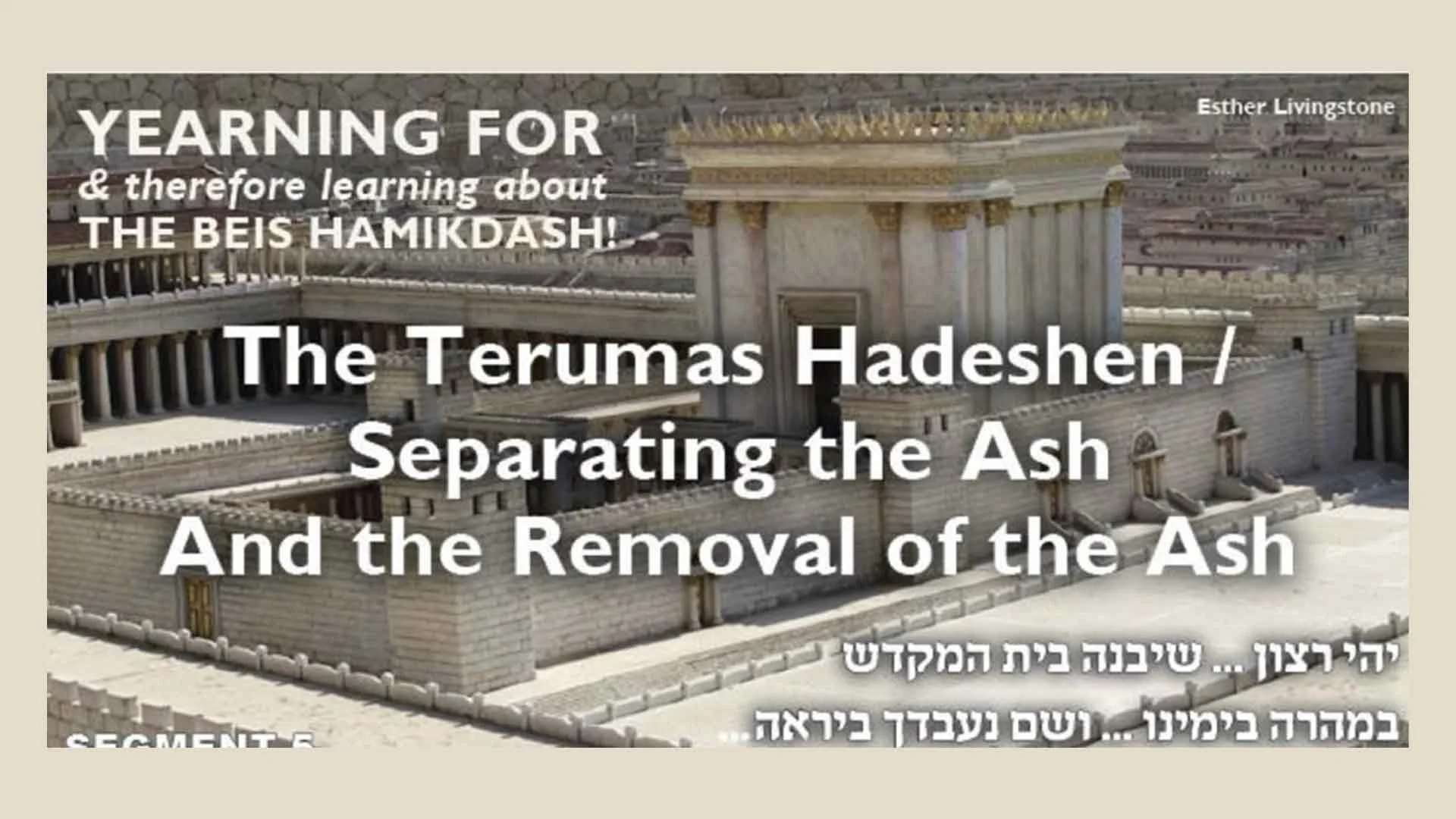
There are some korbanot that must be burned entirely after their blood is sprinkled on the altar and their innards are sacrificed. Thus, many of the Yom Kippur sacrifices, as well as some of the public guilt offerings (for example, those brought by the kohen gadol, and those brought by the Great Sanhedrin that erred and caused the majority of the community to sin) were taken to the beit ha-deshen – the place of the ashes – to be burned (see Vayikra 4:12). If, however, a korban is burned because it must be destroyed, e.g. some error or blemish kept it from being brought as a sacrifice, the Mishna on today’s daf teaches that it is not taken to the beit ha-deshen, rather it is burned in the beit ha-bira.

What were these places where the sacrifices were burned?

Rav Naḥman quotes Rabba bar Avuh as teaching that there were three places in the environs of the Temple that served as repositories for ashes.

We explore the meaning of ash in bible talmud and memory.

Tags 70th
Comment

Zevachim 103: עוֹרוֹת קדְשֵׁי קָדָשִׁים לְכֹהֲנִים

jyungar December 26, 2025

For the source text click/tap here: Zevachim 103

To download, click/tap here: PDF

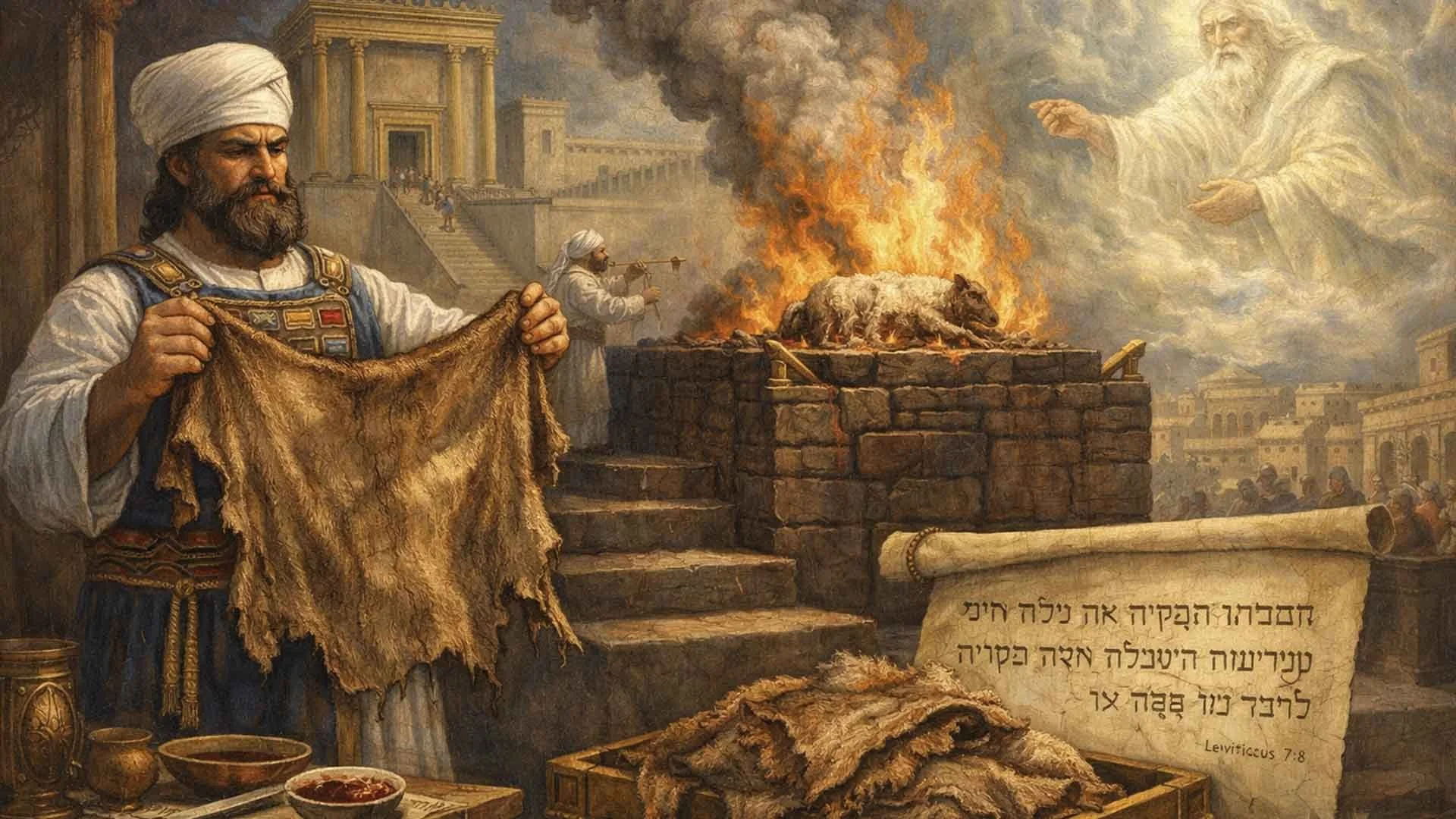
Sacrifices where the meat was not put on the altar will not have their hides given to the Kohanim. This is called olah ish, a sacrifice that is valid for a person. The hides of sacrifices offered without proper intent were still given to the priests. The hide is given to the kohanim whether it was brought by a man or a woman. The owners keep the hides of the less holy sacrifices and the priest keep those of the most holy sacrifices. In the case of a burnt offering, which is burned completely, the priests acquire its hide - the rabbis ask why they shouldn't receive the hides in all cases. The altar does not change anything for only the meat is burned on the altar.

The Beraisa discusses the source for the law that the Kohanim receive the hides of Korbanos. The Torah explicitly states that the Kohanim receive the hide of a Korban Olah, but it does not mention this law with regard to other Korbanos. Although the Tana'im derive the law for other Korbanos in different ways, they agree that the hides of other Korbanos of Kodshei Kodashim go to the Kohanim. Does this mean that those hides have the same status as the hide of the Korban Olah, or does it mean that the hides of other Kodshei Kodashim are simply considered secondary to the meat of their Korbanos, which is also given to the Kohanim?

Tags 70th
Comment

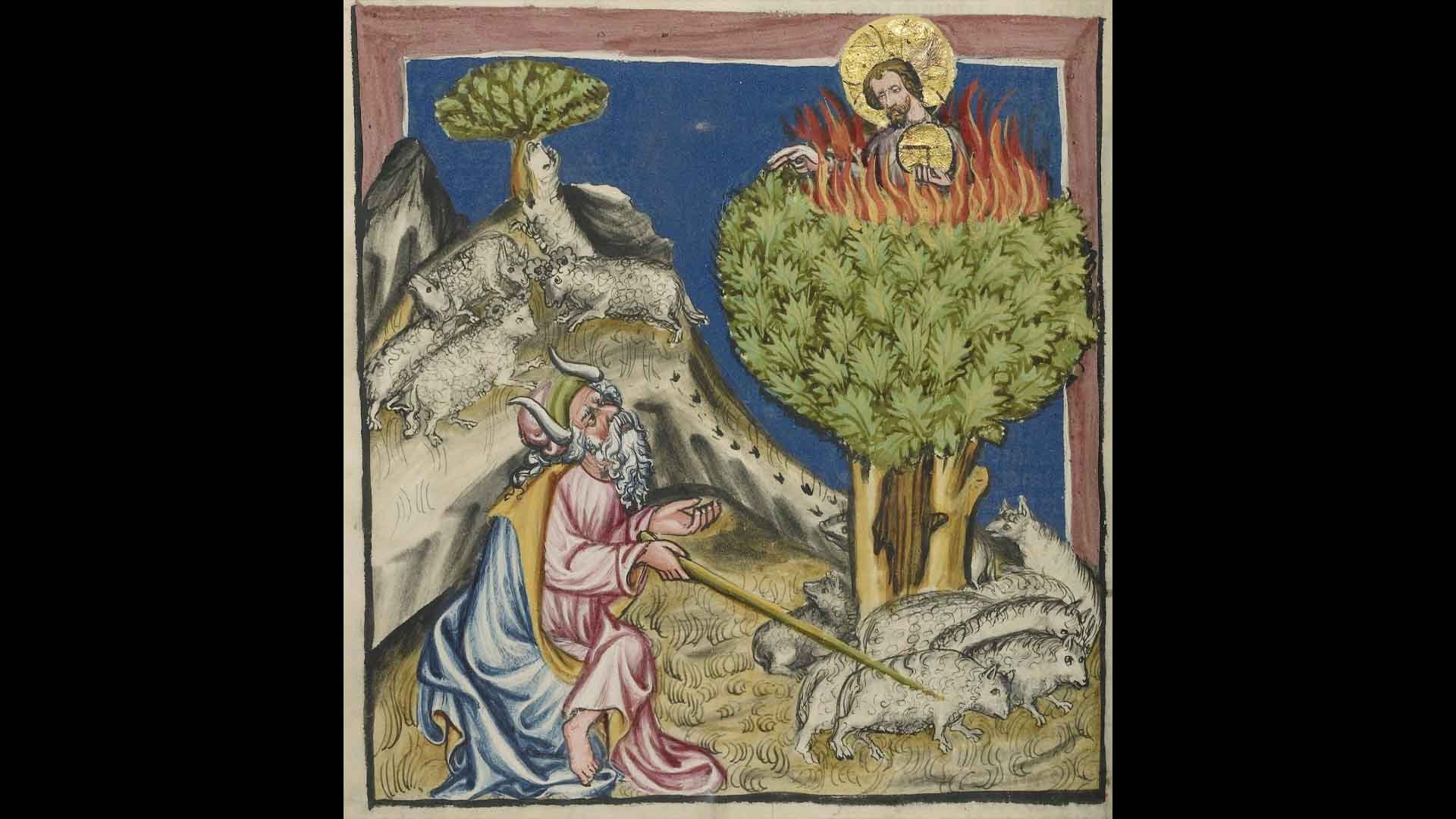
Moses And The Burning Bush, By An Unknown 15th-Century Artist

Zevachim 102: לְעוֹלָם תְּהֵא אֵימַת מַלְכוּת עָלֶיךָ

jyungar December 25, 2025

For the source text click/tap here: Zevachim 102

To download, click/tap here: PDF

When Moshe is reluctant to accept the responsibilities of leadership, refusing God’s repeated requests that he return to Egypt as leader of the Children of Israel (see Sefer Shemot Chapters 3 and 4), God ultimately becomes angry with Moshe and tells him that his brother Aharon the Levite will speak on his behalf (Shemot 4:14).

Rabbi Shimon bar Yoḥai interprets this passage to mean that God had originally planned to make Moshe the priest and leave Aharon as a levi. Since Moshe refused to accept responsibility as a leader, God was going to switch their positions so that Aharon became the kohen and Moshe remained a Levi.

We review various commentaries on the relative roles of Moshe and Aharon.

Tags 70th
Comment

Zevachim 101: וַתִּקְרֶאנָה אֹתִי כָּאֵלֶּה

jyungar December 24, 2025

For the source text click/tap here: Zevachim 101

To download, click/tap here: PDF

The Gemara discusses Aharon's answer to Moshe Rabeinu's question about why Aharon did not eat the Korban of Rosh Chodesh when he was explicitly told that he should eat the Korbanos of the Milu'im even though he was an Onen. Aharon explained that perhaps Hash-m had told Moshe Rabeinu that Aharon was permitted to eat Kodshei Sha'ah (Korbanos brought specially for the Milu'im). Aharon did not think that this leniency applied to Kodshei Doros (Korbanos brought in all generations), since the Halachah is that even a Kohen Gadol who is an Onen is not allowed to eat such Korbanos.

The Gemara quotes the verse which relates Moshe Rabeinu's response: "va'Yishma Moshe va'Yitav b'Einav" -- "and Moshe heard and it was good in his eyes" (Vayikra 10:20). The Gemara explains that Moshe admitted to his error and was not embarrassed to say, "That is what I heard, and I forgot," when he could have said, "That is not what I heard.”

We explore the deeper meanings behind their exchange.

Tags 70th
Comment

Zevachim 100: כָּאן שֶׁמֵּת קוֹדֶם חֲצוֹת, כָּאן שֶׁמֵּת לְאַחַר חֲצוֹת

jyungar December 23, 2025

For the source text click/tap here: Zevachim 100

To download, click/tap here: PDF

In the context of discussing kohanim who were not permitted to partake in the Temple service for a variety of reasons enumerated in the Mishna (daf 98b), the Gemara discusses the laws of an onen – a mourner on the day of death of a close relative – and mourning practices generally.

The Gemara on our daf quotes a baraita that teaches that the day a person is first informed of the death of a close relative will be considered like the day of burial with regard to the laws of shiva – the week of severe mourning following burial – and shloshim – the thirty days after burial when the severe mourning is over, but the mourner still refrains from cutting his hair and so forth. With regard to the laws of the korban Pesaḥ, however, it is only considered to be like the day of likkut atzamot – the day that the bones of a dead ancestor are collected – which would allow him to eat the Passover sacrifice in the evening (see Massekhet Pesaḥim daf 92)

We explore the notion of compelling impurity and coercion.

Tags 69th
Comment

Zevachim 99: אֲנִינוּת לַיְלָה מִדִּבְרֵי תוֹרָה

jyungar December 22, 2025

For the source text click/tap here: Zevachim 99

To download, click/tap here: PDF

On our daf Reish Lakish raises the following question: What is the status of a ba’al mum who is tameh – ritually defiled? Should we say that the Torah included a ba’al mum under all circumstances, even if he cannot actually eat from the sacrifice at this moment, or, perhaps, the fact that he is ritually defiled and cannot eat will preclude him from receiving a portion?

Rabba clarifies this issue by quoting a baraita that teaches that in the case of the High Priest who is allowed to perform the Temple service even when he is in acute mourning for a parent, nevertheless he cannot partake from the meat of that sacrifice.

We explore the ritual psychological and neuro-biology of acute grief and mourning.

Tags 69th
Comment

Zevachim 98: בַּעַל מוּם רַחֲמָנָא רַבְּיֵיהּ

jyungar December 22, 2025

For the source text click/tap here: Zevachim 98

To download, click/tap here: PDF

A tevul yom (one who was tamei but has immersed himself in a mikvah; he is considered a tevul yom until nightfall) and a mechusar kippurim (one who was tamei, but has immersed himself in a mikvah, and has waited until nightfall; he is just lacking atonement until he brings his offerings the next day) do not receive a share in the sacrifices to eat in the evening (even though they will be tahor by then).

An onein (one whose close relative passed away and has not been buried yet) may touch the sacrifices but does not offer them and does not receive a share to eat in the evening.

Those who have a blemish, whether a permanent blemish or a temporary one, receive a share and eat, but do not offer. The Mishna states a general rule: Whoever is unfit to perform the service does not receive a share in the meat. And he who has no share in the meat, has no share in the hide.

Tags 69th
Comment
  • Daf Ditty
  • Older
  • Newer

Julian Ungar-Sargon

This is Julian Ungar-Sargon's personal website. It contains poems, essays, and podcasts for the spiritual seeker and interdisciplinary aficionado.​