
For the source text click/tap here: Zevachim 104
To download, click/tap here: PDF
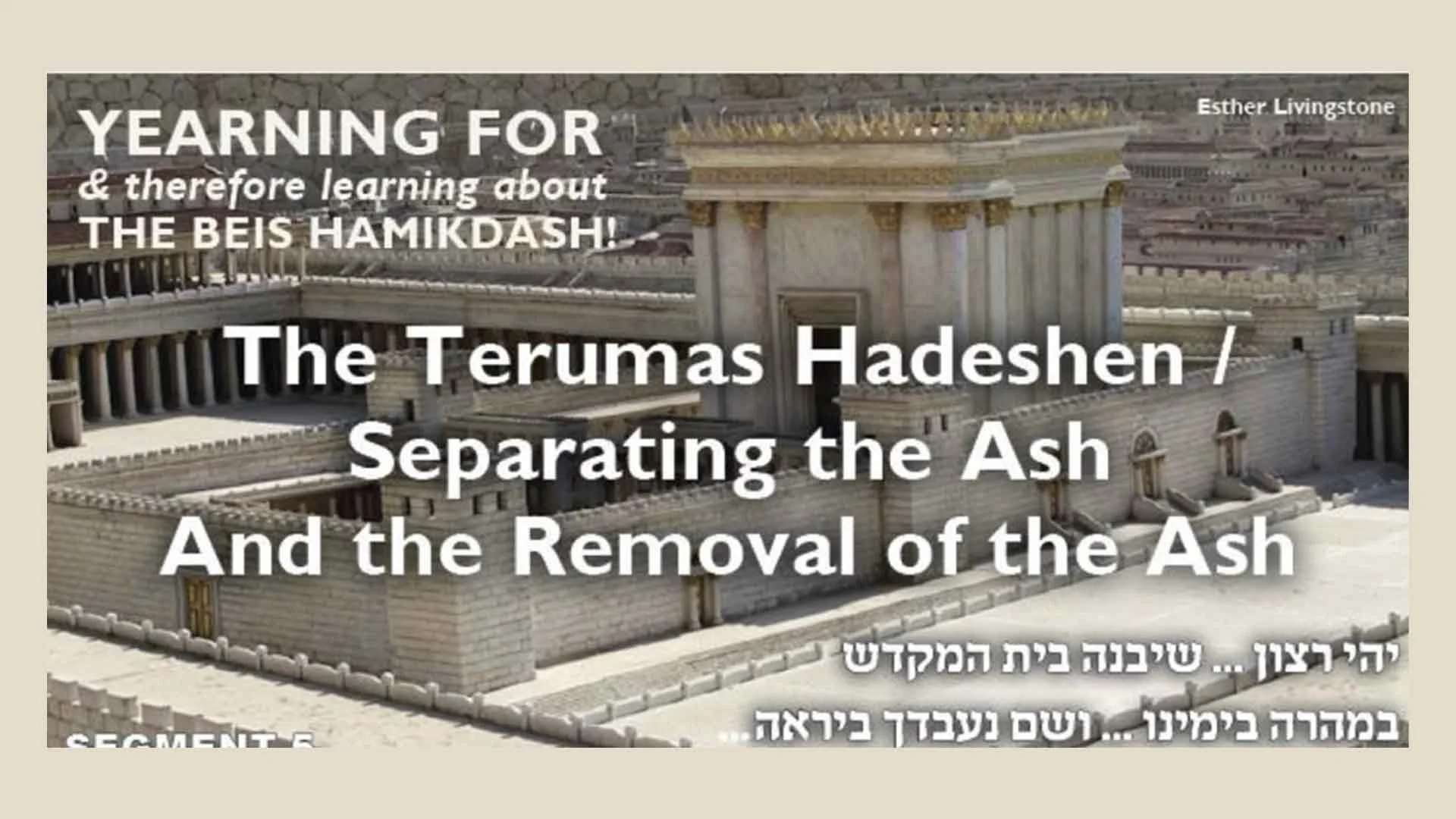
There are some korbanot that must be burned entirely after their blood is sprinkled on the altar and their innards are sacrificed. Thus, many of the Yom Kippur sacrifices, as well as some of the public guilt offerings (for example, those brought by the kohen gadol, and those brought by the Great Sanhedrin that erred and caused the majority of the community to sin) were taken to the beit ha-deshen – the place of the ashes – to be burned (see Vayikra 4:12). If, however, a korban is burned because it must be destroyed, e.g. some error or blemish kept it from being brought as a sacrifice, the Mishna on today’s daf teaches that it is not taken to the beit ha-deshen, rather it is burned in the beit ha-bira.
What were these places where the sacrifices were burned?
Rav Naḥman quotes Rabba bar Avuh as teaching that there were three places in the environs of the Temple that served as repositories for ashes.
We explore the meaning of ash in bible talmud and memory.