
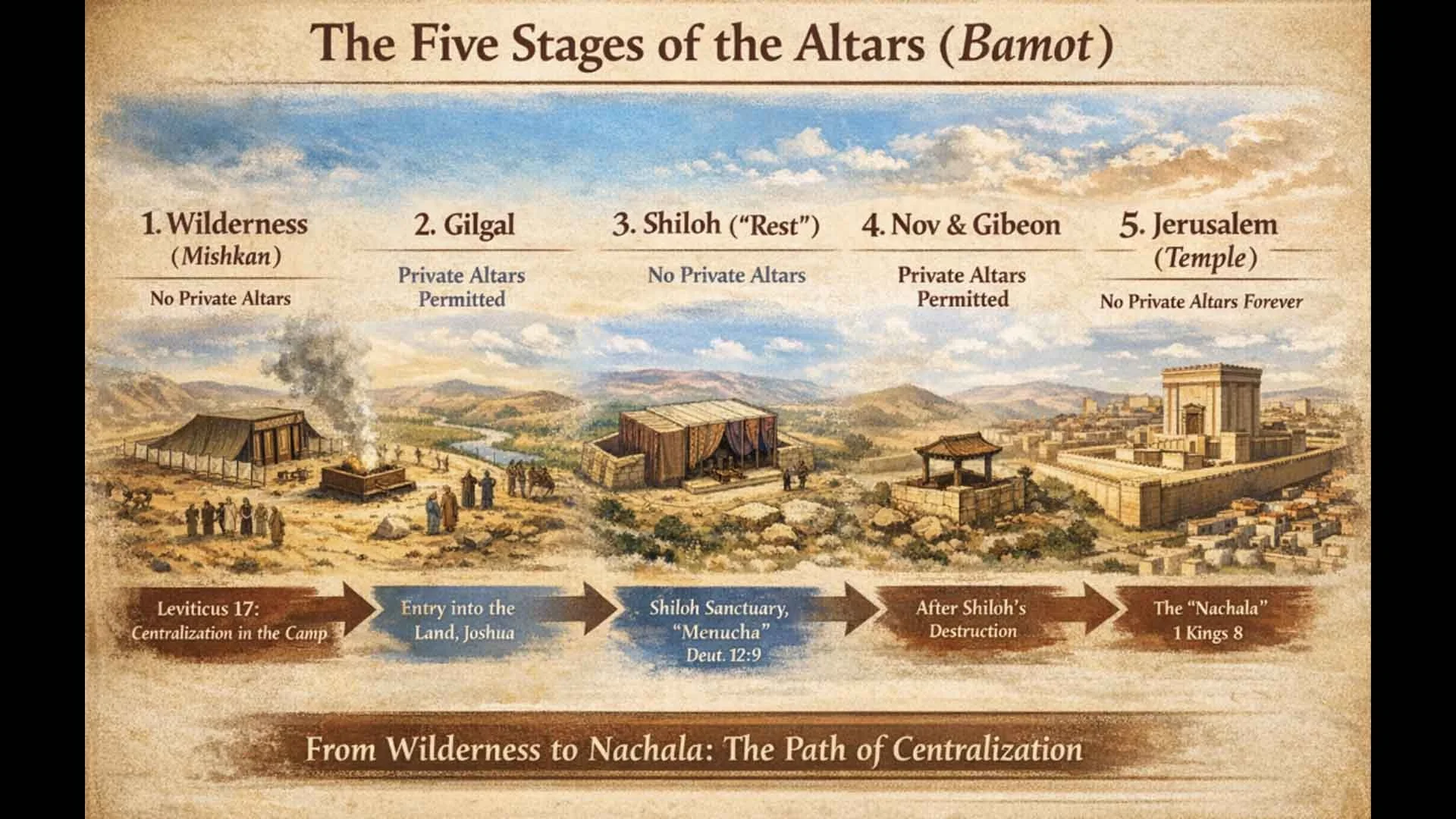
For the source text click/tap here: Zevachim 112
To download, click/tap here: PDF
We analyze the Talmudic description of the five cultic transitions—Wilderness, Gilgal, Shiloh, Nov/Gibeon, and Jerusalem—as presented in Mishnah Zevachim, comparing it with the biblical narrative and the historiography of Josephus. The study demonstrates that the Talmud is not merely recording history but constructing a legal topology of sanctity. Biblical peshat presents a linear theological story of divine presence migrating toward permanence; Josephus offers apologetic-national historiography designed to present Jewish religion as venerable and rational to Roman audiences; the Talmud constructs a jurisprudential map governing liability, legitimacy, and the ontology of sacred space. By examining how each source treats the transitions between cultic centers, this essay illuminates the distinct hermeneutical purposes animating these textual traditions.