
For the source text click/tap here: Chullin 15
To download, click/tap here: PDF
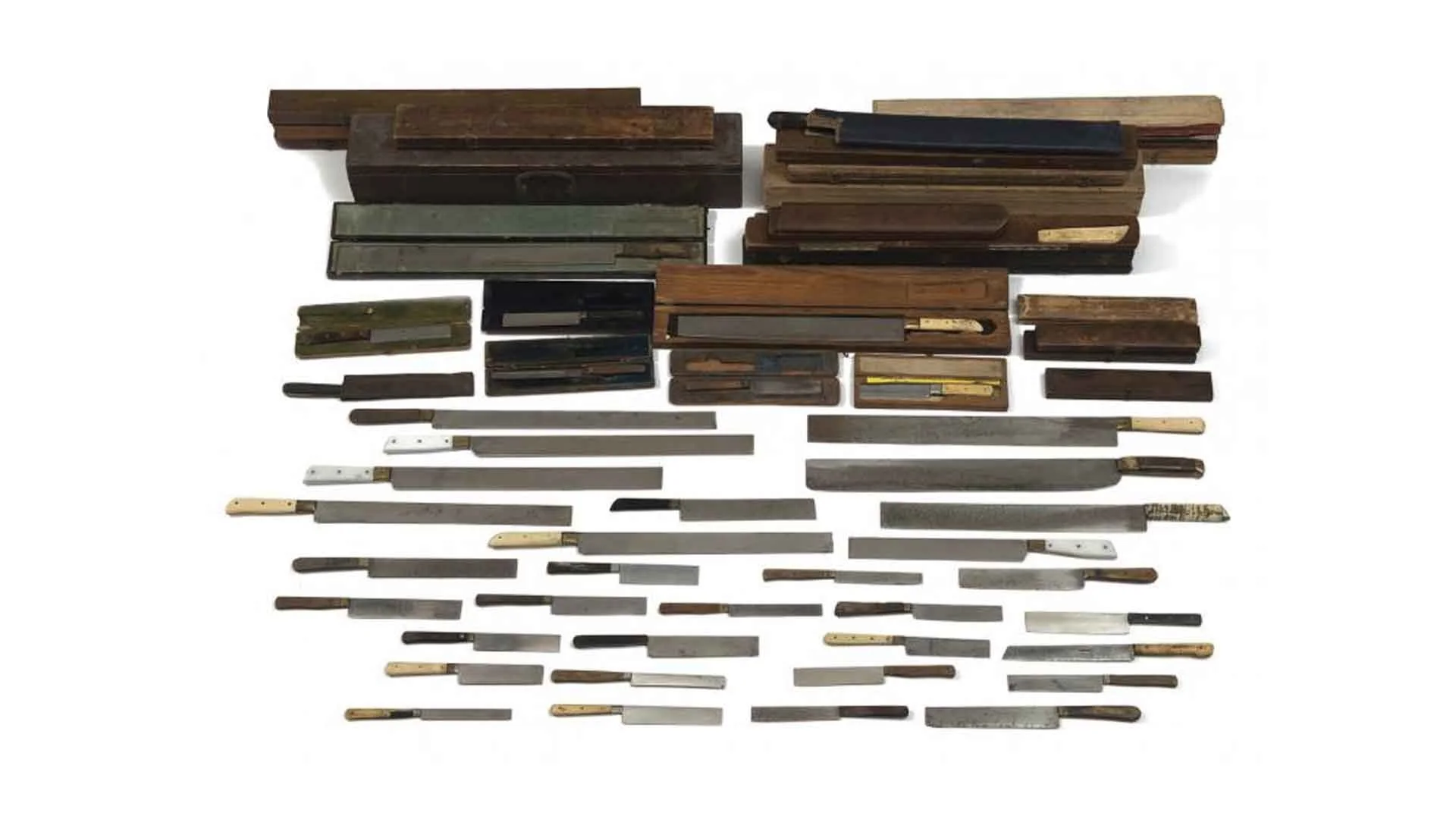
Regarding the implements that may be used for sheḥita – ritual slaughter – the Mishna on our daf teaches:
If one slaughtered with the smooth edge of a hand sickle, with a flint or with a reed, the slaughtering is valid. All may slaughter; at all times one may slaughter; with any implement one may slaughter, excepting a harvest sickle, a saw, teeth or a fingernail, since these strangle.
The Gemara points out that the expression used by the Mishna, that slaughtering with the abovementioned implements is valid, indicates that the sheḥita is valid ex post-facto, but that ideally it should not be used. In the case of a hand sickle, or magel yad, the Gemara suggests that the reason for this is obvious – we fear lest the slaughterer might use the wrong side of the sickle, which would be invalid. According to Rashi, the wrong side of the magel yad has a serrated edge, while according to the Ra’avad, the magel yad is a type of axe, and the wrong side is sharp, but pointed and not long enough to perform sheḥita.
We explore how our mishna and its accompanying gemara enclose a remarkable amount of conceptual machinery. They oscillate between the materiality of the cutting edge and the metaphysics of the agent who wields it; between the ancient repertoire of Iron Age and Roman-period implements and the abstract question of when an act of severance counts as a human act. Our daf has migrated from blades to mechanical contrivances — the mukhni, the potter’s wheel, the waterwheel — and from the slaughter of beasts to the killing of men, with Rav Pappa’s celebrated ruling on the bound captive and the diverted water (bidka de-maya).