
For the source text click/tap here: Bechorot 56
To download, click/tap here: PDF
The Mishnah on our daf sets two Temple obligations against each other.
Animal tithe (ma'aser behemah) falls only on a flock with a single owner. The kalbon, the small premium added to the half-shekel, falls on those who pay as separate individuals and is waived when one person pays for another as a father pays for his son. The two duties run in opposite directions, so that brothers are always liable to one and exempt from the other.
The Mishnah uses this inverse pair as an instrument for measuring a single question: when the father dies, is his estate still one person, or has it become several?
We explore how the sugya's deepest claim: brotherhood, in halakhah, is not a sentiment and not merely a bloodline. It is a legal condition that persists until it has been undone in every register at once.
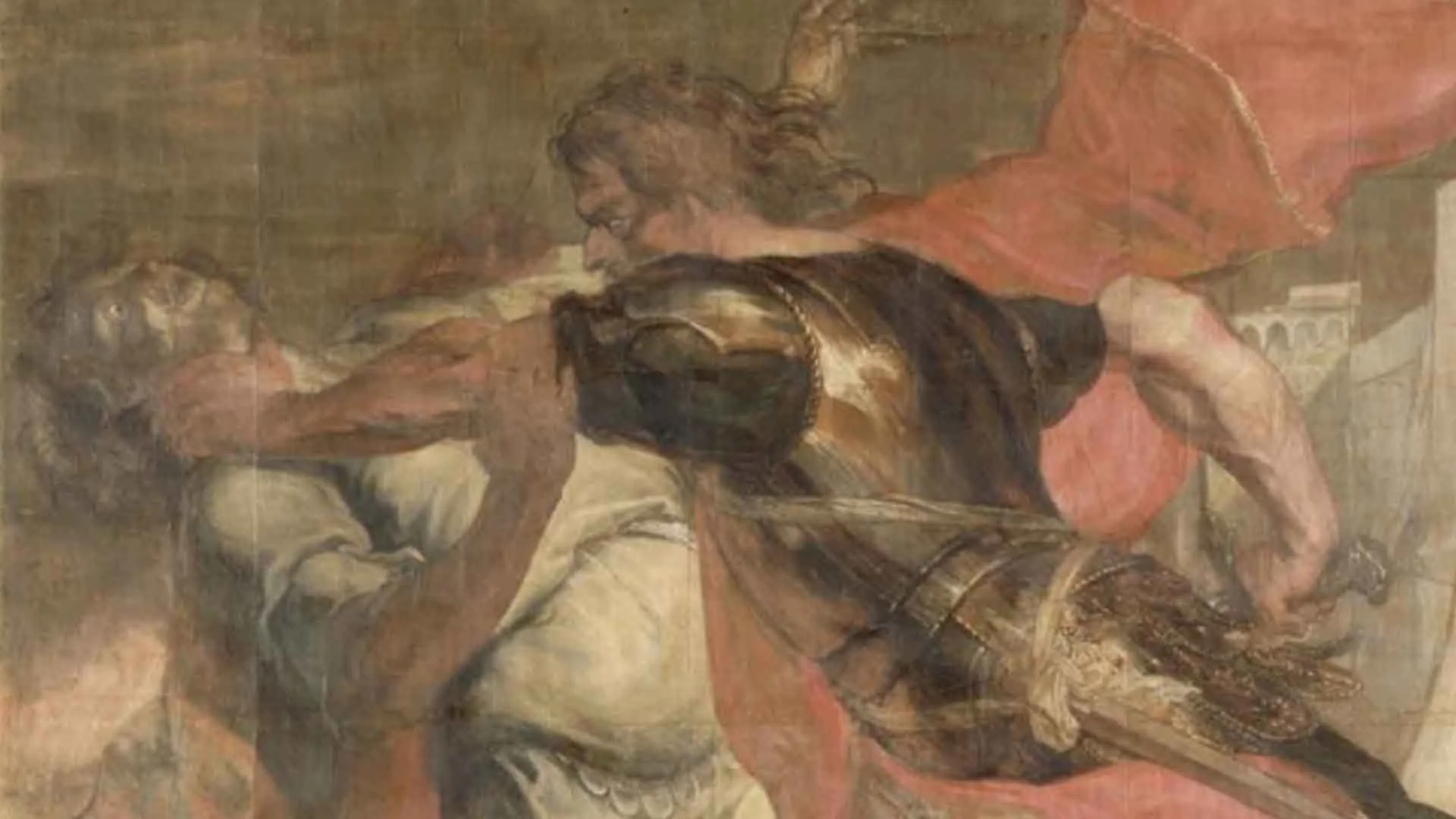
We also look how the Western canon tells its origin twice, and both times a brother kills a brother.
In Genesis the first man born of woman murders the second, and the first city is built by the murderer (Gen 4:1–17) .
In Livy, Rome is founded when Romulus kills Remus over the boundary of a wall. Augustine saw the parallel and made it the hinge of The City of God: the earthly city, he wrote, was founded by a fratricide in both its Hebrew and its Roman form.
Before the West had a theory of the state, it had a story of a brother's blood under the foundation.