
For the source text click/tap here: Zevachim 87
To download, click/tap here: PDF
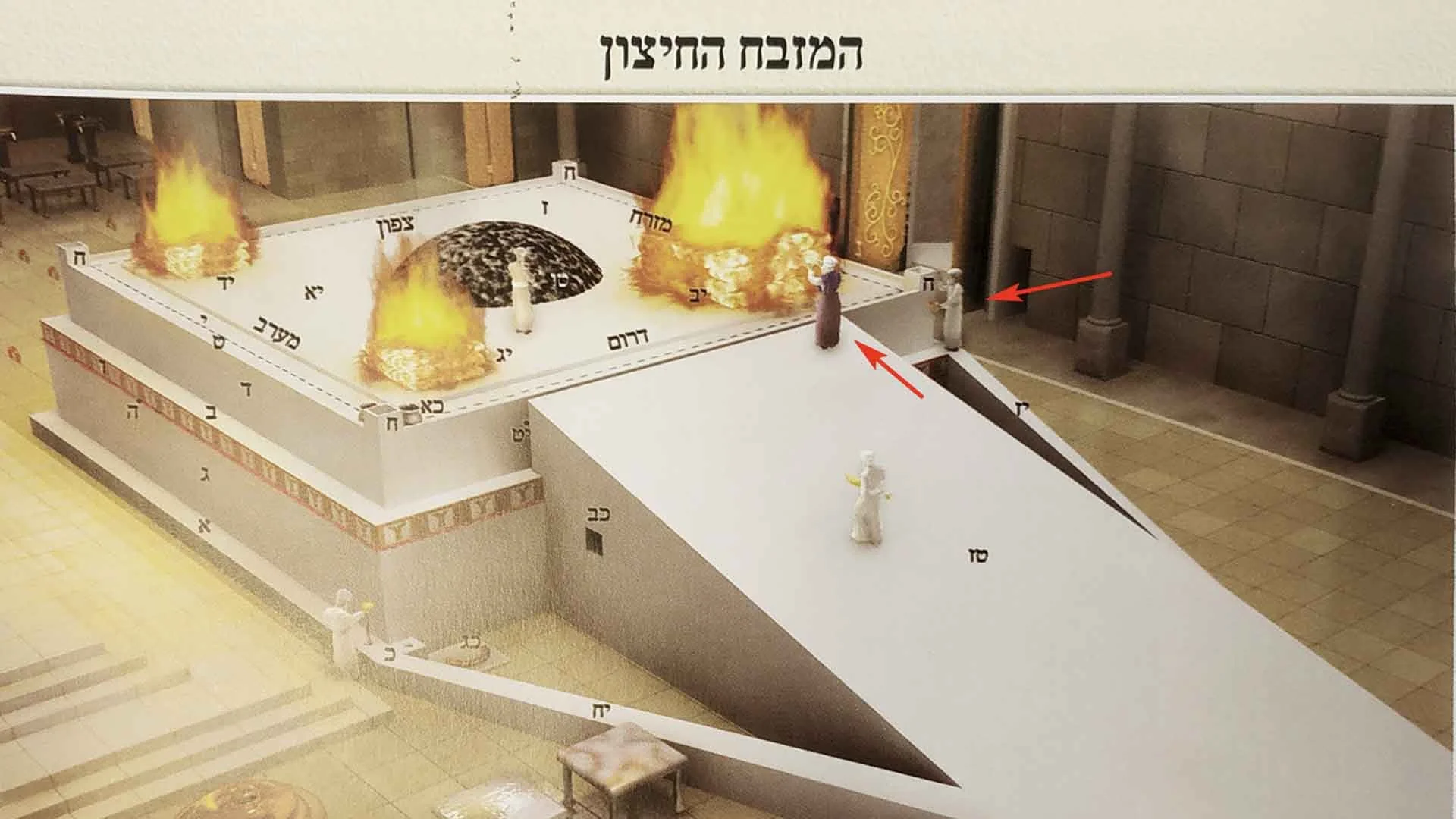
As we have learned (on daf 83, and on yesterday’s daf, as well) animals that are appropriate for sacrifice will become fully sanctified if they are brought onto the altar – or onto the ramp leading up to the altar – even if there is a problem that would, ordinarily, cause them to be disqualified for sacrifice.
The Gemara on our daf raises the following question: Does that rule apply to the air above the altar? If an animal that is disqualified from sacrifice is placed above the altar, does it also become sanctified to the extent that it cannot be removed from the altar and must be sacrificed?
The rabbinic notion of avir ha-mizbeach—the "airspace of the altar"—forms one of the most nuanced and conceptually daring discussions in all of Zevachim. The sugya our daf (Zevachim 87a–88a) asks a seemingly technical halakhic question: yet beneath this question lies a complex hermeneutical, architectural, and metaphysical meditation on sanctity, proximity, liminality, and the nature of sacrificial space.