
Psalms: Prayer, Praise, and Tikkun II
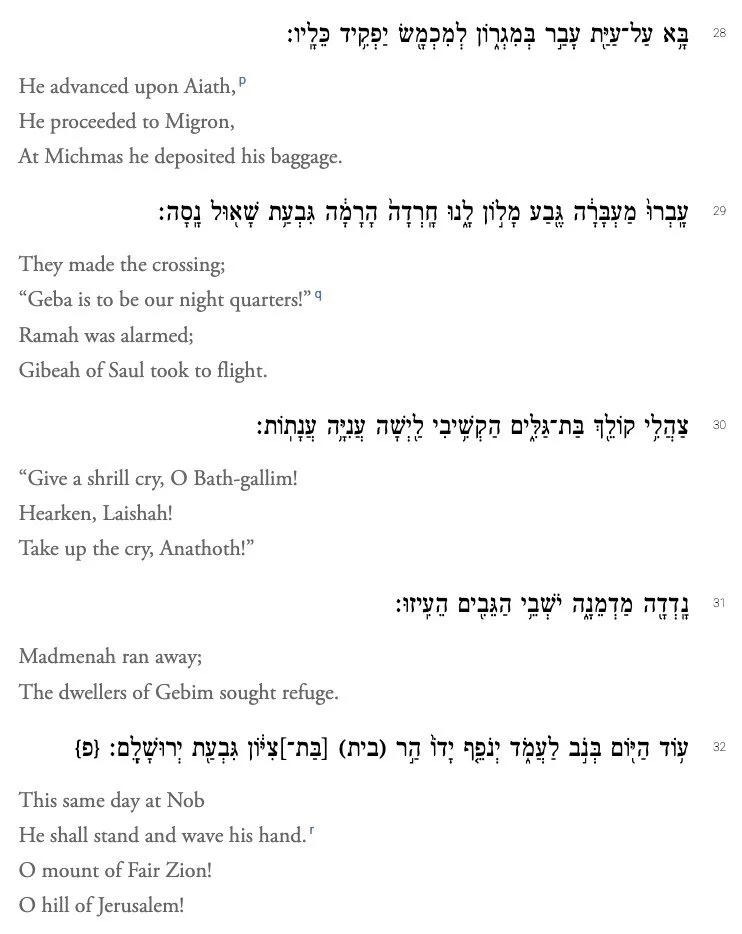
A single half-verse in Isaiah's account of the Assyrian advance — tzahali kolekh bat gallim, "cry aloud, daughter of Gallim" (Isa 10:30) — travels an extraordinary interpretive distance. It begins as a shriek of terror from a doomed village on the northern approach to Jerusalem, a place-name in an itinerary of panic. The Talmud lifts it out of the map entirely and hears it as prophetic address to the congregation of Israel — and does so, crucially, because the clause will not fit into the count of ten journeys attributed to the invader. The Zohar re-reads gallim as waves of descending light that fill the Bride. The Tikkunim complete the reversal: the shriek becomes a command to sing, instrumented as five strings, ten wheels, ten melodies. This essay traces that trajectory, sets it against Rabbi Nachman's ten-psalm remedy and its underlying doctrine of ten songs answering ten woundings, and argues that the whole arc is a theology of the divided divine: a King who commands his exiled Bride to sing because he cannot otherwise reach her. The essay closes with the clinical implication, which is not decorative. The physician stands where the Zoharic King stands — before a cry he did not cause, cannot silence, and must not prematurely convert into meaning.