
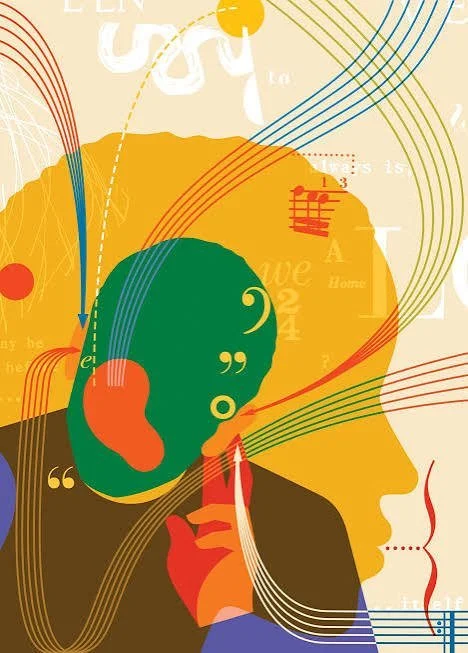
The Music of the Soul
Over the past several years my essays on music have moved steadily inward: from the Pythagorean harmony of the spheres, through the neuroscience of auditory reward and prediction, to the clinical encounter as a listening relationship. This article takes the last step of that trajectory, from the brain to the soul. It offers a close reading of a treatise on joy by Rabbi Dov Ber Schneuri (1773–1827), the Mitteler Rebbe of Chabad, built on Isaiah 29:19, "The humble shall increase their joy in the Lord." The text poses a strikingly modern question: how can the sound of a violin, which has no heart, arouse intention in the heart of the one who hears it? His answer, that sound does not carry feeling but awakens a latent interiority "from below" (ha'ala'at mayin nukvin), is worked out through a sefirotic reading of the ten instruments of Psalm 150. The reading ascends from the drum, through the mixed sweetness of harp and lyre and the articulation of the voice into letters, to the shofar's "simple voice" without letters or melody, which he identifies with Keter and the point of the will. I compare this ladder with Rebbe Nachman of Breslov's (1772–1810) ten kinds of song, ten pulses, ten psalms of the Tikkun HaKlali, and the princess wounded by ten arrows in "The Seven Beggars," and trace both to their Talmudic, Zoharic, and Tikkunei Zohar sources, including those identified in the notes to the edition studied. The ancient music of the spheres supplies the outward pole of this history; Boethius's musica humana marks the first turn inward; Hasidism completes it. Contemporary neuroscience (musical reward and prediction, the preservation of musical memory in dementia, singing in aphasia, the subcortical cry) is read not as a reduction of the soul but as evidence that music reaches layers of the person that language and cognition leave behind. Clinically, the argument yields a model of healing as awakening rather than deposit, and of the clinician as a musician whose sound can arouse, but cannot replace, the patient's own voice.