Did He Know?
My second cousin, a dealer in violins,
who bought his instruments in Communist East Germany,
once appeared at my door carrying a cello.
“Hold it for me for a while,” he said.
He placed its dark, curved body in my keeping—
a stranger from behind the Iron Curtain,
wood seasoned by winters I had never known,
its varnish holding the dim light
of another country, another time.
Then he left.
And never came back.
For years the cello waited,
quiet in its case,
keeping its own counsel.
Perhaps silence is not emptiness
but music gathering itself—
a song not yet composed,
a resonance older than words.
For there is a song within all creation,
a vibration travelling through matter,
through wood and air,
through the hidden chambers of the heart.
Perhaps the world itself began in hunger for music,
each living thing carrying some fragment
of the first great harmony,
each soul waiting for the note
that will make it tremble awake.
The cello waited through the crowded years
when there was always something more urgent:
work, family, duty,
the bright and passing noise of days.
Still, beneath them,
it kept the current of its harmonies.
It asked nothing.
It merely stood nearby,
a dark tree dreaming of its forest,
its strings stretched between silence and song.
Sometimes we must grow quiet
before we can hear what has been given to us.
Sometimes a gift arrives long before
we have become the person
who can receive it.
Now, in my semi-retirement,
with time loosening its grip,
I opened the case again.
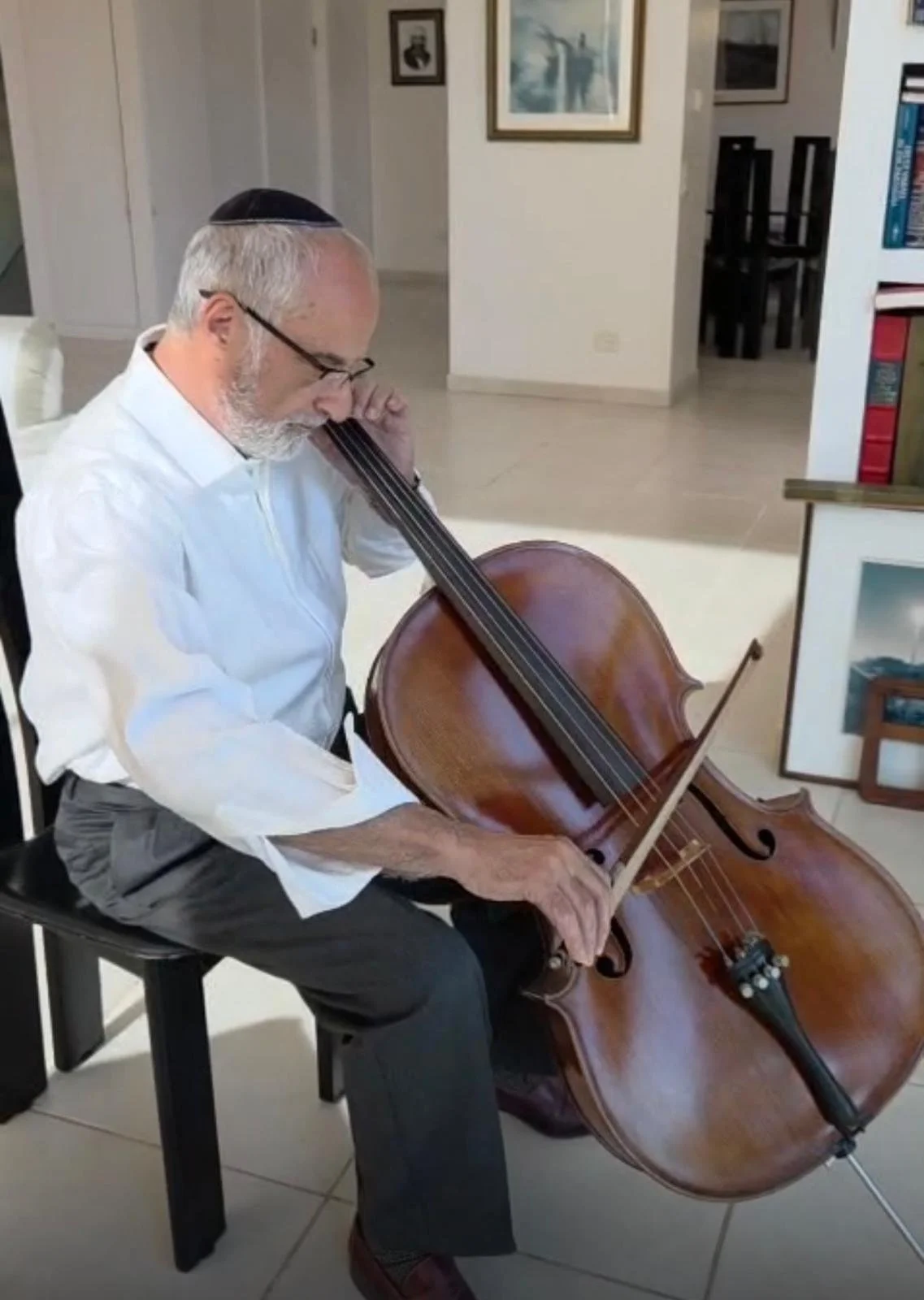
I drew the cello toward me,
held it between my knees,
felt its weight lean into my body.
At first the bow scratched and stumbled,
an uncertain traveller searching for the road.
Then something changed.
The bow and string began a conversation.
A deep, mellow voice emerged
and moved across the living room—
not merely sound,
but presence.
The instrument resonated against my chest,
through my hands,
into chambers of myself
I had not known were waiting.
It sang in answer to the bow,
and I listened in answer to its singing.
No longer was I simply playing it.
The cello was playing me—
drawing breath from hidden depths,
joining body and spirit,
memory and longing,
silence and expression.
In that space between listening and performing,
I found stillness,
focus,
clarity.
I found the song
that had waited all those years
without impatience.
And I was delighted—astonished—
by its majesty,
by the warmth and fullness of its tone,
by the great voice sleeping
inside that old East German wood.
My second cousin had said only,
“Hold it for me for a while,”
then vanished into the years.
But now, as the room fills
with a music older than either of us,
I wonder whether he heard it first—
whether he knew what he was leaving,
whether he knew what I would one day find,
whether he knew the cello
was not waiting for him at all.
Did my second cousin know?