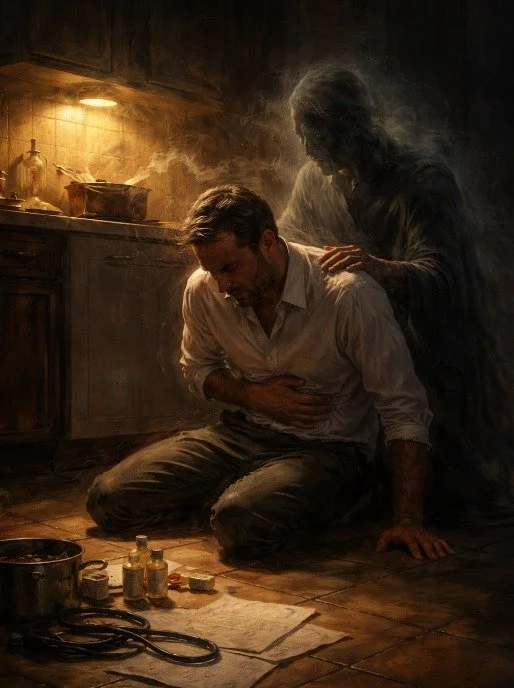
The physician in me catalogued the pain— inferior wall, appendix, stone, or spleen— while something older, wiser, more arcane knelt beside me on the kitchen floor between the differential and the unseen.
Six hours writhing, Jacob at the ford, the fish stew burning twice, a spicy jest, but what was wrestling me was not the Lord of easy answers. Pressed against my chest, the question: Julian, what remains undigressed?
You preach the body as a sacred text, hermeneutic medicine, the flesh that speaks— so read yourself, physician. What comes next when your own soma writhes and creaks? The Shekhinah weeps through us. She seeks.
Perhaps She used me as Her instrument, a vessel for some grief I cannot name, or maybe this was simply what was meant: the mystic and the clinician, both the same, brought low, reminded neither runs the game.
Six months of abstinence approach their end, January first, the body's referendum— to continue or release, to break or bend, this discipline of holding back the venom, or blessing, of desire's memorandum.
And here's the sweetness hidden in the gall: the floor that met my knees was not a grave but altar. Every patriarch must fall to learn what cannot diagnosis save— the broken vav still spells the word forgave.
So let the ambulance arrive too late, the pain resolve to mystery and spice. The body prays in tongues we mistranslate, and sometimes kneeling is the best advice the Shekhinah can give. She asks it twice:
What are you holding that demands release? What threshold waits that only pain can show?
I have no answer yet. But on my knees, I felt Her presence in the vertigo— not punishment, but invitation: grow.
The stomach settles. The question doesn't. January approaches like a guest. The body spoke. The mind, for once, wasn't the one who knew the answer best.