Julian Ungar-Sargon

  • Home
  • Theological Essays
  • Healing Essays
  • Podcast
  • Poetry
  • Daf Ditty
  • Deep Dive Ditty
  • Videos
  • Publications
  • Military Service
  • Dominican University
  • Home
  • Theological Essays
  • Healing Essays
  • Podcast
  • Poetry
  • Daf Ditty
  • Deep Dive Ditty
  • Videos
  • Publications
  • Military Service
  • Dominican University
Julian Ungar-Sargon copy 3.jpg

Daf Ditty

A wide-ranging commentary on the daily page of Talmud.

Bava Batra 130: לֹא יוּכַל לְבַכֵּר

jyungar November 2, 2024

For the source text click/tap here: Bava Batra 130

To download, click/tap here: PDF

If one says, "Let so-and-so inherit me," where there is a daughter who will survive him, or if he says, "Let my daughter inherit me," where there is a son who will survive him - he has said nothing, that is, his words are not effective, since he made a stipulation contrary to what is written in the Torah.

However, if he increased the portion of one son among the other sons, or one daughter among the other daughters, or completely eliminated the portion of one son, leaving everything for the other sons, his words stand.

We explore deathbed bequests and other disputes in jewish history.

Tags 56th
Comment

Bava Batra 129: כּל תּוֹךְ כְּדֵי דִבּוּר כְּדִבּוּר דָּמֵי

jyungar November 1, 2024

For the source text click/tap here: Bava Batra 129

To download, click/tap here: PDF

The Mishna (126b) teaches that as long as he says that what he is doing is a gift it will work, even if he also says that he means it to be an inheritance. The Gemara on our daf explains that this will work in all cases where the statements are made tokh ke-dei dibbur – when they are said “in the same breath.”

We approach the letter vs the law “FOR THE LETTER KILLS, BUT THE SPIRIT GIVES LIFE”: from two perspectives that of Pauline Theology and that of Kabbalah.

Tags 56th
Comment

Bava Batra 128: שֶׁלֹּא נִסְתַּמֵּא, וְנִסְתַּמֵּא

jyungar October 31, 2024

For the source text click/tap here: Bava Batra 128

To download, click/tap here: PDF

Rabbi Abba also sent a ruling to Rav Yosef bar Ḥama concerning testimony: If one knewinformation that could serve as testimony about the boundary of another’s land before he became blind, and then he became blind, he is disqualified from bearing witness in a dispute as to the boundaries of that person’s properties.

And Shmuel said: He is fit to bear witness, as it is possible for him to determine the boundaries of the fields despite his blindness.

The Gemara then brings a Baraisa which teaches a rule that a witness is only allowed to testify if he was eligible for testimony at the moment he witnesses the event, as well as at the moment he actually testifies. If he is in a state of disqualification at either of these points, he may not testify.

We review Rav Aharon Lichtenstein’s magisterial essay on blindness and Halacha as well as explore the notion of cortical blindness, a complex visual impairment that originates from damage to the brain's occipital cortex rather than the eyes themselves. This condition disrupts visual processing, leading to partial or complete loss of vision at times without the person being aware of it: and Visual agnosia a condition where individuals can see but cannot recognize or interpret visual information. This can manifest as difficulty recognizing faces, objects, or familiar places.

Tags 56th
Comment

Jacob Blessing the boys (Asenath in background)

Bava Batra 127: זֶה בְּנִי בְּכוֹר

jyungar October 30, 2024

For the source text click/tap here: Bava Batra 127

To download, click/tap here: PDF

The people of a town on a lake sent the following question to Shmuel: if we had known one son to be the bechor, and then the father stated that another son was the bechor, who gets the extra portion?

Shmuel answered that the two sons should grant each other right to representation, and between the two collect one extra portion, which they split.

The Gemora explains that Rabbi Yehudah says that a father is believed to identify a son as the bechor, even when we had known a different son to be the bechor, while the Sages say that a father is believed only when we had no prior knowledge who is the bechor.

We focus on the children of Asenath and Joseph :

Jacob says to Joseph, “God Almighty appeared to me ... in the land of Canaan, and there he blessed me and said to me, ‘I am going to make you fruitful and increase your numbers. I will make you a community of peoples, and I will give this land as an everlasting possession to your descendants after you.’"

So, in fulfillment of the divine promise, Jacob "adopts" or "claims" his Egyptian grandkids:

"Now your two sons born to you in Egypt before I came to you here will be reckoned as mine; Ephraim and Manasseh will be mine, just as Reuben and Simeon are mine.

Any children born to you after them will be yours ; in the territory they inherit they will be reckoned under the names of their brothers"

In this story, the two sons of Joseph and Aseneth are grafted into this divinely promised "community of peoples." As such, they are granted an inheritance along with Joseph's brothers, and they become the heads of two tribes of Israel.

Who authored the aprocyphal book about Asenath and how did it serve the diaspora Jews in Alexandria?

Tags 56th
Comment

Anti-smoking placard of the American Lung Association, 1943

Bava Batra 126: מַסֵּי רוּקֵּיהּ

jyungar October 29, 2024

For the source text click/tap here: Bava Batra 126

To download, click/tap here: PDF

A new Mishnah informs us that if a father says, “So-and-so, my firstborn son, shall not receive a double portion, or, if he says, “So-and-so, my son, shall not inherit with his brothers (and then he died), he has said nothing, for he has made a condition against what is written in the Torah.

The Gemara relates: There was a certain man who came before Rabbi Ḥanina and said to him: I know that this man is a firstborn. Rabbi Ḥanina said to him: From where do you know? He said to Rabbi Ḥanina: Because when people would come before his father to obtain a cure for their ailing eyes, he would say to them: Go to my son Shikhḥat, as he is a firstborn and his saliva heals this ailment.

We explore the history of spittle and the superstitions surrounding it to this day.

Tags 56th
Comment

Bava Batra 125: מַאי סָבְתָּא?

jyungar October 28, 2024

For the source text click/tap here: Bava Batra 125

To download, click/tap here: PDF

What rights does a person have to determine the ownership of an object after he has given it away?

Our Gemara tells the story of “grandma.” That is, someone announced that he was giving all of his money to his grandmother, stating that he did so with the proviso that after she died the money would go to his descendants rather than to the people who would inherit her.

We explore the definition of Savta (and Sabba!) as well as the archetype of “senex" in the writings of Jung and Hillman

Tags 56th
Comment

Primogeniture, a principal of seniority exists in many cultures even today. It is considered an important aspect of social organization and cosmology. It has two closely related meanings – one is the principal of seniority and authority which automatically the eldest son of the family receives and the other is the principle of inheritance which again is automatically given to the firstborn child of the parents.

Bava Batra 124: ״פִּי שְׁנַיִם״

jyungar October 27, 2024

For the source text click/tap here: Bava Batra 124

To download, click/tap here: PDF

As we have learned, the Torah commands (see Devarim 21:15-17) that the firstborn son will receive a double portion of the estate left by his father at the time of his death. What if the estate grows after the father’s death, but before the children have had time to divide it up into the shares that they will receive? Will the firstborn get a double portion in those additional profits?

We explore the concept of firstborn and primogeniture and its repudiation in the writings of Adam Smith and the brith of the republic.

Tags 55th
Comment

'Jacob and Rachel at the Well' is a painting of unverified provenance that its owner attributes to Rembrandt

Bava Batra 123: וּמַאי צְנִיעוּת הָיְתָה בָּהּ בְּרָחֵל

jyungar October 26, 2024

For the source text click/tap here: Bava Batra 123

To download, click/tap here: PDF

The Gemara discusses the double portion of the firstborn. There could be a number of ways to actualize a double portion. The considerations might be different if there were five brothers or only two brothers involved in the inheritance.

The rabbis consider the experiences of our forefathers - for example, Joseph. Although he was not the firstborn son, he was offered the birthright, which included all of the rights of the firstborn son. Many potential prooftext are offered to demonstrate that Joseph's portion was double the property received by one of the inheritors (his brothers).

We ask why Joseph received his brother's birthright. Is it because Joseph gave so much to his father Jacob that Jacob felt he must repay Joseph in this way? Is it because of Reuven's earlier sin that Jacob gave the double portion to Joseph?

Rabbi Yonatan tells us Leah's son with Jacob should have been given the birthright.

But Rachel's resulting patience and humility warranted Joseph receiving Jacob's birthright.

We explore the characters of these biblical figures.

Tags 55th
Comment

Bava Batra 122: אֶחָד הַבֵּן וְאֶחָד הַבַּת לְנַחֲלָה

jyungar October 25, 2024

For the source text click/tap here: Bava Batra 122

To download, click/tap here: PDF

A new Mishna informs us:

The son and daughter are the same in inheritance (the Gemora will explain this statement).

However, the firstborn son inherits a double portion of the father’s possessions but not his mother’s possessions.

Daughters are supported from the father’s possessions but not from the mother’s possessions.

We explore the notion of Eretz Yisrael with Rav Judah Goldberg’s analysis.

Tags 55th
Comment

Ruins and Terraces on Betar

Bava Batra 121: יוֹם שֶׁנִּתְּנוּ הֲרוּגֵי בֵיתָר לִקְבוּרָה

jyungar October 24, 2024

For the source text click/tap here: Bava Batra 121

To download, click/tap here: PDF

The Gemara on our daf brings the last Mishna in Massekhet Ta’anit, which closes with a discussion of two of the happiest days on the Jewish calendar – Yom Kippur and T”u b’Av, the 15th of Av, when the daughters of Jerusalem would go out to the dance in the vineyards in borrowed white clothing (so that girls who were poor would not be embarrassed), calling out to the young men suggesting that they choose wives from among them.

Rav Yehuda quotes Shmuel as saying that it was the day that women who had inherited land were released from the restrictions limiting them to marry only members of their tribe.

Rabba bar bar Ḥana suggests that it was the day that the tribe of Binyamin was permitted to marry. According to the story at the end of Sefer Shofetim (see Chapter 21) wives needed to be found for the remnants of the tribe of Binyamin, which had almost been wiped out.

We explore the wonderful roots of this holiday.

Tags 55th
Comment

Biblical places associated with Silat ad Dhahr

Bava Batra 120: בְּנוֹת צְלָפְחָד הוּתְּרוּ לְהִנָּשֵׂא לְכל הַשְּׁבָטִים

jyungar October 23, 2024

For the source text click/tap here: Bava Batra 120

To download, click/tap here: PDF

If the daughters of Tzlofchad got married so late, how did they have children? A miracle happened to them and it is compared to Yocheved giving birth to Moshe at an old age.

The gemara explains the whole chronology of the Yocheved narrative and how it is clear she was so old when Moshe was born. In telling the narrative, they also resolve other difficulties in the verses. The daughters of Tzlofchad are mentioned twice in a different order each time.

We explore the different genealogies of Menashe and the possible resolutions.

Tags 55th
Comment

Illustration of Joshua and Eleazar Divideth the Land by Lot (Joshua)- the Distribution of the Land after capturing the Land of Canaan

Solomon Schernbac

Bava Batra 119: שֶׁמְּגַלְגְּלִים זְכוּת עַל יְדֵי זַכַּאי

jyungar October 22, 2024

For the source text click/tap here: Bava Batra 119

To download, click/tap here: PDF

If the daughters of Tzlofchad got married so late, how did they have children? A miracle happened to them and it is compared to Yocheved giving birth to Moshe at an old age.

The gemara explains the whole chronology of the Yocheved narrative and how it is clear she was so old when Moshe was born. In telling the narrative, they also resolve other difficulties in the verses. The daughters of Tzlofchad are mentioned twice in a different order each time.

We explore the different genealogies of Menashe and the possible resolutions.

Tags 55th
Comment

Bava Batra 118: מִתְלוֹנְנִין וַעֲדַת קֹרַח

jyungar October 21, 2024

For the source text click/tap here: Bava Batra 118

To download, click/tap here: PDF

The baraita teaches that the protesters and the assembly of Korah did not possess a portion of Eretz Yisrael. The Gemara asks: But isn’t it taught otherwise in a baraita: With regard to the spies, the protesters, and the assembly of Korah, Joshua and Caleb took their portions of the land? Apparently, the protesters and the assembly of Korah were assigned portions in Eretz Yisrael, which were then given to Joshua and Caleb.

The Gemara answers: It is not difficult: One Sage, the tanna of the baraita quoted earlier, juxtaposes the protesters to the spies, teaching that just as the spies were assigned a portion of Eretz Yisrael, so were the protesters.

And one Sage, the tanna of the baraita quoted here, does not juxtapose the protesters to the spies. Although the spies were assigned a portion, the protesters were not.

The source for these exceptions stems from the argument made by the daughters of Zelopheḥad who were appealing to receive their father’s portion.

We explore the claim of these daughters and the episode of Korach as a challenge to the literary strata and redaction.

Tags 55th
Comment

József Molnár: The March of Abraham, painting by József Molnár, 19th century; in the Hungarian National Gallery, Budapest.

Bava Batra 117: יְהוֹשֻׁעַ וְכָלֵב נָטְלוּ חֶלְקָם

jyungar October 20, 2024

For the source text click/tap here: Bava Batra 117

To download, click/tap here: PDF 

The daughters of Tzelophchad took three portions of the inheritance of the Land of Israel. (1) the portion of their father, Tzelophchad, who was among those who left Egypt; (2) their father's portion among brothers in the estate of Chepher, his father; (3) an extra share in the estate of Chepher, to which their father was entitled because he was a firstborn.

Number (1) teaches that the Land of Israel was divided among those who left Egypt, even if they were not living at the time of the conquest of Israel; Number (2) teaches that the daughter of a son received a share even when her father's brothers are alive; Number (3) teaches that the Land of Israel is considered to have been in possession of those who left Egypt.

How was the Land of Israel divided up among the Children of Israel who arrived after the 40 year trek through the desert?

Two passages in the Torah appear to offer different versions of the method used for dividing the land –

The pasuk in Bamidbar (26:55) teaches that the land was divided according to “the name of the tribes of their fathers.”

Two pesukim before (Bamidbar 26:53) the Torah states that the land would be divided “among these…according to the number of names.”

Our Gemara quotes three different opinions about how to interpret these pesukim.

Rabbi Yehuda HaNasi said: to illustrate the point, I will tell you a parable. To what is this matter comparable? To two brothers who were priests and who were in one town…

We explore his life and legacy and the use of parables to illustrate legal principles and even Kafka’s debt to midrasnhic parables!

Tags 55th
Comment

Bava Batra 116: כּלֹ שֶׁאֵינוֹ מַנִּיחַ תַּלְמִיד

jyungar October 19, 2024

For the source text click/tap here: Bava Batra 116

To download, click/tap here: PDF

The Gemara focuses on how it has been determined that the daughter of a son will not inherit with her brothers. This was done after the war where few sons (b'nei Binyamin) survived; daughters would transfer their inheritances to other tribes if they married out of their tribe.

The Gemara relates that after the incident of Pilegesh b'Giv'ah when Shevet Binyamin was almost wiped out, a decree was established for Shevet Binyamin in order that its ancestral property remain in the ownership of the Shevet. The decree was that whenever there would be sons who are supposed to inherit from their father, along with a daughter of a deceased son, the daughter would not inherit.

This decree was made despite the Torah's law that a deceased son inherits from his father, and his daughter (if he had no son) subsequently inherits that portion of her grandfather's estate.

We explore the literary and historical drama behind the tragedy of pilegesh begivah in Judges 21.

Tags 55th
Comment

Bava Batra 115: גְּמִירִי דְּלָא כָּלֵה שִׁבְטָא

jyungar October 18, 2024

For the source text click/tap here: Bava Batra 115

To download, click/tap here: PDF 

Rav Huna says that Rav says: With regard to anyone who says that a daughter of the deceased should inherit the estate of her father along with the daughter of the son of the deceased, even if he is a prince of the Jewish people, one should not listen to him, as this is nothing other than an act of the Sadducees and runs counter to the ruling of the mishna that the descendants of a son inherit before a daughter.

As the Sadducees would say: A daughter should inherit the estate of her father along with the daughter of the son of the deceased.

Rabbi Yochana ben Zakkai then engages in a polemical exegesis including the verses:

“These are the sons of Seir the Horite, the inhabitants of the land: Lotan and Shobal and Zibeon and Anah” (Genesis 36:20), then contradictory :

“And these are the children of Zibeon: Aiah and Anah” (Genesis 36:24). The first verse portrays Zibeon and Anah as brothers, while the second states that they are father and son.

Rather, this teaches that Zibeon engaged in sexual intercourse with his mother and begot Anah, so that he was both Anah’s father and his brother.

We explore the character and midrashic descriptions of Anah and the inventions of fire and the mule.

Tags 55th
Comment

Bava Batra 114: דְּאִשָּׁה אֶת בְּנָהּ, דּוּמְיָא דְּאִשָּׁה אֶת בַּעְלָהּ

jyungar October 17, 2024

For the source text click/tap here: Bava Batra 114

To download, click/tap here: PDF 

The mishna teaches that a woman bequeaths to her son, her husband, and her maternal uncles, but she does not inherit from them. The Gemara asks: Why do I need this as well? But it is already taught in the former clause: A man inherits from his mother and a maninherits from his wife.

bequeaths to her son is similar to that of a woman who bequeaths to her husband: Just aswith regard to a woman who bequeaths to her husband, the husband does not inheritproperty through his wife while he is in the grave, i.e., if a husband predeceases his wife, then his relatives, such as children from another marriage, do not inherit the wife’s property through him but rather the wife’s own relatives inherit her property, so too, the same halakha applies with regard to a woman who bequeaths to her son, that the son does not inherit property through his mother while he is in the grave in order to bequeath to his paternal brothers.

We explore the cultural history of matrilineal descent.

Tags 55th
Comment

Inheritance, Ilana Judah

Bava Batra 113: שְׁלֹשָׁה שֶׁנִּכְנְסוּ לְבַקֵּר אֶת הַחוֹלֶה

jyungar October 16, 2024

For the source text click/tap here: Bava Bayta 113

To download, click/tap here: PDF

The Mishna listed the sons of a woman’s sister as ones who receive inheritance, but do not give inheritance. The Gemora cites a braisa that explains that only the sons are listed, but not daughters, to teach us that the sons preempt any daughters. Therefore, if a woman dies, and her sister has sons and daughters, only the sons receive the inheritance. Rav Shmuel bar Rav Yitzchak explains that the verses that list the heirs are all joined with the letter vav – and (e.g., v’yarash osa – and he inherits it), to teach us that just as at the first degree of inheritance (children), sons preempt daughters, so in all degree of inheritance (e.g., siblings and their offspring), sons preempt daughters.

We explore the issue of women’s inheritance comparing Numbers and Deuteronomy and also looking at the Islamic law.

Tags 55th
Comment

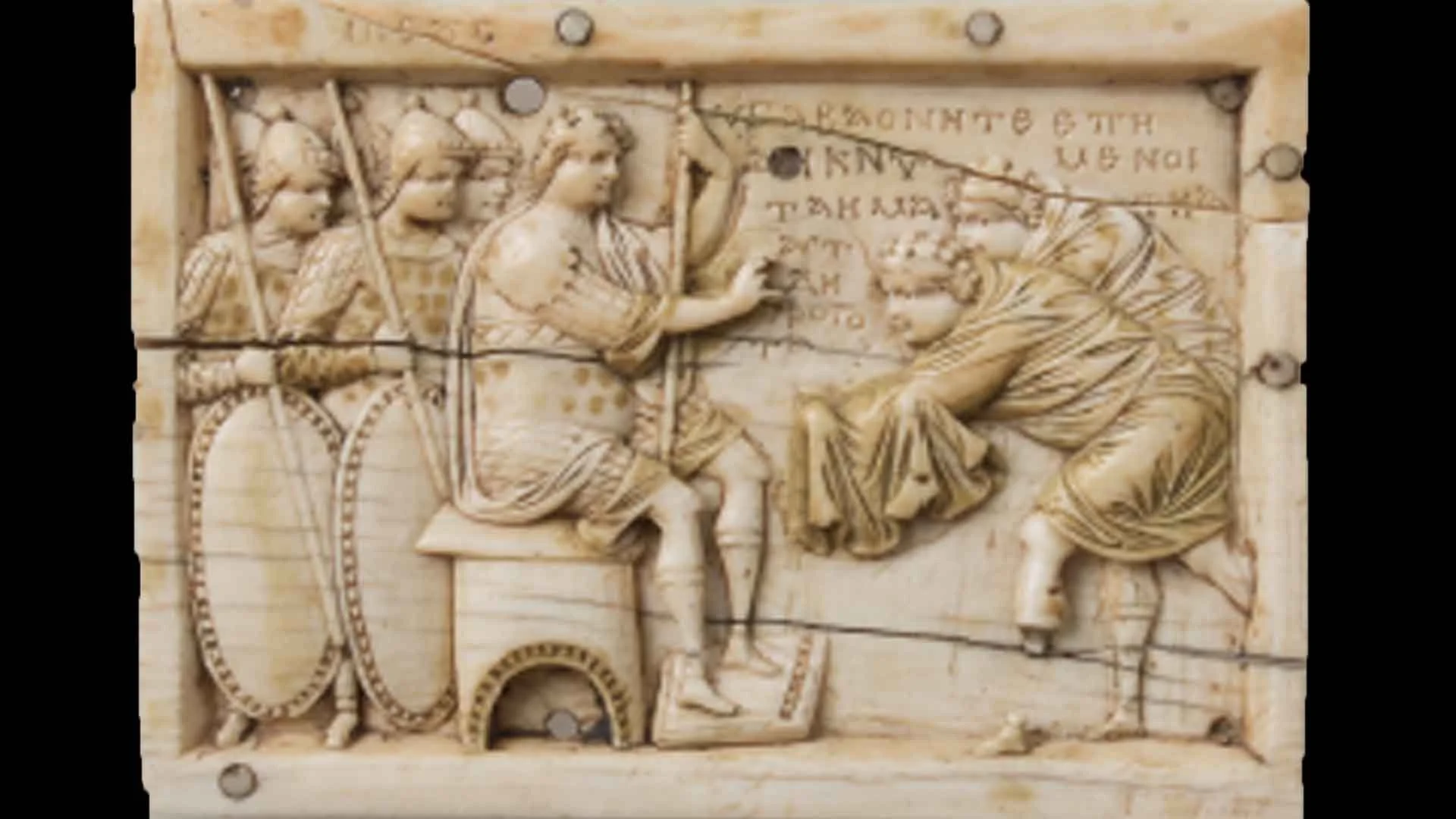
Plaque with Scenes from the Story of Joshua 900–1000 Byzantine These panels are from a casket that illustrated Joshua’s conquest of the Promised Land and carry paraphrasing of texts from the Book of Joshua

Bava Batra 112: פִּנְחָס דִּזְבַן מִיזְבָּן לָא מָצֵית

jyungar October 15, 2024

For the source text click/tap here: Bava Batra 112

To download, click/tap here: PDF

Using a number of examples, the rabbis wish to establish that transfer might happen through the father or through the son.

Abaye responded: It cannot be said that Pinchas had bought the land, for, if so, it would follow that the field must be returned by Yovel, and it would emerge that the righteous man (Elozar ben Aharon) would be buried in a grave which was not his own.

The Nimukei Yosef writes that our Gemora teaches us that it is a lack of dignity for the deceased to be buried in a grave site owned by another.

The Chasam Sofer (Responsa Yoreh Deah 330) citing our Gemora as its source says that the prevalent custom is that everyone pays for his own grave.

We explore notions of biblical inheritance as well as Halachic aspects of yerusha.

Tags 55th
Comment

Israeli Nobel Laureate S.Y. Agnon's famous masterpiece, his novel Only Yesterday, Published in 1945, the book tells a seemingly simple tale about a man who immigrates to Palestine with the Second Aliya--the several hundred idealists who returned between 1904 and 1914 to work the Hebrew soil as in Biblical times and revive Hebrew culture. This epic novel also engages the reader in a fascinating network of meanings, contradictions, and paradoxes all leading to the question, what, if anything, controls human existence? Seduced by Zionist slogans, young Isaac Kumer imagines the Land of Israel filled with the financial, social, and erotic opportunities that were denied him, the son of an impoverished shopkeeper, in Poland. Once there, he cannot find the agricultural work he anticipated. Instead Isaac happens upon house-painting jobs as he moves from secular, Zionist Jaffa, where the ideological fervor and sexual freedom are alien to him, to ultra-orthodox, antiZionist Jerusalem. While some of his Zionist friends turn capitalist, becoming successful merchants, his own life remains adrift and impoverished in a land torn between idealism and practicality, a place that is at once homeland and diaspora. Eventually he marries a religious woman in Jerusalem, after his worldly girlfriend in Jaffa rejects him. Led astray by circumstances, Isaac always ends up in the place opposite of where he wants to be, but why? The text soars to Surrealist-Kafkaesque dimensions when, in a playful mode, Isaac drips paint on a stray dog, writing "Crazy Dog" on his back. Causing panic wherever he roams, the dog takes over the story, until, after enduring persecution for so long without "understanding" why, he really does go mad and bites Isaac. The dog has been interpreted as everything from the embodiment of Exile to a daemonic force and becomes an unforgettable character in a book about the death of God, the deception of discourse, the power of suppressed eroticism, and the destiny of a people depicted in all its darkness and promise.

Bava Batra 111: מְלַמֵּד שֶׁהַבַּעַל יוֹרֵשׁ אֶת אִשְׁתּוֹ

jyungar October 14, 2024

For the source text click/tap here: Bava Batra 111

To download, click/tap here: PDF

We had understood that a husband inherits from his wife but that she does not inherit from him. Why would this be so? The rabbis decide that the "kinsmen" who receive the husband's inheritance are his blood kin and not his wife. Rava attempts to argue with the logic used in this proof. He states that words have been changed; letters moved. But the rabbis disagree.

We explore the 3 textual witnesses to the Rav Yannai story, learning how local Palestinian polemics influenced the subtle differences in those renditions (Yerushalmi and Lev Rabba) over the Bavli.

Tags 55th
Comment
  • Daf Ditty
  • Older
  • Newer

Julian Ungar-Sargon

This is Julian Ungar-Sargon's personal website. It contains poems, essays, and podcasts for the spiritual seeker and interdisciplinary aficionado.​