Julian Ungar-Sargon

  • Home
  • Theological Essays
  • Healing Essays
  • Podcast
  • Poetry
  • Daf Ditty
  • Deep Dive Ditty
  • Videos
  • Publications
  • Military Service
  • Dominican University
  • Home
  • Theological Essays
  • Healing Essays
  • Podcast
  • Poetry
  • Daf Ditty
  • Deep Dive Ditty
  • Videos
  • Publications
  • Military Service
  • Dominican University
Julian Ungar-Sargon copy 3.jpg

Daf Ditty

A wide-ranging commentary on the daily page of Talmud.

Bava Metzia 26: כְּגוֹן שֶׁעֲשָׂאוֹ פּוּנְדָּק לִשְׁלֹשָׁה נָכְרִים

jyungar March 25, 2024

For the source text click/tap here: Bava Metzia 26

To download, click/tap here: PDF

The Gemara previously raised a dilemma with regard to the halakha stated by Rabbi Shimon ben Elazar that a lost item found in a location frequented by the multitudes belongs to the finder.

We explore the attitudes towards gentiles in rabbinic literature.

Tags 47th
Comment

Statue of Roman god Mercury in SCHLOSS SCHÖNBRUNN SCHÖNBRUNN GARDEN, Vienna, Austria

Bava Metzia 25: כְּאַבְנֵי בֵּית קוּלִיס

jyungar March 24, 2024

For the source text click/tap here: Bava Metzia 25

To download, click/tap here: PDF

The Mishna on our daf discusses objects that cannot have a siman on them, e.g. fruits or coins, and whether a siman can be created for them by collecting them in a bag or by placing them in a certain pattern.

For example, the Mishna teaches that three coins placed one upon another can be considered a siman, and if they are found placed that way they must be announced and returned.

Rav Ashi raises one further situation – ke-avnei beit kulis– and the Gemara concludes that such a case would need to be announced and returned.

Beit kulis was a house of worship dedicated to the Roman god Mercurius (referred to as kulis in the Talmud), which was considered the god of trade and commerce.

There was a common practice to set up icons on the roads in his honor, and the accepted manner of worship was for the traveler to add a rock to the pile that was placed there in his honor.

We examine the presence of Roman gods (on coins) in Palestine of the period form an archeological and cultural perspective and specifically Mercury (Hermes).

Tags 47th
Comment

Watercolor by Arie Singer imagining a scene of concentration camp prisoners at Auschwitz being suspended by their arms by German guards. It is from a series of works created from 1985-2000. Unlike this work, most of the works are based upon memories and events from his youth as a 13 year old partisan fighter in the forests northeast of Vilna, Poland, (Vilnius, Lithuania) and in Belarus from 1943-1944

Bava Metzia 24: כַּפְתֵיהּ וְאוֹדִי

jyungar March 23, 2024

For the source text click/tap here: Bava Metzia 24

To download, click/tap here: PDF

The Gemora relates an incident: A silver cup was stolen from the host of Mar Zutra the Pious. Mar Zutra saw a certain student wash his hands and dry them on his friend’s garment. He said: Someone who is not concerned for his friend’s property is a prime suspect on the thievery. He was bound to a post until he eventually confessed to the crime.

We analyze the literary motifs in this story and the similarity to the goblet “stolen” in the Jospeh story.

We then examine the troubling history of torture to Jews and by Jews.

Tags 47th
Comment

Bava Metzia 23: כָּל כְּלֵי אֶנְפּוֹרְיָא אֵינוֹ חַיָּב לְהַכְרִיז ἐμπορία

jyungar March 22, 2024

For the source text click/tap here: Bava Metzia 23

To download, click/tap here: PDF

The mishna teaches: Rabbi Shimon ben Elazar says: If one finds any anpurya vessels he is not obligated to proclaim his find. The Gemara asks: What are anpurya vessels? Rav Yehuda says that Shmuel says: They are new vessels, as the eye of its purchaser has not yet sufficiently seen them to be able to recognize them. The Gemara asks: What are the circumstances? If there is a distinguishing mark on the vessels, when the eye of its purchaser has not yet sufficiently seen them, what of it?

The Mishnah uses the term as ἐμπορία emporia or Merchandise. New items that aren't familiar looking, and the owner hasn't gotten used to how they look. This is because sometimes lost items are returned just from recognizing them, for example to a scholar who doesn't lie. These items that are known that their owner's haven't gotten used to how they look aren't obligated to be announced.

We explore the emporia or marketplaces of antiquity with special reference to commerce in Roman Palestine.

Tags 47th
Comment

Bava Metzia 22: אֲבֵידָה שֶׁשְּׁטָפָהּ נָהָר

jyungar March 21, 2024

For the source text click/tap here: Bava Metzia 22

To download, click/tap here: PDF

Of all the amora’im, Abaye and Rava are presented as epitomizing the discussions that take place in the Gemara. In all of their arguments in the Gemara, the halakha always follows Rava’s opinion, with only six exceptions. Those six are referred to by the Gemara by the acronym YAL KGM:

Yeush shelo mida’at (our daf today) – When a person does not realize that he has lost an object until after it is picked up by someone else, and he gives up ownership when he realizes it, can we apply it retroactively? Abaye rules that despair that is not conscious is not despair, and despair is needed for the ownership to transfer.

We turn our attention to the halachot of hashoas aveidah and its applications and restrictions.

Tags 47th
Comment

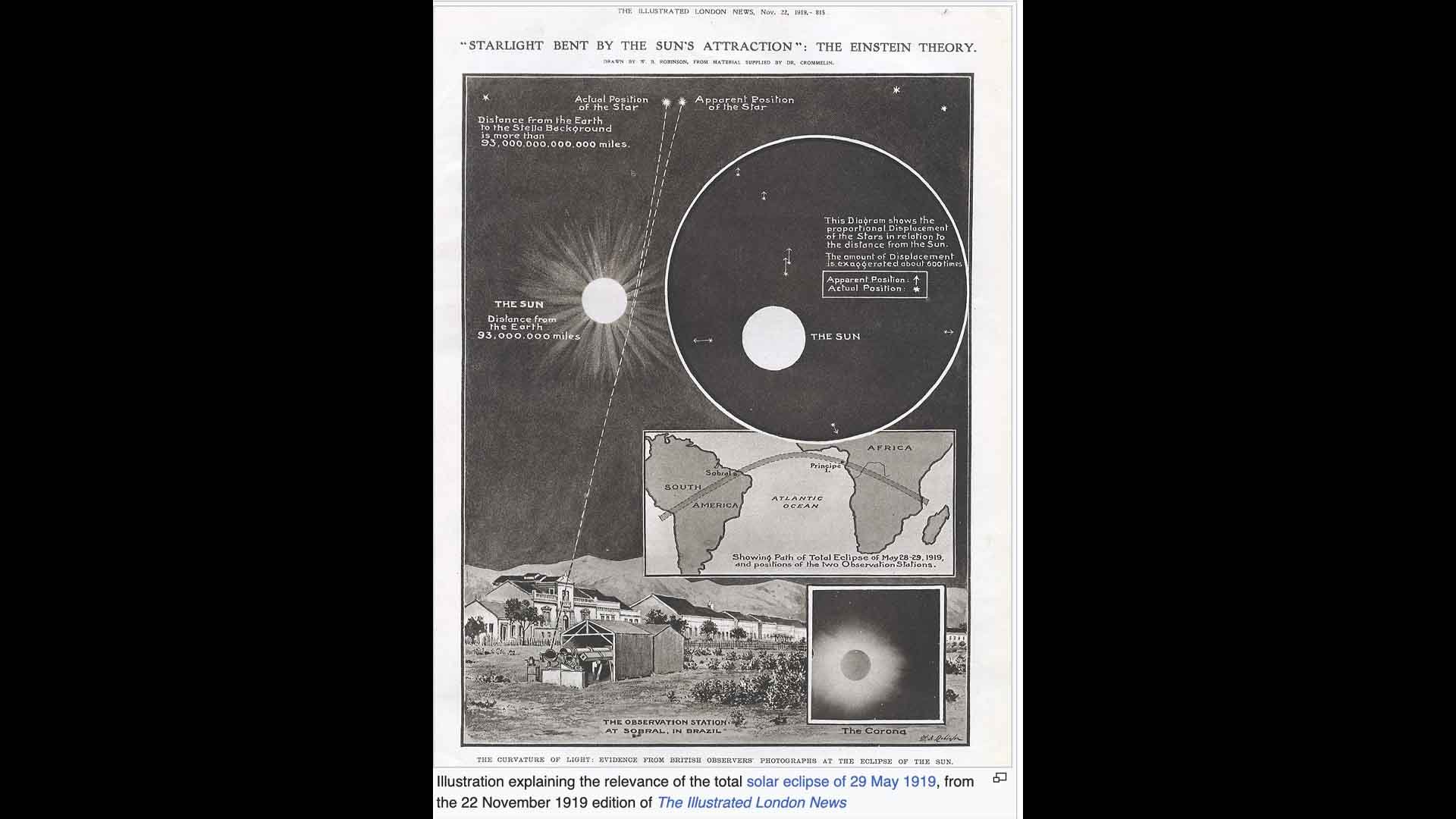
Illustration explaining the relevance of the total solar eclipse of 29 May, 1919, from the 22 November 1919 edition of The Illustrated London News

Bava Metzia 21: אִי דֶּרֶךְ נְפִילָה

jyungar March 20, 2024

For the source text click/tap here: Bava Metzia 21

To download, click/tap here: PDF

We begin Perek II the most famous perk which all your bochruim begin talmud, with the following question:

The mishna teaches as an example of items that one finds without any distinguishing mark: If one found scattered produce.

The Gemara asks: And how much produce in how large an area constitutes scattered produce?

Rabbi Yitzḥak says: It is considered scattered produce when it has a dispersal ratio of one kav in an area of four by four cubits.

The Gemara asks: What are the circumstances? If he found the produce scattered in a manner indicating that it came there by falling and was not deliberately placed there, then even if the volume of produce in that area was greater than this limit, it should also belong to him, because there is no distinguishing mark that would enable the owner to reclaim it.

Falling rather than deliberately placing allows us to examine the history of gravity and th resistance of some latter day Rabbis to the implications of modern science.

Tags 47th
Comment

Franz Joseph Haydn helped develop the form that became the standard first movement of the modern symphony

Bava Metzia 20: אִם יֵשׁ עִמָּהֶן סִמְפּוֹנוֹת Συμφωνία

jyungar March 20, 2024

For the source text click/tap here: Bava Metzia 20

To download, click/tap here: PDF

The mishna teaches: If there are cancellations of contracts [simponot] among one’s documents, he should do what is stated in the simponot. The Gemara cites that which Rav Yirmeya bar Abba says that Rav says: With regard to a simpon that emerges from the possession of a creditor, even if it is written in his own handwriting and is clearly not forged, it is considered as though he were merely jesting and the simpon is invalid.

The Gemara explains: It is not necessary to state this halakha in a case where it is written in the handwriting of a scribe, as it can be said that he happened to have an opportunity to have the scribe write the simpon, and therefore he had him write it before the debt was repaid.

We examine the etymology of the Greek loan word Συμφωνία and its transformation into the modern understanding of both harmonic musicality and contracts.

Tags 47th
Comment

Bava Metzia 19: διαθήκη

jyungar March 18, 2024

For the source text click/tap here: Bava Metzia 19

To download, click/tap here: PDF

If a person finds a document in the marketplace, must it be returned to its owner? And which owner, the person receiving or the person selling?

Our daf focuses on specific documents that might be lost and then found. These include a get, b a bill of manumission, and a will. The rabbis compare these documents to found promissory notes. They also consider gifts and notes written when a person is healthy or unhealthy.

"the Gemara raises a contradiction to that inference from a baraita that states that if one found wills, or deyaytiki deeds of designated repayment, or deeds of gift, even if both the one who wrote the deed and its intended recipient agree that it is valid, he should return it neither to this person nor to that person."

διαθήκη deyaytiki is a will or a deed of gift given by one on his/her deathbed acquired after the death.

We examine the etymology of this Greek loan word and its use in the Bible, Septuagint and in ancient wills and testaments.

Tags 47th
Comment

Bava Metzia 18: חָיְישִׁינַן לִשְׁנֵי שְׁוִירֵי

jyungar March 17, 2024

For the source text click/tap here: Bava Metzia 18

To download, click/tap here: PDF

According to the new Mishna, in all of these cases the document cannot be returned to either of the people mentioned, because it is possible that the individual who arranged for the document to be written changed his mind and did not do so. If that is the case, then what was written in the document never took effect, since a divorce or a present, for example, only takes place when the document is handed over by the person who has the power to effect the divorce or the present. If the document is given to them by the finder, the recipient may lie and use the document as proof to the falsehood.

Today we review the scholarship of Prof David Weiss Halivni and the radical new way of understanding the development of the Talmud.

Tags 47th
Comment

Bava Metzia 17: חָיְישִׁינַן לִשְׁנֵי שְׁוִירֵי

jyungar March 16, 2024

For the source text click/tap here: Bava Metzia 17

To download, click/tap here: PDF

The rabbis teach about debtors who first deny their debt, but when faced with witnesses, amend their statements, and admit that they already repaid that debt. These debtors are held to the presumptive status of one who denies that they owe a debt. Any subsequent claims are ignored. Similar consequences face those who claim that they are completely innocent when it comes to other cases - money, a cloak, an oath.

The rabbis wonder whether oaths should be treated with the same gravitas as the other claims. One might say that he will take an oath but later he reconsiders and does not take the oath.

The Rabbis stated this ruling before Rabbi Abbahu. He said to them: Rabbi Avin’s statement is reasonable in a case where one was obligated by a court to take an oath. But if one voluntarily obligated himself to take an oath, and he later claims that he took the oath, he is deemed credible. This is because a person is prone to say incidentally that he will take an oath and then change his mind; this does not render him a liar. The Rabbis then brought Rabbi Abbahu’s analysis back to Rabbi Avin and presented it before him. Rabbi Avin said to them: I also said this halakha specifically with regard to one who was obligated by a court to take an oath, as Rabbi Abbahu explained.

We explore the circumstances around lying in Halacha.

Tags 47th
Comment

A detailed Kabbalistic tree from 1691, depicting the Sefirot in the center. Bayerische Staatsbibliothek, Munich Cod. hebr. 450.

Bava Metzia 16: וְעָשִׂ֛יתָ הַיָּשָׁ֥ר וְהַטּ֖וֹב

jyungar March 15, 2024

For the source text click/tap here: Bava Metzia 16

To download, click/tap here: PDF

Our daf explains If the debtor pays his debt, he can reclaim his property at any point. Consequently, even bills of foreclosure or authorization might be obsolete, and nevertheless the mishna states that one who finds them must return them to the creditor.

Rather, Rava said that the mishna is not proof for the ruling of Shmuel for a different reason: There, this is the reason that the documents are returned: As I can say that if the debtor has already repaid his debt, it is he who caused the loss to himself, as at the time he repaid his debt he should have either ripped up the document, or alternatively, he should have demanded of the creditor to write another document for the debtor’s redeemed property, returning it to him.

The reason for a new document to be written is that according to the letter of the law, the land need not be returned by the creditor to the debtor, and it is due to the verse:

“You shall do that which is right and good in the eyes of the Lord” (Deuteronomy 6:18), that the Sages said that the land should be returned. Therefore, it is as though the debtor is purchasing it anew, and the creditor must write a bill of sale.

This leads us to an analysis of the struggle between the letter and the spirit of the law…and the biography of Prof Yosef Faur.

Tags 47th
Comment

Bava Metzia 15: הָתָם הַלְוָאָה, הָכָא זְבִינֵי

jyungar March 14, 2024

For the source text click/tap here: Bava Metzia 15

To download, click/tap here: PDF

Shmuel’s opinions relating to shevach are discussed.

If one buys from a robber and invests in the property, he loses his investment because if the robber returns him his investment, it will look like interest. Various sources are brought to contradict this but are resolved.

According to Shmuel, a ba’al chov who comes to demand land from liened property, he can take the shevach, (the investment). Various sources are brought to prove or question his opinion and as a result some distinctions are made.

If one buys property and knows it is stolen, Rav and Shmuel debate whether or not he can get his money back.

Our Gemara examines a position put forward by Shmuel who rules that if the borrower cannot pay, then the lender can collect not only from the guaranteed field itself, but also from any increase in the value of the field that derives from the investment that the third-party purchaser made in the field. Rava explains that this rule is based on the standard contract that was written at the time that a field was sold, where the seller guarantees to the purchaser that he will make sure that the purchaser will be fully reimbursed should there be any problem with the purchase, the investment or the profits stemming from the sale.

We continue our exploration of scribal errors as well as the history of the textual emendation and redaction of the Mishnah.

Tags 47th
Comment

Bava Metzia 14: סָבְרִי אַחְרָיוּת טָעוּת סוֹפֵר הוּא

jyungar March 13, 2024

For the source text click/tap here: Bava Metzia 14

To download, click/tap here: PDF

§ Shmuel said: What is the reason for the opinion of the Rabbis, who say that one can collect a debt from liened property even if the promissory note does not include a property guarantee? They hold that omission of the property guarantee from the promissory note is a scribal error, as one would certainly not lend money without a property guarantee.

It is important to distinguish between scribal errors and scribal corrections. The Talmud was copied by professional scribes and students in a centuries-long process. One manuscript was copied from another (sometimes more than one), and mistakes, known as scribal errors, crept in during copying. Sometimes copyists read the text incorrectly, while on other occasions, they accidentally omitted entire words, phrases, and whole lines. Thus, one class of variants derives from scribal errors.

We explore some examples of textual transmission and the effort to prevent scribal errors.

Tags 47th
Comment

Bava Metzia 13: כּוֹתְבִין שְׁטָר לַלֹּוֶה אַף עַל פִּי שֶׁאֵין מַלְוֶה עִמּוֹ

jyungar March 12, 2024

For the source text click/tap here: Bava Metzia 13

To download, click/tap here: PDF

Beginning with the Mishna on yesterday’s daf (12b), the focus in our perek is on what to do what you find a shetar – a legal document – which contains information about a transaction between two people. Since it is not clear who was holding the shetar when it was lost, it is unknown to whom it should be returned; perhaps, it cannot be returned to either of them.

For shelichut to work, it typically requires a DIRECT appointment by the ba'al davar, the person who will dispatch the shaliach and who will absorb the halakhic consequences of the action performed. However, several gemarot assert the ability to represent another person without direct appointment. If the given activity is overwhelmingly beneficial, a “zekhut,” it can be performed by an agent who has not been explicitly appointed. This ability is known as “zachin le-adam shelo be-fanav.” The Rishonim differ as to the relationship between classic shelichut and zachin, and this debate affects to the nature of shelichut itself.

We explore the notion of “zachin le-adam shelo be-fanav.” Where it applies especially regarding the sale of chametz on Pesach.

A Shtar may be written for a borrower even without the presence of the lender; nonetheless if the lender protests not to write the Shtar for the borrower we do not write the Shtar against his will.

However a Shtar may not be written for the lender if the borrower is not present. (Shulchan Aruch CM 39:13)

Tags 47th
Comment

Recumbent Lion, Rembrandt van Rijn, c. 1660 Rembrandt had the ability to depict poses and mental states faultlessly, and not only of people. Everything about this powerful lion indicates that Rembrandt saw it in reality and wanted to record it before it moved.

Bava Metzia 12: וְכִי מוּתָּר לָאָדָם לְהַרְבִּיץ אֲרִי בְּתוֹךְ שָׂדֵהוּ

jyungar March 12, 2024

For the source text click/tap here: Bava Metzia 12

To download, click/tap here: PDF

While the previous two Mishnayot dealt with how a person can claim an object by taking possession of it himself or by having his field take possession on his behalf, the Mishna on our daf discusses how a person can come to own something through the efforts of family members.

According to the Mishna, if an ownerless object is picked up by someone’s underage children, his non-Jewish slaves or his wife, it belongs to him. If, however, the children were adults, the slaves were Jewish or if he and his wife were in the midst of divorce proceedings, then the object would belong to the finder.

In the talmudic discussion Rav Adda bar Mattana said to Abaye: But how is it permitted for one to allow his son to follow him in the field, thereby causing all the poor people to leave? Is a person permitted to have a lion crouch in his field so that the poor people will see it and flee?

Which brought to mind Rembrandt’s Lion and his relationship with and influence on the Jews of Amsterdam and later Jewish painters which we explore.

Tags 47th
Comment

Bava Metzia 11: שָׁכוּחַ מֵעִיקָּרוֹ הָוֵי שִׁכְחָה

jyungar March 10, 2024

For the source text click/tap here: Bava Metzia 11

To download, click/tap here: PDF

The Mishna on our daf, as well as the Mishna that preceded it (10a) focus on how a person might take possession of an object that he finds by taking hold of it himself or by claiming it as being on his property.

The case in our Mishna describes how a person who sees people running after an ownerless animal to claim it can say “my field has effected acquisition of the animal on my behalf” – assuming, of course, that the animal is on his property.

The Gemara asks: And from where do you say that in the case of an unsecured courtyard, if the owner is standing next to his field, yes, it effects acquisition of ownerless items on his behalf, but if he is not, it does not effect acquisition of items on his behalf?

As it is taught in a baraita: There is a case where a landowner was standing in the town and saying: I know that my laborers forgot a sheaf that I have in the field, which I had intended for the laborers to bring in, but since I remember it, it shall not be considered a forgotten sheaf, which must be left for the poor. Then, the landowner himself forgot about the sheaf. In this case, one might have thought that it is not considered a forgotten sheaf. To counter this, the verse states:

“When you reap your harvest in your field, and have forgotten a sheaf in the field, you shall not go back to fetch it; it shall be for the stranger, for the fatherless, and for the widow” (Deuteronomy 24:19). It is derived from here that the phrase: “And have forgotten”applies “in the field,” but not in the town.

We explore memory and forgetting with respect to trauma and cultural violence.

Tags 47th
Comment

Bava Metzia 10: אַרְבַּע אַמּוֹת שֶׁל אָדָם קוֹנוֹת לוֹ

jyungar March 10, 2024

For the source text click/tap here: Bava Metzia 10

To download, click/tap here: PDF

One of the themes that is discussed on our daf is “Ein shali’ah le-dvar aveira – a person cannot be made an agent to sin” – i.e. that a person must take responsibility for his own actions, and cannot blame another person for having told him to perform a forbidden act.

According to the Gemara in Massekhet Kiddushin (42b) the underlying principle of ein shali’ah le-dvar aveira is based on the fact that the messenger’s true obligation is to follow the directions of God, not of another person – divrei ha-rav ve-divrei ha-talmid, divrei me shom’im!

We explore the science of coercion and the famous Milgrom experiments.

Tags 47th
Comment

Bava Metzia 9: הָכִי נָמֵי דְּחָצֵר מְהַלֶּכֶת הִיא

jyungar March 8, 2024

For the source text click/tap here: Bava Metzia 9

To download, click/tap here: PDF

Our Daf turns us toward the question of what is included in one's acquisition. If a person pulls an animal, does s/he acquire the vessels that are sitting on that animal?

Would a person who wanted the vessels but not the animal acquire those vessels by pulling the animal? Is the animal like a 'mobile courtyard' in this case, and thus what is left in the courtyard is acquired by its owner?

Acquire the animal and acquire the vessels, does the buyer acquire the vessels? Although one can acquire an item by having it placed in his courtyard, and one’s animal is the equivalent of his courtyard, it is considered a mobile courtyard, and a mobile courtyard does not effect acquisition of items that are placed in it.

And if you would say that the animal can function as a courtyard when it is standing still, not walking, while being pulled, isn’t there a principle which states that anything that does not effect acquisition when moving also does not effect acquisition when it is standing or sitting?

Several gemarot establish the principle of kinyan chatzer. Though personal possession entails the most basic form of ownership, the gemara recognizes the capacity of 'chatzer' to almost mimic physical possession.

We explore the Halacha of parking lots, driving and parking on Shabbat and the various approaches.

Tags 47th
Comment

A painting in the Joodse Historische Museum of the Esnoga Synagogue, 18th century showing the affluence of the Jews at the time

Bava Matzia 8: הַמַּגְבִּיהַּ מְצִיאָה לַחֲבֵירוֹ

jyungar March 8, 2024

For the source text click/tap here: Bava Metzia 8

To download, click/tap here: PDF

Aside from the cases described in the first Mishna (2a) where two people were both holding a cloak and claiming ownership, the Mishna also describes other situations in which ownership claims are made. If two people are riding an animal, for example, or if one was riding and one was leading the animal, the Mishna rules that we will treat their claims of ownership the same way we treat people who are each holding an object.

As we use oath taking to settle financial disputes like these we explore the legal system used by Jews in 18th century Amsterdam.

Tags 47th
Comment

Bava Metzia 7: שְׁנַיִם אֲדוּקִין בִּשְׁטָר

jyungar March 7, 2024

For the source text click/tap here: Bava Metzia 7

To download, click/tap here: PDF

Up until this point in the discussion of how to rule when two people are both holding – and claiming ownership of – a single object, we have been dealing with things that can theoretically be divided between the two parties. Our Gemara brings a baraita that discusses a case where two people are holding onto a shetar – a legal document (in this case a promissory note) – where the lender claims that it is his and he had dropped the note and the borrower agrees that it had once been the lender’s but that now he had paid the debt and it belonged to him. The baraita quotes a disagreement in this case, with Rabbi Yehuda HaNasi ruling that the shetar should be examined by the courts to see if it is reliable and Rabban Shimon ben Gamliel arguing that the two people should divide the sum of money that is in doubt.

We explore the history and Tisha B’Av Kinna surrounding the burning of the Talmud in Paris 1240 penned by Reb Meir of Rotenburg.

Tags 47th
Comment
  • Daf Ditty
  • Older
  • Newer

Julian Ungar-Sargon

This is Julian Ungar-Sargon's personal website. It contains poems, essays, and podcasts for the spiritual seeker and interdisciplinary aficionado.​