Julian Ungar-Sargon

  • Home
  • Theological Essays
  • Healing Essays
  • Podcast
  • Poetry
  • Daf Ditty
  • Deep Dive Ditty
  • Videos
  • Publications
  • Military Service
  • Dominican University
  • Home
  • Theological Essays
  • Healing Essays
  • Podcast
  • Poetry
  • Daf Ditty
  • Deep Dive Ditty
  • Videos
  • Publications
  • Military Service
  • Dominican University
Julian Ungar-Sargon copy 3.jpg

Daf Ditty

A wide-ranging commentary on the daily page of Talmud.

Bava Kamma 104: מְשַׁלְּמִים קֶרֶן וָחוֹמֶשׁ

jyungar February 14, 2024

For the source text click/tap here: Bava Kamma 104

To download, click/tap here: PDF

Rav Yehudah in the name of Shmuel says (104a) that one may not give over money on the basis of a Deyukni even if witnesses are signed on it.

RASHI (DH b'Deyukni) explains that a person deposited his money with a Shomer (guardian) and now wishes to appoint a Shali'ach (agent) to retrieve the object. He gives the Shali'ach identifying signs which the agent uses to prove that he is acting on behalf of the owner of the money.

Rebbi Yochanan disagrees with Shmuel and maintains that if witnesses sign the document, the Shomer may rely on the Deyukni.

Rashi (and most of the other commentaries, as well) understand the Gemara’s discussion to be a debate about establishing agents in general, although the Bartenura suggests that it is limited to the case of our Mishna and discusses only returning stolen objects.

In light of the recent discussions of Takanat Hashavim I thought we might explore the Sin of King David in rabbinic literature.

Tags 46th
Comment

Detail headgear of Jews and Gentiles

Bava Kamma 103: לֹא זוֹ דֶּרֶךְ מוֹצִיאָתוֹ מִידֵי עֲבֵירָה

jyungar February 13, 2024

For the source text click/tap here: Bava Kamma 103

To download, click/tap here: PDF

How much effort must a thief expend in returning something that he stole?

According to the Torah (Vayikra 5:21-26) if someone steals from his friend and then lies, swearing that he did not do so, he is obligated to return the money (plus a penalty of an additional fifth) and bring a special sacrifice called an asham gezelot.

The Torah emphasizes that it must be returned to the victim, from which the Mishna on our daf, concludes that if someone steals from his friend something that is worth at least a peruta and swears falsely, he is obligated to follow him even to Madai – also known as Medes, part of the ancient Iranian Empire – to return it.

We explore the different possible rules regarding theft from Non-Jews and the recent debate regarding the explosive publication of Prof Shahak’s book and the debate in its aftermath.

Tags 46th
Comment

The Lubavitcher Rebbe brings down a universal lesson from the teaching of the rehabilitated ox. We all have a wild ox inside of us that can lead us to behave in ugly ways. But like the fearsome muad, we have a path to redemption: new ownership. When we place ourselves under God’s control and submit to His will, we can overcome our “animal nature.”

Bava Kamma 102: מַחֲכוּ עֲלַהּ בְּמַעְרְבָא

jyungar February 12, 2024

For the source text click/tap here: Bava Kamma 102

To download, click/tap here: PDF

The braisa states: If someone gives money to his messenger (meaning partner, and they will split the profits) to buy for him wheat, and instead he buys for him barley, or vice versa, one braisa states that if they lost money, the lost money is from the portion of the messenger. If they gained money, the original sender gained. Another braisa states: If they lost, it is from the portion of the messenger. If they gained money, they split the profits. [This is a contradiction!]

The Gemara tries to reconcile the contradictory texts and notes that they laughed at it in the West (Eretz Yisrael), at the explanation of Rabbi Yoḥanan, stating a deviation by an agent from the terms of his assignment does not result in the acquisition of the item for the agent himself.

Rabbi Abbahu resolves the issue: The case of an agent who was assigned to purchase wheat and purchased wheat is different, as the agent is performing his assignment and, as such, he is like the customer, i.e., the one who appointed him, and it is as though the latter has purchased the grain himself.

This laughing at the scholars of Eretz Yisroel is found elsewhere in seas and allows us an exploration of the two Talmuds and the relative weight given to the Bavli and Boyarin’s tribute to his teacher Professor Shaul Lieberman and his scholarship on the Yerushalmi and Tosefta.

Tags 46th
Comment

Thomas Rogers (1781–1875), Carpenter, Aged 48 by William Jones 1830, from National Trust, Erddig

Bava Kamma 101: הַנּוֹתֵן עֵצִים לֶחָרָשׁ

jyungar February 11, 2024

For the source text click/tap here: Bava Kamma 101

To download, click/tap here: PDF

The Sages taught (Tosefta 10:8): With regard to one who gives wood to a carpenter to fashion a chair from it and he fashioned a bench from it instead, or one who gives him wood to fashion a bench and he fashioned a chair from it instead, Rabbi Meir says: The carpenter gives him the value of his wood and keeps the chair or bench, as he has acquired it due to the change.

Rabbi Yehuda says: He does not acquire the item. Rather, if the value of the wood’s enhancement exceeds the carpenter’s expenses the owner gives the carpenter the expenses, and if the expenses exceed the enhancement of the wood, he gives him the value of the enhancement. Since the carpenter deviated from the customer’s order, he is entitled to either his expenses or the enhancement, the smaller amount of the two.

We explore the trade of craftsmanship in antiquity and the use of the term in the vision of the 4 craftsmen in Zecharia II.

Tags 46th
Comment

From Marie Josephine Carr’s The Charm of Color, published by the Monroe Chemical Company, 1928

Bava Kamma 100: צְבָעוֹ כָּאוּר

jyungar February 10, 2024

For the source text click/tap here: Bava Kamma 100

To download, click/tap here: PDF

The Mishna on our daf discusses cases where someone gave wool to a dyer to color, and the wool was not dyed properly.

According to the Mishna in the case of hikdiho yorah – if the wool was boiled at too high a temperature and was burned – the wool is considered entirely ruined, and full restitution will need to be made to the owner.

If the dye came out uneven, the owner would pay either the added value of the poorly dyed wool or the dyer’s expenses – whichever is less.

We explore the history of dyes including recently discovered dye industry in Ancient Palestine.

Tags 46th
Comment

Bava Kamma 99: יֶשְׁנָהּ לִשְׂכִירוּת מִתְּחִילָּה וְעַד סוֹף

jyungar February 9, 2024

For the source text click/tap here: Bava Kamma 99

To download, click/tap here: PDF

We have just learned that a craftsperson is responsible for damages made to an item that s/he was hired to repair or build. Our daf brings in the question of payment. We are obliged to pay a craftsperson for their work on the day that that work is done.

It is forbidden to wait even until the following morning to pay someone for their work. Would it be permitted to restrict or delay payment to a craftsperson who damaged one's property? The rabbis consider this question.

We explore the ethics of business employment specifically timely compensation in Halacha.

Tags 46th
Comment

Portrait of Rabbi Tzvi Hirsch Ashkenazi - The "Chacham Tzvi" - Original Painting and Interesting Inscription

Bava Kamma 98: גָּזַל מַטְבֵּעַ וְנִפְסַל

jyungar February 8, 2024

For the source text click/tap here: Bava Kamma 98

To download, click/tap here: PDF

Our sugya describes how already in ancient times it was the custom to honor great people by engraving their likeness on coins. So it was with Dovid and Shlomo, and before them with Avrohom and Yitzchok.

Tosafos (S.V. Matbeya Shel Avrohom) contends that it was not their image on the coins, as it is forbidden to forge a human image, rather it was their names that were inscribed.

The Yavetz’s father, the Chacham Tzvi, was extremely strict for himself and would not even allow his face to be drawn.

We know this from his son who describes with great emotion how, “The true saint, my father and rebbe, our great master, may Hashem be with him forever… went to visit the Sephardic Kehilla in London. He was greeted with great respect the like of which is unheard of. He was escorted into town in a royal floatilla amidst great jubilation.”

The kehilla, relying on the majority of poskim had commissioned an artist to draw his countenance.

We explore the teshuvot and life of this great Chacham, the father of Reb Yakov Emden.

Tags 46th
Comment

A coin showing an image of King Antiochus VII was one of 16 coins excavated in Modi'in, Israel

Bava Kamma 97: שֶׁיָּצָא מוֹנִיטִין שֶׁלּוֹ בָּעוֹלָם

jyungar February 7, 2024

For the source text click/tap here: Bava Kamma 97

To download, click/tap here: PDF

Steinsaltz "The Gemara on our daf discusses the return of money in cases where the value of the currency – and, in particular, the coinage – changes while a loan is taking place.

To clarify the question about how to establish the value of coins that have gone out of circulation, Rava brings a baraita that discusses the case of pidyon ma’aser sheni. On certain years of the agricultural cycle, a farmer is obligated to bring ma’aser sheni – to tithe his crops and take them to Jerusalem where they must be eaten in holiness within the city. “

We explore the history of coinage from ancient times.

Tags 46th
Comment

Bava Kamma 96: נִיטְּלָה הַתְּיוֹמֶת – פָּסוּל

jyungar February 6, 2024

For the source text click/tap here: Bava Kamma 96

To download, click/tap here: PDF

The Gemara teaches that when one steals a Lulav from his friend and plucks off the leaves one by one from the spine, he thereby acquires the leaves because their name has changed. Originally, they were called a "Lulav" and now they are a different object, "Hutzei" (leaves).

Rav Papa asks, if one steals a Lulav and splits the "Tiyomes," does this also represent a change in the name of the object such that the thief acquires it?

The Gemara attempts to answer Rav Papa's question from a statement of Rebbi Matun in the name of Rebbi Yehoshua ben Levi, who says that if the Tiyomes of a Lulav was removed the Lulav is invalid for the Mitzvah of Arba'as ha'Minim on Sukos.

The Gemara suggests that the law is the same if the Tiyomes was not removed but only split.

What exactly is a Tiyomes? The Rishonim and Acharonim discuss the definition of a Tiyomes at length. Some of their definitions are unclear, and thus there is additional discussion about what exactly they mean.

We explore the halachot of this curious split as well as the mythic meaning of the palm in different cultures.

Tags 46th
Comment

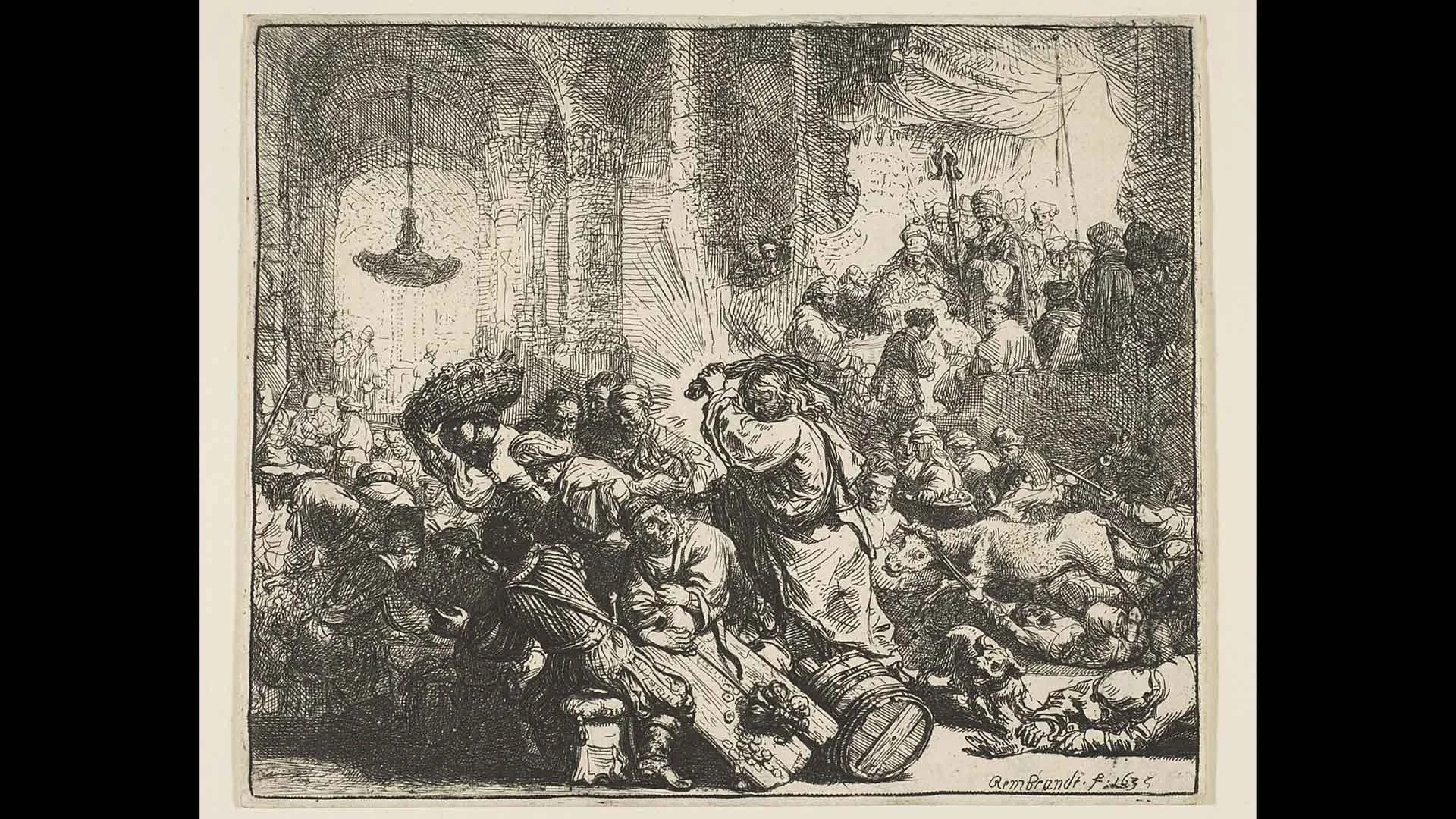
Christ Driving the Money Changers from the Temple Rembrandt (Rembrandt van Rijn)

Bava Kamma 95: שִׁינּוּי קוֹנֶה

jyungar February 5, 2024

For the source text click/tap here: Bava Kamma 95

To download, click/tap here: PDF

Our rabbis' discussions about damages for stolen items in different circumstances. We begin with a reminder about what to do when a stolen item should be given back but is not available - it has been 'used up', it has become part of another structure that cannot be unbuilt, or it is gone. In such cases the thief pays for the cost of the item's value when it was stolen.

If an item has been 'enhanced' - a cow has had a calf or a sheep's wool has been dyed and used - both the stolen item and the enhancement are returned to the owner. Rabbi Yehuda adds that the thief pays additional monies in the amount of the enhancement between the time of stealing and the time of the original's return.

We continue to struggle with how a thief might be “rewarded” and in what circumstances then discuss the historicity of the Temple money changers “שולחני” in Rabbinics and New Testament versions.

Tags 46th
Comment

Bava Kamma 94: אָדָם אֶחָד שֶׁבִּקֵּשׁ לַעֲשׂוֹת תְּשׁוּבָה

jyungar February 4, 2024

For the source text click/tap here: Bava Kamma 94

To download, click/tap here: PDF

It was taught in the days of Rabbi Yehuda HaNasi, in a baraita:

There was an incident with regard to one man who desired to repent after having been a thief for many years.

His wife said to him: Empty one [reika], if you repent you will have to return all the stolen items to their rightful owners, and even the belt that you are wearing is not yours, and he refrained and did not repent.

At that time, the Sages said: With regard to robbers or usurers that returned either the stolen item or the interest to the one from whom they took it, one should not accept it from them.

And concerning one who does accept it from them, the Sages are displeased with him.

We explore the case of the repentant thief (not to he confused with St. Dismas).

Tags 46th
Comment

Bava Kamma 93: סַמֵּא אֶת עֵינִ

jyungar February 3, 2024

For the source text click/tap here: Bava Kamma 93

To download, click/tap here: PDF

§ The mishna teaches: With regard to one who says to another: Blind my eye, or: Cut off my hand, or: Break my leg, and he does so, the latter is liable to pay for the damage, even if the injured party explicitly instructed him to do so on the condition that he will be exempt from payment.

The Gemara comments that this is also taught in a baraita. With regard to one who said to another: Strike me, or wound me; and the other asks: Is this on the condition that I will be exempt from payment? And the first one said to him, in the tone of a question: Yes, this is an example of the principle: There is a yes that is like a no. It is as if the victim asked: Even if I give you permission to do it, do you think that I would forgo the compensation?

We explore the Jewish attitude to boxing as well as the controversial Rambam regarding wife-beating.

Tags 46th
Comment

Sarai Is Taken to Pharaoh's Palace by James Tissot

Bava Kamma 92: אַכְסְנַאי שֶׁבָּא לָעִיר

jyungar February 2, 2024

For the source text click/tap here: Bava Kamma 92

To download, click/tap here: PDF

The Mishnah states that although one who damages his friend pays him the required compensation, he does not receive atonement for what he did until he requests forgiveness from his victim. This is derived from Hashem's words to Avimelech, "And now return the man's wife" (Bereishis 20:7). The ME'IRI explains that this is derived from the continuation of the verse, "v'Yispalel Ba'adcha" -- "and he will pray for you" (Bereishis 20:7). Hashem instructed Avimelech to appease Avraham and seek forgiveness from him in order to have Avraham pray for him.

The Gemara cites a Beraisa which states that all the sums mentioned in the Mishnah (90a) are payments for "Boshes," "embarrassment." Even when all of the payments have been paid, the pain of having been shamed is not forgiven "even if he brought all the choice rams of Nevayos" (see Yeshayah 60:7). Therefore, he must request forgiveness from the person he embarrassed. The Beraisa derives this from Hashem's command to Avimelech, "And now, return the man's wife, because he is a prophet, and he will pray for you and you will live" (Bereishis 20:7).

We explore the Biblical scene and the motives for Avraham’s deception.

Tags 46th
Comment

A slave pouring wine for his master. A Roman mosaic from the 2nd century, Tunisia

Bava Kamma 91: אֲפִילּוּ עֲנִיִּים שֶׁבְּיִשְׂרָאֵל

jyungar February 1, 2024

For the source text click/tap here: Bava Kamma 91

To download, click/tap here: PDF

Someone who embarrasses his friend verbally is Patur from paying Boshes. The Yerushalmi states that if someone embarrasses a Talmid Chacham he is Chayav. Even though a person is Patur from embarrassing someone other than a Talmid Chacham, however it is a grave sin to embarrass someone and Chazal teach us that someone who embarrasses his friend publicly loses his share in the world to come. However, if the intention of the perpetrator was not embarrass him but rather his intention was to rebuke him for his Aveirah in the hope that he will be embarrassed to commit the Aveirah again his act commendable and is permitted. It all depends on the intent of the perpetrator. (Me’iri)

We review comparisons between Roman Law (aniuria) and Jewish Law.

Tags 46th
Comment

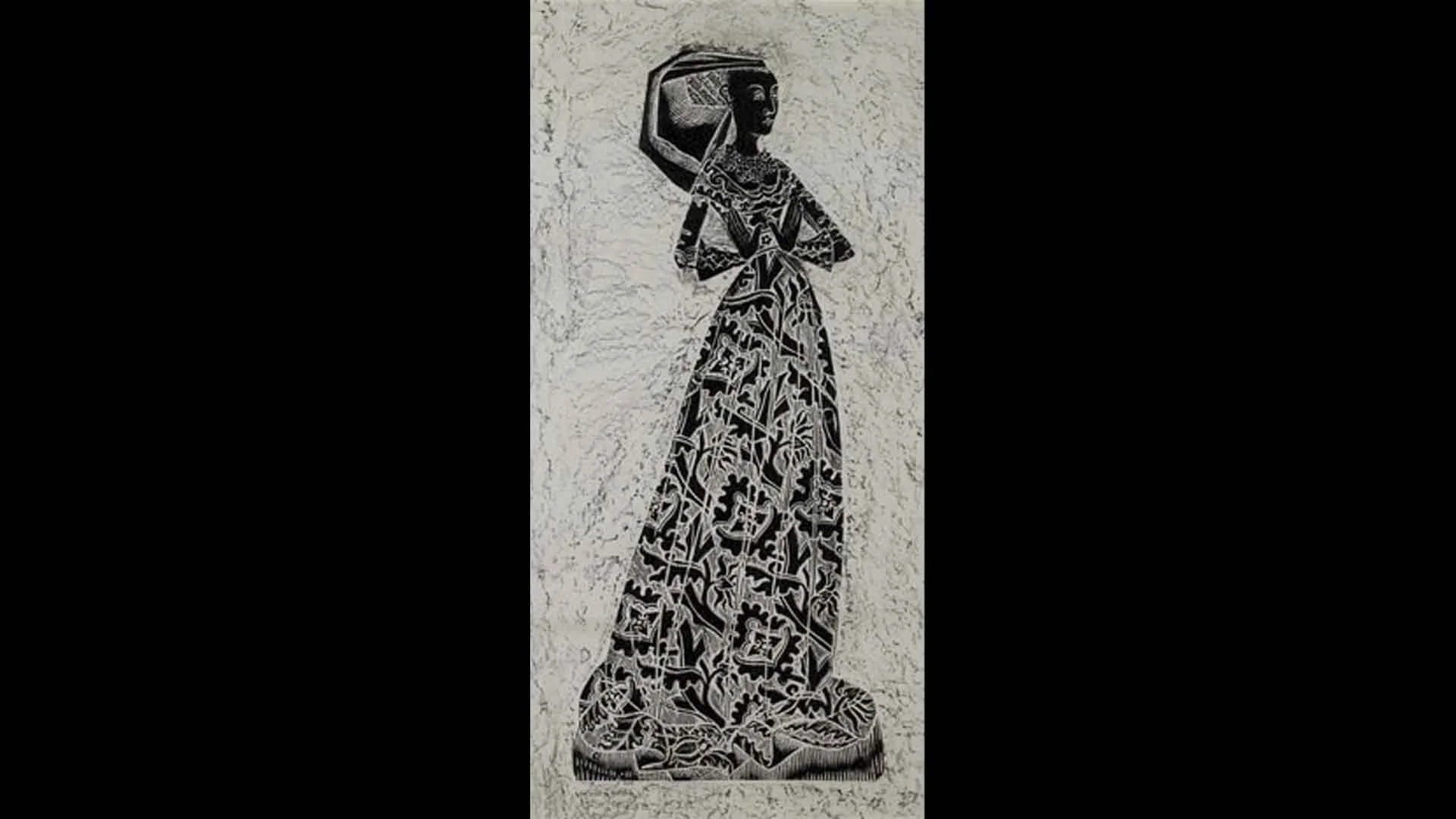
Rubbing of the brass of Margaret Bernard Peyton, dated c.1445 from St Andrew's Church, Isleham, Cambridgeshire. She was the first wife of Thomas Peyton

Bava Kamma 90: הַכֹּל לְפִי כְּבוֹדוֹ

jyungar January 31, 2024

For the source text click/tap here: Bava Kamma 90

To download, click/tap here: PDF

The Mishna on our daf rules: “Ha-toke’a la-havero noten lo sela – if someone hits his friend, and he remains uninjured, he is obligated to pay him a sela,” because of the embarrassment that he caused. Rabbi Yehuda quotes Rabbi Yossi haGalili as requiring payment of a maneh.

The definition of toke’a is a matter of some dispute. While Rashi says that it means he hit him on his ear, others suggest that he hit him on his neck with his fist, that he shouted in his ear, or even that he did not touch him at all, rather he clapped his hands together in a derogatory manner towards his friend. The payment of a sela or a maneh is understood by Rashi (above on daf 36b) as a standard payment for embarrassment, but if any injury occurred, that would be evaluated and paid for separately.

We explore the concept of rebuke/Tochechah.

Tags 45th
Comment

Part of map sheet 5 of Survey of Western Palestine, by Conder and Kitchener, 1872-1877

Bava Kamma 89: מִשּׁוּם תַּקָּנַת אוּשָׁא

jyungar January 30, 2024

For the source text click/tap here: Bava Kamma 89

To download, click/tap here: PDF

When Rav Pappa and Rav Huna, son of Rav Yehoshua, came from the study hall of Rav they said: We learned a source for the ordinance of Usha in the mishna (87a): With regard to a slave or a married woman, an encounter with them is disadvantageous, since one who injures them is liable.

Rather, it must be that the mishna is discussing a case where she does not have usufruct property of which she can sell the future rights. So too, there is no source from the mishna for the ordinance of Usha, as the mishna is discussing a case where she does not have usufruct property to sell.

The takanot of Usha formed the basis of some 7 ordinances which we explore, as well as following the footsteps of the Sanhedrin from Jerusalem to Yavneh to Usha.

Tags 45th
Comment

Bava Kamma 88: לֹא יוּמְתוּ אָבוֹת עַל בָּנִים

jyungar January 29, 2024

For the source text click/tap here: Bava Kamma 88

To download, click/tap here: PDF

“Fathers shall not be put to death for children” (Deuteronomy 24:16), meaning that people shall not be put to death based on the testimony of fathers who do not havecommon lineage [ḥayis] with their children.

This is referring to Canaanite slaves, whose children are not considered to be related to them. For if it enters your mind to interpret the verse according to its straightforward meaning, as we say: “Fathers shall not be put to death for children,” meaning by the testimony oftheir children, then let the Merciful One write: Fathers shall not be put to death for their children. What does the verse teach by stating only: “Children,” without the word their? Learn from this formulation that people shall not be put to death based on the testimony of fathers who do not have common lineage with their children.

We explore the sons accountability for the sins of the fathers in Torah and Ezekiel as well as in Philo and Zaleucus.

Tags 45th
Comment

Bava Kamma 87: יַעֲשֶׂה לָהֶם סְגוּלָּה

jyungar January 29, 2024

For the source text click/tap here: Bava Kamma 87

To download, click/tap here: PDF

Mishnah two compares payments for injuries caused by an ox with payments for injuries caused by a human.

Mishnah three deals with several laws related to personal injury.

Two baraitot stated that the father makes a safe investment (segulah) for his minor children with the compensation paid to them. The Gemara asks: What is meant by a safe investment?

Rav Ḥisda says: The father should purchase a Torah scroll for his child. Rabba bar Rav Huna, says: The father should purchase a date palm, from which the child will consume dates.

We explore the long and varied history of the term segulah from Ex 19:5 and Deut 7:6 to Kabbalistic amulets.

Tags 45th
Comment

Bava Kamma 86: זִיקָא כַּרְכִינְהוּ לְמָאנֵיהּ

jyungar January 28, 2024

For the source text click/tap here: Bava Kamma 86

To download, click/tap here: PDF

According to the Mishna on our daf, the obligation of boshet only takes effect if it was done with the intention of embarrassing, and it remains in force, even if the person who is embarrassed is naked or sleeping.

A baraita brought by the Gemara points out that although there is an obligation to pay boshet even if the person is naked, the amount that he will have to pay is based on the level of embarrassment, and we can assume that the embarrassment will be less for someone who was already naked than someone who was fully clothed.

We struggle with the compensation fo humiliation and its parameters.

Tags 45th
Comment

Bava Kamma 85: מִכָּאן שֶׁנִּיתַּן רְשׁוּת לָרוֹפֵא לְרַפּאוֹת

jyungar January 26, 2024

For the source text click/tap here: Bava Kamma 85

To download, click/tap here: PDF

The Gemara derives from the extra phrase of "Rapo Yerapei" (Shemos 21:19)

that a doctor is permitted to heal sick people.

Why would one have thought that a doctor is not permitted to heal a sick person, had the Torah not included the extra word "Yerapei"? The verse refers to a situation in which one person causes bodily damage to another, and the victim needs to pay a doctor to heal him. It is obvious from the verse, even without the extra word, that a person who is harmed does not have to passively accept the fate of being wounded by the other person, but that he may go to a doctor to be healed.

RASHI and TOSFOS seem to understand that the Gemara learns from the extra word that even when a person becomes sick or bruised without human intervention, but rather as a Divine decree, a doctor still is permitted to heal him. One might have thought that this is a matter of faith in Hash-m and that a person should trust that just as Hash-m brought the illness upon him, Hashem will take it away.

The verse teaches that it is not considered a lack of faith to turn to a doctor for healing.

We explore the notion of Medical Healing from traditional and modern perspectives.

Tags 45th
Comment
  • Daf Ditty
  • Older
  • Newer

Julian Ungar-Sargon

This is Julian Ungar-Sargon's personal website. It contains poems, essays, and podcasts for the spiritual seeker and interdisciplinary aficionado.​