Julian Ungar-Sargon

  • Home
  • Theological Essays
  • Healing Essays
  • Podcast
  • Poetry
  • Daf Ditty
  • Deep Dive Ditty
  • Videos
  • Publications
  • Military Service
  • Dominican University
  • Home
  • Theological Essays
  • Healing Essays
  • Podcast
  • Poetry
  • Daf Ditty
  • Deep Dive Ditty
  • Videos
  • Publications
  • Military Service
  • Dominican University
Julian Ungar-Sargon copy 3.jpg

Daf Ditty

A wide-ranging commentary on the daily page of Talmud.

Kiddushin 37: כֹּל שֶׁהִיא חוֹבַת הַגּוּף

jyungar September 19, 2023

For the source text click/tap here: Kiddushin 37

To download, click/tap here: PDF

A new states that any mitzvah that is dependent on the ground itself, aretz, applies in Eretz Yisrael only.

Any mitzvah that is not dependent on the land applies both in Eretz Yisrael and outside of Eretz Yisrael.

Two exceptions: the mitzvot of orla and of chilim, diverse kinds, which apply in all places.

Rabbi Eliezer says that this halacha applies regarding the prohibition to eat from the chadash, the new crop, before the omer offering has been brought on Nisan the 16th, as well.

The Gemara’s first suggestion of how to define the concept of mitzvot ha-teluyot ba’aretz is that it is based on whether or not the Torah discusses the mitzvot in the context of bi’ah – of coming into the land.

Explore these restrictions that are land based.

Tags 41st
Comment

Kiddushin 36: תְּנוּפָ֖ה לִפְנֵ֥י

jyungar September 18, 2023

For the source text click/tap here: Kiddushin 36

To download, click/tap here: PDF

The Mishna on our daf teaches that many of the laws that relate to bringing sacrifices in the Temple apply to men and not to women. The exceptions are the mitzva of tenufa – lifting the minha (the meal offering) – brought by a sota (see Bamidbar 5:11-31) and a nezira (see Bamidbar 6).

The minha was brought by the person bringing the sacrifice in a basket. It was removed from the basket and placed in a keli sharet – a utensil belonging to the Temple – and was given to the woman to hold. As is generally the case with menahot, tenufa was then done, with the kohen placing his hands under the hands of the owner and lifting the minha up in the air. Afterwards it was brought to the altar and sacrificed, with the remainder given to the kohanim to eat.

We explore the wave offering ritual…

Tags 41st
Comment

Kiddushin 35: זְקָנֶךָ, וְלֹא זְקַן אִשְׁתְּךָ

jyungar September 17, 2023

For the source text click/tap here: Kiddushin 35

To download, click/tap here: PDF

The Mishna (29a) taught that women are obligated to refrain from all mitzvot lo ta’aseh – negative commandments – with the exception of three:

Bal takif (not to shaving their payot – the “corners” of the hair on one’s head – see Vayikra 19:27)

Bal tash’hit (not to shave one’s beard – according to the Gemara, with a razor – see Vayikra 19:27)

Bal titmah le-metim (a kohen cannot come into contact with a dead body – see Vayikra 21:1).

The Gemara argues that the law that applies to the beard also applies to the payot, and since women do not ordinarily have a beard, the prohibition against shaving one’s beard does not apply to them, thus the prohibition against cutting payot does not apply to them either.

We explore the biblical and rabbinic prohibitions around shaving.

Tags 41st
Comment

Kiddushin 34: תַּלְמוּד תּוֹרָה נָשִׁים פְּטוּרוֹת

jyungar September 16, 2023

For the source text click/tap here: Kiddushin 34

To download, click/tap here: PDF

The Mishna (29b) taught that women are not obligated in mitzvot aseh she-hazman geramah – positive commandments that are dependent on time. Our Gemara asks for a source that frees women from these commandments and presents tefillin as the archetype – just as women are not obligated to lay tefillin similarly all mitzvot aseh she-hazman geramah are not obligatory for women.

We further explore women and learning further.

Tags 41st
Comment

Kiddushin 33: מִפְּנֵי שֵׂיבָה תָּקוּם

jyungar September 15, 2023

For the source text click/tap here: Kiddushin 33

To download, click/tap here: PDF

The passage, “Mipnei seivah takum ve-hadarta penei zaken” commands us to stand up before an elderly person and revere the elder (see Vayikra 19:32). Nevertheless, the Gemara understands that honoring the zaken obligates us to stand before a Torah scholar.

Isi ben Yehuda comments that the obligation to stand before the elderly applies to all old people.

The Gemara records that Rabbi Yohanan who accepts Isi’s ruling made it his business to stand before elderly non-Jews, saying, “Kamah harpatkei adu alayhu d’hani – how many adventures this man must have experienced!”

We explore the ethics of elderly care.

Tags 41st
Comment

Kiddushin 32: אַבָּא עָבַרְתָּ עַל דִּבְרֵי תוֹרָה

jyungar September 14, 2023

For the source text click/tap here: Kiddushin 32

To download, click/tap here: PDF

Our Daf whose focus has been the mutual obligations of parents to their children and children to their parents, concludes that the obligation of morah – awe of one’s parents (see Vayikra 19:3) – forbids a child from sitting in his father or mother’s place, contradicting them, etc. while kibbud – honor (see Shemot 20:11) – obligates a child to feed and clothe his parents. Who must pay for this? Is the child obligated to do so, or should the funds come from the parents’ money?

Rav Yehuda rules that the child must pay; Rav Natan bar Oshaya rules that the parent must pay.

We explore further the limits of Kibbud Av.

Tags 41st
Comment

Kiddushin 31: בֵּן מְכַבֵּד אֶת אִמּוֹ יוֹתֵר מֵאָבִיו

jyungar September 13, 2023

For the source text click/tap here: Kiddushin 31

To download, click/tap here: PDF

It is taught in a baraita that Rabbi Yehuda HaNasi says: It is revealed and known before the One Who spoke and the world came into being that a son honors his mother more than he honors his father, because she persuades him with many statements of encouragement and does not treat him harshly.

Therefore, in the mitzva of: “Honor your father and your mother” (Exodus 20:11), the Holy One, Blessed be He, preceded the mention of the honor due one’s father before mentioning the honor due one’s mother.

We explore the implications of this precedence as well as the limits of Kibud Av.

Tags 41st
Comment

(See: Daf Ditty Pesachim 82)

Kiddushin 30: סוֹפְרִים כׇּל הָאוֹתִיּוֹת

jyungar September 12, 2023

For the source text click/tap here: Kiddushin 30

To download, click/tap here: PDF

A person should divide up his days and spend a third of his time on Mikra, a third on Mishnah and a third on Gemara.

The Torah consists of 5,888 Pesukim; Tehilim has eight more than that while Divrei ha'Yamim has eight less.

A person should divide up his learning into three; one third of his learning shall be the 24 Sefarim of the written Torah, one third shall be the Mishnah, which is the Oral Torah and the commentary on the written Torah, and one third of the time he shall learn the Talmud…

This only applies to a person who is starting to learn, but when his Torah learning is more developed and it is no longer necessary for him to learn the written and Oral Torah he shall put aside set times for the written and Oral Torah so that he does not forget any of the Dinim and he should spend the rest of his time on the Talmud.

We explore the mitzvah of chinuch as well as the differences in counting practices of letters and verses and the midrashim around the hinge verses such as my essay on Lev 10:16 וְאֵ֣ת ׀ שְׂעִ֣יר הַֽחַטָּ֗את דָּרֹ֥שׁ דָּרַ֛שׁ מֹשֶׁ֖ה

Tags 41st
Comment

Kiddushin 29: אַף לַהֲשִׁיטוֹ בַּמַּיִם

jyungar September 11, 2023

For the source text click/tap here: Kiddushin 29

To download, click/tap here: PDF

The Gemara looks to the next point in our Mishna, that of mitzvot about parenting. These apply only to men; women are exempt from their observance. First, the rabbis consider what it is that a father is supposed to do for his son. For example, he is t circumsize and redeem his son. He should teach his son Torah, find him a wife, and teach him a trade. Perhaps he should teach his son to swim.

We explore the differences between men and women in these observances plus the divide between modern orthodox and chord attitudes to women’s learning.

Tags 41st
Comment

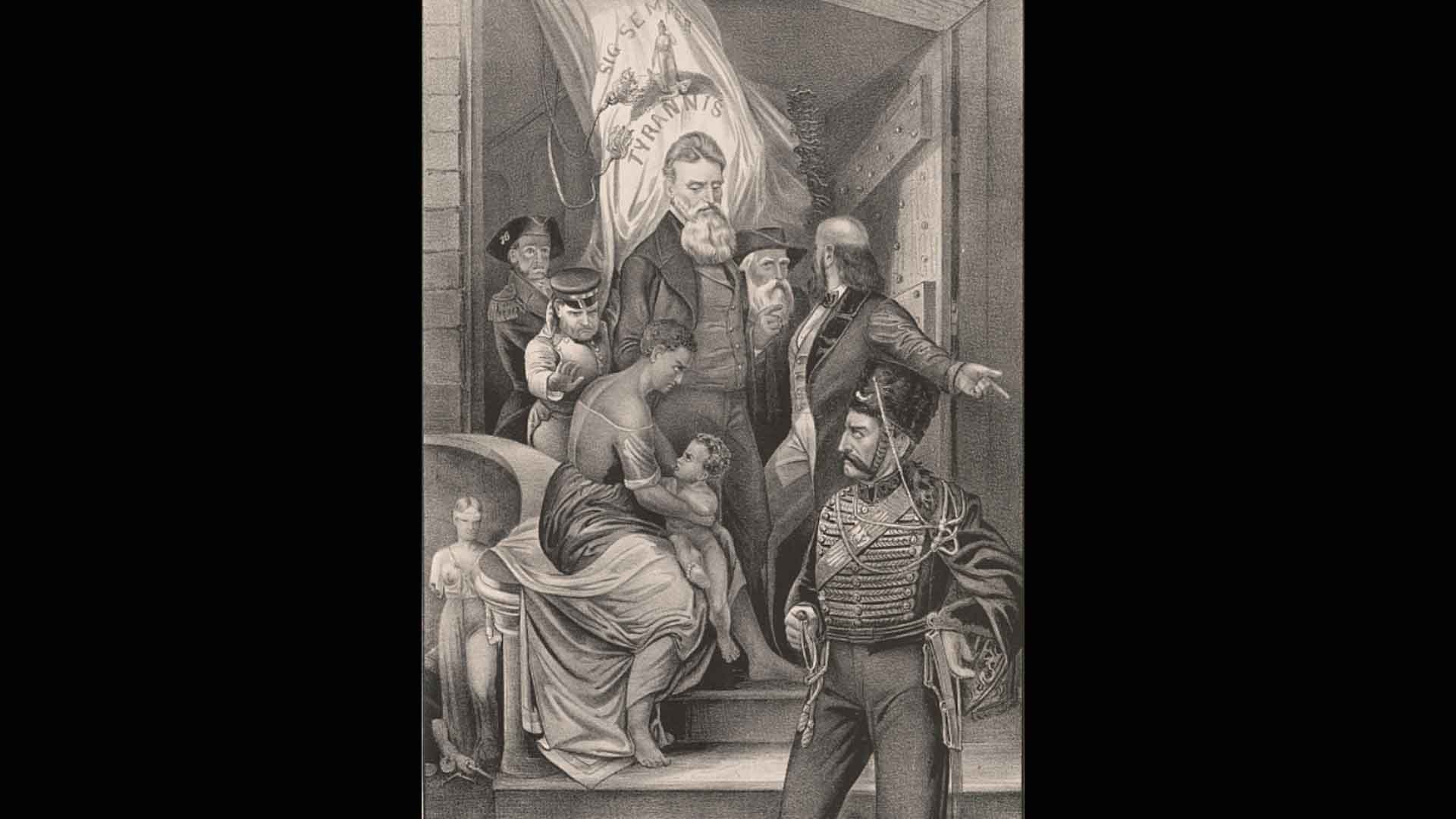
A rare instance of a mulatto baby portrayed next to the baby's darker mother. John Brown, about to be hanged, kisses the baby. Louis Ransom, 1863

Kiddushin 28: עֶבֶד עִבְרִי גּוּפוֹ קָנוּי

jyungar September 10, 2023

For the source text click/tap here: Kiddushin 28

To download, click/tap here: PDF

The Gemara asks: the court ostracizes one who says this to another, as it is taught in a baraita:

One who calls another a slave shall be ostracized. One who calls another a mamzer incurs the punishment of forty lashes. If one calls another a wicked person then the insulted person may harass him in all aspects of his life.

In light of this halakha, it is clear that the court will not force the accused to respond to this insult by taking an oath.

We explore insults in the talmud and in antiquity.

Tags 41st
Comment

Lord Mayor taking the oath in court, 1890, Sydney P. Hall

Kiddushin 27: ״אָמֵן״ עַל ״הַשְּׁבוּעָה״

jyungar September 9, 2023

For the source text click/tap here: Kiddushin 27

To download, click/tap here: PDF

From Steinsaltz:

The Mishna (26a) teaches that when the beit din rules that an individual is obligated to take an oath on a specific matter, other issues that are in dispute can also be included in the oath, even if they are matters that ordinarily would not require an oath.

The Gemara on our daf discusses this rule, called gilgul shevua – literally, “rolling over”, or extension, of an oath. Ulla teaches that the source for the concept of gilgul shevua is the law of sota. We find that a sota who is required to take an oath that she did not commit adultery listens to the words of the kohen who is officiating at the ceremony and responds “Amen, Amen.” This response is interpreted by the Gemara to include not only her denial of an adulterous relationship with this specific man, but also another man and not only at this time, but at different points in her life, as well.

We explore the curious derivation of gilgul shavua from of all places the Sotah ritual.

Tags 41st
Comment

Kiddushin 26: Kinyan Agav

jyungar September 8, 2023

For the source text click/tap here: Kiddushin 26

To download, click/tap here: PDF

The Gemora inquires: Must the movable property be piled on the real property in order for the kinyan agav (by making a kinyan on the land, he automatically acquires the movable property)to be effective?

Rav Yosef said: This can be resolved from the following Mishna: Rabbi Akiva said: The smallest piece of land is subject to the requirements of pe’ah (a corner of the field is left over for the poor) and bikkurim (the first ripe fruits of any of the seven species with which the Torah praises Eretz Yisroel, which had to be brought to the Beis Hamikdosh in Yerushalayim) and to write a pruzbul because of it (after shemitah all debts are cancelled unless the lender wrote a pruzbul; a document which transfers all of one’s personal loans to the Beis Din, and their debts are not cancelled after shemitah; it may only be written if the debt was secured by land) and movable properties can be acquired by means of it.

Tags 41st
Comment

Kiddushin 25: עֶבֶד שֶׁסֵּרְסוֹ רַבּוֹ בַּבֵּצִים

jyungar September 7, 2023

For the source text click/tap here: Kiddushin 25

To download, click/tap here: PDF

With regard to a slave whose master castrates his testicles, what is the halakha?

Is that considered an exposed blemish that is sufficient to emancipate him or not? An answer to their dilemma was not available to Rav Hamnuna. They said to him: What is your name? He said to them: Hamnuna.

They said to him in jest: You should not be called Hamnuna, a good hot fish; rather, your name should be Karnuna, a cold fish that is no longer tasty.

The tips of the fingers and the toes, the tips of the ears, nose and male member, the tips of a woman’s breasts. Rabbi Yehudah says: Even the tips of a man’s breasts.

A braisa was taught regarding this Mishna: The tips of these limbs can set a slave free. Rebbe said: Even castration. Ben Azzai said: Even the tongue.

The question whether or not the testicles are extremities, whether they were fully or partially severed, whether they can be compared to the tongue, are discussed.

We explore the history of emasculation in the slave trade as recent as 1900!

Tags 41st
Comment

During the colonial era of the United States, many slaves were subjected to mutilation of their bodies in order for them to obey their masters.

Kiddushin 24: יוֹצֵא בְּשֵׁן וָעַיִן

jyungar September 6, 2023

For the source text click/tap here: Kiddushin 24

To download, click/tap here: PDF

Our Gemara discusses this rule and distinguishes between a case where the master physically injured his slave, causing him to become blind or deaf – in which case the slave would go free – and cases where he did not actually hit his eye or his ear, but the trauma of a near-miss causes the slave to lose his sight or his hearing, in which case he would not go free.

We present Efraim Urbach’s master essay on Jewish slavery during talmudic times.

Tags 41st
Comment

Eric Fromm 1900-1980

Kiddushin 23: זָכִין לְאָדָם שֶׁלֹּא בְּפָנָיו

jyungar September 5, 2023

For the source text click/tap here: Kiddushin 23

To download, click/tap here: PDF

The Mishna (22b) discusses how non-Jewish slaves can be purchased or be freed. Such slaves can be bought with money, a document of purchase (shetar) or an act that symbolizes ownership (hazakah). There is a difference of opinion regarding methods that can be used allowing them to take possession of themselves (i.e., be freed from slavery). According to Rabbi Meir, someone else can purchase them, although they cannot purchase themselves; the Hakhamim allow a slave to purchase his own freedom, as long as the money that he uses belongs to someone else.

Can a slave use his own money to emancipate himself? What if a master dies without heirs - who is permitted to take on his adult slaves? His minor slaves? Where can the money paid for emancipation come from? Should slaves be freed early in any case? Does a slave have the ability to acquire for himself while in servitude? What if the master has no means with which to acquire? When a slave receives his bill of manumission, is he simultaneously permitted to acquire? Should these halachot align with the halachot regarding divorce, where movement from one location to another defines some of the changes in rights and responsibilities?

WE compare and contrast 2 great thinkers of the 20th century: Rav Kook and Erich Fromm’s view of slavery.

Tags 41st
Comment

Moses Displays the Tablets of the Law, Cesare Fantetti, after Rafaël, 1675 Rijksmuseum

Kiddushin 22: אֹזֶן שֶׁשָּׁמְעָה קוֹלִי

jyungar September 4, 2023

For the source text click/tap here: Kiddushin 22

To download, click/tap here: PDF

R’ Yochanan ben Zakkai said: This ear that heard at Sinai (Shemos 20:13) “Do not steal”, and he went and he stole, and it heard (Vayikra 25:55) “For Bnei Yisrael are slaves to Me,” and he went and acquired a [different] master for himself, let it be bored.

The Torah clearly states (Vayikra 25:39) that if a person becomes destitute, he can sell himself to be a slave. Why should this be allowed, if it is in violation of the verse to be servants of Hashem alone?

Finally, the slave who has his ear pierced has to suffer this indignity for having heard and then ignored the prohibition at Har Sinai of “Do not steal.”

We examine these texts and the implication of servants being masters.

Tags 41st
Comment

Par la Loy rigoureuse de Moïse, quand le Serf avoit [M] acompli son terme, prefix & destiné à servitute, il avoit le chois de s’en aller en liberté: ou bien de tousjours demourer en servitute avec son maitre, s’il lui plaisoit. Chose que s’il choisissoit de faire, lui perçoit son maitre l’Oreille avec une Alesne.

Kiddushin 21: וְרָצַע אֲדֹנָיו אֶת אׇזְנוֹ

jyungar September 3, 2023

For the source text click/tap here: Kiddushin 21

To download, click/tap here: PDF

Our Gemara focuses on the eved ivri who chooses to remain with his master. Will he remain with the master’s son after the master’s death? How long is “forever”? How must the technical application of the law that requires the eved ivri to have his ear pierced be applied? Must it be done with an awl?

Based on a close reading of the pesukim, the Gemara concludes that the eved nirtza – the slave who has had his ear pierced – is only obligated to work for the master, and not his son.

We examine the source critical material distinguishing the Eved Ivri laws in Exodus vs Deuteronomy and the Halacha regarding ear and body piercings.

Tags 41st
Comment

Residents of Freedman’s Village reading books outside their barracks in Arlington, Virginia, between 1863 and 1865. Freedman’s Village was built on land seized from Robert E. Lee and occupied by the Union army since the beginning of the war. The grounds of the Confederate commander’s estate were used first as a soldier’s camp then as a graveyard, in a deliberate attempt to provoke the general.

Kiddushin 20: נַעֲשֵׂית לוֹ כְּהֶיתֵּר

jyungar September 2, 2023

For the source text click/tap here: Kiddushin 20

To download, click/tap here: PDF

If a person does not notice the error of his ways, he will end up selling his fields, as the verse states, “When you friend will become poor and he will sell from his ancestral heritage.” If it does not come to his hand (meaning he still does not repent), he then ends up selling his house, as the verse states, “When he will sell a house in a city with a wall.”

The Gemora asks: Why did the braisa say, “If a person does not notice” (if he decides not to repent) and then it says, “If it does not come to his hand” (meaning that it is a foregone conclusion that he will not repent)? The Gemora answers: This is as Rav Huna states: Once a person sins and then sins again, it is permitted to him. Is it really permitted? It is like it is permitted to him. [Accordingly, the braisa explained the last verse to mean that he will not repent, for he repeated the sin, and it becomes permitted to him.]

The braisa continues: If it does not come to his hand, he will end up selling his daughter, as the verse states, “And if a man will sell his daughter.” Even though this verse is not near the other verses, the person must have sold his daughter, as people say that one would rather sell his daughter before taking loans with interest.

( The Gemora (Yoma 86b) explains that a true penitent is one who committed a sin in the past and then the opportunity for the same sins comes again a first time and a second time and he is saved from the sin on both occasions.)

We continue our exploration of slavery and the fruits of bad habits!

Tags 41st
Comment

Kiddushin 19: אֵין יִעוּד אֶלָּא מִדַּעַת

jyungar September 1, 2023

For the source text click/tap here: Kiddushin 19

To download, click/tap here: PDF

The Gemara wonders whether or not a master could designate his Hebrew maidservant to his minor son. I am guessing that the rabbis find this distasteful and are not merely arguing. However, there are previously discussed halachot, including a yevam who is nine years old and one day who has intercourse with his yevama.

One of the arguments against designating one's maidservant to a minor son is the issue of consent. The Gemara notes that a maidservant must consent to her designated husband. One rabbi argues that the maidservant's consent is not her acquiescence but her knowledge of the upcoming marriage arrangement before it occurs.

We present Jay Rosner’s article of rhetorical strategy and dialectical necessity in Kiddushin.

Tags 40th
Comment

Hebrew Maiden, 1914/2017, digital collage

Kiddushin 18: יֵשׁ בָּעִבְרִי שֶׁאֵין בָּעִבְרִיָּה

jyungar August 31, 2023

For the source text click/tap here: Kiddushin 18

To download, click/tap here: PDF

The Beraisa states that a Jewish servant goes free after 6 years or at Yovel or with the death of the master but a Jewish maidservant does not go free with these things.

The Gemara explains that a Jewish maidservant does not go free with these three things if her master did Yi'ud.

We see differences in our daf between the treatment of a Hebrew maidservant vs a Hebrew male slave.

Beyond the elements already mentioned in our last two dapim, the rabbis delve into the fact that a Hebrew maidservant is not sold a second time.

They walk us through the possible reasons that a Hebrew slave or a Hebrew maidservant might be sold twice.

We present the wonderful scholarship by Diane Krueger on THE SHIFḤAH NEḤEREFET OF LEVITICUS 19:20-22.

Tags 40th
Comment
  • Daf Ditty
  • Older
  • Newer

Julian Ungar-Sargon

This is Julian Ungar-Sargon's personal website. It contains poems, essays, and podcasts for the spiritual seeker and interdisciplinary aficionado.​