Julian Ungar-Sargon

  • Home
  • Theological Essays
  • Healing Essays
  • Podcast
  • Poetry
  • Daf Ditty
  • Deep Dive Ditty
  • Videos
  • Publications
  • Military Service
  • Dominican University
  • Home
  • Theological Essays
  • Healing Essays
  • Podcast
  • Poetry
  • Daf Ditty
  • Deep Dive Ditty
  • Videos
  • Publications
  • Military Service
  • Dominican University
Julian Ungar-Sargon copy 3.jpg

Daf Ditty

A wide-ranging commentary on the daily page of Talmud.

Ketubot 48: Domain of Father to Husband

jyungar August 23, 2022

For the source text click/tap here: Ketubot 48

To download, click/tap here: PDF

According to the mishna, “A father is not obligated to provide his daughter’s sustenance,” and the Gemara draws the obvious corollary: “It is with regard to providing his daughter’s sustenance that he is not obligated, but with regard to providing his son’s sustenance, he is obligated.” This looks like another glaring example of gender inequality in the Talmud: Sons have a greater claim on their father’s resources than daughters.

But the ensuing discussion suggests that things are not so clear-cut. Indeed, according to several authorities, including Rabbi Meir and Rabbi Yehuda, sons too do not have a legal claim for sustenance from their father. Rabbi Yochanan ben Beroka says, “During their father’s lifetime both these and those,” that is both sons and daughters, “are not sustained.” Paradoxically, as it might seem, children have a legal claim on their father’s property only after he is dead.

We explore gender inequality with a focus on the writings of Daniel Boyarin whose erudition in midrash and talmudic hermeneutics allows us a glimpse into a unique scholar with a sensitivity to gender bias.

Tags 28th
Comment

Ketubot 47: תִּיקְּנוּ מָצוּי לְמָצוּי

jyungar August 22, 2022

For the source text click/tap here: Ketubot 47

To download, click/tap here: PDF

The Sages instituted a common obligation in exchange for a common right, and they instituted an uncommon obligation in exchange for an uncommon right. In other words, the Sages instituted a husband’s obligation to provide his wife with sustenance, which is relevant on a regular basis, in exchange for his right to her earnings, which also applies regularly. The other obligations and rights of a husband are relevant less frequently.

On our daf we learn that although many of these rights belong to the father based on interpretations of biblical passages by the Sages, in the relationship between husband and wife, many of the rights and responsibilities are related to each other. Thus, the wife’s earnings belong to her husband in exchange for his feeding her (mezonot), he must redeem her from captivity in exchange for the rights that he receives to derive benefit from her property (peirot), and he is obligated to ensure a proper burial in exchange for the dowry that she brings into the household (ketuba).

Once we understand this relationship, the logical conclusion is that upon agreement between husband and wife it is possible that these relationships can be broken, i.e. since the central concern of the Sages is to ensure that the wife is fed, a woman will be able to say eini nizonet ve-eini osa – I choose not to receive food from my husband, and I will keep my earnings for myself.

We explore the rights and obligations In Islam and Halachah as well as secular case law of contract law vs property law.

Tags 28th
Comment

Ketubot 46: Father's Rights vs Obligations

jyungar August 21, 2022

For the source text click/tap here: Ketubot 46

To download, click/tap here: PDF

A new Mishna teaches us about a father's legal rights over his daughter while she is betrothed.

He has authority over her entrance into betrothal through money, the ketubah, or intercourse.

He owns whatever she finds, her earnings, and the right to nullify her vows.

He acts on her behalf if she divorces after betrothal but before marriage.

He inherits her property (inherited from her mother's family) if she dies, but he cannot use the produce of that property while she is alive.

We struggle with the status of a daughter in antiquity and modern legal rights and obligations of fatherhood.

Tags 28th
Comment

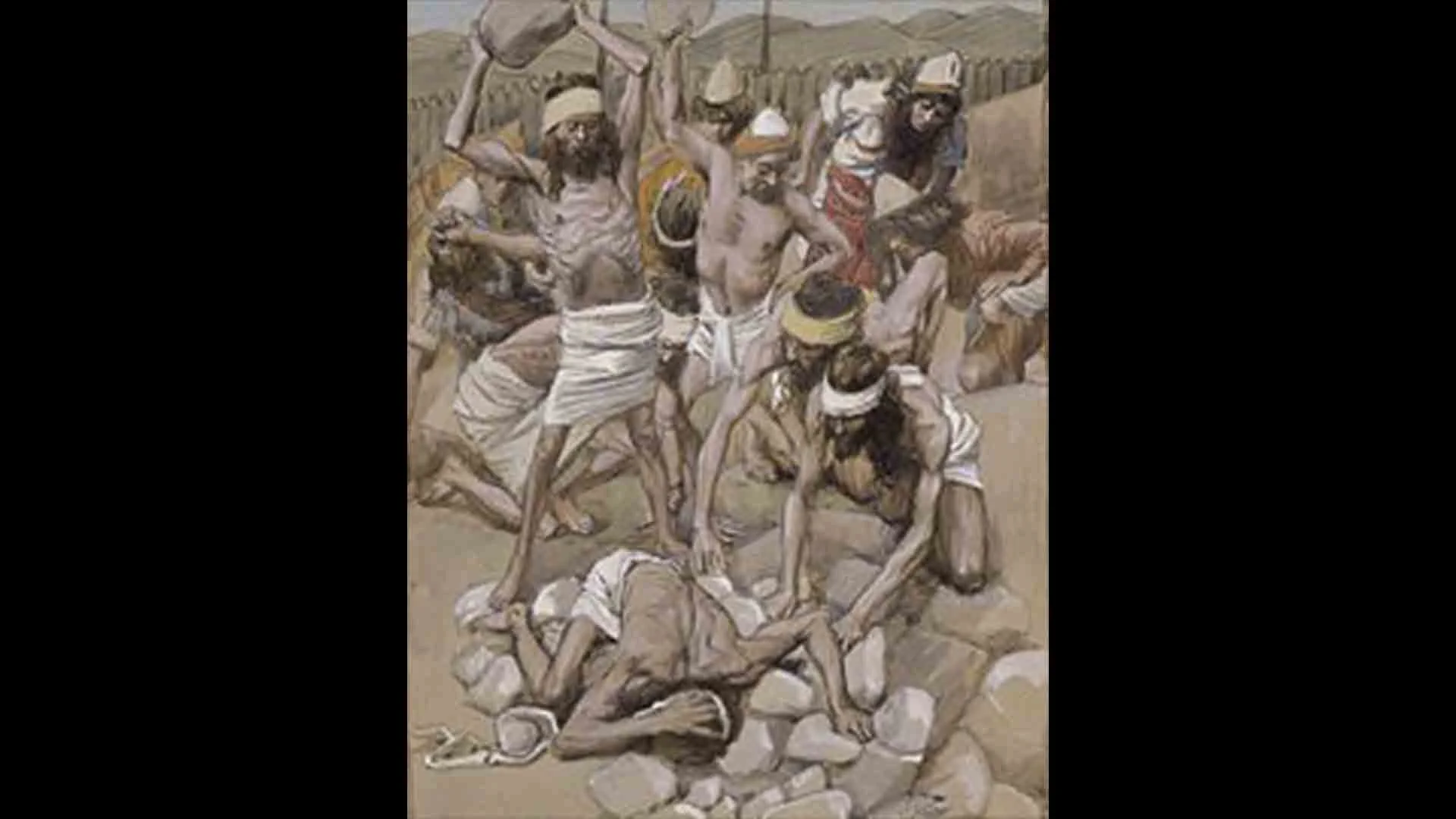
Ketubot 45: Death By Stoning

jyungar August 20, 2022

For the source text click/tap here: Ketubot 45

To download, click/tap here: PDF

Our daf questions how the punishment for adultery is meted out. One of the larger questions that the rabbis explore is how an adult is punished for a crime that s/he committed as a minor.

The Gemora cites a Baraisa: A betrothed na’arah who committed adultery is stoned at the entrance of her father’s house.

If she does not have an entrance of her father’s house (for he has no house), she is stoned at the entrance of that city’s gate.

In a city where there are mostly idolaters, she is stoned at the gates of Beis Din.

The rabbis share proof texts to better understand why women must be stoned at the entrance to the gates of the city.

They determine that women who commit adultery while betrothed are similar to those who worship idols.

We explore a Comparative Study of Stoning Punishment in the Religions of Islam and Judaism by Sanaz Alasti. and modern versions of stoning in our time.

Tags 28th
Comment

Ketubot 44: Conversion of Minors

jyungar August 19, 2022

For the source text click/tap here: Ketubot 44

To download, click/tap here: PDF

Our new Mishna teaches that if the daughter of a woman who converted while she was pregnant is found to be sexually licentious (read: not a virgin) after betrothal, she is not punished as a woman born Jewish might be punished. Instead of being strangled at the gates of her father's home, she may be stoned at the gates to the city.

The Gemara discusses a number of different contributing possibilities, including what to do if the girl is born at slightly different times, what to do if the girl is an orphan, a minor, an older young woman, what to do if her father is opposed to the marriage or if she is opposed to the marriage, etc.

We explore the halachic ramifications of conversion of minors both then and in modern times.

Tags 28th
Comment

Ketubot 43: Unfit to Parent?

jyungar August 18, 2022

For the source text click/tap here: Ketubot 43

To download, click/tap here: PDF

Our daf presents a new Mishna. It discusses who receives the ketubah money if a father marries off his daughter and she is divorced, and then he marries her off again and she is widowed.

Does the ketubah from both marriages belong to her father?

Or does she retain rights t the second ketubah?

We explore the responsibility of parents and their rights following injury to a daughter then the reverse when the child is delinquent (Deut 22).

What are the conceptions of childhood in antiquity and what are the legal ramifications of court determined unfitness to parent from modern legal vs Jewish perspectives.

Tags 28th
Comment

Ketubot 42: אָנַסְתָּ וּפִיתִּיתָ אֶת בִּתִּי

jyungar August 17, 2022

For the source text click/tap here: Ketubot 42

To download, click/tap here: PDF

Our daf discusses considers what should be done if a father accuses a man of seducing or raping his daughter. In the first discussions, the accused denies the accusation. The father of the woman victimize then administers an oath. Responding with "amen", the accused confirms that he did indeed commit this crime.

He then pays the fine for rape or seduction plus one fifth, and he brings a guilt-offering for swearing falsely.

In the second discussion, the father accuses a man of the rape or seduction of his daughter, of going to court and being found guilty of the crime, and of not paying the penalty. In this case, again an oath is administered. With his response of "amen", the accused must pay the penalty.

We explore the horrific notion of a man confronting another about his daughter…and the defamation for survivors of assault…then we review the literary history of sexual violence (Christine Foula) including th literary history of narrative rape in Gen 34 (Sandie Gravett) ending with Andre Peto’s look at rape in the aftermath of WWII.

Tags 28th
Comment

Ketubot 41: חצי נזק

jyungar August 16, 2022

For the source text click/tap here: Ketubot 41

To download, click/tap here: PDF

Our daf ends as we begin Perek IV with a new Mishna.  It teaches that if a young woman was seduced, she is entitled to the fine for seduction and to the additional compensation for degradation, humiliation (and pain, if she was raped).  

If she goes to court to sue the offender for this crime and she is a minor or still under her father's authority, the money goes to her father.  If her father has died, the money goes to her brothers, her father's heirs.  

We examine the concept of chazi nezek whereby a person’s property causes damage, obviously there is a need to pay restitution. Nevertheless, the Torah teaches that we distinguish between a shor mu’ad – an ox that has gored in the past – for which one pays full damages (nezek shalem), and a shor tam – an ox with no violent history – for which one pays for only half of the damage (hatzi nezek) that he caused.

We explore Deborah Greniman’s essay on The Origins of the Ketubah: Deferred Payment or Cash up Front? as well as Michael Satlow’s distinction between the biblical “mohar” bride price vs the talmudic ketubah or nedunia.

Tags 28th
Comment

R. Elazar b. Shamu'a studied under several teachers, but eventually became a devoted student of R. Akiva. He stayed with him even when the latter was awaiting execution. He then left Palestine, returning to set up an academy in the Galilee. Among his students was the future Nasi, R. Yehudah. Though R. Elazar was reputed to have lived to 105, he too was eventually executed by the Romans.

Ketubot 40: Rabbi Elazar b. Shamu'a טוּבְיָנָא דְחַכִּימֵי

jyungar August 15, 2022

For the source text click/tap here: Ketubot 40

To download, click/tap here: PDF

Rabbi Zeira said that Rabba bar Sheila said that Rav Hamnuna the Elder said that Rav Adda bar Ahava said that Rav said: The halakha is in accordance with the opinion of Rabbi Elazar. Rav would exclaim about Rabbi Elazar: He is the  וּבְיָנָא דְחַכִּימֵי happiest of the Sages, as he held that the halakha was ruled in accordance with his opinion in many instances.

We identify Rav Elazar ben Shamua the prize pupil of Rebbe Akiva who was martyred at the hands off the Romans.

All statements in the Mishna and Boraitha which are quoted in the name of Rabbi Elazar (without further identification) are the opinions of Rabbi Elazar ben Shamua.

The name of Rabbi Elazar ben Shamua is also listed among the ten martyrs, and he was said to have been 105 years old at the time of his death.

On this day Tisha B’Av 2022, we review the story of the 10 martyrs The Misrash Eleh Ezkerah, from a historical and literary perspective.

Tags 28th
Comment

Ketubot 39: Seduction vs. Rape

jyungar August 14, 2022

For the source text click/tap here: Ketubot 39

To download, click/tap here: PDF

The Mishna on our daf teaches the differences between punishments for rape and for seduction.

Seducers must pay a fine, pay for humiliation and degradation, pay when he releases her but not immediately, and he must release her only if he wants to release her.

Rapists must pay a fine, pay for humiliation and degradation. But he also must pay for pain. He must pay immediately, and he must marry her with the consent of the woman and her father.

Is there pain when a woman is seduced? Or only when she is raped? What causes the pain in rape? Is the pain of intercourse different if a woman is consenting? Does the pleasure derived from consenting intercourse override the experience of pain?

We explore compensation for pain (Rav Shmuel Shimoni), and the differences in punishment for rape in Assyrian codes vs the Bible (Dr Eva Levavi Feinstein).

Lastly Judith Hauptman and Gail Labovitz’ analysis of consent and agency in the talmud.

Tags 28th
Comment

Ketubot 38: עַיִן תַּחַת עַיִן

jyungar August 13, 2022

For the source text click/tap here: Ketubot 38

To download, click/tap here: PDF

In the course of discussing whether a person who commits an act that will theoretically obligate him to receive two separate punishments will only receive the more severe one, 

the Gemara quotes the teaching of Tanna dvei Rabbi Hizkiyya that a person who kills another as a consequence of poking out his eye will not be responsible for the eye and the murder. 

The source brought for this is the famous passage, “Ayin tahat ayin – an eye for an eye” (Shemot 21:24) – which is interpreted to limit the punishment. “An eye for an eye,” but not “a life and an eye for an eye.”

We explore the history of the biblical command and its non literal interpretation comparing with the Roman Law of the 12 tablets and Rabbinic vs Roman Laws of personal Injury (Pomeranz) and Milgrom’s essay on Lex Talionis and the Rabbis.

Tags 28th
Comment

Ketubot 37: Precautions

jyungar August 12, 2022

For the source text click/tap here: Ketubot 37

To download, click/tap here: PDF

In the Beraisa, Rebbi Yehudah states that a Nochris who converted, a female captive who was redeemed, and a Shifchah (maidservant) who was set free when they were over the age of three years and one day are required to wait three months before they may marry. The Chachamim enacted this period of waiting in order to distinguish between a child conceived from a Nochri and a child conceived from a Jew. If one of these women fails to wait three months, the fatherhood of her baby born soon afterwards is in doubt. Rebbi Yosi disagrees and rules that they may marry immediately and do not have to wait three months.

The Gemara explains that Rebbi Yosi does not share the concern of Rebbi Yehudah because he maintains that a woman who has illicit relations uses a Moch (cloth) to prevent pregnancy, and thus she may marry a Jew immediately after her conversion, redemption, or emancipation.

We explore the use of contraception in antiquity and in Halacha form different denominational perspectives.

Tags 28th
Comment

The Rape of Helen, Artist Luca Penni (1500)

Ketubot 36: No Reparations

jyungar August 11, 2022

For the source text click/tap here: Ketubot 36

To download, click/tap here: PDF

A new Mishna details those whose fathers get no fine if they are raped or seduced: a convert, a emancipated captive woman, and a redeemed gentile maidservant who were converted or freed when they were older than three years and one day.

The assumption is that they must have had sexual intercourse.

Rabbi Yehuda argues that the captive woman might still be a virgin.

Girls and women who were raped by their father, grandfather, step-father, or step-grandfather.

This is because the perpetrator is liable to the death penalty and thus he does not pay a fine.

Justin Jaron Lewis reviews cases of rape, where one might expect the rabbis to punish the transgressors, even if they could not be convicted under the stringent Talmudic rules of evidence.

However, in the responsa of three late 18th century women the issue of punishment does not arise. Moreover, the halakhic process, in these cases, has proven capable only of solving problems of its own creation and incapable of listening to women or answering their calls for help.

Tags 28th
Comment

Ketubot 35: אָתְיָא ״רָשָׁע״ ״רָשָׁע״

jyungar August 10, 2022

For the source text click/tap here: Ketubot 35

To download, click/tap here: PDF

Where does the Torah compare one who is Chayav Malkus with one who is Chayav Misah? Abaye answers that there is a Gezeirah Shavah, "Rasha Rasha." With regard to capital punishment the Torah says, "... he is a Rasha who must die" (Bamidbar 35:31). With regard to Malkus the Torah states, "If the Rasha deserves to be beaten..." (Devarim 25:2).

Rava disagrees with Abaye and suggests a different source. The verse uses a form of the word "Makeh" -- "one who strikes" -- both when it discusses one's obligation to compensate for damage he caused to someone else's animal (Vayikra 24:21) and when it discusses the punishment of Malkus (Devarim 25:2).

The usage of the word "Makeh" in the verse of the Hekesh (Vayikra 24:21) teaches that Malkus is included in the Hekesh.

We explore the concept of peshawar and midrash halacha that makes use of this leg theory called “hekesh"

and the biblical vs rabbinic notion of the Rasha specifically the portrayal of Edom in Midrash and some meditations on the four sons….from rabbinic and Hassidic perspectives.

Tags 28th
Comment

A 15th-century depiction of shechita and bedikah.

Ketubot 34: Schechitah Musings

jyungar August 9, 2022

For the source text click/tap here: Ketubot 34

To download, click/tap here: PDF

Steinsaltz summarizes our daf as follows:

In the context of discussing how halakha deals with actions that will lead to a person being responsible on two different levels – e.g. he will deserve both a death penalty and to pay as a consequence of what he did,

our daf quotes a Mishna from Massekhet Ḥullin (14a) which teaches that a person who performs shehitah (ritual slaughter) of an animal on Shabbat or on Yom Kippur will receive the death penalty; nonetheless his shehitah will be considered good – the animal will be deemed kosher and can be eaten.

Although this ruling is presented as a straightforward halakha, the rishonim are disturbed by the fact that we ordinarily deem a Shabbat transgressor as a meshumad – an apostate – whose shehitah should be considered invalid!

We explore a number of references to Shechitah and modernity.

Tags 28th
Comment

Franz Joseph Hermann, "The Fiery Furnace; from the Book of Daniel, 3"; St. Pankratius, Wiggensbach, Germany. King Nebuchadnezzar (left) watches the three youths and the angelic figure in the furnace (right), while the king's gigantic statue towers behind them (centre).

Ketubot 33: אילמלי נגדוה לחנניה מישאל ועזריה

jyungar August 8, 2022

For the source text click/tap here: Ketubot 33

To download, click/tap here: PDF

The fact that in the case of one who injures another as well he pays money and is not flogged is derived not by means of a verbal analogy but from the verse: Ex 21:22

“If men quarrel and hurt a pregnant woman so that her child departs from her, and yet no harm follow, he shall be punished as imposed upon him by the woman’s husband”

And Rabbi Elazar said: The verse is speaking of a quarrel that involves death, i.e., they sought to kill each other,

as it is written: “And if any harm follow, then you shall give a soul for a soul”

from where do you ascertain that the death penalty is a more severe punishment than lashes?

Perhaps the punishment of lashes is more severe, as Rav said: Had they flogged Hananiah, Mishael, and Azariah (see Daniel ch.3)

instead of casting them into the fiery furnace, these three would have been induced to worship the graven image.

Apparently, the punishment of lashes is more severe than death. Rav suggests that had they been whipped, they would have relented and bowed to the idol.

Thus it appears that malkot was deemed a more severe punishment than mittah.

We explore the narrative of the furnace into which the three were cast and the narrative history and midrashic interpretation of Daniel 3.

Tags 28th
Comment

Art by Sefira Lightstone

Ketubot 32: הַכָּאָה שֶׁאֵין בָּהּ שָׁוֶה פְּרוּטָה

jyungar August 7, 2022

For the source text click/tap here: Ketubot 32

To download, click/tap here: PDF

Even according to Rabbi Yohanan, however, there are cases in the Torah where an individual will be required to pay and will not receive malkot.

Appropriate punishment in the case of hovel ba-haveiro – personal injury – which includes both malkot and mamon – will be to pay the damages.

Only in a case where the damage was less than the value of a peruta (an amount so small that it cannot be returned) will malkot be given.

Poskim discuss the issue of providing patients with pain relief medication like morphine in order to alleviate the suffering of patients even though it could potentially damage the patient’s health or even hasten death.

We explore the halachic ramifications of end-of-life decision making, and the ethical ramifications of Withholding and Withdrawing of Therapy, even physician assisted suicide.

Tags 28th
Comment

Ketubot 31: וְקָרַע שִׁירָאִין The History of Silk

jyungar August 6, 2022

For the source text click/tap here: Ketubot 31

To download, click/tap here: PDF

One who shoots an arrow from the beginning of four cubits to the end of four cubits in the public domain on Shabbat, thereby performing a prohibited labor for which he is liable to receive a court-imposed death penalty, and the arrow ripped silk as it proceeds, is exempt from the obligation to pay for the silk because he is liable for the more severe punishment for desecrating Shabbat.

Although the silk was ripped prior to completion of the prohibited labor, as the arrow had not yet come to rest, he is nevertheless exempt, as lifting is a prerequisite for placement.

The prohibited labor of carrying on Shabbat is comprised of lifting of the object and placement.

Once he shot the arrow, its movement through the air is a continuation of his act of Shabbat desecration, for which he is liable to be executed.

We explore the history of silk in antiquity and the intersection of the silk trade routes and the Jews, concluding recent finds in the Cairo Geniza as well as from Afghanistan.

Tags 28th
Comment

Hieronymus Bosch, The Garden of Earthly Delights, Museo del Prado, Madrid

Ketubot 30: Heavenly vs Earthly Punishment

jyungar August 5, 2022

For the source text click/tap here: Ketubot 30

To download, click/tap here: PDF

On our daf the rabbis consider the argument about karet, death at the hand of heaven, vs. capital punishment, death at the hand of man.

Verses from Exodus 21:23 and Genesis 42:38 help us to understand each concept.

Since we know that fines are not honoured if they accompany capital punishment, do we extrapolate this to the payment of fines in other circumstances?

Perhaps these verses refer to what is controlled by G-d and what is controlled by man.

The rabbis describe tzinim pachim, cold and heat, which are argued to exist at the hand of Heaven and alternatively at the hand of man.

“Cold and heat are on the path of the crooked, he who guards his soul shall keep far from them” (Prov 22:5)

We explore the differences between death by court vs death by heaven, and Itamar Eldar’s analysis of the fear of heaven in the writings of Rebbe Nachman.

Tags 27th
Comment

Ketubot 29: Consequences (Or Lack Thereof) For Rape

jyungar August 4, 2022

For the source text click/tap here: Ketubot 29

To download, click/tap here: PDF

According to the Torah, in the event that a na’ara betula – a young woman who was a virgin – was seduced (mefuta) or raped (ones), if the father agrees, the perpetrator will be obligated to marry the girl. There also is a monetary payment that is made to the father (in the case of seduction it is only if the father chooses to refuse the possibility of marriage; in the case of rape it is in addition to the marriage, which the rapist will not be allowed to end by means of divorce).

The first Mishna in the perek lists women who will receive kenas (the penalty mentioned in the Torah) if she is raped or seduced, which includes even women who the perpetrator cannot marry, like a mamzeret or an immediate relative or a Bibeonite (Netina)

Who were these Gibeonites ? and why were they eligible? We explore the scholarly work and the notion of their being a late talmudic construction.

We explore the recent discussions regarding marital rape and the consequences of the overturning of Roe on victims of rape.

Tags 27th
Comment
  • Daf Ditty
  • Older
  • Newer

Julian Ungar-Sargon

This is Julian Ungar-Sargon's personal website. It contains poems, essays, and podcasts for the spiritual seeker and interdisciplinary aficionado.​