Julian Ungar-Sargon

  • Home
  • Theological Essays
  • Healing Essays
  • Podcast
  • Poetry
  • Daf Ditty
  • Deep Dive Ditty
  • Videos
  • Publications
  • Military Service
  • Dominican University
  • Home
  • Theological Essays
  • Healing Essays
  • Podcast
  • Poetry
  • Daf Ditty
  • Deep Dive Ditty
  • Videos
  • Publications
  • Military Service
  • Dominican University
Julian Ungar-Sargon copy 3.jpg

Daf Ditty

A wide-ranging commentary on the daily page of Talmud.

Leonardo Da Vinci. Studies of the Fetus in the Womb. Drawn between 1510-1513.

Yevamot 69: Just Plain Water

jyungar May 15, 2022

For the source text click/tap here: Yevamot 69

To download, click/tap here: PDF

The Gemara on our daf quotes a baraita that offers the following ruling. If the daughter of a kohen marries an ordinary Jew, and he dies with no children, the widow can begin eating terumah immediately. That is to say, we are not concerned with the possibility that she is pregnant with a child, something that would keep her from returning to her father’s household. Rav Chisda explains that this is true for forty days because we can work with the assumption that either she is not pregnant or else the embryo is not considered to be significant for the first 40 days.

The Rabbinic ruling that an embryo is not given halakhic significance for the first 40 days coincides with the stage of development when the embryo loses its similarity to embryos of other animals to the extent that the tail disappears and the human head, hands and legs begin to form. Although at that point the embryo is still small and undeveloped, still it is clearly recognizable as a human form.

In light of the raging debate about the leaked Supreme Court brief planning to overturn Roe vs Wade how opportune a moment to reflect on the nuanced halachic deliberations regarding abortion based upon our daf’s claim that prior to 40 days the legal status of a fetus is dubious since it it merely like Just Plain Water מַיָּא בְּעָלְמָא הִיא

Tags 25th
Comment

Yevamot 68: The Gene Pool and Lousy Science

jyungar May 14, 2022

For the source text click/tap here: Yevamot 68

To download, click/tap here: PDF

Our daf struggles to prove that a woman who has relations with a man to whom she is prohibited with an Isur Lav becomes disqualified from eating Terumah.

The Gemara searches for a source that such a relationship also disqualifies the woman from marrying a Kohen.

The barite claims A nine-year-and-one-day-old boy who is an Ammonite or a Moabite convert; or who is an Egyptian or an Edomite convert; or who is either a Samaritan, a Gibeonite, a ḥalal, or a mamzer, when he engaged in intercourse with a priestess, or a Levite, or an Israelite, he thereby disqualified her from marrying into the priesthood.

We once again explore the “asarah yuchesin” those excluded from the club as well as Prof Meir Bar Ilan’s superb analysis of the mazer.

We then turn attention to the genetics of transmission of kehuna once claimed by geneticists then debunked a few years later, not first having been used by those selling Judaism as to the racial purity of the jehudah and perforce of Jews.

Tags 25th
Comment

Smoke and flames rise during a fire at the Notre Dame Cathedral in central Paris on April 15, 2019

Yevamot 67: נפל הבית עליו

jyungar May 13, 2022

For the source text click/tap here: Yevamot 67

To download, click/tap here: PDF

Our daf and new Mishnah deals with another case of doubt. If a house falls on a husband and his wife, who is his brother’s daughter, and it is not known who died first, the rival wife must have halitzah and cannot have yibbum.

She must have halitzah, lest her rival wife died first, and she was obligated to yibbum, because at the time of her husband’s death she had no rival wife who was forbidden to the yavam.

She cannot have yibbum lest the husband died first, and therefore at the time of his death she was the rival wife of a woman forbidden to the yavam (the yavam’s sister).

We explore the halachic definitions of death as well as the stories of Divine Punishment in Talmudic narrative.

Tags 25th
Comment

Yevamot 66: De Usufructu et Habitatione

jyungar May 12, 2022

For the source text click/tap here: Yevamot 66

To download, click/tap here: PDF

One of the topics that was discussed in the sixth perek of Masechet Yevamot was how the relationships that a woman has affect her ability to marry a kohen, and similarly whether she will be able to eat terumah – the tithes that are permitted only to a kohen and to members of his household.

Although this topic has little direct connection to Masechet Yevamot, nevertheless, the seventh perek, which begins on our daf, is devoted to clarification of this issue.

The basic rule of thumb with regard to eating terumah is that all members of a Kohen’s household can eat, not only his wife and children, but also his slaves and even animals that he owns (see Vayikra 22:11-13). This is true of animals that are kinyan kaspo – that the kohen has purchased and owns. If, however, the kohen was responsible for the animal, but did not actually own it, then he cannot feed it terumah.

Thus, the Gemara on our daf quotes a Mishnah in Terumot (11:9) according to which a kohen who rents an animal from another Jew who is not a kohen will not be allowed to feed it karshinei terumah, even though a Jew who is not a kohen would be allowed to feed karshinei terumah to an animal rented from a kohen.

We examine the basic rules of usufruct in late antiquity and as recently as an Israeli Supreme court ruling.

Tags 25th
Comment

Yevamot 65: The Cost of Lying

jyungar May 11, 2022

For the source text click/tap here: Yevamot 65

To download, click/tap here: PDF

The broadest of the Torah prohibitions against lying (even without language of oaths) is “mid’var sheker tirchak” (distance yourself from a matter of falsehood) (Shemot 23:7).

Philosophically, we abhor dishonesty. We are to emulate Hashem, about Whom it is said: “Hashem’s signet is truth” (Sanhedrin 64a).

Yet, gemarot spell out cases in which one may and/or even should lie. One daf (Yevamot 65b) says that one may lie to preserve peace.

Rebbi Ila'i teaches that one is permitted to alter the truth for the sake of peace. He derives this from the conduct of Yosef's brothers, who told Yosef that their father had commanded before his death that Yosef should forgive them for their sin (Bereishis 50:16-17), even though their father did not give such a directive.

Rebbi Nasan adds that not only is one permitted to alter the truth for the sake of peace, but it is a Mitzvah to do so. He derives this from Hashem's command to Shmuel to tell Shaul ha'Melech that he was on his way to offer a Korban to Hashem, when in truth he was on his way to coronate David ha’Melech.

We explore the notion of lying for the sake of Sholom (bayis) and the halochos therein.

When is it permissible to lie to a patient?

Tags 25th
Comment

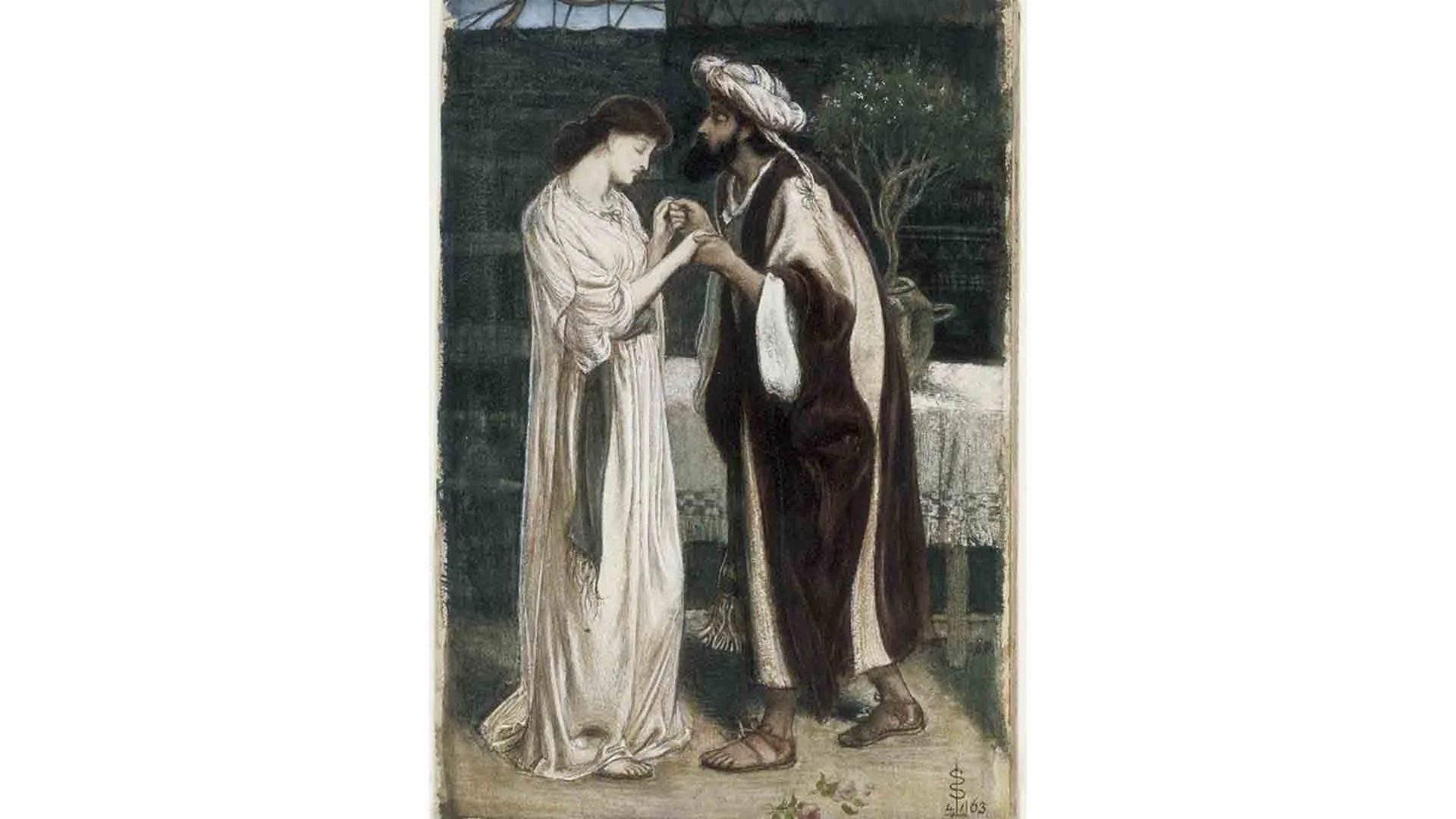
Watercolour entitled ‘Isaac and Rebekah’. The couple are depicting facing each other with hands clasped. Rebekah has her eyes closed and Isaac is speaking to her. Artist: Simeon Solomon, 1863.

Yevamot 64: Divorcing a Barren Wife

jyungar May 10, 2022

For the source text click/tap here: Yevamot 64

To download, click/tap here: PDF

If a man was married to a woman for ten years, and they did not have any children, in the times of the Talmud he would have to divorce her or marry another wife, so that he can fulfill the mitzvah of procreation.

This is only true if he did not children before. It also assumes that they don't know who is at fault. However, if the man is sterile, there is no point for him to divorce her, since he cannot have children with anybody else anyway.

After he divorces her, she has no presumption of not being able to have children, and when she marries to another man, the new husband needs to also count ten years before applying the rule above.

We explore the whole notion of the barren wife and her treatment.

Tags 25th
Comment

Yevamot 63: מצא או מוצא

jyungar May 9, 2022

For the source text click/tap here: Yevamot 63

To download, click/tap here: PDF

Our daf claims that in Eretz Yisrael prospective grooms were challenged with the following question:

”When a man marries a woman, people ask him: מצא or מוצא ?Is the match one where you say: ‘One who has found a woman has found (מצא (good?’

Or is it one where you say: Behold, I have found (מוצא (the woman more bitter than death?’”

The daf rehearses a number of rabbis and their experiences with their wives "Rav was once taking leave of Rav Hiyya. The latter said to him, 'May the All-Merciful deliver you from that which is worse than death'. 'But is there' [Rav wondered] 'anything that is worse than death'? When he went out, he considered the matter and found [the following text]: And I find more bitter than death the woman'" (Kohelet 7:26, Yevamot 63a).

We examine women as wives in the talmud.

Tags 25th
Comment

Mrs. Arthur Knowles and her Two Sons by John Singer Sargent

Yevamot 62: פרו ורבו

jyungar May 8, 2022

For the source text click/tap here: Yevamot 62

To download, click/tap here: PDF

We look at the many different opinions on whether creating one boy and one girl are the ideal way to fulfill our mitzva to "be fruitful and multiply". Is one of each enough? What if we had two boys? What if one child dies? What if someone who converted already had children - who inherit. Is the mitzva fulfilled? What if one's child has a child - might that grandchild count as your child? Should you continue to procreate until you are old? How much does lineage matter to how we 'count' our children/grandchildren? The rabbis go into some detail discussing these and other questions.

We explore this unique mitzvah including Rav Soloveitchik’s halachic perspective and the famous T'shuva of red Moshe on siamese twins.

Tags 25th
Comment

Yevamot 61: Procreation/Population Explosion

jyungar May 7, 2022

For the source text click/tap here: Yevamot 61

To download, click/tap here: PDF

In the Mishnah, Beis Shamai and Beis Hillel disagree about the fulfillment of the Mitzvah of Piryah v’Rivyah.

Beis Shamai maintains that one fulfills the Mitzvah only when he has two sons.

Beis Hillel maintains that one fulfills the Mitzvah when he has one son and one daughter (see Chart).

Beis Hillel derives his view from Creation, when Hash-m created the world with one male and one female, Adam and Chavah.

Beis Shamai argues that "we may not derive that which is possible from that which is not possible" ("Ein Danin Efshar mi'she'Iy Efshar").

The world had to be created with one man and one woman (and not with two men) in order for mankind to propagate. The world could not have been created in any other way.

We explore the current [population growth of Am Yisrael in Israel and abroad and the ethical issues regarding ecology and sustainability.

Tags 24th
Comment

Birkat Kohanim at Kotel Alex Levin

Yevamot 60: Kohanim in War

jyungar May 6, 2022

For the source text click/tap here: Yevamot 60

To download, click/tap here: PDF

With regard to a woman who was raped by another man and a woman seduced by another man, the High Priest may not marry her.

And if he married her, Rabbi Eliezer ben Ya’akov says that the child born from this union is a ḥalal, and the Rabbis say the lineage of the offspring is unflawed.

The kohen gadol and other kohanim are restricted by biblical law however our daf struggles with virgins, non-virgins, girls under the age of three years and one day, grown women, those who have been seduced or raped by an Israelite and those who were raped or seduced by the priest.

In these cases the rabbis consider whether or not each girl/woman is fit for the priesthood; fit for intercourse with the priest. They compare some of the considerations faced only by the high priest versus those faced by all priests.

We explore the halachos of kohen who murders someone or who serves in the army and whether he forfeits his privilege to duchan.

This leads us (in anticipation of Yom Hazikaron) to the recent halachic issues of military service for Kohanim and yeshiva students.

Tags 24th
Comment

Red-figure Vessel with Leda and the Swan (Greek, Apulia 330 BCE) - Leda with the Swan, as Hypnos enchants her

Yevamot 59: Zoophilia

jyungar May 5, 2022

For the source text click/tap here: Yevamot 59

To download, click/tap here: PDF

The Mishna on our daf delineates the rules of a kohen gadol – the High Priest – who is limited by the Torah (see Vayikra 21:10-15) with regard to who he can marry, even more so than an ordinary kohen.

While an ordinary kohen cannot marry a gerusha (divorcee), zona (harlot) or halala (woman who was defiled by a forbidden sexual encounter), the kohen gadol also cannot marry an almana (widow) and may only marry a betula (virgin).

The Gemara discusses the technical definition of these terms in some detail in order to clarify the rules of marriage for both an ordinary kohen and a kohen gadol.

One ruling presented by Rav Shimi bar Hiyya is that a woman who has had relations with an animal does not fall into any of the forbidden categories and a kohen would be permitted to marry her, even though she is liable to receive a death penalty for her actions (if she did it on purpose).

The Gemara then goes on to relate that such a story actually took place. In the town of Hitlu, a young woman was innocently cleaning the house when she was raped by a dog (some manuscripts say it was a kof – a monkey).

We explore the history of bestiality in the antique period from the Hittite codes to the greek Myth of Leda the Swan.

Tags 24th
Comment

Art by Rivkah Korf

Yevamot 58: Amen, Amen

jyungar May 4, 2022

For the source text click/tap here: Yevamot 58

To download, click/tap here: PDF

Normally (unlike modern secular courts) the Torah never requires witnesses to take an oath – the court either accepts the witness as being reliable, or questions his reliability.

Occasionally, it requires the defendant in a case to swear that the version of events he/she presents is true.

One situation is the case of sotah – a woman whose husband suspects her of being unfaithful, which is described in detail in Bamidbar 5:11-31 – if there are witnesses, then the woman would be tried as an unfaithful wife.

If however, there are no witnesses then the procedure described in the Torah is carried out, culminating with the shevu’ah – the oath – recited by the kohen and accepted by the woman with her statement of “amen, amen” (Bamidbar 5:22).

We explore the formulaic phrase “amen amen” listed only 5 times in the chumash, and how it developed through the late antique period into Jewish and Christian liturgy.

Tags 24th
Comment

Illustration of Aaron's lineage, 1493 Nuremberg Chronicle

Yevamot 57: פצוע דכא

jyungar May 3, 2022

For the source text click/tap here: Yevamot 67

To download, click/tap here: PDF

The Gemara asks, if a “petzuah daka” Kohen marries a convert’s daughter, may she eat terumah on his account?

Two issues are at play here. A regular Kohen cannot marry a giyores, and a petzuah daka cannot marry a standard woman.

As the Gemara spells out, a Kohen with such a disability may be devoid of his kedusha and thus can marry a convert.

Secondly, geirim are not included in the regular prohibition of marrying a petzuah daka. What about other laws of Kohanim?

Is a petzuah daka excluded from all of them, or only that he can marry a giyores?

We explore modern ideas of impotence and Halacha as well as vasectomy.

Tags 24th
Comment

Yevamot 56: Kohein and “Zonah”

jyungar May 2, 2022

For the source text click/tap here: Yevamot 56

To download, click/tap here: PDF

Under ordinary circumstances, if a married woman is raped, the halakha recognizes that the forbidden sexual act happened against her will and she remains permitted to her husband. A particularly painful situation arises if the woman who is raped is married to a kohen. In such a case halakha requires the couple to divorce, since as a kohen, the husband is not allowed to be married to a woman who has had a forbidden sexual encounter – which has happened to his wife, even though it was not her fault in any way.

We explore the evolving notion of “Zonah” in Bible and Rabbinics and modern issues with kohanim and marriage….

Tags 24th
Comment

The Meeting of Tamar and Judah, by Jacopo

Yevamot 55: Definition of Coitus

jyungar May 1, 2022

For the source text click/tap here: Yevamot 55

To download, click/tap here: PDF

The need to define the act of bi’ah (sexual intercourse) is essential in order to know when that significant act has taken place in a number of halakhic settings.

Our daf suggests that in the vast majority of cases, the definition is ha’arah – a simple act of touching (in Shmuel’s words, “a kiss”). Although the focus of the Gemara is on the male organ, it appears that the conclusion is clear: penetration – of even miniscule proportions – of the man into the woman.

We explore these notions of coitus and its definition in antiquity with the work of Brodsky and Boyarin.

Tags 24th
Comment

Yevamot 54: Homosexuality and Hitler

jyungar April 30, 2022

For the source text click/tap here: Yevamot 54

To download, click/tap here: PDF

We are told about the rabbis' views on sexual intercourse between men.

Because Torah verses state that men cannot lie with men as they lie with women, no form of intercourse that could happen between a man and a woman is permitted between two men.

Again, the beginning of the act of intercourse is all that is required.

We review the issue of homosexuality in the community and the incidence of mental illness and those who attempt psychiatric conversion therapies of dubious science.

We consider Hitler’s attack on Jewish homosexuals during the NAZI period and how that might affect our attitudes in not handing him a posthumous victory by vilifying these folk.

Tags 24th
Comment

The Rape of Dinah Giuliano Bugiardini

Yevamot 53: Yevama Raped

jyungar April 29, 2022

For the source text click/tap here: Yevamot 53

To download, click/tap here: PDF

Our new Mishna is the start of Perek VI. The Mishna teaches that intercourse is valid in yibum regardless of consent, coercion, or type of intercourse. Further, any type of intercourse between a yavam and a yevama who is forbidden to him by Torah or rabbinical law disqualifies the yevama from marrying into the priesthood.

We return to the issue of consent and the halachic ramifications of nonconsensual intercourse, i.e.rape.

We review modern issues of coercive relationships and the feminist readings of the rape of Dinah.

And the Reskin/Greenberg debate with Grodimer regarding homosexuality in orthodoxy, the Stanford rape case and Hervey Weinstein’s influence on the discourse.

Finally the use of rape and adultery in the midrash of Toldos Yeshu.

Tags 24th
Comment

Noah and family getting the covenant

Yevamot 52: Ger Toshav

jyungar April 28, 2022

For the source text click/tap here: Yevamot 52

To download, click/tap here: PDF

Our Daf states: “Rav ordered that lashes be given to any person who betrothed by cohabitation, who betrothed in the open street, or who betrothed without previous negotiation; who annulled a letter of divorce, or who made a declaration against a letter of divorce; who was insolent towards the representative of the rabbis, or who allowed a rabbinical ban upon him to remain for thirty days and did not come to the Beit Din to request the removal of that ban; and of a son-in-law who lives in his father-in-law's house”….

We further explore the historical development of the Halacha regarding the Ger Toshav…

Tags 24th
Comment

Yevamot 51: Redaction of Mishnah

jyungar April 27, 2022

For the source text click/tap here: Yevamot 51

To download, click/tap here: PDF

The fifth perek of Masechet Yevamot focuses on one main topic – the relationship between the various responses that the surviving brother (the yavam) can perform with the widow (the yevamah). There are four possible responses, two of them taught by the Torah and two suggested by the Sages of the Mishnah:

bi’ah (sexual relations), which would complete the process of yibum, so that the two would now be married

chalitzah, the ceremonial rejection of yibum, which would free the widow to marry anyone she wants

ma’amar, in which case the yavam offers a ring (or another object of value) to the yevamah, mimicking a marriage ceremony. In such a case they have fulfilled yibum on a Rabbinic level

get (a divorce document), which would preclude the possibility of fulfilling yibum. Even though on a biblical level a get has no meaning in this relationship, the Sages treat the divorce as having enough power to force the yavam and yevamah to choose the option of chalitzah.

We use this opportunity to study the redaction of the Mishnah through the eye of Moshe Klein , Yaakov Elman and graham Walfish.

Tags 24th
Comment

On The Wings Of Freedom - Birds Flying And Broken Chains - Charge Concept

Yevamot 50: דִּרְשׁוּ ה׳ בְּהִמָּצְאוֹ

jyungar April 26, 2022

For the source text click/tap here: Yevamot 50

To download, click/tap here: PDF

Menasheh interrogated Isaiah with the following 3 questions:

Your Rebbi Moshe said (in the Torah) "A person will not see Me and live", but you said "I saw Hashem sitting on a lofty throne"!

Your Rebbi Moshe said "Who is like Hashem Elokeinu whenever we call to Him", but you said "Seek Hashem when He is found"!

Your Rebbi Moshe said "I will complete the number of your days", but you said (to my father Chizkiyahu) "I will add 15 years to your days"!

Question: How can we resolve Menasheh's questions?

Answer (for "I saw Hashem" - Beraisa): All (other) Nevi'im saw Hashem through a glass that distorts; Moshe saw through a clear glass.

Answer (for "Seek Hashem when He is found"): Hashem is always found to a congregation, but not always to an individual.

When is He found to an individual?

Rav Nachman responded: He is found during the 10 days between Rosh Hashanah and Yom Kippur.

After reviewing the new Mishnah in Perek V we explore the notion of ״דִּרְשׁוּ ה׳ בְּהִמָּצְאוֹ״

and how it operates during the days of penitence.

Tags 24th
Comment
  • Daf Ditty
  • Older
  • Newer

Julian Ungar-Sargon

This is Julian Ungar-Sargon's personal website. It contains poems, essays, and podcasts for the spiritual seeker and interdisciplinary aficionado.​