Julian Ungar-Sargon

  • Home
  • Theological Essays
  • Healing Essays
  • Podcast
  • Poetry
  • Daf Ditty
  • Deep Dive Ditty
  • Videos
  • Publications
  • Military Service
  • Dominican University
  • Home
  • Theological Essays
  • Healing Essays
  • Podcast
  • Poetry
  • Daf Ditty
  • Deep Dive Ditty
  • Videos
  • Publications
  • Military Service
  • Dominican University
Julian Ungar-Sargon copy 3.jpg

Daf Ditty

A wide-ranging commentary on the daily page of Talmud.

Cod. Karlsruhe 3378 26r (Speculum Humanae Salvationis). See Richard Bernheimer, “The Martyrdom of Isaiah.” The Art Bulletin 34.1 (1952): 30

Yevamot 49: Who Killed Isaiah?

jyungar April 25, 2022

For the source text click/tap here: Yevamot 49

To download, click/tap here: PDF

Rabbi Shimon ben Azay reports that he found a scroll in Jerusalem that accused King Menashe as having killed the prophet Yeshayahu.

Rava comments that that Menashe did not simply murder him, rather he put him on trial for heresies that appear among his prophecies.

Although Yeshayahu could explain each one of them, he chose not to do so, because he knew that Menashe would kill him in any case, and he preferred that Menashe should not be held responsible for murder.

We explore the midrashim and the apocryphal text of the Ascension of Isaiah that claims he was sawed in half when hiding in a cedar tree. This then passes on to Christian and Muslim traditions.

There is a tradition of martyrdom of prophets or which Isaiah is an early example.

Tags 24th
Comment

The Prisoner, Evelyn De Morgan ca. 1907

Yevamot 48:The Beautiful Captive

jyungar April 24, 2022

For the source text click/tap here: Yevamot 48

To download, click/tap here: PDF

One difficult halakha that appears in the Torah is the law of eshet yefat to’ar – if a Jewish soldier desires a woman captured in battle, the Torah forbids him to rape her (as is, unfortunately, the case in most armies). Recognizing that in the heat of battle men may want to behave in ways that are not acceptable under normal circumstances, the Torah concedes that the woman can be taken, but she is to be given a month to mourn the loss of her family, and only then will the soldier be given a choice to marry her or to set her free.

Regarding an eshet yefat to’ar the Torah rules (Devarim 21:12) that she should shave her head and “do” her nails. The definition of this term is subject to a disagreement between Rabbi Eliezer and Rabbi Akiva. Rabbi Eliezer rules that she should cut her nails short, while Rabbi Akiva believes that the Torah commands her to allow them to grow.

We explore the license provided by the Torah and how we reconcile this with moral propriety.

We review the history of rape during war and tragically relevant during the current war inn Ukraine.

Tags 24th
Comment

Yevamot 47:Principles of Conversion

jyungar April 23, 2022

For the source text click/tap here: Yevamot 47

To download, click/tap here: PDF

Conversion to Judaism involves a number of stages. The potential convert must accept the laws of Judaism, if he is male he must undergo a brit milah (circumcision) and he must go to the mikvah for ritual immersion.

What would such a person’s status be were he to become circumcised without having gone to the mikvah?

We find a discussion of this question in a baraita.

The chachamim rule that both are essential for conversion, and one without the other is meaningless. Thus, such a person is not considered Jewish until he has completed the process.

Rabbi Yehoshua says that we can accept someone who has not completed both, just as the imahot – women who became converts – only went to the mikvah without circumcision.

Rabbi Eliezer agrees that a lack of mikvah will not keep the person from becoming Jewish, pointing out that our forefathers also did not immerse in a mikvah when they had a brit milah.

We explore the process of conversion and the problems in modern day Israel for those from heterodox traditions wishing to participate in our faith.

Tags 24th
Comment

Yevamot 46: Milah without Tevilah

jyungar April 22, 2022

For the source text click/tap here: Yevamot 46

To download, click/tap here: PDF

Conversion to Judaism involves a number of stages. The potential convert must accept the laws of Judaism, if he is male he must undergo a brit milah (circumcision) and he must go to the mikvah for ritual immersion.

What would such a person’s status be were he to become circumcised without having gone to the mikvah?

We find a discussion of this question in a baraita.

The chachamim rule that both are essential for conversion, and one without the other is meaningless. Thus, such a person is not considered Jewish until he has completed the process.

When slaves decided to convert to Judaism, like all others, they had to immerse and become circumcised (if they were male).

If a slave declared that s/he was intending to convert just before immersing, S/he could convert to Judaism and thus belong to his/her slave owner only as a labourer but not in body.

If the slave owner witnessed the immersion including such a statement, it was assumed that the slave owner agreed with the slave's decision.

We explore the halachic status of the get who converts who had undergone his Brit Milah and was waiting to recover until he was ready for his Tevilah to complete his conversion asked if he was permitted to observe Shabbat during this interim period. It turns out that there is considerable discussion of this topic in the Teshuvot of the past two hundred years.

We review variety of recent issues regarding conversion an/or immersion.

Tags 24th
Comment

Yevamot 45:Lying With Good Intent

jyungar April 21, 2022

For the source text click/tap here: Yevamot 45

To download, click/tap here: PDF

Our daf relates that Rav was approached and asked about the personal status of someone who had a Jewish mother and non-Jewish father.

When Rav replied that he believed such a person to be perfectly acceptable, the questioner – who was, apparently, the product of such a union – asked to marry Rav’s daughter. Rav refused.

Upon witnessing the exchange, Rav’s grandson, Shimi bar Chiya asked: ‘People say that in Media a camel can dance on a kab (a small measure); here is the kab, here is the camel and here is Media, but there is no dancing’ – i.e. people exaggerate about events that happen in a far-away place, but here, when your ruling is being put to the test, you are not willing to support your position with an action. Rav replied that even if this man were like Yehoshua bin Nun, he would not be willing to allow his daughter to marry him.

We explore the crisis of shiduchim and the halacha of lying on the resume….

Tags 24th
Comment

A Jewish wedding (1903) by Jozef Israëls

Yevamot 44: Marry Someone Your Age!

jyungar April 20, 2022

For the source text click/tap here: Yevamot 44

To download, click/tap here: PDF

MISHNA: In a case of four brothers married to four women and some of the brothers died childless, their wives thereby become yevamot. If the eldest of the brothers who survived wished to consummate the levirate marriage with all of his yevamot, he has permission to do so.

The Baraita demurs, we advise him as follows:

If he was a young man and she an elderly woman or if he was an elderly man and she a young woman, they say to him:

What do you want with a young woman when you are elderly? Or: What do you want with an elderly woman when you are young? Go after your own kind, i.e., a woman of a similar age, and do not place discord in your household that could be caused by marrying a woman of a significantly different age.

From the baraita it is apparent that if consummating the levirate marriage will ultimately lead to contention between the couple, it is preferable to perform ḥalitza. Similarly, in the case of the mishna, marrying four women will likely lead to contention since it is difficult to support so many people, and poverty will lead to strife.

Therefore, the yavam should not be allowed to consummate levirate marriages with all of them.

We explore the notion of age differences in halacha and the success of such marriages using modern statistics.

Tags 24th
Comment

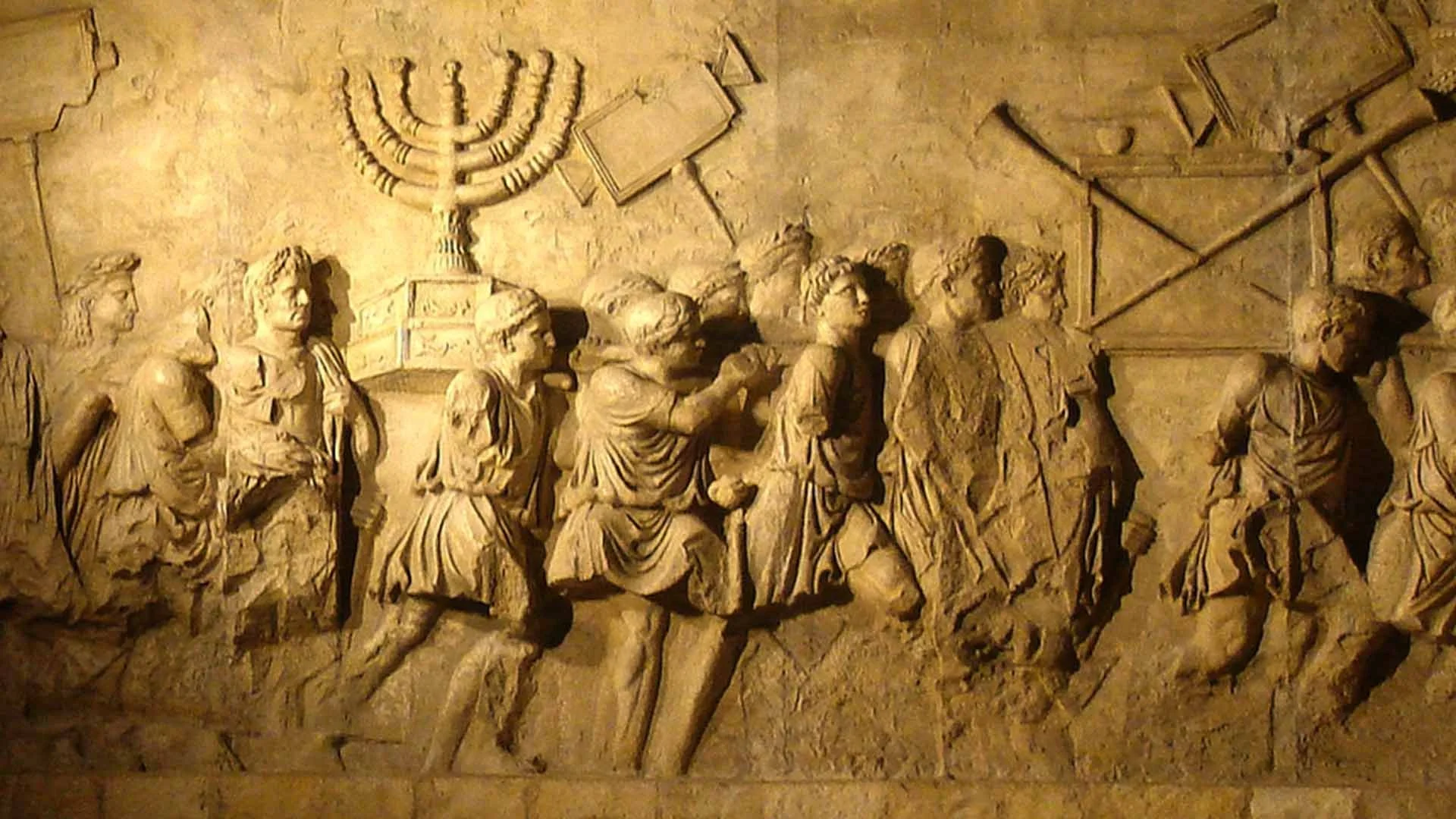
The Arch of Titus

Yevamot 43: Personal vs. Communal Loss

jyungar April 19, 2022

For the source text click/tap here: Yevamot 43

To download, click/tap here: PDF

In the Mishnah (41a), Rebbi Yosi permits a woman (who was divorced) to do Erusin with a second husband immediately without having to wait three months. The only exception is a woman whose husband died, in which case the woman must wait before she remarries, not because of the requirement of "Havchanah" but because of her Aveilus.

Our Daf distinguishes between avelut hadashah and avelut yeshanah, "new" mourning and "old," historical mourning - or, expressing the same thought in a different idiom,

between avelut de-yahid and avelut de-rabbim, private and national-communal mourning.

The first, avelut hadashah, is caused by a death or disaster which strikes a family or an individual. It is a primordial, instinctual, spontaneous response of man to evil, to the traumatic confrontation with death, to the impact of catastrophe and disaster.

The second category, avelut yeshanah, is due to a historic disaster that took place 1,900 years ago. This category is the handiwork of man. There is no spontaneous reaction to some new event which has just transpired, for nothing new has happened which should justify grief.

Tags 24th
Comment

Necropolis of Isola Sacra: Tomb 100

Yevamot 42: 7th vs. 8th Month Fetal Viability

jyungar April 18, 2022

For the source text click/tap here: Yevamot 42

To download, click/tap here: PDF

Our Daf determined that in order to clarify the paternity of a child which might be born, a woman must wait three months after the death of her husband before remarrying.

The Gemara then analyzes why a three-month period is necessary in order to satisfy this question.

It is clear that one month is not enough, because if a child will be born seven months later, we would not know if it was an eight-month child of the first husband or s seven-month child of the second husband.

The Gemara probes, however, to determine why waiting two and a half months would not be sufficient.

We explore the ancient cross cultural notion of viability of fetus at 7month but not 8 months.

How this carries into modern day halachic determinations.

Tags 24th
Comment

The Prophet Elijah and the Angel in the desert, Peter Paul Rubens

Yevamot 41: Elijah as Ultrasound

jyungar April 17, 2022

For the source text click/tap here: Yevamot 41

To download, click/tap here: PDF

If a man died childless, the yavam may not consummate the levirate marriage with either sister because it is possible that he will do so with the sister who was not betrothed to his brother, who is therefore forbidden to him as the sister of a woman who is bound to him by a levirate bond. This is in fact the case of the baraita, and the baraita teaches that she performs ḥalitza, even though she is not permitted to enter into levirate marriage.

The Gemara rejects the proof: How can these cases be compared? There, in the case of uncertainty, if Elijah were to come and say that the man betrothed this one of the sisters, then she would be eligible for ḥalitza and levirate marriage. It is clear, then, that fundamentally the sister who was betrothed is actually eligible for levirate marriage, and it is merely a lack of knowledge that prevents her from entering into it.

However, here, with regard to a woman during the first three months following her previous marriage, if Elijah were to come and say that this woman is not pregnant, would one pay heed to him and would we allow the yavam to consummate levirate marriage?

Certainly not, as is evident from the fact that a minor girl, who cannot become pregnant, must also wait three months. Evidently, the requirement to wait three months applies in all situations, even those in which the reason for the requirement is irrelevant. Therefore, by virtue of that decree the yevama is considered to be fundamentally ineligible for levirate marriage and similarly is ineligible for ḥalitza.

We explore the use of Elijah in determining halacha or in this case acting as an ultrasound to detect a pregnancy in the talmud and other historical aspects of Eliyahu especially how he crept into the haggadah.

Tags 24th
Comment

Yevamot 40: Gluttony

jyungar April 16, 2022

For the source text click/tap here: Yevamot 40

To download, click/tap here: PDF

Wasn’t it taught by Reish Lakish that one who eats gluttonously on Yom Kippur is exempt from liability for violating the prohibition of “… that shall not afflict…”

Our daf’s conclusion is clear; namely, one who eats gluttonously on Yom Kippur does not violate the prohibition against eating on Yom Kippur, because gluttonous eating is not defined as eating.

Tosafos answers (3) that there are two types of gluttonous eating; the more severe type of gluttonous eating is when one is full to the point that the thought of additional eating is reviled. Eating under this condition is not defined as eating, as implied by our Gemara.

The less severe form of eating, which is defined halachically as eating, is when a person is not interested in eating because he is full but has not yet reached the point that the thought of eating makes him ill.

These guidelines are cited by Mishnah Berurah which rules that if a person eats when feeling full he is still obligated to make a beracha before and after he partakes.

If, however, he is full to the point that food appears disgusting he does not make a beracha before or after eating, since that act of gluttonous eating is not defined as eating.

We explore the halachic parameters of eating the Afikomen when full and the notion of gluttony.

Tags 24th
Comment

Portrait of Henry VIII by Hans Holbein

Yevamot 39: Which is Preferable?

jyungar April 15, 2022

For the source text click/tap here: Yevamot 39

To download, click/tap here: PDF

In earlier periods when the yavam and yevamah had pure intentions, and performed yibum with the intention of fulfilling the mitzvah, yibum was preferable.

In later years, when people could no longer be relied upon to have the proper intent, chalitzah became the preferred option.

This most basic question is discussed on our daf, where we find a disagreement between Abba Shaul and the Chachamim.

Abba Shaul argues that a person who performs yibum because he finds the yevamah beautiful, because he wants to be married to her or for some other reason (the Rivan suggests that this refers to monetary gain), it is as though he engaged in a forbidden sexual act.

The Hakhamim point to the passage (Devarim 25:5) that commands the yavam to “come upon” her, and see no qualifications in the performance of the mitzvah.

We explore the notion of intent and heterodox opinions regarding yibbum and Chalitzah and which is preferable nowadays.

Tags 24th
Comment

Her Future Dowry by Antoine Jean Bail

Yevamot 38: Women's Inheritance

jyungar April 14, 2022

For the source text click/tap here: Yevamot 38

To download, click/tap here: PDF

It was traditional for the wife to also bring financial assets into the marriage, which were divided into two –

Nikhsei melug, which are possessions that remain the property of the woman. While the couple is married, the husband can derive benefit from this property. When the marriage ends, they remain hers, in whatever condition they may be.

Nikhsei tzon barzel, which are possessions that become the property of the husband. Their value is written into the ketubah, and in the event that their marriage comes to an end – if the husband dies or if they become divorced – the wife will be reimbursed for the full amount, either from the estate if he died or from him if they divorced.

When it is uncertain whether or not a grown man is the child of a deceased father or the child of a yavam (because the man's mother may have become pregnant before or after participating in yibum), we run into many problems.

Today we focus in on inheritance.

The rabbis discuss a number of different cases. Each case allows us to understand the intricacies of decision-making in uncertain circumstances.

Halachot of inheritance teach that inheritance is given to heirs. Without heirs, it is split within the family along generational lines. For example, a father's inheritance is split between his sons.

Would the heir in question (the son of the deceased father or possibly the son of the yavam) be given a larger portion of his deceased father's inheritance, for he is that man's son, or should he receive a smaller portion of inheritance only after the yavam and his other brothers have split the wealth?

We explore the nature of women’s inheritance rights from biblical times until modern.

Tags 24th
Comment

Babylonian Marriage Market by Edwin Long, 1875, Royal Holloway College, London

Yevamot 37: Mutah, Temporary Marriages

jyungar April 13, 2022

For the source text click/tap here: Yevamot 37

To download, click/tap here: PDF

"Married Jewish male seeks company of Jewish single female for purposes of short-term marriage."

According to a report that appears in our daf, the equivalent of the above personal ad was published by, Rav and Rav Nahman, in the course of their travels.
The former, when journeying to Dardashir, and the latter when going to Shekhansib, would announce: "Who will be my wife for the day?”

In order to arrange for temporary marriages that would be in force only for the duration of their sojourns.

We explore the notion of temporary marriage in halacha and the Mutah in Islamic law.

Tags 24th
Comment

Yevamot 36: Fetal Viability

jyungar April 12, 2022

For the source text click/tap here: Yevamot 36

To download, click/tap here: PDF

All of our discussions in Masechet Yevamot open with the premise that the brother who passed away had no children; if he did have children, the mitzva of yibum would never come into effect. The first Mishnah in the fourth perek (35b) presents a situation where the widow is left pregnant. In such a case, we must wait and see whether the unborn child is viable. If she gives birth to a child who lives, there is no need for yibum; if the child does not survive, then the normal rule of yibum will apply.

We explore posthumous paternity in halacha (R. David Bleich) as well as Schenker’s article on the status of an embryo in halacha.

as well as a legal analysis of the notion of viability:Viability is an incoherent legal concept as it is currently featured in US law and in the legal framework in England and Wales.

Viability is frequently ill-defined and presumed from a point in gestation before the fetus has a reasonable chance of survival, thus undermining the (limited) logic behind the use of viability in determining the protection afforded to unborn entities.

Tags 24th
Comment

Yevamot 35:Defining Paternity

jyungar April 11, 2022

For the source text click/tap here: Yevamot 35

To download, click/tap here: PDF

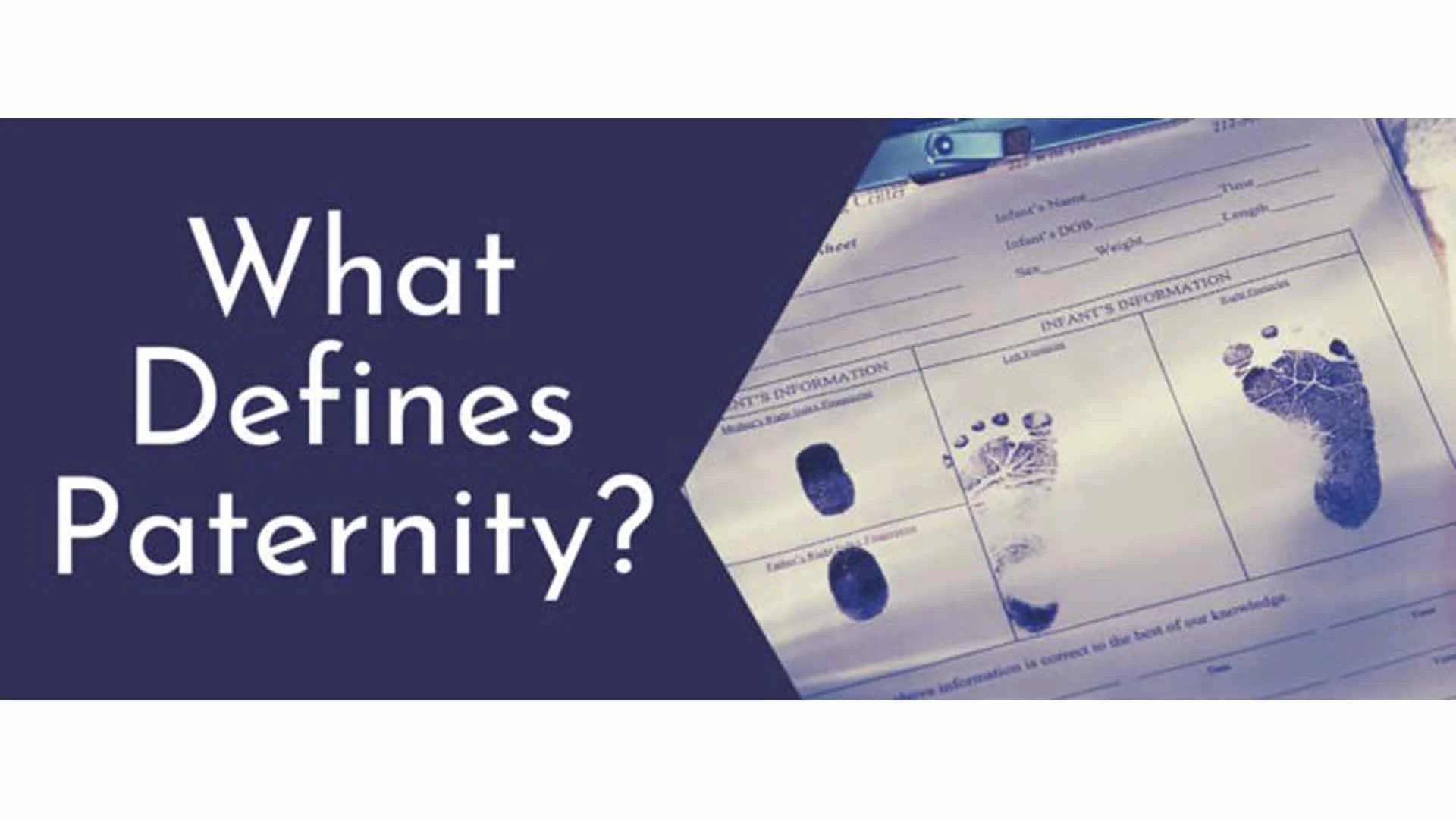
The new Perek begins with the following Mishnah: If a man dies and leaves a pregnant wife, the yet-to-be born fetus is still the seed of the father.

And if such a fetus survives thirty days, the woman is free to marry whomever she pleases, without the need for chalitzah; and the brother of the deceased is forbidden to marry her on the penalty of karet.

If the brother marries his pregnant sister-in-law--deliberately or unknowingly--whether such is a grievous sin, or the retroactive performance of a "mitzvah" will not be known for many months.

While our rabbis forbade such a marriage, the Sages of the Mishnah would allow the marriage to continue if and when the woman either miscarries or gives birth to a baby who dies within thirty days.

We explore the notion of paternity and the new technologies such as DNA and HLA testing and how the Israeli courts struggle with the halacha vs science when applying this to paternity.

How the World Trade Disaster and search for DNA remains (and developments in the science) to free women from being agunot has influenced the rabbinic t’shuvot.

Tags 24th
Comment

Yevamot 34: Conception in Antiquity

jyungar April 10, 2022

For the source text click/tap here: Yevamot 34

To download, click/tap here: PDF

Our Gemara questions why a period of three months (havchanah) would be considered necessary before remarriage, since it is known that a woman will not become pregnant the first time she engages in sexual relations.

Rav Nachman suggests that the couples engaged in more than one act of relations and that the suspicion is that conception took place in a later act of relations.

Rava questions the very basis of the question, pointing out that there are known cases of virgins who had become pregnant the first time they engaged in sexual relations.

Rav Nahman responded with the explanation that these women prepared themselves in advance by removing their hymen, which allowed them to become pregnant the first time they engaged in relations.

The example of Tamar is brought to disprove the notion of the impossibility of pregnancy after a single act of cohabitation, which allows us to explore further the concepts of conception in antiquity.

The Noda B’Yehudah writes in his responsa נודע יהודה קמא אה"ע סימן כ"ב that nowadays it is possible for women to become pregnant the first time they have relations.

Furthermore, even in the time of Chazal the principle did not indicate that it was impossible for a woman to become pregnant the first time she had relations, rather the principle was stated with regards to the majority.

Tags 24th
Comment

Yevamot 33: Epikleros

jyungar April 9, 2022

For the source text click/tap here: Yevamot 33

To download, click/tap here: PDF

Our Mishna presents a uniquely disturbing case that stems from the following situation.

Two men offer kiddushin to two women, but at the time of the nesu’im the women are switched and each ends up sleeping with the wrong spouse.

In such a case, they would all need to bring a korban chatat – a sin-offering.

We continue our exploration of marriage in the late antique period with a comparison with cases in Attic law, where there were sons in the family, the daughter exhausted her rights, including those of inheritance, with the dowry, and was then known as epiproikos.

But in a case where there was no son, she was known as epikleros and had the right to the whole estate, as sole descendant of an oikos with no males.

City law did not however allow the wife to be the possessor of the kleros. She therefore functioned as conveyor of the kleros, and it was via her that it was passed on to her sons.

But so that the kleros should not disappear from the family, the law laid it down that the epikleros, along with the kleros, should pass over to the male relative nearest in the lateral branch.

Should he refuse her, she came to the immediately next, and so on.

This nearest blood relative (anchisteas) could marry her, provided she was unmarried; or could proceed to aphaeresis epiklerou, if she was already married.

Tags 24th
Comment

Yevamot 32: Ain Issur Chal al Issur

jyungar April 8, 2022

For the source text click/tap here: Yevamot 32

To download, click/tap here: PDF

Rebbi Shimon maintains "Ein Isur Chal Al Isur" -- once an object is prohibited with one Isur, it cannot become prohibited again with another Isur.

Accordingly, when two brothers were married to two sisters and one brother died, if the surviving brother does Yibum with his brother's wife (to whom he is prohibited because of "Achos Ishto"), he is liable for transgressing only one Isur: If the first brother was married first the Isur of "Eshes Ach" took effect, and when the second brother marries the sister of his brother's wife the Isur of "Achos Ishto" cannot take effect.

If, however, the second brother married first and his wife's sister became forbidden to him as "Achos Ishto," when his brother marries the second sister the Isur of "Eshes Ach" cannot take effect.

Do we say issur ḥal al issur – that one prohibition can be added to another prohibition – or not?– it is not clear how far this idea applies.

Thus we find that Rabbi Yosei understands ein issur ḥal al issur to mean that there is no punishment for the second prohibition, but it still exists and the perpetrator of such a crime would be deemed a rasha – an evil person – who would not be buried in the Jewish cemetery.

Rabbi Shimon takes a simpler view of the ruling and argues that ein issur ḥal al issur means that there is no place for the second prohibition to be applied and it does not exist at all.

The Gemara in Yevamot adds that even Rabbi Shimon agrees that if the first prohibition no longer exists, the second one would take its place.

We explore the notion of levirate marriage in the late antique period.

What happened to biblical law when it was transferred into the new world of late antiquity? How was it understood, and what were the reasons for this particular interpretation? Answering these questions can provide a paradigm to help explain the development of late antique Christian legal traditions and discourse in their Greco-Roman and Jewish contexts.

Tags 24th
Comment

Yevamot 31: Levirate v Agnate Marriages

jyungar April 7, 2022

For the source text click/tap here: Yevamot 31

To download, click/tap here: PDF

When a bet din – a Jewish court – needs to establish facts in order to make a decision, the preferred method is to listen to the testimony of eyewitnesses and rule according to the statement that they make. The principle taught by the Torah is that testimony of two witnesses is accepted as definitive (see Devarim 19:15), and in the words of the Talmud, trei ke-me’ah – if two witnesses testify, it is as though one hundred did.

What if two pair of witnesses come into court and each tells a different, conflicting story?

In such a case the Gemara rules that we must use other methods in order to reach a conclusion on how to decide the case.

The Gemara’s suggestion is to rely on chazaka – we accept the status quo ante, i.e. that the situation has not changed – until we find compelling evidence that suggests otherwise.

We continue to explore the difference between Levirate and Agnate marriages with the work of Dr Samuel Belkin.

Tags 23rd
Comment

Yevamot 30: Conversos

jyungar April 6, 2022

For the source text click/tap here: Yevamot 30

To download, click/tap here: PDF

There are two Mishnayot on today’s daf that are almost identical. In both of them, the scenario opens with three brothers, two of whom are married to sisters, while the third brother is married to an unrelated woman.

The Gemara asks the obvious question – why do we need both of these Mishnayot? Aren’t the cases so similar that there is no need to repeat the rule a second time?

The Gemara’s response is that we really do not need both, and that the rule of the second Mishna can be understood from the first.

Nevertheless, once it was taught, Mishna lo zaza mimkoma – the Mishna is not moved from its place.

We continue our exploration of levirate marriage, today regarding the conversos especially the work of the history Yosef Hayim Yerushalmi.

Tags 23rd
Comment
  • Daf Ditty
  • Older
  • Newer

Julian Ungar-Sargon

This is Julian Ungar-Sargon's personal website. It contains poems, essays, and podcasts for the spiritual seeker and interdisciplinary aficionado.​