Julian Ungar-Sargon

  • Home
  • Theological Essays
  • Healing Essays
  • Podcast
  • Poetry
  • Daf Ditty
  • Deep Dive Ditty
  • Videos
  • Publications
  • Military Service
  • Dominican University
  • Home
  • Theological Essays
  • Healing Essays
  • Podcast
  • Poetry
  • Daf Ditty
  • Deep Dive Ditty
  • Videos
  • Publications
  • Military Service
  • Dominican University
Julian Ungar-Sargon copy 3.jpg

Daf Ditty

A wide-ranging commentary on the daily page of Talmud.

Mea Shearim, Jerusalem, c. 1960

Megillah 10: Tamar's Veil

jyungar December 22, 2021

For the source text click/tap here: Megillah 10

To download, click/tap here: PDF

Our daf states that : Rabbi Shmuel bar Naḥmani said that Rabbi Yonatan said: "Any bride who is modest in the house of her father-in-law merits that kings and prophets will emerge from her. From where do we derive this? From Tamar"

We explore the issue of Tamar's qualities and examine Gen 38 to reveal a textual analysis the ambivalence of the narrator and how modern feminist interpretations expose the misogyny inherent in how we appropriate sacred texts halachically.

Tags 20th
Comment

Ptolemy II Discussing the Translation of the Old Testament with the Hebrew Scholars, Spadarino 1620s

Megillah 9: Ekphrasis

jyungar December 21, 2021

For the source text click/tap here: Megillah 9

To download, click/tap here: PDF

The targum shiv’im was the first translation of the Torah into a foreign language, an occurrence that the Sages viewed at first as dangerous, at best (Megillat Ta’anit records that a fast day was established in commemoration of the event). After a time, however, the translation was accepted as important and valuable and was treated with respect by the Sages. The Jews of Egypt, in particular, viewed the targum shiv’im with great reverence and saw its creation as one of holiness.

Aside from the record of the event that appears in Rabbinic literature, a lengthy description of the translation and how it came to be has been found in an ancient Greek letter entitled “the letter of Aristias,” which describes the king’s initiative to have the Torah translated and the greatness of the Sages who were brought from Israel to carry it out. We explore the history of the letter and how its author employed a device called ekphrasis or embellishment in order to praise Ptolemy and curry favor for the Jewish community.

Tags 20th
Comment

Samuel Hirszenberg, “Juden beim Talmudstudium, Paris”

Megillah 8: Lost In Translation

jyungar December 20, 2021

For the source text click/tap here: Megillah 8

To download, click/tap here: PDF

Rabban Shimon ben Gamliel’s opinion quoted in the Mishnah limits foreign writing in Sifrei Torah to Greek, based on the passage in Sefer Bereshit (9:27) that invites Yefet to dwell in the tents of Shem. This pasuk is understood to recognize the beauty of Greek, which would be appropriate to use to enhance Jewish practice. The Gemara rules like Rabban Shimon ben Gamliel, a position accepted by the Rambam, who argues that the original Greek has become corrupted and has effectively been lost. Therefore today all of our ritual objects, including Sifrei Torah, are only written with ketav Ashuri.

We examine the translations of our Torah into other languages and its relationship to the Oral Law.

Tags 20th
Comment

Megillah 7: Opus Non Gratum

jyungar December 19, 2021

For the source text click/tap here: Megillah 7

To download, click/tap here: PDF

Our daf relates that Esther requested from the Chachamim permission to record the miracle of Purim in writing. They dissented based on the verse in Mishlei (22:20) which says, "Have I not written for you a threesome (Shalishim)?" The verse implies that the defeat of Amalek may be recorded in writing only three times and no more.

The Chachamim, however, later agreed to Esther's request. They derived from a verse in the Torah that the miracle of the defeat of Amalek in the times of Esther may be written in a Sefer.

The Rabbis also offer various proofs that the Book of Esther was written with (ruach hakodesh) the spirit of divine inspiration. They derive this from the various verses that reflect the thought of the characters, or that attest to actions of which a normal person could not be cognizant, such as “Haman said to himself” (Esth. 6:6), or the definite statement, that could be known only to God: “but they did not lay hands on the spoil” (9:10). This book therefore has the same sanctity as the other books of Scripture.

Tags 20th
Comment

Megillah 6: Tiberian Walls

jyungar December 18, 2021

For the source text click/tap here: Megillah 6

To download, click/tap here: PDF

On yesterday’s daf we learned that Chizkiya asserted that Tiberias was a walled city dating back to the time that the Jewish people entered the land of Israel at the end of their exodus from Egypt.

This assertion is supported by a passage in Sefer Yehoshua (19:35) that lists walled cities included in the area set aside for the tribe of Naftali, and includes cities in the vicinity of the Kinneret, including one that is identified as Tiberias.

Contemporary Tiberias was established in the year 18 CE by King Herod, who named the new city in honor of the Roman Caesar Tiberius.Although the city was built anew, it was established on the ruins of an ancient city – according to most opinions in the Gemara, of the city Rakat.

We review the halachic aspects of naming ancient cities with walls for the sake of megillah reading and second day Purim, then move onto a mediation on the history of Tiberias, its archeology and the curious visit of Rebbe Nachman during a plague 5569.

Finally, the dazzling work by Motti Zohar on the great earthquake of 1837, using reconstruction of three-dimensional models of the city prior to and after the earthquake enabling a 360º examination of the damage distribution in high resolution and evaluation of the overall impact of the earthquake.

Tags 20th
Comment

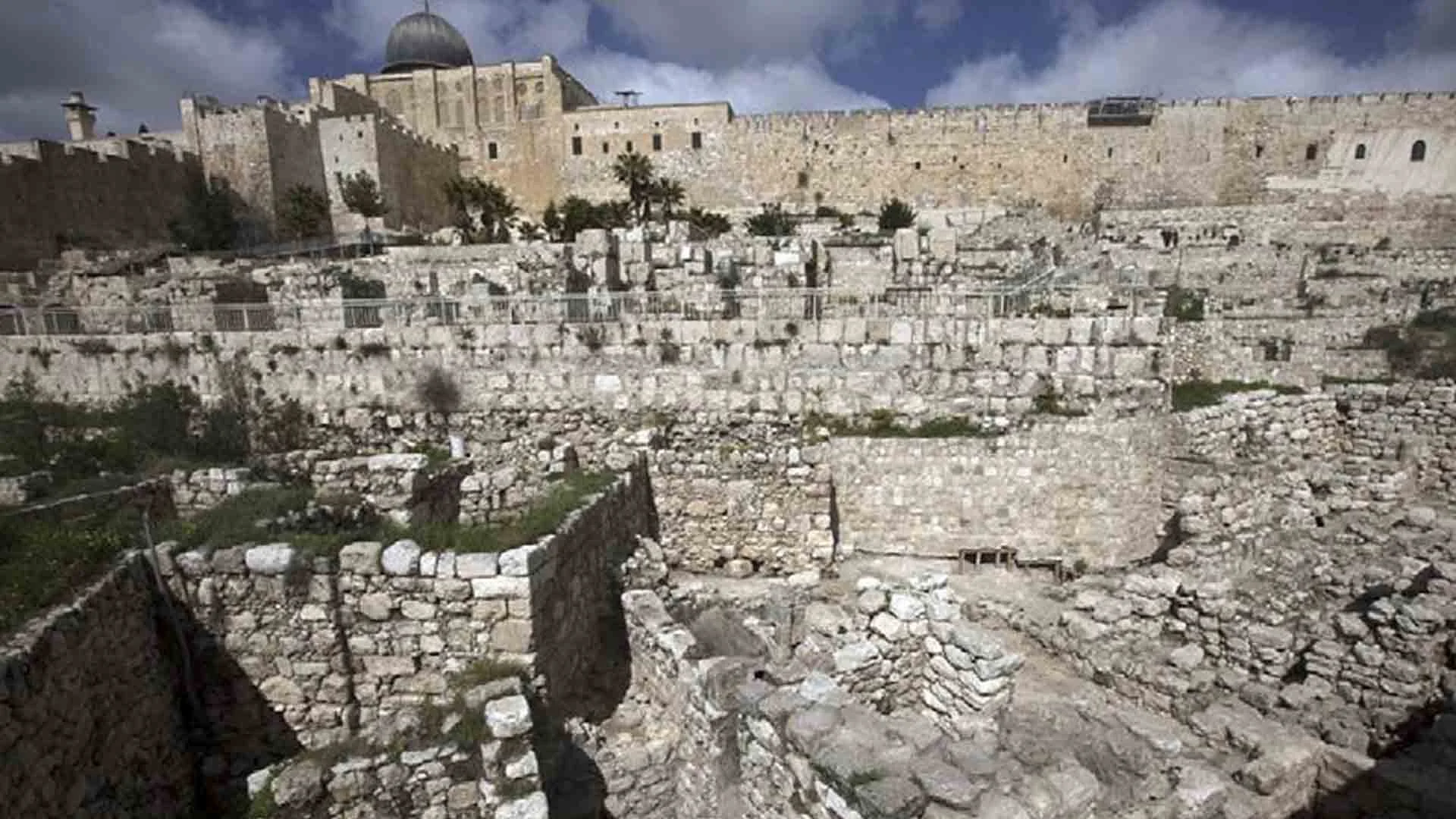
Newly (2010) excavated Jerusalem site includes a wall claimed to have been built by the biblical King Solomon

Megillah 5: Walled Cities

jyungar December 17, 2021

For the source text click/tap here: Megillah 5

To download, click/tap here: PDF

Our daf explains that a city must have at least ten (batlanim) idlers, or congregants who are not paid to be at the service, to qualify as a city. The difference between city and village is important because it determines whether the Megilla reading might be postponed when Purim falls on Shabbat.

Our daf ends with a question about walled cities. We know that those living in cities that were walled from the time of Joshua celebrate Purim on the 15th of Adar, postponed from the 14th of Adar. All others celebrate on the 14th of Adar. But what if we aren't sure whether or not a city has four walls?

We explore recent anomalies like Prague and Bet Shemesh to see how halachic authorities struggle with the issue of walled city status as it affects when to read the megillah.

Tags 20th
Comment

Esther (detail), Jean-François Portaels, ca. 1869. Art Gallery of New South Wales, Australia

Megillah 4: אֵלִ֣י אֵ֖לִי לָמָ֣ה עֲזַבְתָּ֑נִי

jyungar December 16, 2021

For the source text click/tap here: Megillah 4

To download, click/tap here: PDF

Rabbi Yehoshua ben Levi ruled: It is obligatory for women to hear the reading of the Megillah, because they benefited also by the same miracle (Haman’s decree to kill all the Jewish people included the women).

The Rishonim dispute whether a woman can read the Megillah and discharge the obligation for a man. Rashi (Eruchin 3a) maintains that she could and Tosfos cites a Behag that she cannot. There are those that explain the Behag that he holds that a woman is only obligated to hear the Megillah but not to read it. Rashi’s viewpoint is easily understood by the fact that the Gemora explicitly states that women are obligated in the reading of the Megillah.

We explore the history of halacha and its development as regards this issue as well as the relationship between Purim and Psalm 22.

Tags 20th
Comment

Joshua meets the angel who leads the hosts of heaven; By Anonymous (Meister 2) (Hochschul- und Landesbibliothek Fulda)

Megillah 3: Mysterious Angels

jyungar December 15, 2021

For the source text click/tap here: Megillah 3

To download, click/tap here: PDF

Our Daf asks: Is the Temple service more important than Torah study? does this affect the priority of Megillah reading over Torah learning? and how do we derive that?

The Gemora relates a conversation between Yehoshua bin Nun and an angel, proving that Torah study is regarded as being stricter than the service in the Beis Hamikdosh (which is inconsistent with that which was previously learned). Yehoshua bin Nun, during the night between two days of battle, had a vision of the Heavenly Warrior Angel. The verse states that Yehoshua prostrated himself before the Angel.(Josh 5)

As for the angel’s mission, the Gemara explains that the angel said to Joshua: Yesterday, i.e., during the afternoon, you neglected the afternoon daily offering due to the impending battle, and now, at night, you have neglected Torah study, and I have come to rebuke you. Joshua said to him: For which of these sins have you come? He said to him: I have come now, indicating that neglecting Torah study is more severe than neglecting to sacrifice the daily offering. Joshua immediately determined to rectify the matter.

We explore another case of mortal combat with an angel... that of Rebbe Yehoshua ben Levi on his last day immortalized by the Longfellow poem.

Tags 20th
Comment

One of the World’s Oldest Esther Scrolls (Mid-15th Century Iberian Megillah)

Megillah 2: Introductions

jyungar December 14, 2021

For the source text click/tap here: Megillah 2

To download, click/tap here: PDF

The Mishnah lists the days on which the Megillah may be read under various circumstances: the eleventh, twelfth, thirteenth, fourteenth, or fifteenth of Adar.

What is the source for these dates? The verse (Esther 9:21) explicitly states that the Megillah may be read on the fourteenth and the fifteenth of Adar. The Gemara derives from other verses that the Megillah may be read on the eleventh and twelfth of Adar.

We review the basics of our introductory Mishnah as well as the issue of women reading the Megillah.

Tags 20th
Comment

Taanit 31: Hadran-"Dancing with the Zaddikim"

jyungar December 13, 2021

For the source text click/tap here: Taanit 31

To download, click/tap here: PDF

In the final section of our masechta we explore the joy of the festival for which the daughters of Jerusalem would go out to the dance in the vineyards in borrowed white clothing (so that girls who were poor would not be embarrassed), calling out to the young men suggesting that they choose wives from among them.

Our Daf here concludes the Maseches by saying that in the future, Hashem will make a (machol) circle of Tzadikim.

The Shechinah will sit inside the circle, and the Tzadikim will point towards the center of the circle and declare, "This is my G-d, we will rejoice in His salvation."

This event is understood by the commentaries as referring to a mystical event rather than a physical one. Other midrashim will suggest that when Hashem offers them a cup of consolation (for all the suffering of Galut)

They will refuse it!!

We explore the notion of learning Torah by night as well as the incongruity for the rationale (for the 4th brocho in benching) for the burial of the victims of Beitar with the historical dates.

Tags 20th
Comment

Taanit 30: Mourning and Messianism

jyungar December 12, 2021

For the source text click/tap here: Taanit 30

To download, click/tap here: PDF

Aside from the five basic activities forbidden on Tisha be-Av (eating and drinking, washing, anointing, wearing leather shoes, and sexual relations), the baraita teaches that all of the restrictions that apply to someone who is in mourning for a close relative are applicable to all Jews on Tisha be-Av. A person is not allowed to learn Torah – neither Tanakh nor the Oral Law – except for things that are in the spirit of the day, like kinot, Sefer Iyov and the parts of Yirmiyahu that describe the destruction of the Temple.

Over the past millenia Tisha B'av also embodies the hope for the future rebuilding of the destroyed Beis Hamikdash as well as the birthday of the Messiah.

We explore the halachic parameters of learning on this day then look at false Messiahs who were born on this day. We end with the disturbing article by Sol Kirsch reviewing the academic analysis of Chabad Messianism.

Tags 20th
Comment

Taanit 29: Calamity and Communal Memory

jyungar December 11, 2021

For the source text click/tap here: Taanit 29

To download, click/tap here: PDF

The Mishnah (26a-b) taught that five separate occurrences took place on the seventeenth of Tamuz and another five on the ninth day of Av for which we are in mourning to this day.

The events of Tisha be-Av are discussed on our daf. They include:

After the sin of the spies, the Children of Israel were condemned to die in the desert rather than enter the Promised Land

The first Temple was destroyed

The second Temple was destroyed

The city of Beitar was captured

The city of Jerusalem was plowed up

We explore the historical events from Apostemus to Himmler associated with Tisha B'Av and how it shapes our communal memory and self identity.

Tags 20th
Comment

Taanit 28: Zatu and Bikkurim Smugglers

jyungar December 10, 2021

For the source text click/tap here: Taanit 28

To download, click/tap here: PDF

On our daf we find that it was once decreed that the Jewish people could no longer bring their bikkurim/ new fruits to Yerushalayim. Guards were stationed along the roads leading to the holy city just as they had been during the days of Yeravam ben Nevat.

Certain righteous people, however, would smuggle in their bikkurim by covering the new fruits with a layer of dried figs. When the guards asked what they were doing with the basket of figs, they would respond that they were bringing in figs for processing. It is clear that those who were not especially righteous did not bring their bikkurim during that period of prohibition. This appears to be very problematic.

We explore the history of Jewish identity during the period with Rivkah Fishman-Duker's excellent review as well as the transformation of the wood offering from biblical times onward.

Tags 20th
Comment

Taanit 27: Neshama Yeseirah

jyungar December 9, 2021

For the source text click/tap here: Taanit 27

To download, click/tap here: PDF

Reish Lakish said: They would not fast on Sunday due to the added soul, as Reish Lakish said: An added soul is given to man on Shabbat eve, and at the conclusion of Shabbat it is removed it from him, as it is stated:

“He ceased from work and rested [vayinafash]”

which he expounds as follows: Since one has rested and Shabbat has passed, woe for the soul [vai nefesh] that is lost, the added soul that each individual relinquishes. Consequently, one is still weak from this loss on Sunday.

We explore the mystical notion of the added soul of Shabbat.

Tags 19th
Comment

Taanit 26: Tu B'Av

jyungar December 8, 2021

For the source text click/tap here: Taanit 26

To download, click/tap here: PDF

Our daf reminds us that the 15th of Av and Yom Kippur are our most joyous holidays. On both of those days, wood is burned, and women dance in the fields all dressed in white. Their clothes are all borrowed from each other to divert attention from wealth. They call out to the boys to choose themselves wives. However, they also quote from Psalms (30:31-2) to remind young men that beauty is not as valuable as righteous behaviour.

Tu b'av reminds us of five historical events the most disturbing being the scandal of Pilegesh B'Givah.

Tags 19th
Comment

Taanit 25: מַעֲבִיר עַל מִדּוֹתָיו/Nicht Fargin

jyungar December 7, 2021

For the source text click/tap here: Taanit 25

To download, click/tap here: PDF

Rabbi Eliezer led the congregation in the lengthy amidah prayer for fast days, but his prayers were not answered. At that point, his student, Rabbi Akiva, prayed for rain, and rain began to fall. When the rabbis present began to discuss why the student, Rabbi Akiva, was successful, while Rabbi Eliezer was not, a heavenly voice called out that it was not an issue of greatness; rather, Rabbi Akiva was more relaxed and forgiving, while Rabbi Eliezer was more exact and demanding. God responded to each of them according to his personality.

We look at the avina malkenu prayer in depth.

We then examine the concept of מַעֲבִיר עַל מִדּוֹתָיו as applied to personal conduct and behavior as well as the yiddish term "fargin".

Tags 19th
Comment

Study Of A Fig Tree by John Singer Sargent

Taanit 24: Chaninah ben Dosa Benefitting From Miracle?

jyungar December 6, 2021

For the source text click/tap here: Taanit 24

To download, click/tap here: PDF

Many Talmudic scholars took great pride in their clarity of thought, their verbal precision and their rationality. The Talmud is however a vast literary sea. It encompasses law, philosophy, science, literature and creative ideas. Thus, it should not come as a surprise that among its many tomes and thousands of pages of text, we also move from the rational to the mystical and from the mystical to the world of miracles.

Such is the journey that Rabbi Chanina (also spelled Haninah) ben Dosa provides for us. Rabbi Chanina is different from the other Talmudic personages about whom we have studied. If the others dealt with the laws of probability and probability, Chanina was their opposite. His world was one of the improbable, of the irrational, of the unprovable.

We explore the permissibility of praying or relying on miracles and review the scholarship on charismatic Galillean hassidim like Chanina, and the controversial influence they might have had on the founder of Christianity and his own performance of miracles.

Tags 19th
Comment

Taanit 23: Rain Makers and Miracle Workers

jyungar December 5, 2021

For the source text click/tap here: Taanit 23

To download, click/tap here: PDF

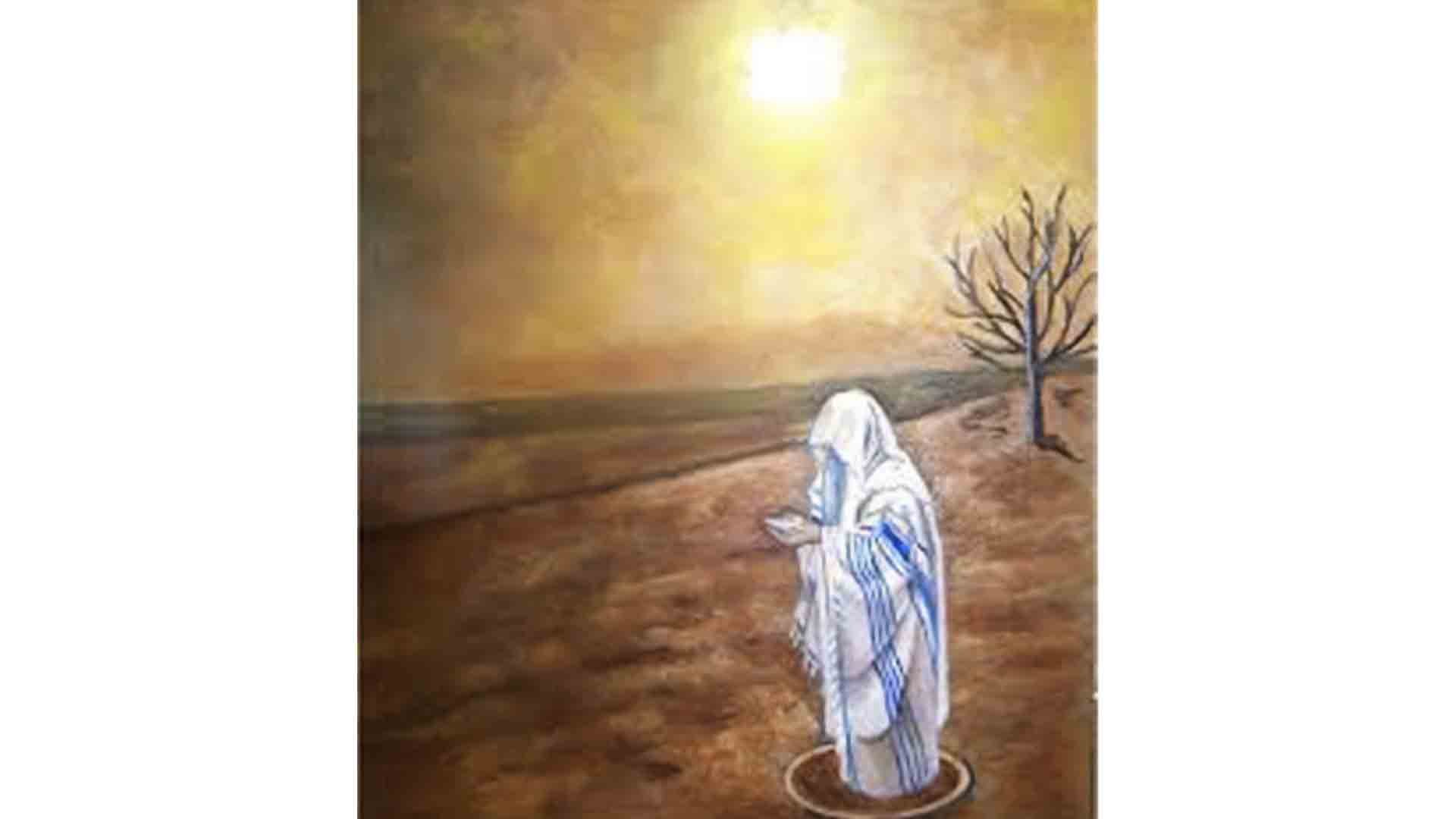
Honi Hamaagel (Honi the circle maker) was an especially pious Jewish man who lived during the first century BCE. The Talmud states that he was so pious that he had a special relationship with God and was able to be a miracle worker. He would be able to pray for rain when the populace needed the precipitation. He would draw a circle, step inside it, and inform God that he would not step out of the circle until it rained. Due to his piety, he was always successful; God did not want to see this pious man stranded in a circle.

Honi has bucked the rabbinic method of dealing with drought, and though his methods initially work, bringing the rain that is so desperately needed, the ultimate results are disastrous. The rabbis are appalled, but because they recognize Honi’s extraordinary relationship with God, they stop short of excommunicating him.

On our daf, while traveling Honi saw a man planting a carob tree. He asked him, “How long would it take (for this tree) to bear fruit?” The man answered, “Seventy years.” He then asked, “Are you sure that you will live another seventy years?” The man answered, “No. But I’m not planting this (tree) for myself, but for the next generations and the ones that follow.” Honi shrugged his shoulders and left.

Later, when he sat down to rest, he slept for seventy years. When he awoke and retraced his prior walk, he saw a man plucking carobs from a tree. He asked, “Did you plant this tree?” The man answered, “No. My grandfather planted it. My father told me that his father planted this tree for me.”

We examine the literary and folk motif aspects of rain makers and miracle workers in Aggadah and the way his intercession provides a model for petitionary prayer.

Tags 19th
Comment

Taanit 22: Pious Comedians

jyungar December 4, 2021

For the source text click/tap here: Taanit 22

To download, click/tap here: PDF

On our daf we find that Rabi Beroka Choza’ah was once in the market of Bei Lefet when he met Eliyahu Hanavi.

He asked Eliyahu Hanavi, “Are there any bnei Olam Habah in this marketplace?” Eliyahu Hanavi answered, “No.”

Just then, two people arrived, and Eliyahu Hanavi changed his answer. Indicating the newcomers, he declared, “These two are bnei Olam Habah.”

Rabi Beroka Choza’ah asked the two men about their profession, and they responded that they were comedians/merry-makers who cheered people up. “When we see two people fighting, we make peace between them,” they said.

We explore the history of Jewish comedy and the use of humor when facing tragedy as a form of resistance.

Tags 19th
Comment

Taanit 21: "It's All For The Best" Really?

jyungar December 3, 2021

For the source text click/tap here: Taanit 21

To download, click/tap here: PDF

Nachum ish Gam Zu was called this way because he was accustomed to saying "That, too, (gam zu) is for the best." Once the Jews needed to send a gift of precious pearls to the Roman emperor. They chose Nachum ish Gam Zu, because "he is used to miracles happen on his behalf." On the road, people at an inn exchanged the precious stones in his chest for dirt from the house. In the morning, when Nachum saw it, he said "This, too, is for the best," and continued on his way, to present it to the emperor. When the latter saw the dirt, he was enraged, "Jew are mocking me!" and decided to kill them all. Nachum said, "That, too, is for the best."

We explore the notion that "all is for the best" and the problems this faith based claim caused in history most prominently in the philosophical debate following the Lisbon Earthquake in 1775 (Voltaire vs Leibnitz).

Tags 19th
Comment
  • Daf Ditty
  • Older
  • Newer

Julian Ungar-Sargon

This is Julian Ungar-Sargon's personal website. It contains poems, essays, and podcasts for the spiritual seeker and interdisciplinary aficionado.​