Julian Ungar-Sargon

  • Home
  • Theological Essays
  • Healing Essays
  • Podcast
  • Poetry
  • Daf Ditty
  • Deep Dive Ditty
  • Videos
  • Publications
  • Military Service
  • Dominican University
  • Home
  • Theological Essays
  • Healing Essays
  • Podcast
  • Poetry
  • Daf Ditty
  • Deep Dive Ditty
  • Videos
  • Publications
  • Military Service
  • Dominican University
Julian Ungar-Sargon copy 3.jpg

Daf Ditty

A wide-ranging commentary on the daily page of Talmud.

Yoma 39: Lottery for Life

jyungar May 20, 2021

For the source text click/tap here: Yoma 39

To download, click/tap here: PDF

Having finished describing the preparations for the avodah…

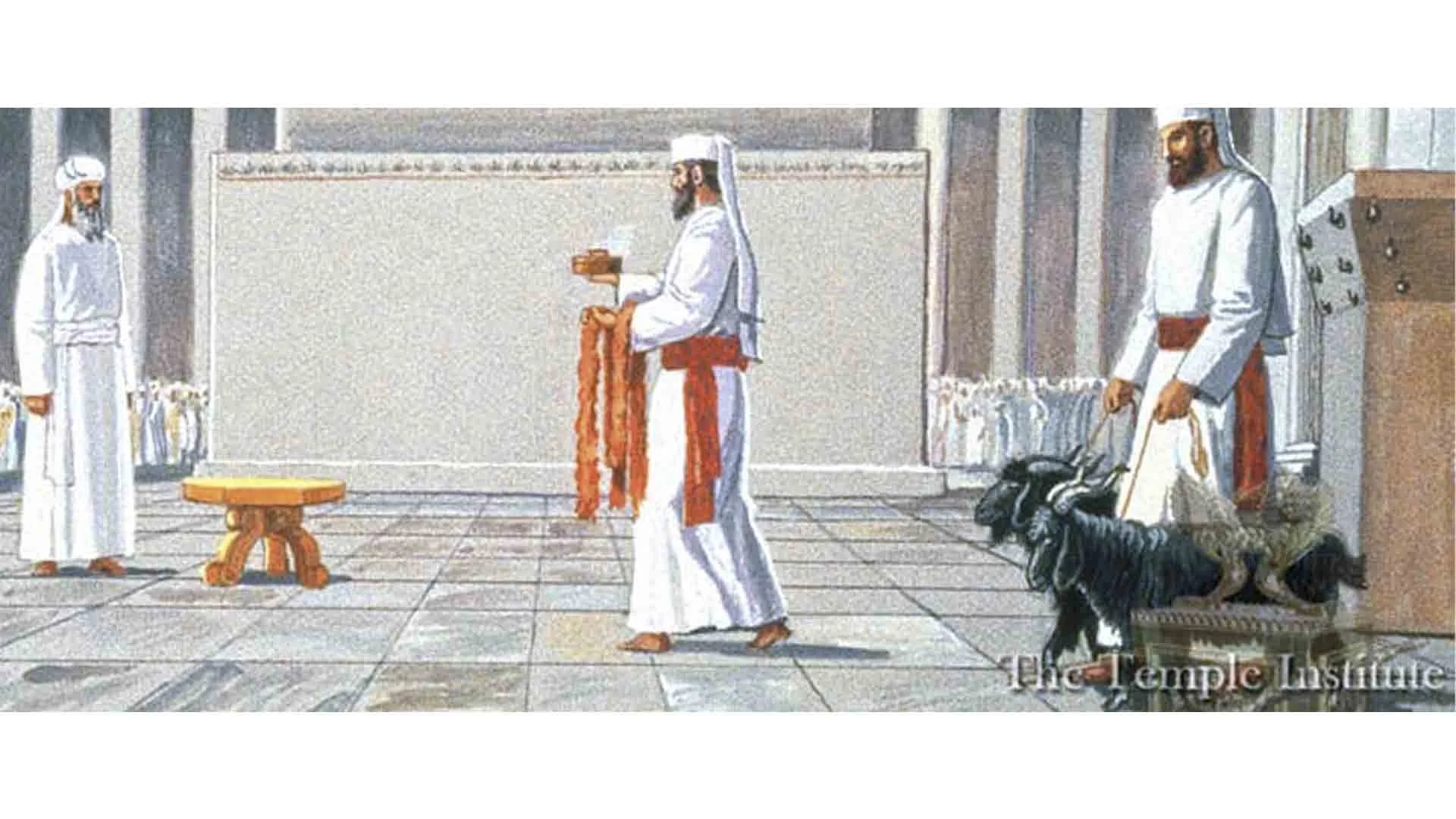
The fourth perek of Masechet Yoma begins on our daf with a portrayal of the service itself, beginning with the lottery where the kohen gadol drew lots to determine which of the goats would be sacrificed on the mizbe’ach and which would be the scapegoat, which would be sent to Azazel.

The kohen gadol stood with his assistant to his right and the head of the family of kohanim who were serving in the Temple to his left. If the lot indicating that the animal was to be sacrificed to God appeared in his right hand, the assistant would call out “raise your right hand.”

If it appeared in his left hand, the head of the family of kohanim would say “raise your left hand.”

The Gemara quotes a baraita that teaches that for the forty years that Shimon ha-Tzaddik served as the kohen gadol, the lottery always came out with the animal to be sacrificed in his right hand. After his death, it occasionally came out in the right hand and occasionally in the left.

The baraita continues with a list of other miraculous events that took place during Shimon ha-Tzaddik’s tenure and stopped after his passing.

Tags 13th
Comment

Leptadenia pyrotechnica (Hindi: खींप; Punjabi: ਿਖੱਪ) is the botanical name of a desert herb of the family Apocynaceae.

Yoma 38: Leptinemia Pyrotechnica

jyungar May 19, 2021

For the source text click/tap here: Yoma 38

To download, click/tap here: PDF

The Mishna on our daf lists individuals whose behavior was criticized by the Sages.

Among them are two families of kohanim – Bet Garmu, who were responsible for baking the lehem ha-panim (shewbread) and Bet Avtinas, who were responsible for the ketoret and succeed in creating an incense whose smoke would rise in a straight line to the heavens

The plant seen by the descendant of Bet Avtinas is referred to as ma’aleh ashan.

Although the tradition identifying this plant has apparently been lost over the centuries, the generally accepted identification is with a weed called leptadenia pyrotechnica, a plant that grows in the southern part of the Jordan Valley and in the northern Sinai.

Tags 13th
Comment

Yoma 37: Queen Helena

jyungar May 18, 2021

For the source text click/tap here: Yoma 37

To download, click/tap here: PDF

The Mishnah (late 2nd century C.E.) describes the donations of Helena and her son Munbaz (=Monbazus II), "King Monobaz had all the handles of all the vessels used on Yom Kippur made of gold. His mother Helena had a golden candlestick made over the door of the Hechal. She also had a golden tablet made, on which the portion about the Sotah was inscribed. "

Josephus in his Antiquities of the Jews, tells the story of Queen Helena of Adiabene and her sons Kings Izates II and Monobazus II, and how they converted to Judaism in the mid-first century C.E. Rabbinic literature preserves several anecdotes about this family. However, the rabbis knew little about them, and grappled with their insider/outsider status.

Her tomb was discovered by the French archaeologist Louis Félicien Caignart de Saulcy (1807–1880), who conducted the first systematic archaeological dig in Jerusalem in the middle of the nineteenth century.

Tags 13th
Comment

Nate Dendy (Ariel), Joby Earle (Ferdinand), Tom Nelis (Prospero), and Charlotte Graham (Miranda). Directed by Aaron Posner and Teller. 2014.

Yoma 36: Confessional Priorities

jyungar May 17, 2021

For the source text click/tap here: Yoma 36

To download, click/tap here: PDF

The KG leans his hands between the animal's horns, ensuring that nothing is separating between his hands and the animal, and confesses the sin for which he is bringing the sacrifice.

The Sages say that avon is intentional transgressions, as the verse says that one who transgresses will be cut off, since its avon is in it, indicating that they are intentional. Pesha is rebellious transgressions, as the verses refer to rebellions of Moav and Levana with this verb. Chata'im refer to unintentional transgressions, as indicated in the verse which refers to someone who secheta – does a chait unintentionally.

Given these definitions, how can he confess on the less severe unintentional sins, after he confessed on the intentional and rebellious ones?

Rather, he confesses chatasi, avisi, and pashati, going in ascending order of severity.

We explore the confessional and cite the majestic sicha of Rav Aharon Lichtenstein who cites Shakspeare, the greatest psychologist of the western canon: "Every time a person is confronted by God's will, Prospero's question arises: "My foot, my tutor?" (The Tempest, Act 1, Scene 2) - will he be led by his head or by his foot?

Tags 13th
Comment

The Egyptian archeological mission working in Tel al-Farma (ancient Pelusium) in North Sinai have uncovered part of a huge building dating to the Graeco-Roman Period, used as a seat for the ancient Senate.

Yoma 35: Pelusian vs Indian Linen

jyungar May 16, 2021

For the source text click/tap here: Yoma 35

To download, click/tap here: PDF

They brought the High Priest to immerse a second time in the Hall of Parva, which was in the sacred area, the Temple courtyard.

In the morning he would wear linen garments from the Egyptian city of Pelusium worth twelve maneh, 1,200 dinars or zuz. These garments were very expensive due to their high quality. And in the afternoon he wore linen garments from India, which were slightly less expensive, worth eight hundred zuz.

We will try to identify the function of the special "bigdei lavan," the white linen garments donned by the kohen gadol on this special day, referred to by the verse as "bigdei habad" - "linen clothing."

Why must the kohen change out of his standard clothing? Does this change mark a heightened spiritual quality or perhaps a lower status?

We explore the linens and their possible midrashic meaning as well as the history of Indian linen.

Tags 13th
Comment

Yoma 34: Quenching and Tempering

jyungar May 15, 2021

For the source text click/tap here: Yoma 34

To download, click/tap here: PDF

The Mishna (31b) describes the tevilah (ritual bath immersion) that is done by the kohen gadol on Yom Kippur, and closes with the comment that if the kohen gadol was elderly or particularly sensitive, they would add heated water to the water in the mikveh so that he could immerse himself more comfortably.

It was taught in a baraita that Rabbi Yehuda said: They would heat blocks of iron on Yom Kippur eve and cast them into the cold water of the ritual bath to temper its chill.

Quenching and tempering are processes that strengthen and harden materials like steel and other iron-based alloys. The process of quenching or quench hardening involves heating the material and then rapidly cooling it to set the components into place as quickly as possible. The process is tightly controlled, with the heating temperature, cooling method, cooling substance and cooling speed all dependent upon the type of material being quenched and the desired hardness.

We explore the science of quenching but also the metaphor as applied to Isa 1:25 in our YK confession.

Tags 13th
Comment

Yoma 33: Priority of Heart over Head

jyungar May 14, 2021

For the source text click/tap here: Yoma 33

To download, click/tap here: PDF

The Gemora cites Rish Lakish that one is not permitted to pass over a mitzvah and that is why the Kohen cleans the Altar before the preparation of the menorah for the Altar is closer to the entrance of the heichal. Rava (33b) states that we can learn from here regarding tefillin that the shel yad should be before the shel rosh. Rashi says that this is referring to the putting on of the tefillin for the arm comes before the head.

Rabbeinu Tam disagrees and says that it is referring to the removing and placing in the bag, that the shel rosh should be placed first in order that the next day, one should come into contact with the shel yad first. Rabeinu Eliyohu learns that it is referring to the touching of the tefillin during davening.

I cite those who see this as a conflict between the head and the heart.

Tags 13th
Comment

The prayer ʾAtah konanta ʿolam me-rosh said on Yom Kipur. Or 10476, Date of origin: 1800-1899 CE. The British Library

Yoma 32: Sequences

jyungar May 13, 2021

For the source text click/tap here: Yoma 32

To download, click/tap here: PDF

Our Daf (Yoma 32a) points out a lacuna in the Mishnah. In Mishnah 6, there is a sanctification “sandwich.” The Kohen Gadol sanctifies his hands and feet both before and after the immersion. In Mishnah 4, however, for the first immersion of the day, there is only one hand and feet sanctification. If this is the case, the math simply does not add up. At the outset, the Mishnah calls for five immersions and ten sanctifications, but in reality the total in only nine!

The Rabbanan of the gemara reply: the final sanctification takes place when he removes the sacred garments and wears his daily clothing. The long day of avodat Hashem is over and the exhausted Kohen Gadol dresses in his own regular clothing, leaving the Mikdash behind and heading home. Before that final change he sanctifies his hands and feet for the tenth time that day.

The gemara has not only resolved the mathematical “error,” but has also, in its inimitable subtle way, taught us something critical about the nature of avodat Yom HaKippurim. Sanctification of hands and feet always precedes avodat Hashem.

We examine the connection between creation and the avoda on YK with the brilliant analysis by Prof Dalia Marx.

Tags 12th
Comment

Yoma 31: Ein Eitam

jyungar May 12, 2021

For the source text click/tap here: Yoma 31

To download, click/tap here: PDF

The Mishnah (30a) teaches that the kohen gadol immersed in the mikvah five times during the course of the Yom Kippur Temple service.

All of these tevilot (immersions) took place in an office called the bet ha-parveh, except for the first one, which took place on top of the water gate, which was near the office of the kohen gadol.

Abaye comments on this that the water source for these mikva’ot, a spring called Ein Eitam, had to be 23 cubits higher than the ground level of the Temple itself.

We trace the discovered new aqueducts from the Ein Eitam spring, identified as the third of Solomon’s Pools, which is located about three kilometers south-east of Bet Lechem, not far from the present-day community of Tekoa (where the Yeshivat Hesder under the direction of Rav Steinsaltz is located).

Tags 12th
Comment

Yoma 30: Mikveh, Then and Now

jyungar May 11, 2021

For the source text click/tap here: Yoma 30

To download, click/tap here: PDF

The mishna in Yoma (30a) on our daf describes the five tevilot (immersions in a mikva) performed by the kohen gadol during the Yom Kippur avoda (beit ha-mikdash ceremonies). This represents a dramatic increase from the standard single immersion required for each kohen prior to the daily service in order to purify him and pave the way for his entering the mikdash.

Rashi explains the Mishna (the Jerusalem Talmud makes this point, as well) as referring not only to someone who entered the precincts of the Temple to perform avodah (service), but to anyone who had reason to enter the sanctuary, even if he was not planning to participate in the Temple service. Some explain that this is necessary only because a kohen who is found on the premises may be invited to participate in some aspect of the avodah, and therefore must be prepared to do so.

This leads us to an intriguing case of latter day attempts to make mikveh more appealing through the efforts of Rabbi David Miller, Even prior to his move to California, Rabbi Miller observed the abandonment of Jewish observances like Shabbos and taharas hamispachah and dedicated his life to reversing this calamity.

In the early twentieth century, Rabbi David Miller of Oakland, California dedicated himself “to the revival of the observance of niddah–tevilah–mikvah.”[He theorized that women were uncomfortable immersing in public mikvaot for reasons of hygiene or modesty. (This discomfort may have been the product of improved private bathing facilities.) His proposed solution was “a mikvah in every home.”

A successful contractor, he published reams of designs for mikvaot that (he certified) could be built cheaply and effectively by anyone and fit easily and attractively into living areas as well. They could even be disguised as cabinets or used as the frame for sofas, etc.

Tags 12th
Comment

Rembrandt - Haman Begging the Mercy of Esther

Yoma 29: Ayelet Hashachar

jyungar May 10, 2021

For the source text click/tap here: Yoma 29

To download, click/tap here: PDF

The priests mistook the light of the moon for the light of the sun and slaughtered the morning sacrifice before its time.

But how was it possible? The light of the moon shows in a column, and the light of the sun is spread out!? - It was a cloudy day.

This teaches us an additional lessons: the sun behind the clouds diffuses its heat.

The rising of the sun spread behind the clouds is compared to antlers of a morning hind . On that subject, why was Esther compared to hind? - Just as a hind has a narrow womb and is desirable to her mate every time as first one, so was Ester desirable to the king Ahasuerus constantly.

Our daf explains the verse in Psalm (22:1), לַמְנַצֵּחַ, עַל-אַיֶּלֶת הַשַּׁחַר as referring to David ha'Melech reciting this psalm as a prayer for Esther.

Rebbi Asi asks why David ha'Melech compares Esther to the "Shachar," the break of dawn. He answers thatj ust as daybreak marks the end of the night, so, too, Esther marked the end ofmiracles.

The Zohar (Beshalach 46a) reveals that immediately before dawn, the pitch-black night’s sky becomes especially overwhelming and the sun’s light must penetrate that thick darkness.

Tags 12th
Comment

Yoma 28: The Torah before the Torah

jyungar May 9, 2021

For the source text click/tap here: Yoma 28

To download, click/tap here: PDF

When God reveals Himself to Isaac with the blessing of the covenant, He tells him that He is doing so: “because Abraham hearkened to My voice, and kept My charge, My commandments, My statutes, and My laws” (Genesis 26:5).

Our Daf (Yoma 28b) interprets this verse to imply that Abraham performed the Torah entirely, both written and oral, including rabbinic enactments made thousands of years later.

The Midrash expands such observance to include all the patriarchs, and indeed, all the leaders of the nation who preceded the giving of the Torah.

We examine the history of the idea that Avraham Avinu instituted Mincha and even kept Eruv Tavshilin.

We look at the Nesivos Sholom's mystical insight as to intuiting Torah in his introduction to his majestic commentary to Genesis. (Akdomus Milin 3)

Tags 12th
Comment

Painting from the Temple of the Palmyrene Gods mixes Greek, Roman, and Palmyrene elements. It was commissioned by the Roman commander at Dura-Europos, Julius Terentius, identified by a Latin inscription in the center. He performs a sacrifice in front of a military standard, and soldiers stand behind him. The two labeled female figures seated at the lower left personify the cities of Dura and Palmyra. The three male statues in the upper register may represent either Palmyrene gods or deified Roman emperors.

Yoma 27: Non Priests and Sacrifices

jyungar May 8, 2021

For the source text click/tap here: Yoma 27

To download, click/tap here: PDF

The Gemara sees this as a proof that the nisukh ha-mayim was done in the morning, since the people were all carrying their etrogim. The background to this story involves the different sects that lived during the second Temple period and their approaches to the Oral Law taught by the Sages. Many of the kohanim were Tzedukim, who did not accept the traditions of the Sages. Unlike nisukh ha-yayin – the wine libation – which is clearly written in the Torah, the nisukh ha-mayim – the water libation – was a tradition handed down from Moshe on Mount Sinai, and it was not accepted by the Tzedukim.

The particular story referred to in our Gemara, is described in great length in Josephus. According to him, the individual who poured the water on his feet rather than on the altar was a Hasmonean king, Alexander Yannai, who rejected the teaching of the Sages. After the people – who supported the interpretation of the Sages – pelted him with etrogim, the king summoned the non-Jewish guard, and they killed many of the people who were on the Temple grounds.

Tags 12th
Comment

Yoma 26: Sadducee Priests and the Water Libation

jyungar May 7, 2021

For the source text click/tap here: Yoma 26

To download, click/tap here: PDF

The Gemara sees this as a proof that the nisukh ha-mayim was done in the morning, since the people were all carrying their etrogim.The background to this story involves the different sects that lived during the second Temple period and their approaches to the Oral Law taught by the Sages.Many of the kohanim were Tzedukim, who did not accept the traditions of the Sages. Unlike nisukh ha-yayin – the wine libation –which is clearly written in the Torah, the nisukh ha-mayim – the water libation – was a tradition handed down from Moshe on Mount Sinai, and it was not accepted by the Tzedukim.

The particular story referred to in our Gemara, is described in great length in Josephus. According to him, the individual who poured the water on his feet rather than on the altar was a Hasmonean king, AlexanderYannai, who rejected the teaching of the Sages. After the people – who supported the interpretation of the Sages – pelted him with etrogim, the king summoned the non-Jewish guard, and they killed many of the people who were on the Temple grounds.

Tags 12th
Comment

The Torah Shrine at Deura Europas

Yoma 25: Kiyor

jyungar May 6, 2021

For the source text click/tap here: Yoma 25

To download, click/tap here: PDF

Our Daf Yoma 25 inquires: Who receives the blood? Do we say that he who slaughtered it receives it, for if you were to say that the one who throws the blood receives it, perhaps in his enthusiasm (to throw the blood), he may not receive the whole blood; or does the thrower receive it, for if you were to say that he who slaughters the animal receives the blood, occasionally a non-Kohen slaughters the animal?

The Gemora resolves this from the following braisa:

B Ben Katin made twelve spouts for the Kiyor, so that his twelve brethren, the Kohanim, who are involved with the tamid offering, may simultaneously wash their hands and feet. Now, if you were to think that he who slaughters the animal also receives its blood, there would be thirteen. Must we not therefore infer from there that he who throws the blood receives the blood? This indeed proves it.

We will be meeting this Ben Katin in the next perek but for now we examine the Kiyor and its metaphorical significance for our spiritual journey.

Tags 12th
Comment

Yoma 24: Commotion on the Floor

jyungar May 5, 2021

For the source text click/tap here: Yoma 24

To download, click/tap here: PDF

בְּרָֽגֶשׁ : an ambivalent expression to say the least!

The term is used alternatively translated as thong, multitude, bustle, restlessness, company and excitement and feeling and even “fear and dread”!

In our daf Why do they make a lottery and then return to make another lottery?

R’ Yochanan said that it was to cause a commotion in the Azarah, as the pasuk ( Ps 55:15) states: Together we take sweet counsel, In the house of Hashem we walk with excitement. (Beregesh)

This leads to the NETZIV's psychological insight into commotion as distracting the KG and its going to his head....

Tags 12th
Comment

Yoma 23: Murder on the (Oriental) Altar Ramp

jyungar May 4, 2021

For the source text click/tap here: Yoma 23

To download, click/tap here: PDF

Our Daf (Yoma 23) cites a braisa: It once happened that two Kohanim were even as they ran and ascended the ramp, and when one of them came first within four amos of the altar, the other took a knife and thrust it into his heart. The father of the boy, i.e., the young priest who was stabbed, came, and found that he was still convulsing. He said: May my son's death be an atonement for you. But my son is still convulsing and has not yet died, and as such, the knife, which is in his body, has not become ritually impure through contact with a corpse. If you remove it promptly, it will still be pure for future use. The Tosefta comments: This incident comes to teach you that the ritual purity of utensils was of more concern to them than the shedding of blood. Even the boy's father voiced more concern over the purity of the knife than over the death of his child.

We explore this horrific tale from the perspective of the Tosefta as well as modern feminist literary perspectives.

Tags 12th
Comment

Yoma 22: Census and Censure

jyungar May 3, 2021

For the source text click/tap here: Yoma 22

To download, click/tap here: PDF

The Mishnah discusses the Payis, the drawing of the lots, that was performed each day in order to select the Kohen who would perform the Terumas ha'Deshen. The Mishna on our daf teaches that there was a race every morning in the Temple, as all of the kohanim interested in performing the terumat ha-deshen would line up and race up the ramp to the top of the altar. The one who arrived first had the honor of cleaning the ash. Due to injury the lottery was instituted.

This leads to an objection in counting the priests since It is prohibited to count Jews directly, even for the purposes of a mitzva, as it is written concerning King Saul and his count of his soldiers.

Bringing us to a discussion of the Census Taboo and the resistance even in the modern State of Israel to census compliance by the gedolim...

Tags 12th
Comment

Yoma 21: Ten Miracles

jyungar May 2, 2021

For the source text click/tap here: Yoma 21

To download, click/tap here: PDF

It is so ironic we learn about the miracle of the expanding space of the temple following the tragedy of Meron where people were crushed …..may their memory be for a blessing...

Rav Yehuda said in the name of Rav, “When they stood, they were extremely crowded, but when they bowed down they had a lot of room.”

This was one of the ten miracles that that Hashem did in the era of the First Beit Hamikdash — some of which were in the Beit Hamikdash and some of which were in Jerusalem. The mishna in Pirkei Avot (5:5) lists all ten miracles. The one referenced on our daf is the miracle that “They stood crowded but had ample space in which to prostrate themselves.”

Although these are all described as miracles, in his commentary on Aggada, Shem-Tov ibn Shaprut argues that they can all be explained rationally.

Tags 12th
Comment

The massive HAARP antenna, covering 33 acres, can beam 3.6 million watts of radio signal into the ionosphere

Yoma 20: The Sounds of Gavini and Silence

jyungar May 1, 2021

For the source text click/tap here: Yoma 20

To download, click/tap here: PDF

Our Daf is concerned with the Temple Crier gavini who could be heard 3 parssangs (8miles) from the Temple. The mishna (Tamid) speaks of 6 sounds that could also be heard that far emanating from the Temple. Even Agrippa was so enamored he sent him gifts! To which Rabbi Levi comments on a verse from Daniel to prove why sound carries less by day than by night.

Leading us to examine the "Luxembourg effect" as well as a recent contemporary exhibit on sound and silence.

While studying this daf, the memories of Simon and Garfunkel's "Sounds of Silence" inexplicably haunted me, as I followed the horrific news of the tragedy in Meron.

In the iconic lyric: Hello darkness, my old friend / I’ve come to talk with you again. The author has no one to talk to but the dark, to whom he tells, almost like a confession, about a dream he had. The first theme of the ‘vision’ is loneliness: the narrator finds himself walking alone on a narrow path, when the cold night is suddenly lit up by the flash of a neon light; he is dazzled by it, and we are told that the glare is icy, naked and unnatural. The neon conveys an idea of cold modernity, serving as a symbol for present-day industrial society, which has replaced the traditional warmth of the fireplace, bearer of communion and togetherness, with the impersonality of artificial light.

Tags 12th
Comment
  • Daf Ditty
  • Older
  • Newer

Julian Ungar-Sargon

This is Julian Ungar-Sargon's personal website. It contains poems, essays, and podcasts for the spiritual seeker and interdisciplinary aficionado.​