
For the source text click/tap here: Pesachim 42
To download, click/tap here: PDF
The “Wise Men” of Papunya.
Daf Ditty
A wide-ranging commentary on the daily page of Talmud.

Cilicia is a geo-cultural region in southern Turkey, extending inland from the northeastern coasts of the Mediterranean Sea. Cilicia has a population of over six million, concentrated mostly at the Cilicia plain. The region includes the provinces of Mersin, Adana, Osmaniye, and Hatay.
The “Wise Men” of Papunya.

Prefiguring later laws of cooking the Passover lamb itself, which will be discussed in totality later, the Talmud gives a few rules here. One should not cook it in water or in any other liquid, but only roast it on fire. However, once it is roasted, he can baste it or eat it with relishes.
The use of Chamei Teverya the Hot Springs of Tiberias (remember in Shabbes 38?) this time leading us to the use on Shabbes of solar power,solar panels and the controversy over the use of the Dud Shemesh.

Matzah dough is rolled into thin, round discs before it is perforated and baked. Every 15 minutes at the Satmar Bakery in Brooklyn, the work ceases while all surfaces are scoured or replaced, and all hands are washed to remove stray bits of dough. (Uriel Heilman)
Ex 12:!5
וּשְׁמַרְתֶּם, אֶת-הַמַּצּוֹת
These 3 words triggers the prooftext for sh'mura matza and our attempt to follow the mesorah leading to the interesting phenomena of reform Jews participating in this chumra!

Rhododaphne Oleander
Our Daf is in the process of identifying the species which is referred to as “מרור “(Ex 12:8) for fulfillment of the Torah’s mitzvah to consume it on Pesach.[1]
The Mishnah and Baraisa provide an extensive list of vegetables which qualify for this mitzvah. Among them is horseradish, romaine lettuce, endives, palm ivy or succory.
The Gemara then suggests an additional species, hirduf— a piece of wood (possibly oleander bush, an evergreen shrub, the type thrown into the water at Marah by Moshe to miraculously sweeten the water)—for consideration as maror.
This species is identified by Rashi as ruscus, however more likely the species of Rhododaphne Oleander and how Mad Honey stopped Pompey’s army.

The Magen Avraham (471:5) deduces from our Gemora that if a person uses mostly fruit juice and some water as the liquids with which he makes his matzah, he does not fulfill the mitzvah of matzah in any way with this matzah.
The halachot of Matza Ashira are reviewed leading to the extraordinary manage among Lisker chassidim to refrain from
Matzo during Pesach!

In explanation of this baraita, one suggestion that is raised (either by Rav or by Rabbi Yehuda haNasi) is that pat ava does not mean to bake a thick cake; rather it means to bake a large amount at one time. The Gemara points out that if we understand pat ava this way, the potential problem would not be specific to Pesaḥ, but it is a general issue of possibly baking unnecessarily on Yom Tov.
Rabbenu Yehonatan explains that if this is, in fact, the point of disagreement, Beit Shammai forbids it lest some of the bread or matza will be left over and will be used after Yom Tov is over, creating a situation where preparations for the regular weekday were done on the holiday. Beit Hillel would argue that the baking process works better when a large amount is baked, so having leftovers is of no concern.
These concerns lead to the discussion of the shape of Matza, round vs square and the 19th century controversy over machine matzot.

If this bread, kneaded with milk, is prepared in the shape of an ox’s eye, it is permitted. In other words, if one forms this dough in a unique shape, e.g., the eye of an ox, one may eat it, as it is clearly distinguishable from ordinary bread. Therefore, there is no concern that it will be eaten with meat. However Rashi implies the eye of the ox is a measure of size…not the shape of the bread (like an ox)
The ey of an ox or bull…leads us to ponder Zen and the art of archery and the “zuboshi” or bulls eye

Eight hundred years after the custom began the consensus among the Ashkenazi rabbis about the relevance of the prohibition of eating kitniyot has, for the first time, been broken: The rabbis of the “Religious Court of Machon Shilo” have published a ruling that allows Ashkenazim living in Israel to cease the custom.
In a ruling that was published a few days ago, the rabbis of the institute, David Bar-Hayim, Yehoshua Buch, and Chaim Wasserman, claim that citizens of Israel are neither Ashkenazim or Sephardim (Jews of Spanish or North African descent), rather they are “Jews of Eretz Yisrael”, and therefore they should abide by the custom of the land and not by former customs.
Kitniyot represents that fault line between the past and the future and a litmus test of sorts.

As a medical student (like Keats) I often walked Hampstead Heath this wonderful green patch in the middle of London’s NW boroughs. I would go to Keats house where he lived for two years before going to Rome. I was drunk with the British 19th century romantic poets who understood the fragility of life and the intoxication of romance yet also a sense of the sublime.

Apparently, Rabbi Yohanan holds: The liquid is stored inside the grape, as the juice is not considered to be part of the grape itself but rather stored in the grape as though contained in a receptacle.
Rav Hisda believes that the juice is mivla beli’i – that the juice and the grape are a single entity, so that when the grape becomes tameh, the entire unit becomes defiled.
This disagreement about whether the juice contained within fruit is part of the fruit or a separate entity (incidentally, the same disagreement exists with regard to blood within the human body, under certain circumstances) is not so much a question of the physical reality of the situation as it is how we perceive the relationship. The question is whether the liquid that is pressed out of the fruit (or the body) was independent and is now simply being removed, or if squeezing it out affects a real change in the liquid.
This notion of the juice in the grape or the blood in the body opens up the legal definition of different forms of matter within one organism, and leads us to the chemistry of grape juice, grape skins and taste.

The Mishna (31b) teaches that if the teruma was hametz (i.e. it had been baked into bread), and it was accidentally eaten on Pesaḥ, the person who ate it needs to pay its value together with the penalty – even though hametz on Pesaḥ is ordinarily considered to have no value.
Steinzaltz (OBM) writes that our daf’s argument between Abba Shaul and the chachamim can be explained by a Yerushalmi where the Tanna Kamma understands giving the “holy thing” to the kohen as commanding that a minimum amount (a ka-zayit) must be given to the kohen; only then will the penalty be in place. Abba Shaul understands that the “holy thing” given is the penalty for misusing the teruma itself.
Bezalel Naor, my friend has made significant contributions to the scholarship of Hassidut, and the brilliant insight Rav Kook brought to explain our sugya from the Yerushalmi (cited by Steinzaltz (OBM) above, led us to discuss a recent publication...Pinkesei haRa’ayah.
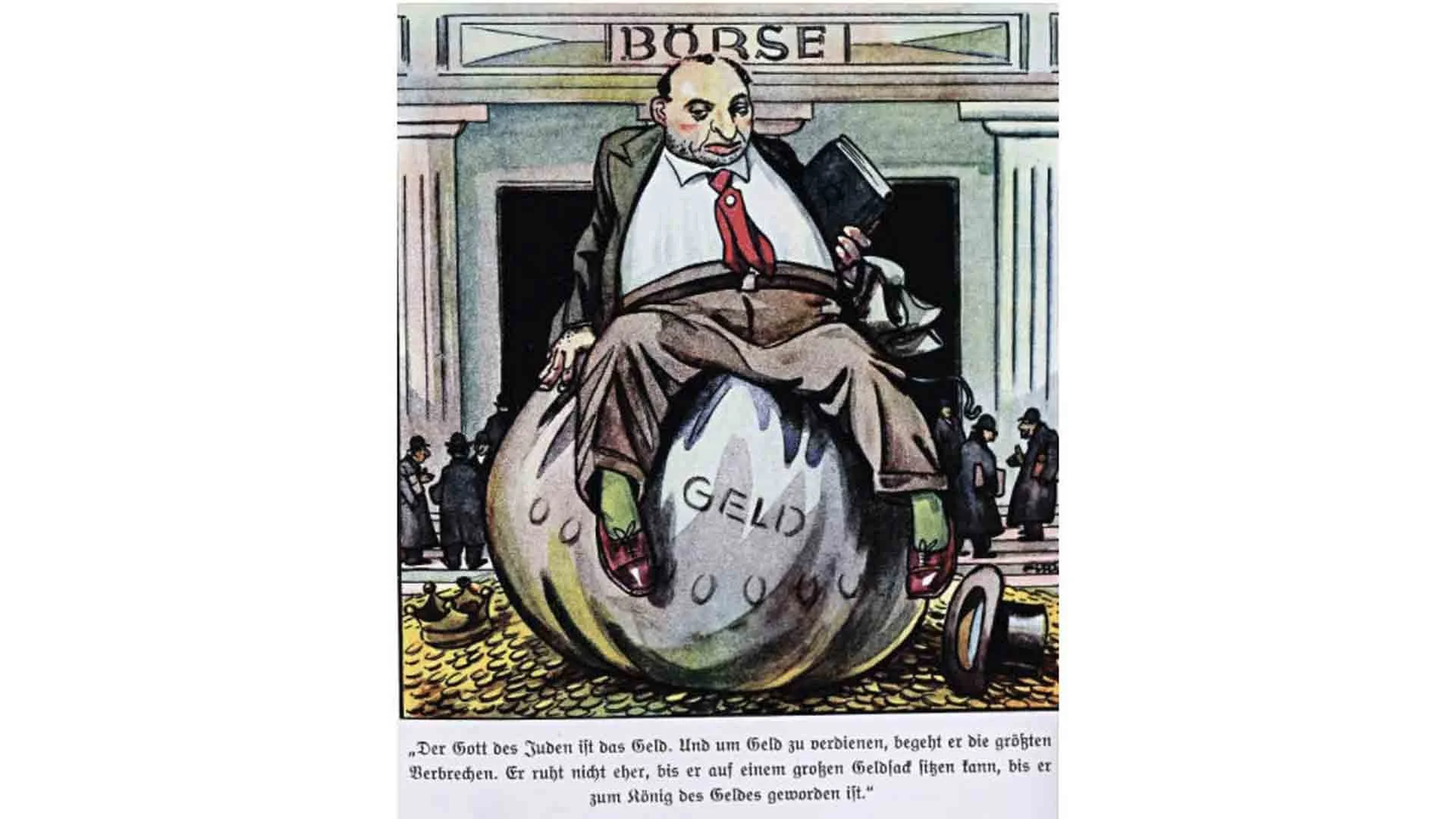
A Jew borrowed money from a non-Jew, and left some chametz (think whiskey or vodka) in the non-Jew’s house as a collateral. If after Passover the Jew defaults on the loan, the non-Jew remains in the possession of the chametz as a repayment. We therefore can say that the chametz was already in non-Jewish hand on Passover retroactively, and now it is not forbidden for use.
By contrast, if it was a non-Jew who borrowed the money and left his chametz in the Jewish house, then, if after Passover the non-Jew defaults on his loan, the chametz becomes Jewish retroactively, and is therefore forbidden for use, as chametz owned by a Jew on Passover.
This leads us to the notion of moneylending and the fraught relationship between the Jew and the Aristocracy of Europe in financing among other, things its wars.

However, some things "never" become batel; they are assur even b'mashehu, that is, even in the smallest amount. The classic example of this is chametz which is assur even in the minutest proportions.
THIS REMINDS ME OF HOMEOPATHY! AND AVOGADRO'S LIMIT...
AND JOBI'MS "THE WATERS OF MARCH"

A mosaic of Hercules with pet Cerberus. (snarl)

Used to punish people for crimes such as swearing or drunkenness. Criminals would sit or stand at a wooden frame and the local people would throw rotten
food or even stones at them. The stocks and pillory were used as a punishment throughout the 16th and 17th centuries. Their use declined in the 18th century. It is thought that the
last time the stocks were used in the UK was in 1872 in Newcastle Emlyn.

The Netziv turns our notion of chametz/matza on its head
What is the symbolism that leaven and unleaven represent in the Temple?
Leaven represents fulfillment, a process which has gone its due course. The ultimate and supreme form of flour and water is a leavened loaf.
Unleaven, on the other hand, is "not yet" what it aspires to be; it figuratively represents the beginning of a yet-unfulfilled process. It is presently immature and unripe. It is in the early stages of a journey.

Consider a case where one is planning to do something permitted, but in the course of it an additional forbidden pleasure comes his way. For example, he plans to travel to a certain destination, but on his way there is an idolatrous temple, from which there comes a fragrant smell of idolatrous spices. Should one avoid this nevertheless?

Not only is it forbidden to eat hametz during Pesah, deriving other benefit from it is prohibited as well. In order to develop a deeper understanding of the relationship between eating and deriving benefit from forbidden foods, the Gemara compares hametz to other things forbidden by the Torah, including basar be-halav (meat and milk) and kilei ha-kerem (wheat grown in a vineyard).
One point the Gemara makes very clearly is that in a case of piku’ah nefesh – of danger to human life – we dispense with all of these rules.
Similar to the sugya in Sanhedrin 74, the logic of "whose blood is redder" is examined including the famous diyuk of Reb Chaim of Brisk


Governments, international agencies and health systems have an obligation to ensure, to the best of their ability, adequate provision of health care for all.
However, this may not be possible during a pandemic, when health resources are likely to be limited.
Our daf discusses the halacha of “Lifne Iver” prompting a review of talmudic ethics in various modern scenarios ending with COVID vaccination distribution.