Julian Ungar-Sargon

  • Home
  • Theological Essays
  • Healing Essays
  • Podcast
  • Poetry
  • Daf Ditty
  • Deep Dive Ditty
  • Videos
  • Publications
  • Military Service
  • Dominican University
  • Home
  • Theological Essays
  • Healing Essays
  • Podcast
  • Poetry
  • Daf Ditty
  • Deep Dive Ditty
  • Videos
  • Publications
  • Military Service
  • Dominican University
Julian Ungar-Sargon copy 3.jpg

Daf Ditty

A wide-ranging commentary on the daily page of Talmud.

This diagram illustrates the timeline of retrograde and anterograde amnesia. Memory problems that extend back in time before the injury and prevent retrieval of information previously stored in long-term memory are known as retrograde amnesia. Conversely, memory problems that extend forward in time from the point of injury and prevent the formation of new memories are called anterograde amnesia.

Pesachim 12: Witness Memory Flaws

jyungar December 3, 2020

For the source text click/tap here: Pesachim 12

To download, click/tap here:  PDF

Only one who is expert in keeping time will come to testify regarding a capital case as he is aware that the court will interrogate him. Regarding chametz, however, although everyone must stop eating chametz at the end of the sixth hour, not everyone is an expert at determining the correct time.

This idea of testimony being more accurate leads us to examine memory and testimony and the neurology of recording time.

Tags 7th
Comment

Pesachim 11: A Knotty Situation

jyungar December 2, 2020

For the source text click/tap here: Pesachim 11

To download, click/tap here:  PDF

A difference between a permanent knot and an a slipknot (aniva) leads us to a review of probability theory to explain The difference of halachic opinion regarding tying or untying knots on Shabbat

Tags 7th
Comment

Pesachim 10: Springmaus/Jerboa

jyungar December 1, 2020

For the Source text, click/tap here: Pesachim 10

To download, click/tap here: PDF

The Gemara differentiates between the Chulda (marten) on Daf 9 and the Achbar the common mouse whose genetics elsewhere (chullin/Sanhedrin) is described as half animal half earth on our daf. This mud mouse could not procreate and has been described by others in antiquity including Aristotle, Ovid and Averroes.

Tags 7th
Comment

Pesachim 9: Hulda

jyungar November 30, 2020

For the source text click/tap here: Pesachim 9

To download, click/tap here: PDF

When imagining the ancient rabbis discussing issues of profound religious importance, we may be inclined to imagine them to be solemn or somber, especially while debating the one of the most severe biblical commandments: to eliminate leavened food from our households on Passover. Rava’s word play and humor remind us that while studying Torah is a serious endeavor, it’s also fun — and sometimes it’s even sarcastic!

Tags 7th
Comment

Pesachim 8: Envoys Protected

jyungar November 29, 2020

For the source text click/tap here: Pesachim 8

To download, click/tap here: PDF

In our Daf we explore the concept of envoys in pursuit of a Mitzvah are not harmed:

Screen Shot 2020-11-27 at 2.32.55 PM.png

And how far does this extend in light of the recent Halachick discussion about yeshiva students during the pandemic and yesterday’s Supreme Court ruling on prayer and uses of worship during the pandemic.

Tags 7th
Comment

Pesachim 7: 10 Crumbs

jyungar November 28, 2020

For the source text click/tap here: Pesachim 7

To download, click/tap here: PDF

The Arizal himself had a custom to scatter ten pieces of bread before his search. Some poskim explain that the reason for this practice is so that some ĥametz will remain after the search, and thus one will not forget to nullify his ĥametz. [1]

I have suggested that the 10 pieces of bread represent the 10 dark sides of the sefirot that are hidden behind our facades of light. “there is no light without darkness” the Zohar tells us. Since leaven represents the “ferment of base desires” the search for these 10 crumbs dramatizes the need to look in the hidden places of our inner psychic homes to expose by the candle/light of the soul, before the drama of the Seder and the deliverance.

clip_image001.png

And he searched, beginning with the oldest, [so that they not suspect him of knowing where it was], and finishing with the youngest, and the goblet was found in Benjamin's sack.

Gen 44:12

clip_image003.png

He replied “we have here brothers who sold their own brother” meaning “who are you to talk about thievery!

For the Zohar and the ARI z’l, the betrayal and sale of Joseph becomes a recurring theme throughout Jewish history and the cause of the (protracted) exile.

I think the use of this prooftext about Benjamin reflects the deeper notion that each Pesach we search for the 10 crumbs, we search for the “ferment of base desires” the leavening of ego and self promotion, in fact we are searching for the soul of the brothers, to fix the ongoing betrayal of self and others in the pursuit of ego and its desires.

Tags 7th
Comment

Pesachim 6: אין מוקדם ומאוחר בתורה

jyungar November 27, 2020

For the source text click/tap here: Pesachim 6

To download, click/tap here: PDF

Tags 7th
Comment

Pesachim 5: Napoleon and the Rebbes

jyungar November 26, 2020

For the source text click/tap here: Pesachim 5

To download, click/tap here: PDF

Our Daf relates the reward of firsts including being told the name of Moshiach (Menachem)
This propelled a historical review of Napoleon’s messianic ambition and the response of the Rebbes
(split) through hagiographical stories. Recent scholars and the fall of the Soviet Union has opened archives which
challenge the century old assumptions about that fateful Rosh Hashonoh 1812

Tags 7th
Comment

Pesachim 4: Ne'emanut Isha

jyungar November 25, 2020

For the source text click/tap here: Pesachim 4

To download, click/tap here: PDF

Tags 7th
Comment

Rebecca Meets Isaac by the Way, James Tissot (c. 1896–1902)

Pesachim 3: Refined Speech

jyungar November 24, 2020

For the source text click/tap here: Pesachim 3

To download, click/tap here: PDF

Tags 7th
Comment

Pesachim 2: The Light of the Fourteenth

jyungar November 23, 2020

For the source text click/tap here: Pesachim 2

To download, click/tap here: PDF

Tags 7th
Comment

Eruvin 105: HADRAN

jyungar November 22, 2020

For the source text click/tap here: Eruvin 105

To download, click/tap here: PDF

Before COVID (BC!) I would pay visits (homage) to Prof Weiss-Halivni in his apartment in Wolfson (Jerusalem). A widower his apartment was spartan (the absence of a woman’s touch apparent). It was spotless and almost bare of clutter. He sat at his dining room table with a few folios of the talmud in front of him and a pencil and writing pad.

I was told he was an iluy in Chaim Berlin Yeshiva and Rav Hutner kept him away from the regular shiurim to cultivate him. Then Prof Saul Lieberman saw his brilliance and “stole” him to the Seminary.

I was taken by the honesty of his autobiographical writing and his ascetic 24/7 study of our sacred texts WITHOUT the piety and pomposity that accompanies those who wear their learning on their sleeves and make you feel like an am Haaretz. His humility shines through.

Like a child he recalled recently how “5 yeshiva bochurim form the Mir came on Tisha B’av to his apartment to understand his method in learning! From the Mir! At this age he reveled in the validation from the frum yeshiva world albeit from these bochurim.

Ah we are cursed with the looking over our charedi shoulder for validation no matter how great!!!

Tags 7th
Comment

Eruvin 104: The Sound of (Shabbes) Music

jyungar November 21, 2020

For the source text click/tap here: Eruvin 104

To download, click/tap here: PDF

Confession

I was walking on West End Ave one summer erev Shabbat and had some time befor attending Kabbalat Shabbat at my father in law’s shul (Young Israel of the West Side). I past 86th street where Bnei Jeshurun would hold services earlier and saw throngs of people standing in line to enter. What was so attractive about this shul (other than the location of the movie “Keeping the Faith”?

I wondered in to see some 800 people davening together. There was music to accompany the Carlebach melodies, there was a silent moment before Kriyat Sh’ma where you could hear a pin drop, there was dancing after Lecha Dodi…I had never heard musical instruments before during a Shabbat service. I found myself weeping.

What had happened to orthodoxy? Why was this alive in ways I had never experienced before? I was overcome with grief.

How had we come to this place in time and history?

I present some historical framing below as a balance to the Rishonim quoted above.

Tags 7th
Comment

Eruvin 103: Papyrus, Bandaging, Despair

jyungar November 20, 2020

For the source text click/tap here: Eruvin 103

To download, click/tap here: PDF

The Soul has Bandaged moments -

When too appalled to stir -

She feels some ghastly Fright come up

And stop to look at her -

Tags 7th
Comment

Eruvin 102: The Fedora

jyungar November 19, 2020

For the source text click/tap here: Eruvin 102

To download, click/tap here: PDF

Tags 7th
Comment

Allegorical depiction of the Four Seasons (Horae) and smaller attendant figures that flank a Roman double-doorway representing the entrance to the afterlife, on a mid-3rd century AD sarcophagus

Eruvin 101: Hinged and Unhinged

jyungar November 18, 2020

For the source text click/tap here: Eruvin 101

To download, click/tap here: PDF

Tags 7th
Comment

Eruvin 100: Animal Morality

jyungar November 17, 2020

For the source text click/tap here: Eruvin 100

To download, click/tap here: PDF

Unfortunately, I am too much of a historicist and learn nothing about “truth” for the sacred texts cited and the learned discussion above. Spirit for me, is so incarnated in this beautiful cosmos as it unfolds that these texts, albeit sacred, reveal more about their authors than about what is out there.

If postmodern reading means anything, it taught me to see my own biases in these texts, and thus a mirror of myself and my reading practices and (lack of) mastery of the entire corpus of rabbinic literature.

When it comes to nature and morality or nature and Torah, these are cultural constructions we have built, however magnificent the edifices, and are just that. What is my connection with the animal world? DO I learn anything moral from an animal? How absurd! I must move away from these literal readings for them to still make sense.

Which brings me to the fantasy world of Rebbe Nachman who uses animals as tropes of the imagination as we shall see below.

Tags 7th
Comment

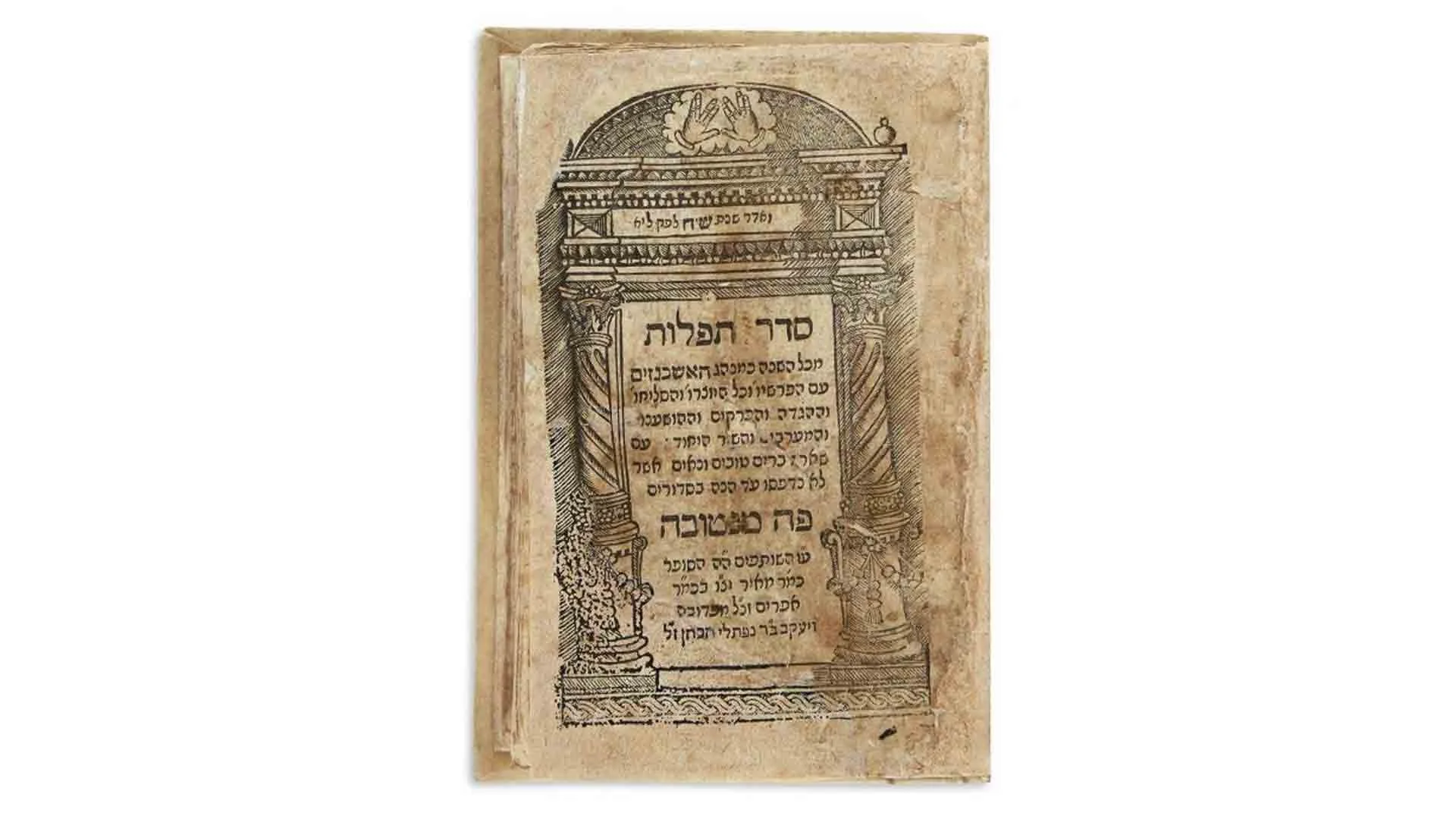
Mantua: Venturino Roffinello for Jacob ben Naphtali Hakohen & Meir b. Ephraim of Padua 1558

Eruvin 99: Kumen Tsum Oysshpayen in Aleinu

jyungar November 16, 2020

For the source text click/tap here: Eruvin 99

To download, click/tap here: PDF

Tags 7th
Comment

The Torah Scroll in the Delivery Room: “Ceremonies for Woman in Labor and Confinement”—from P.C. Kirchner, Jüdisches Ceremoniel, Nuremberg, 1724

Eruvin 98: Scrolls and Magic

jyungar November 15, 2020

For the source text click/tap here: Eruvin 98

To download, click/tap here: PDF

Tags 7th
Comment

Eruvin 97:A Knotty Problem

jyungar November 14, 2020

For the source text click/tap here: Eruvin 97

To download, click/tap here: PDF

Tags 6th
Comment
  • Daf Ditty
  • Older
  • Newer

Julian Ungar-Sargon

This is Julian Ungar-Sargon's personal website. It contains poems, essays, and podcasts for the spiritual seeker and interdisciplinary aficionado.​