


Eruvin 105: HADRAN
For the source text click/tap here: Eruvin 105
To download, click/tap here: PDF
Before COVID (BC!) I would pay visits (homage) to Prof Weiss-Halivni in his apartment in Wolfson (Jerusalem). A widower his apartment was spartan (the absence of a woman’s touch apparent). It was spotless and almost bare of clutter. He sat at his dining room table with a few folios of the talmud in front of him and a pencil and writing pad.
I was told he was an iluy in Chaim Berlin Yeshiva and Rav Hutner kept him away from the regular shiurim to cultivate him. Then Prof Saul Lieberman saw his brilliance and “stole” him to the Seminary.
I was taken by the honesty of his autobiographical writing and his ascetic 24/7 study of our sacred texts WITHOUT the piety and pomposity that accompanies those who wear their learning on their sleeves and make you feel like an am Haaretz. His humility shines through.
Like a child he recalled recently how “5 yeshiva bochurim form the Mir came on Tisha B’av to his apartment to understand his method in learning! From the Mir! At this age he reveled in the validation from the frum yeshiva world albeit from these bochurim.
Ah we are cursed with the looking over our charedi shoulder for validation no matter how great!!!

Eruvin 104: The Sound of (Shabbes) Music
For the source text click/tap here: Eruvin 104
To download, click/tap here: PDF
Confession
I was walking on West End Ave one summer erev Shabbat and had some time befor attending Kabbalat Shabbat at my father in law’s shul (Young Israel of the West Side). I past 86th street where Bnei Jeshurun would hold services earlier and saw throngs of people standing in line to enter. What was so attractive about this shul (other than the location of the movie “Keeping the Faith”?
I wondered in to see some 800 people davening together. There was music to accompany the Carlebach melodies, there was a silent moment before Kriyat Sh’ma where you could hear a pin drop, there was dancing after Lecha Dodi…I had never heard musical instruments before during a Shabbat service. I found myself weeping.
What had happened to orthodoxy? Why was this alive in ways I had never experienced before? I was overcome with grief.
How had we come to this place in time and history?
I present some historical framing below as a balance to the Rishonim quoted above.

Eruvin 103: Papyrus, Bandaging, Despair
For the source text click/tap here: Eruvin 103
To download, click/tap here: PDF
The Soul has Bandaged moments -
When too appalled to stir -
She feels some ghastly Fright come up
And stop to look at her -

Eruvin 102: The Fedora
For the source text click/tap here: Eruvin 102
To download, click/tap here: PDF

Allegorical depiction of the Four Seasons (Horae) and smaller attendant figures that flank a Roman double-doorway representing the entrance to the afterlife, on a mid-3rd century AD sarcophagus
Eruvin 101: Hinged and Unhinged
For the source text click/tap here: Eruvin 101
To download, click/tap here: PDF

Eruvin 100: Animal Morality
For the source text click/tap here: Eruvin 100
To download, click/tap here: PDF
Unfortunately, I am too much of a historicist and learn nothing about “truth” for the sacred texts cited and the learned discussion above. Spirit for me, is so incarnated in this beautiful cosmos as it unfolds that these texts, albeit sacred, reveal more about their authors than about what is out there.
If postmodern reading means anything, it taught me to see my own biases in these texts, and thus a mirror of myself and my reading practices and (lack of) mastery of the entire corpus of rabbinic literature.
When it comes to nature and morality or nature and Torah, these are cultural constructions we have built, however magnificent the edifices, and are just that. What is my connection with the animal world? DO I learn anything moral from an animal? How absurd! I must move away from these literal readings for them to still make sense.
Which brings me to the fantasy world of Rebbe Nachman who uses animals as tropes of the imagination as we shall see below.
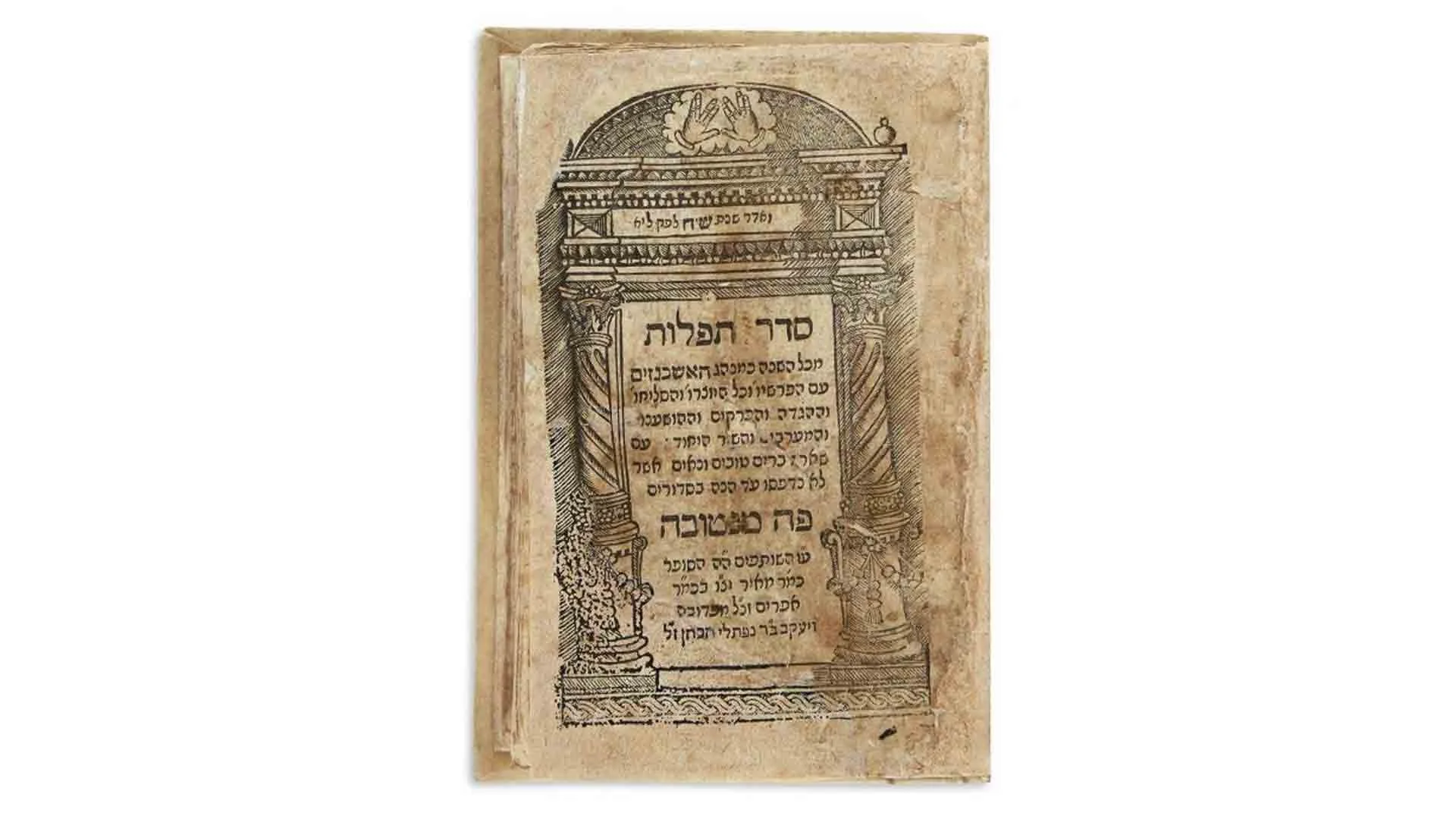
Mantua: Venturino Roffinello for Jacob ben Naphtali Hakohen & Meir b. Ephraim of Padua 1558
Eruvin 99: Kumen Tsum Oysshpayen in Aleinu
For the source text click/tap here: Eruvin 99
To download, click/tap here: PDF

The Torah Scroll in the Delivery Room: “Ceremonies for Woman in Labor and Confinement”—from P.C. Kirchner, Jüdisches Ceremoniel, Nuremberg, 1724
Eruvin 98: Scrolls and Magic
For the source text click/tap here: Eruvin 98
To download, click/tap here: PDF

Eruvin 97:A Knotty Problem
For the source text click/tap here: Eruvin 97
To download, click/tap here: PDF

Eruvin 96:Michal’s Tefillin
For the source text click/tap here: Eruvin 96
To download, click/tap here: PDF

A member of the Women of the Wall prays at the Western Wall in Jerusalem’s Old City
Eruvin 95:Women Donning Tefillin
For the source text click/tap here: Eruvin 95
To download, click/tap here: PDF

Eruvin 94:Pi Tikra and Brooklyn’s Elevated Train Track
For the source text click/tap here: Eruvin 94
To download, click/tap here: PDF

The Fall of the Berlin Wall
Eruvin 93:When Walls Collapse
For the source text click/tap here: Eruvin 93
To download, click/tap here: PDF

The Hurva Synagogue in Jerusalem: Twice Destroyed, Thrice Built
Eruvin 92:Hurva: Hymn Among the Ruins
For the source text click/tap here: Eruvin 92
To download, click/tap here: PDF

Eruvin 91:Whispers and the Sounds of Silence
For the source text click/tap here: Eruvin 91
To download, click/tap here: PDF

Eruvin 90:Imbrex and Tegula
For the source text click/tap here: Eruvin 90
To download, click/tap here: PDF

Eruvin 89:Roofs/Eco Theology
For the source text click/tap here: Eruvin 89
To download, click/tap here: PDF

Chortkov Kloyz built 1881-1885
Eruvin 88:Ukah and Biv
For the source text click/tap here: Eruvin 88
To download, click/tap here: PDF

Tiberias, hugging the bank of Kinneret, as it was depicted in 1862