Julian Ungar-Sargon

  • Home
  • Theological Essays
  • Healing Essays
  • Podcast
  • Poetry
  • Daf Ditty
  • Deep Dive Ditty
  • Videos
  • Publications
  • Military Service
  • Dominican University
  • Home
  • Theological Essays
  • Healing Essays
  • Podcast
  • Poetry
  • Daf Ditty
  • Deep Dive Ditty
  • Videos
  • Publications
  • Military Service
  • Dominican University
Julian Ungar-Sargon copy 3.jpg

Daf Ditty

A wide-ranging commentary on the daily page of Talmud.

Disgust & The Sacred

Chullin 67: וְאֶת נִבְלָתָם תְּשַׁקֵּצוּ

jyungar July 6, 2026

For the source text click/tap here: Chullin 67

To download, click/tap here: PDF

On the closing daf of Perek Eilu Tereifot, the Gemara turns its attention to the passage in Sefer Vayikra (11:42) that forbids eating a variety of different insects and creatures that crawl on the ground.

Pri Chadash states that the standard is not determined by what most people find disgusting, but rather by the subjective reaction of the individual eating the food.

There remains, however, an important question: Is the permission to eat the worms limited to when they are consumed together with the flesh of the fish, or may they even be eaten by themselves?

We explore the notion of the sacred and the disgusting with the meforshim on Vayikra 11:11.

Tags 76th
Comment

Swordfish skeleton at the National Museum of Natural History, Washington, DC

Chullin 66: מִכָּאן תְּשׁוּבָה לָאוֹמֵר אֵין תּוֹרָה מִן הַשָּׁמַיִם

jyungar July 6, 2026

For the source text click/tap here: Chullin 66

To download, click/tap here: PDF

Our daf is the most important reflection on aggadic themes in the masechtah.

It begins with yesterday’s challenges given to Rabbi Yehoshua ben Chananya from the Roman Emperor. When he wishes to see the Lord, Rabbi Yehoshua offers to look at the sun, which is impossible. That much more so to look at the master of the sun, he explains.

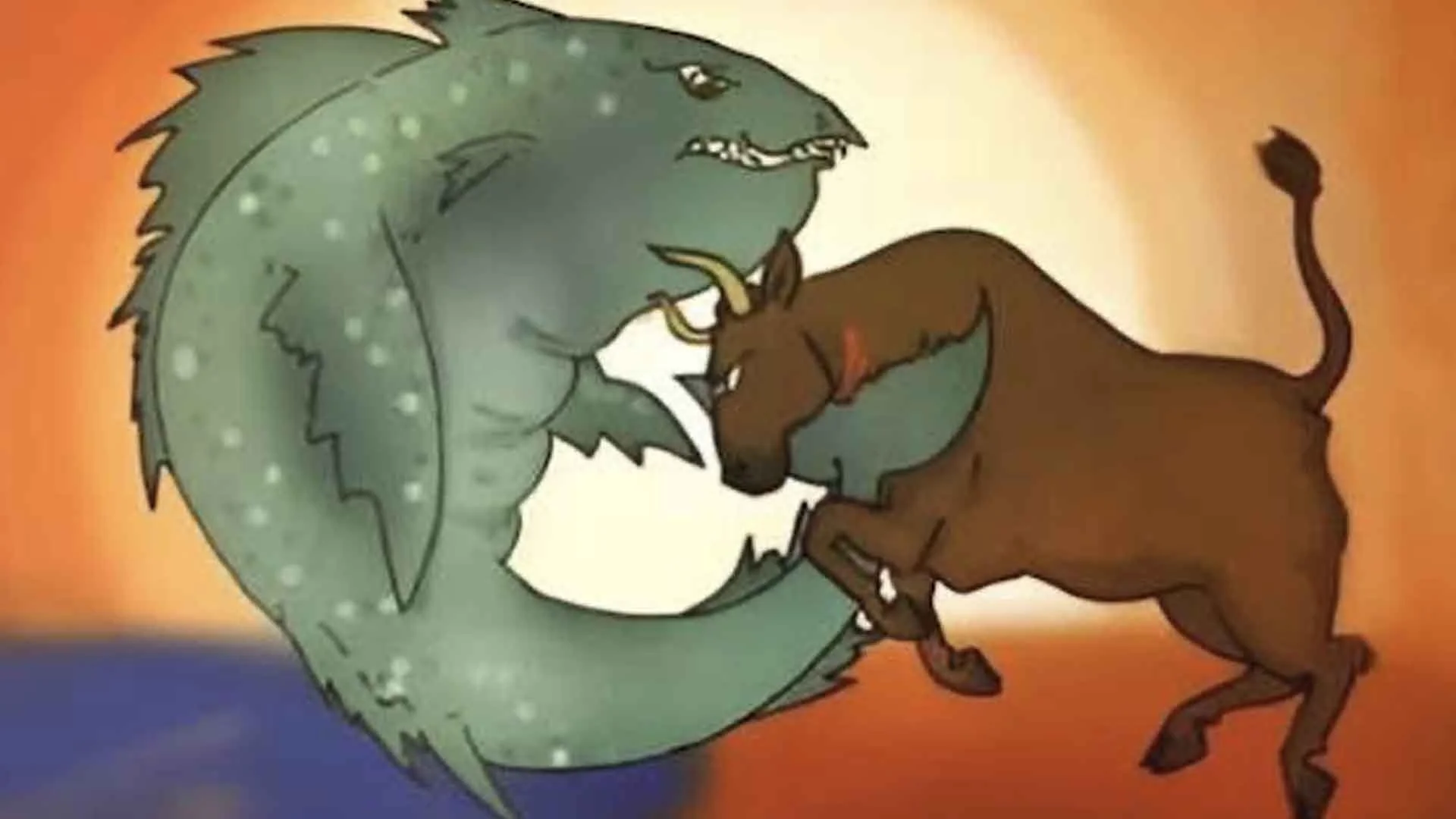
The Gemara then considers differences between bulls and donkeys. It also considers the prohibition against mixing species when referring to grass, which is already mixed.

The daf then discusses Adam harishon and the bull he offered with one horn.

We are told a story about the sun and the moon where Rabbi Shimon ben Pazi sees the moon in competition with the sun, offering that one should be less bright - but not the moon! Rabbi Shimon explains that the moon continues to beg for G-d's mercy and to allow it to be brighter. The moon understands that though people count our months with the moon, it is written in Genesis that we use the sun to count. G-d eventually convinces the moon that other creatures who are 'the lesser' are still great.

We explore these themes with reverence and a midrasnhic eye.

Tags 76th
Comment

Chullin 65: ״לְמִינֵהוּ״ אַרְבַּע פְּעָמִים

jyungar July 5, 2026

For the source text click/tap here: Chullin 65

To download, click/tap here: PDF

While insects are not part of a Western diet, the Torah includes certain types of locusts among the “winged swarming things” that can be eaten (see Vayikra 11:20-25), offering both a description – those that “have jointed legs above their feet, wherewith to leap upon the earth” – and a list of names of the kosher species. The Mishnah (daf, or page 59a) elaborates on the description, requiring that kosher locusts must have four legs, four wings, leaping legs, and wings covering the greater part of the body; Rabbi Yosi adds that they must bear the name hagav – locust.

On our daf, the Sages discuss the four specific names mentioned in the Torah as kosher species of locusts – arbeh, sol’am, hargol and hagav – and what the Torah is including when it adds that each of these is permitted “after its kind.” Thus we find a baraita teaching that the arbeh is the gobai, the sol’am is the vashon, the hargol is the nippol, and the hagav is the gadi’an.

Tags 76th
Comment

Chullin 64: סִימָנִין לָאו דְּאוֹרָיְיתָא

jyungar July 3, 2026

For the source text click/tap here: Chullin 64

To download, click/tap here: PDF

A new Mishna presents Chizikiya's question: Where in the Torah do we learn that the egg of a bird that is not kosher is prohibited? The Gemara reminds us of bat ha'ya'ana (likely the ostrich or the Eurasian eagle-owl, a bird of prey), one of the birds in the list of non-kosher birds (Vayikra 11:16), where bat means daughter. It implies that the egg of the ya'ana, the unclean bird, is not kosher either. Chizikiya's question may not be necessary because of the principal ha'yotzeh min ha'tameh, tameh, anything produced by a non-kosher animal is also non-kosher.

We explore the halachot of eggs from from different sources.

Tags 76th
Comment

Chullin 63: מִשְׁנֵה תוֹרָה לְאוֹסוֹפֵי הוּא דַּאֲתָא

jyungar July 2, 2026

For the source text click/tap here: Chullin 63

To download, click/tap here: PDF

As we have learned, unlike other animals, the Torah does not offer clear indicators that allow us to recognize which birds are kosher, rather it offers a list of 24 non-kosher birds.

On our daf Rabbi suggests that the reason for this is because there are many more kosher birds in the world than non-kosher birds; it was therefore simpler to list the few birds that are not kosher, leaving us to understand that all the rest could be used in the kosher kitchen.

The challenge, of course is whether we can accurately identify all of the birds that appear in the Biblical list.

Tags 76th
Comment

Royal Palm tom. Photo credit: Cristian Rojas, Los Muertos Crew

Chullin 62: כֹּל שֶׁנִּשְׁתַּנָּה שְׁמוֹ קוֹדֶם מַתַּן תּוֹרָה

jyungar July 1, 2026

For the source text click/tap here: Chullin 62

To download, click/tap here: PDF

Unlike the case with mammals and fish, where the Torah gives identifying characteristics by which kosher and non-kosher types can be discerned, the Torah gives no such signs for birds. Instead, the Torah lists various types of non-kosher birds. Since these are the ones specified as being non-kosher, all the ones not listed are ipso facto kosher. That sounds straightforward enough, but there complications.

The Gemara indicates that simanim are sufficient to determine a bird’s kashrus, regardless of a tradition.

However, Rashi writes that simanim can be difficult to ascertain, and therefore rules that no bird may be assumed to be a min tahor unless it has a reliable mesorah. This view, set by Rashi, has been adopted by several rishonim and ultimately brought l’halacha by the Mechaber[5] and the Rama,[6] making the case for the turkey’s kashrus more challenging.

We focus on the turkey, the “Hindik” and the halachic problems it presents.

Tags 76th
Comment

Julian Ungar-Sargon

This is Julian Ungar-Sargon's personal website. It contains poems, essays, and podcasts for the spiritual seeker and interdisciplinary aficionado.​