
For the source text click/tap here: Chullin 35
To download, click/tap here: PDF
As we learned in the prior Mishna (daf 33), ritual slaughter is valid even if no blood flows from the animal at the time of slaughter. With regard to the question of ritual defilement, the Mishna quotes a difference of opinion:
If a man slaughtered cattle or a wild beast or a bird and no blood came forth, the slaughtering is valid and it may be eaten by him whose hands have not been washed, for it has not been rendered susceptible to uncleanness by blood. Rabbi Simon says, it has been rendered susceptible to uncleanness by the slaughtering.
We learned on yesterday’s daf that the difference of opinion between the Tanna Kamma and Rabbi Shimon relates to the law that limits ritual defilement of food only to that which has become wet by means of one of seven liquids – wine, blood, oil, milk, dew, honey or water (see Vayikra 11:38) – which “prepares” the item for possible defilement.
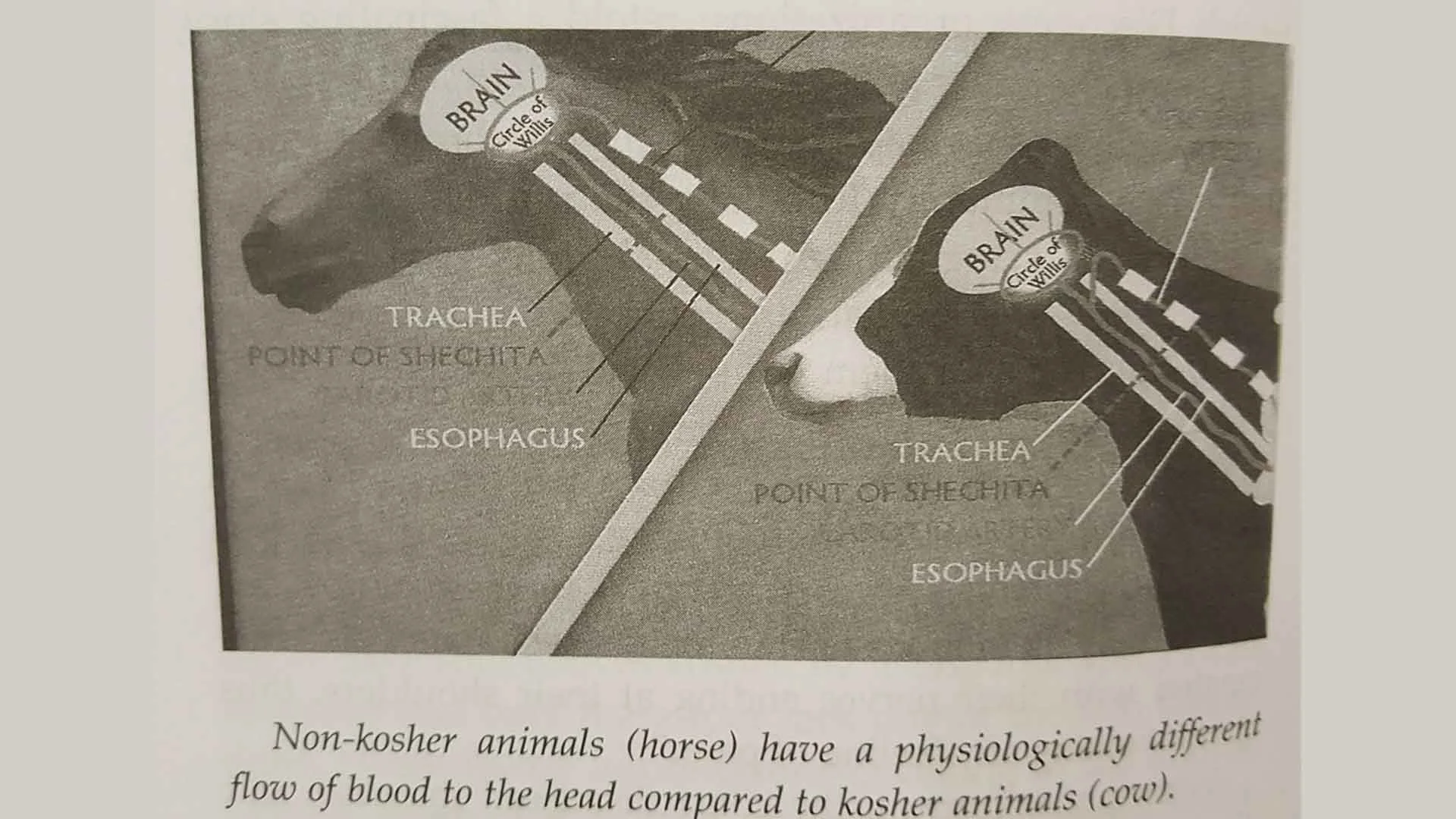
We explore the notion of a dry cut and its halachic ramification and the conditions of hypovolemia and anemia.