
For the source text click/tap here: Menachot 78
To download, click/tap here: PDF
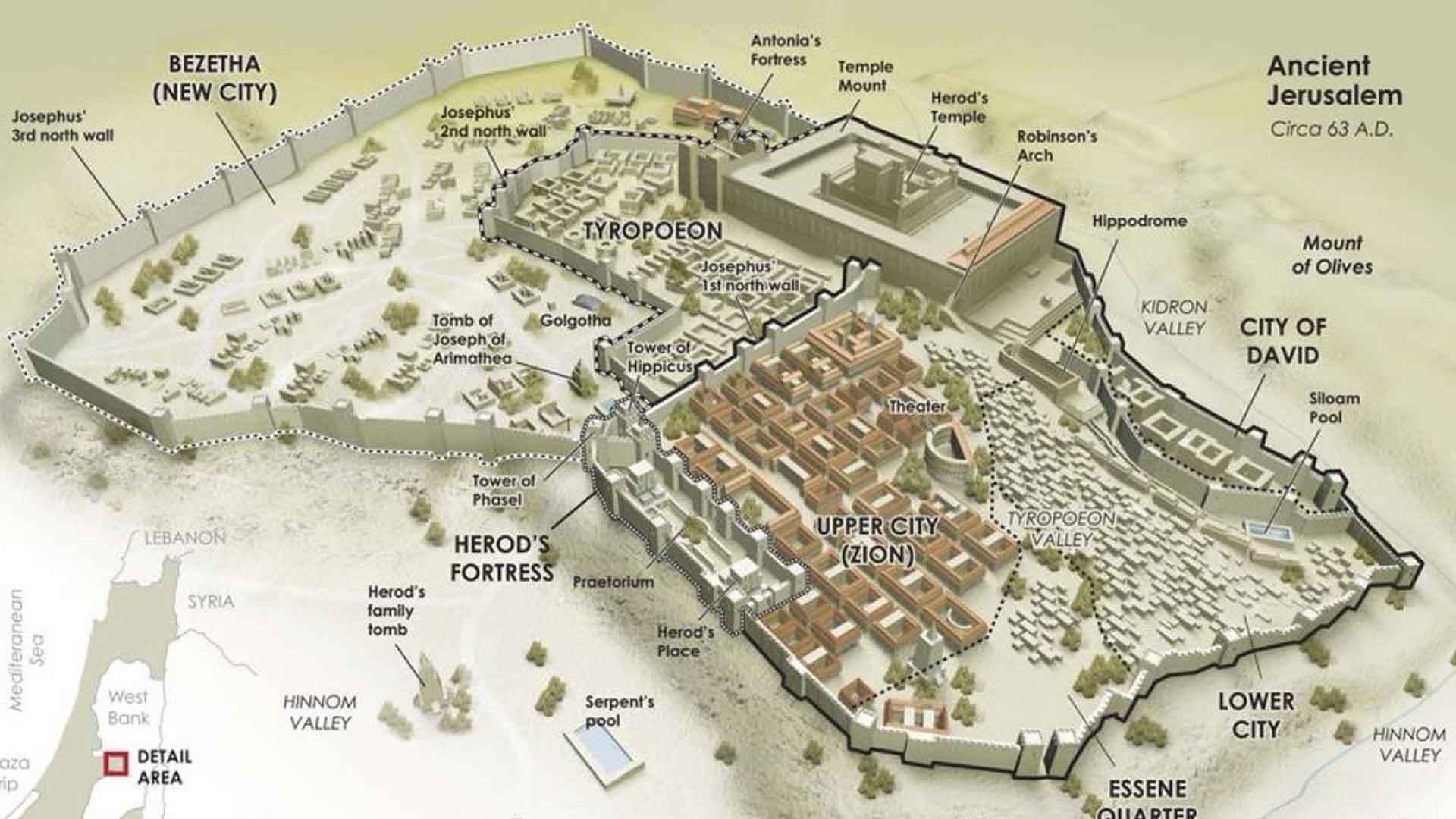
On our Daf a Mishna discusses the thanksgiving sacrifice – the korban toda. That korban is made up of an animal sacrifice brought together with 40 hallot matzot – non-hametz loaves. The Mishna teaches that if the sacrifice is slaughtered inside the azara – the Temple courtyard, as is proper – but the hallot were outside the wall at that time, then the hallot do not become holy; since at the time of the shechita they were in a place where they could not be eaten, they therefore cannot become part of the korban. A question was raised with regard to this mishna: What is the meaning of the phrase outside the wall? Rabbi Yohanan said: It means outside the wall of Beit Pagei, the outermost wall around Jerusalem, but if the bread was merely outside the wall of the Temple courtyard, it has been sanctified, as we do not require that the bread, described as “with” the offering, be next to it in order to be sanctified.
There are many opinions, but it appears that Beit Pagei represented the “third wall” that surrounded the “new city” of Jerusalem. Some say that Beit Pagei is from the Latin root meaning “to eat.” According to this opinion, it was so named because within that wall was still considered Jerusalem with regard to the mitzva of eating korbanot that had to be consumed within the city walls. There also was a small village just outside of Jerusalem that was called Beit Pagei – perhaps because of the figs (pagim) that grew there. According to some opinions that is the Beit Pagei referred to by Rabbi Yohanan.
We explore both the rishonim as well as archeological views of the walls around the Mikdash over time.