
For the source text click/tap here: Menachot 27
To download, click/tap here: PDF
As often happens in the Gemara, which records actual conversations, discussion of a given topic may segue in a different direction. The first Mishna on our daf continues discussing the laws of meal offerings, teaching that the different parts of the minḥa require each other, such that the flour cannot be brought without the oil, nor the oil without the flour; the kometz (the fistful of flour taken by the kohen for sacrifice on the altar) cannot be brought without the frankincense, nor can the frankincense be brought without the kometz.
This leads to the laws that appear in the second Mishna that are not at all related to the laws of meal offerings, rather they are a list of other religious rituals whose different parts make up a greater whole and cannot be divided. It is in this context that we learn that the four different species taken on Sukkot – the lulav, etrog, hadasim and aravot (see Sefer Vayikra 23:40) – require one another and that from a halakhic standpoint, bringing one without the other serves no purpose.
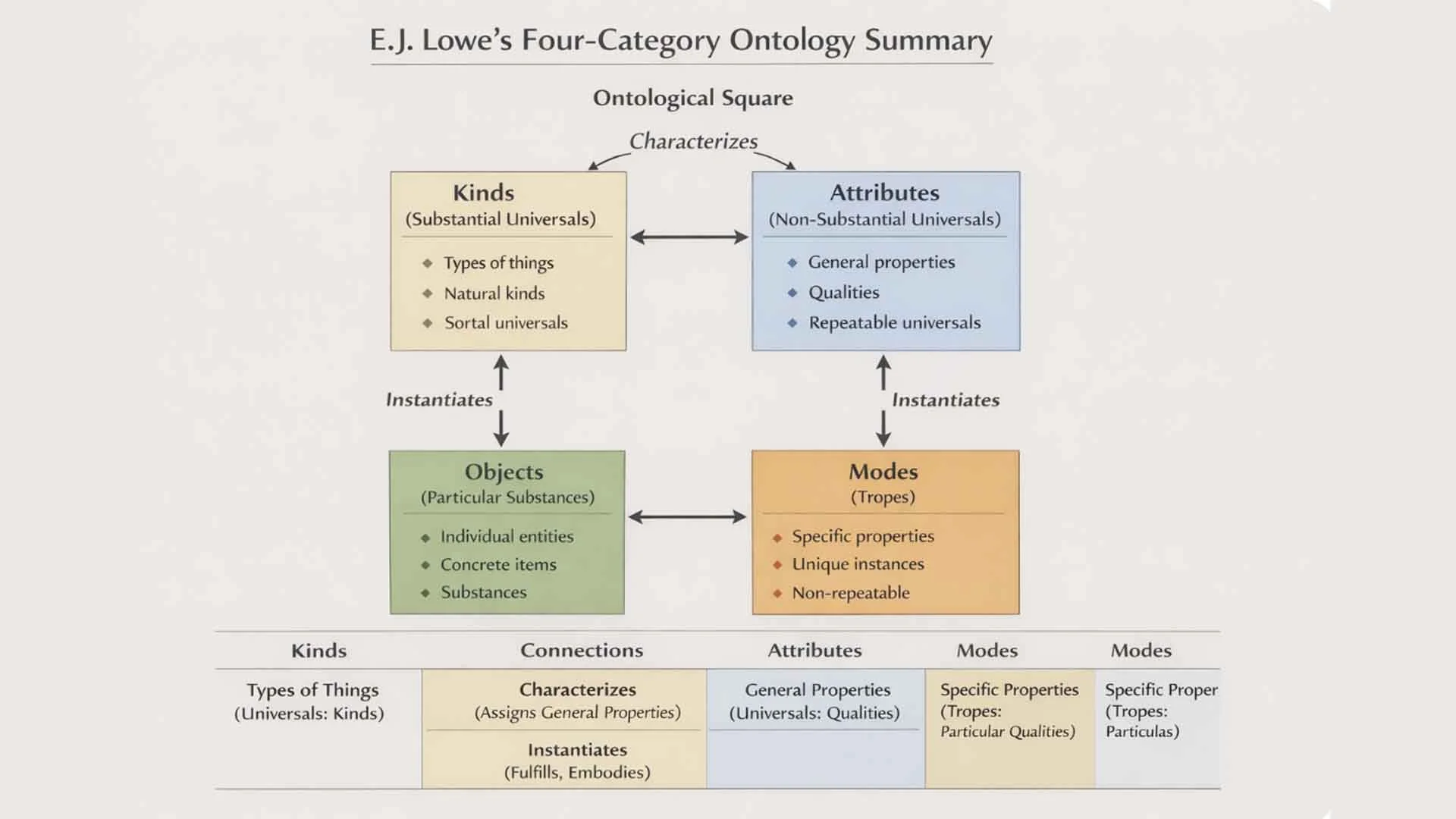
We examine the work of E J Rowe and how it might apply his four-category ontology to talmudic offerings.