
For the source text click/tap here: Menachot 31
To download, click/tap here: PDF
Beginning on our daf, the discussion in the Gemara moves away from the laws of a Sefer Torah and turns its focus on the laws of mezuza, which was mentioned in the previous Mishna (daf 28a).
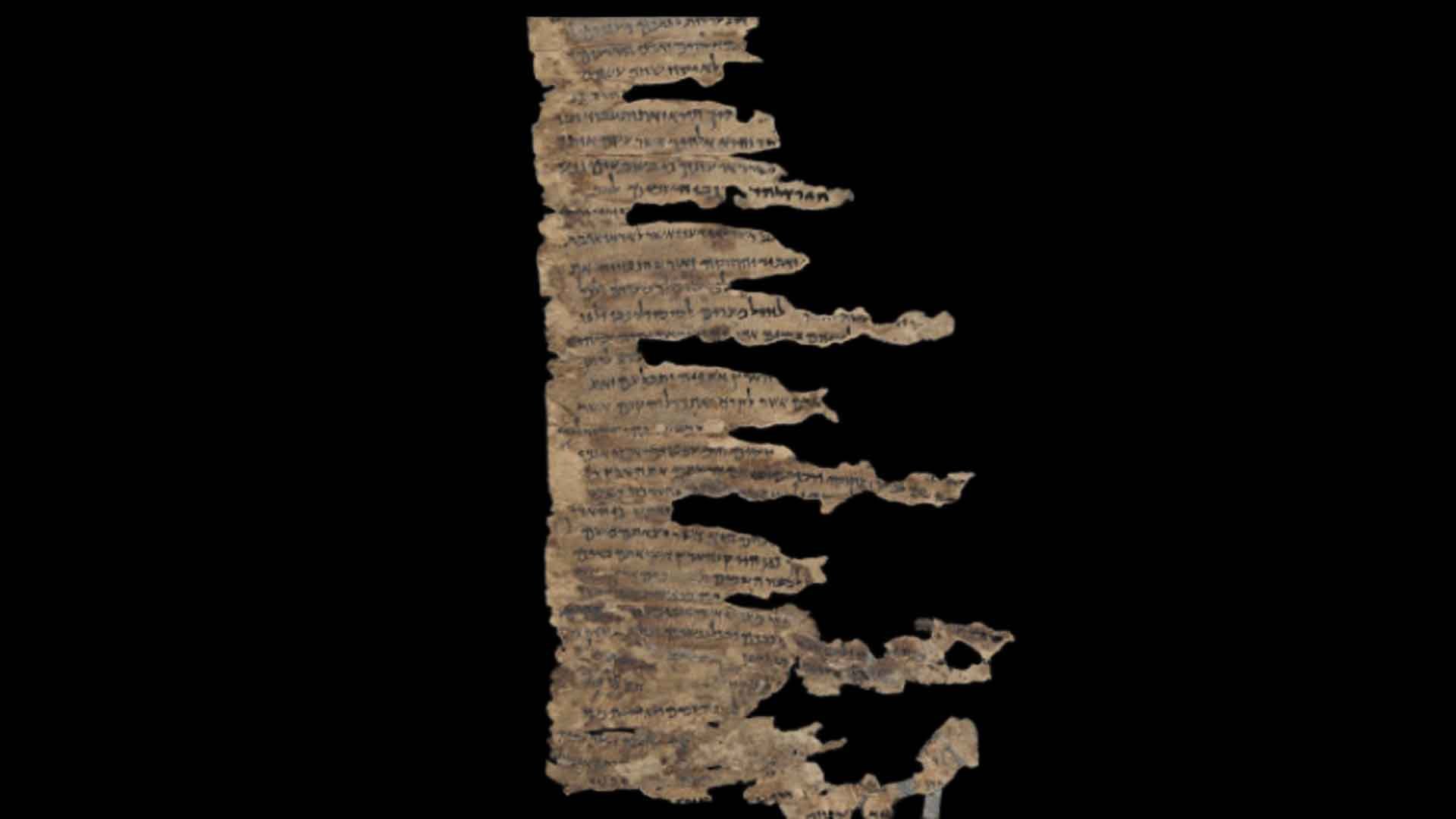
A number of the laws distinguish specifically between the way a Torah must be written and the way a mezuza is written. For example, certain parts of the Torah, like Parashat Ha’azinu and Shirat HaYam – the song sung by the Children of Israel upon crossing the Red Sea – are written as song or poetry. These special songs must be written in a unique fashion, and the rest of the Torah cannot be written in that way, while a mezuza can be written in poetic form, even though that is not the ordinary way of writing it. Another example is the length of a given line. A line in the Torah must have at least 30 letters in the line (the word lemishpeḥoteikhem written out three times), while a mezuza may have even two words on a given line.