
For the source text click/tap here: Bechorot 51
To download, click/tap here: PDF
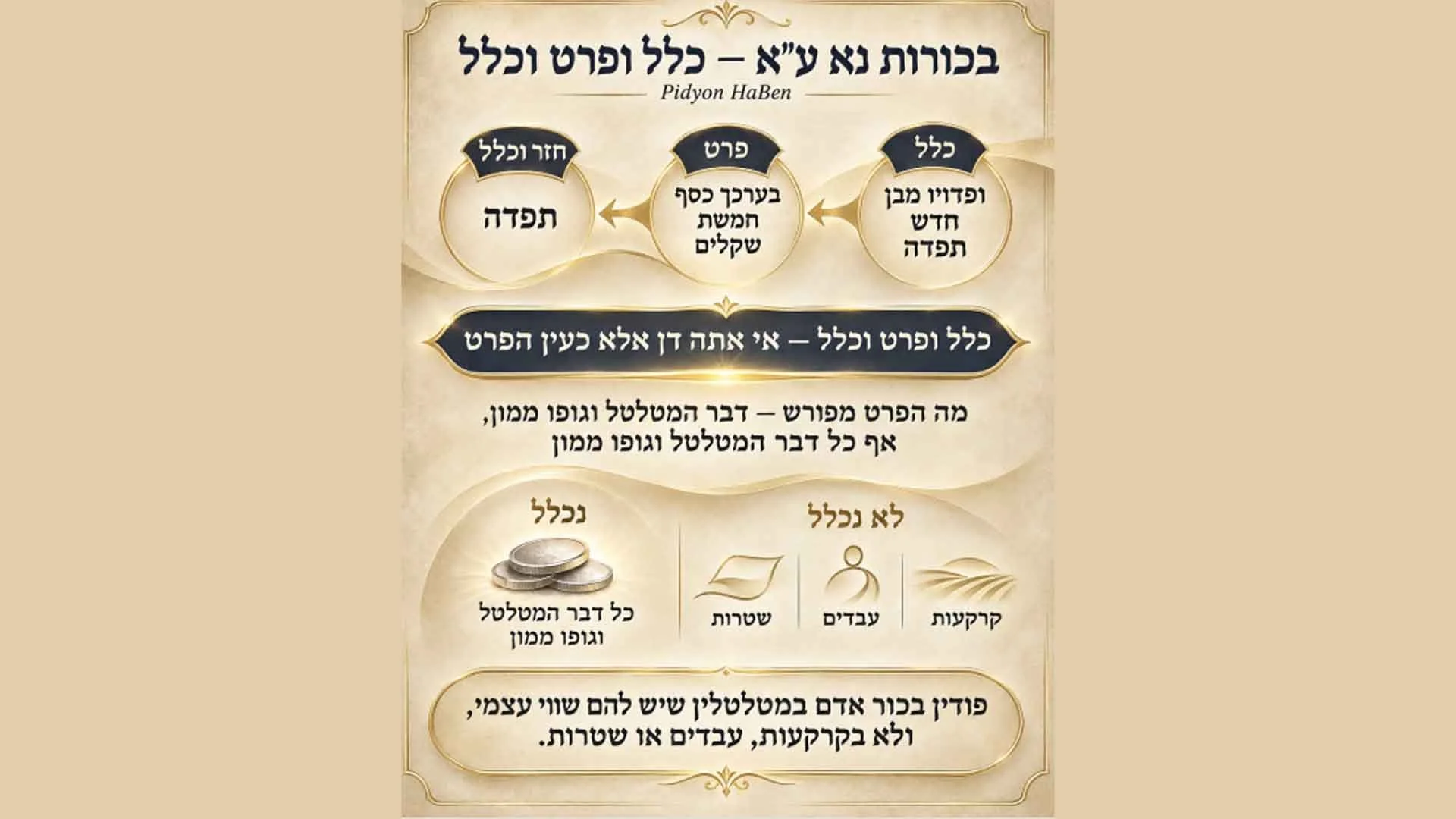
To redeem a firstborn one can give to a Kohen either five shekel coins or goods worth that amount. However, lands, slaves, and loan documents cannot be used for redemption. Why not? When the Torah said, "A firstborn is redeemed from one month old", it included all means of payment.
When it continued, "According to the valuation of five shekels of silver", it limited the available means somewhat, and when it again generalized, "You shall redeem", we interpret it to mean that only payments similar to the specified ones are included. Just as coins are movable and have intrinsic value, so too all similar items are included.
What's excluded? Lands, because they are not movable. Slaves, because they have the laws of the land. Loan documents, because they are pieces of paper not worth anything by themselves, but only because of the obligation recorded in them.
We explore how The Mishnah on our daf says that redemption cannot be made with land, Canaanite slaves, debt documents, or consecrated property. That list is not random. Each exclusion exposes a different boundary of the biblical expression “five shekels of silver.” Land may be valuable but cannot be picked up and handed over. A debt document can be carried, yet its financial importance lies in the obligation that it records. Consecrated property raises a separate issue of ownership and sanctity. The older status category of slaves follows special property classifications in rabbinic law; describing those classifications does not endorse human ownership.
The Gemara then presents an alternative: Rabbi Yehuda HaNasi is prepared to permit virtually any valuable property except debt documents. Two interpreters, reading the same biblical words, generate different answers. To understand why, we need to learn the grammar klal prat uklal.