
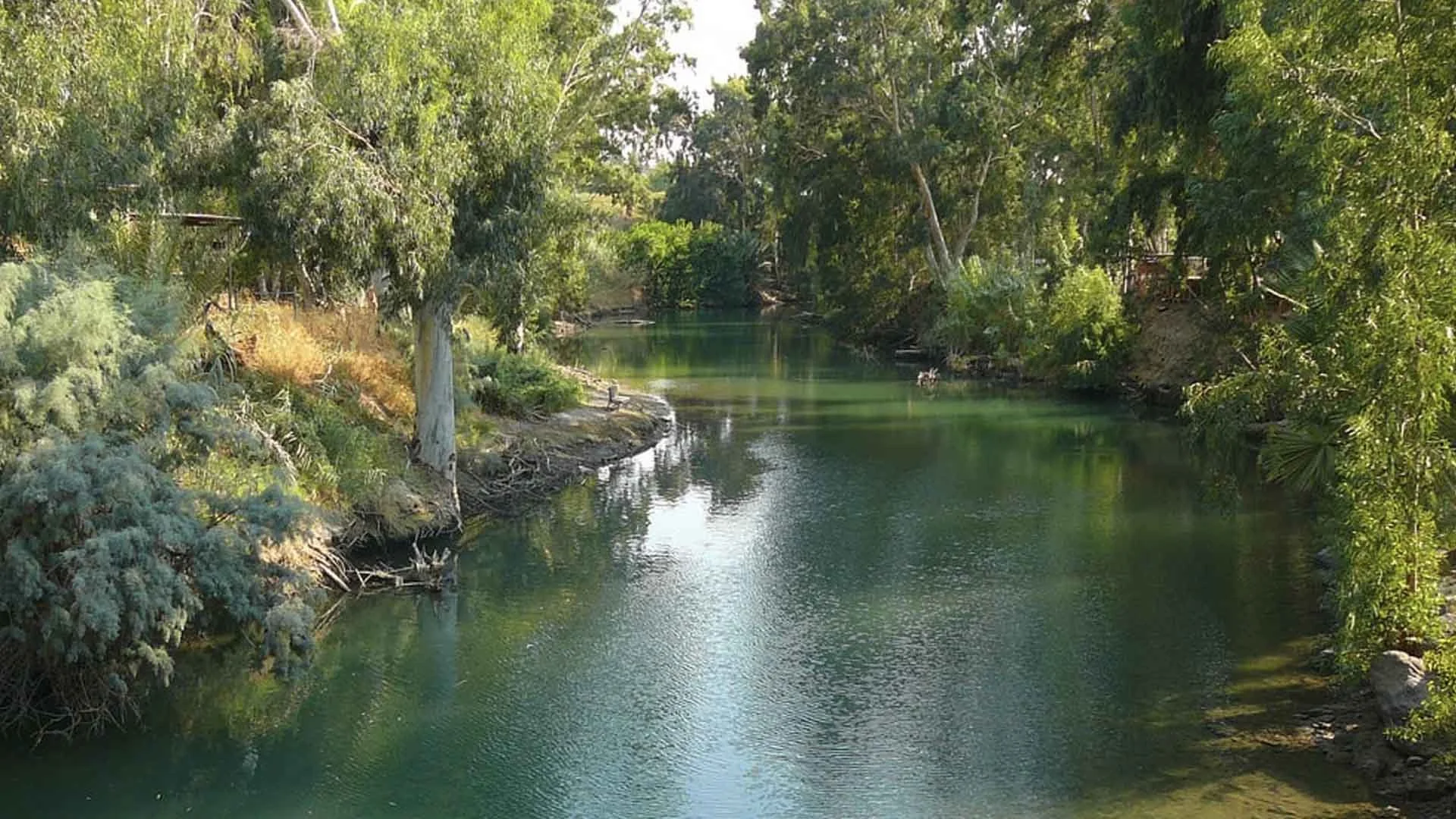
For the source text click/tap here: Brechorot 54
To download, click/tap here: PDF
We learned in the Mishnah (Bekhorot 54b):
Rabbi Meir says: The Jordan River constitutes a division with respect to the animal tithe (ma'aser behemah).
According to Rabbi Meir, a flock of sheep situated on the two banks of the Jordan River cannot be combined into a single unit for purposes of the animal tithe.
Rabbi Meir's statement leads the Gemara into a fascinating discussion concerning the Jordan River. Two central questions are addressed in this discussion.
First, what is the status of the Jordan River in relation to the Land of Israel? Is the river itself part of the Land, or is it legally regarded as territory outside the Land of Israel?
Second, where are the sources of the Jordan River? This question is significant for various halakhic matters mentioned in the Talmudic discussion. Over the generations, however, it also acquired far-reaching political and territorial importance. The struggle over control of the Jordan's headwaters arose repeatedly throughout history and as is well known, was among the contributing causes of the Six-Day War.
The discussion becomes considerably richer when placed alongside Rav Abraham Isaac Kook's theology of Eretz Yisrael.
We explore how, at the beginning of Orot, in the section devoted to the Land of Israel, Rav Kook insists that the land is not an external acquisition of the Jewish people, nor merely an instrument for political or spiritual consolidation.
Rather, the relationship between the people and the land is intrinsic. The land participates in the spiritual constitution of the nation.