
For the source text click/tap here: Bechorot 33
To download, click/tap here: PDF
It is forbidden to injure an animal that has been sanctified for use in the Temple, causing it to become a ba’al mum, that is, a blemished animal that cannot be sacrificed. This includes the case of a bekhor – a first-born animal – that is automatically sanctified at the time of its birth.
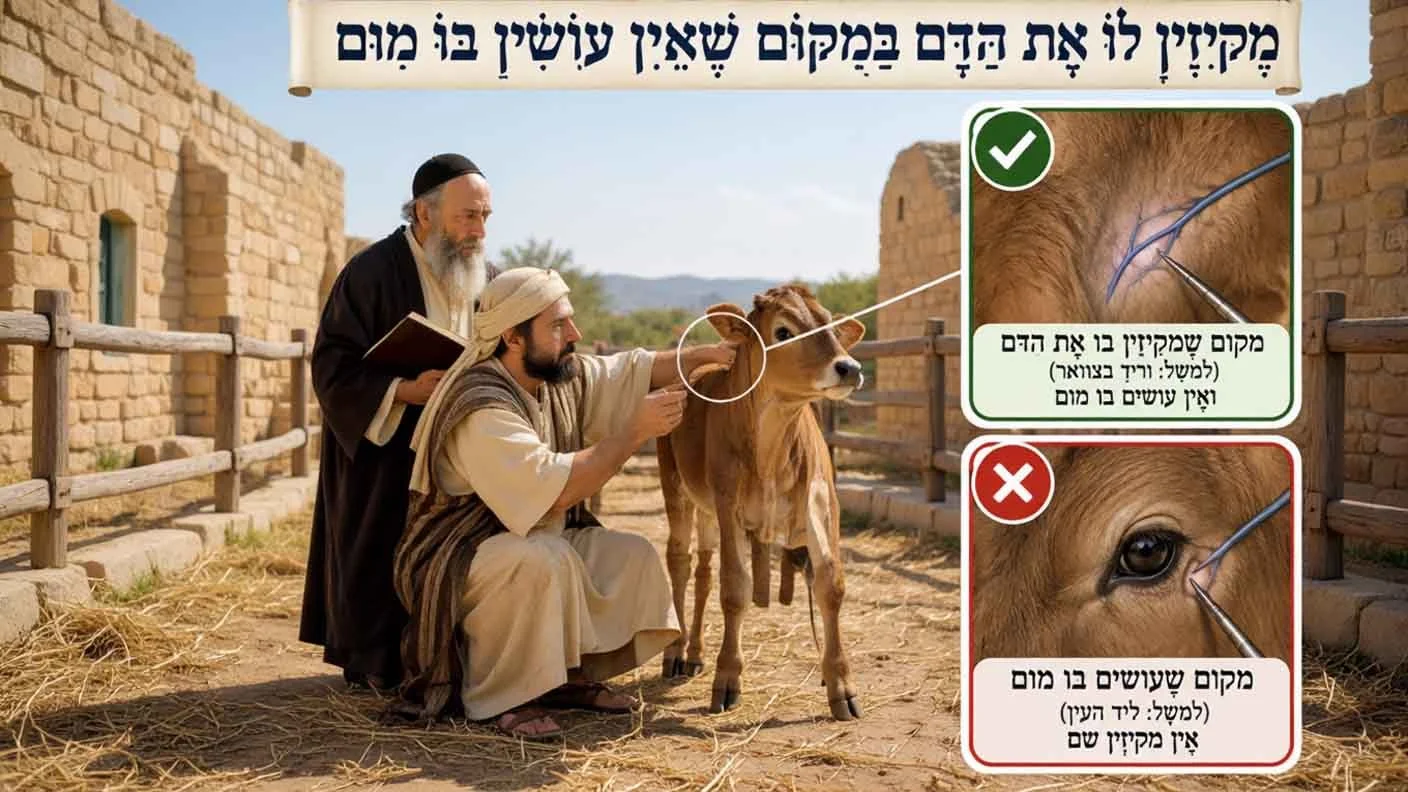
The Gemara on our daf discusses a situation where a bekhor was suffering from a condition described as aḥazo dam – it was suffering from an overabundance of blood – and the recommended treatment was hakazat dam – bloodletting. Four opinions are offered –
Rabbi Meir permits the treatment only in a place where the animal will not receive an injury that would render it a ba’al mum.
The Sages permit bloodletting, even if the animal will become blemished, although not in the place on the animal where it would be slaughtered.
Rabbi Shimon permits the bloodletting even in the place where it is slaughtered.
Rabbi Yehuda prohibits bloodletting under any circumstances, even if the animal will die without treatment.
Rabbi Eliezer insists that an animal whose ear has been deliberately notched may never be slaughtered on that basis, even if another blemish develops later. The Sages permit slaughter once an independent blemish arises.
At first glance, their disagreement concerns the appropriate severity of punishment for someone attempting to circumvent sacrificial law. Yet beneath the legal dispute lies a profound question about the nature of holiness itself.
We explore whether sanctity a condition residing within the object, or is it a relationship between the object, its consecrated purpose, and the moral agency of the human being who acts upon it?