All her life they spoke of her beauty,
yefat to'ar, yefat mar'eh,
the green of her that Jacob saw at the well
and wept, and rolled the stone away for.
Seven years that seemed to him a few days.
It seemed this would last forever.
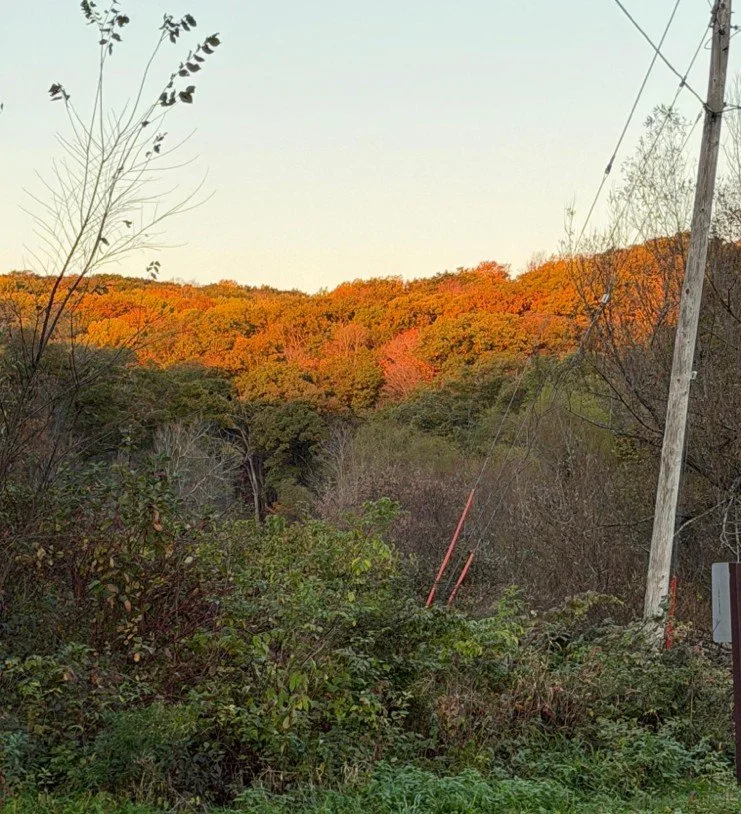
But beauty is chlorophyll.
It feeds the tree and hides the leaf.
No one saw the night she lay beneath the bed
answering in her own voice for her sister
so Leah would not be shamed beneath the veil.
She gave away the signs. She gave away the night.
That color was in her all along,
waiting for a gray sky to be seen.
On the road to Ephrath the morning wind turns cold.
Do not fear, the midwife says, this one too is a son.
And she names him from the bottom of her last breath,
Ben-oni, son of my sorrow,
and her husband, who cannot bear the name, unsays it.
Was it his own word that killed her,
the curse he swore over the stolen teraphim,
not knowing whose saddle hid them?
He does not carry her to Machpelah
to lie among the fathers.
He leaves her by the road,
a grave without a city,
as if he knew
that a thousand years on, her children would come this way
in chains toward Babylon
and need someone to weep for them.
Kol be-Ramah nishma.
The fathers had gone up first,
Abraham with his knife laid down,
Isaac with his offered throat,
Jacob with his twenty winters of frost among the sheep,
and Moses with his forty years of sand,
each pleading his merit at the gate.
The gate stayed shut.
Heaven said nothing.
Then a woman from the roadside,
who never sat at the head of anything,
lifts her voice.
She does not plead merit. She argues.
I am flesh and blood, dust and ash,
and I brought my rival into my own wedding night
and was not jealous.
And You, living King, eternal, merciful,
are You jealous of idols that are nothing,
wood and stone with no breath in them,
that for their sake You send my children into exile?
I hid such things under a saddle once.
They were not worth a sister's shame.
Me'anah le-hinachem.
She refuses to be comforted.
Not grief alone, but refusal:
a woman who will not let God's silence
be the last word spoken over her children.
And in the dying of Rachel her true colors are revealed.
Not the green the shepherd loved,
but red,
red that was never hidden underneath
but made in the letting go,
the color a leaf makes only as it falls.