Julian Ungar-Sargon

  • Home
  • Theological Essays
  • Healing Essays
  • Podcast
  • Poetry
  • Daf Ditty
  • Deep Dive Ditty
  • Videos
  • Publications
  • Military Service
  • Dominican University
  • Home
  • Theological Essays
  • Healing Essays
  • Podcast
  • Poetry
  • Daf Ditty
  • Deep Dive Ditty
  • Videos
  • Publications
  • Military Service
  • Dominican University

Essays on Healing

Illness as the Demonic II

jyungar November 29, 2025

Illness as the Demonic II

This essay argues against the tendency to conceptualize illness--particularly chronic, mysterious, or treatment-resistant illness--as a form of the demonic. While such framing may offer psychological comfort by providing a coherent narrative for suffering, it carries a profound danger: it relieves us of the responsibility to understand, fight, and ultimately prevent disease. The parallel to historical explanation is instructive. When we invoke the demonic to explain phenomena like Hitler and Nazism, we foreclose the possibility of understanding the social, economic, and psychological conditions that made such horrors possible. By rendering evil supernatural and inexplicable, we abandon the task of prevention. This essay develops the thesis that submission to demonic explanations--whether of illness or of historical atrocity--constitutes a moral and intellectual failure. We must resist such explanations precisely because they feel satisfying; their satisfaction is the measure of our abdication.


Tags HE5
Comment

The Function of the Demonic in Illness and Dying

jyungar November 27, 2025

The Function of the Demonic in Illness and Dying

This essay traces the development of the demonic (or daemonic) as an interpretive category for the experience of illness and dying. Surveying texts from the Hebrew Bible, Greek philosophy, early rabbinic literature, medieval Kabbalah, Christian demonology, and modern depth psychology (especially C.G. Jung), the essay argues that the “demonic” is not merely a supernatural force but an existential structure of experience—a symbolic form through which humans interpret suffering, powerlessness, and the limits of agency. Across these traditions, illness becomes a site where human mastery collapses and where the daemonic, representing both dread and hidden meaning, breaks into consciousness. The demonic threatens destruction, yet paradoxically becomes the source of integration, insight, and spiritual transformation: the triumph of the daemon over mere egoic will. An addendum extends this analysis to addiction, exploring how substance use disorders manifest the daemonic structure with particular intensity—the experience of possession by alien compulsion, the collapse of will, and the paradoxical path to recovery through surrender and spiritual transformation.

Tags HE5
Comment

The Sacred Temporality of Healing

jyungar November 27, 2025

The Sacred Temporality of Healing

This article synthesizes depth psychological insights on solitude with mystical theology to propose a transformative framework for healing practice. Drawing on Carl Jung, James Hillman, Robert Bly, and Jordan Peterson's reflections on time's preciousness, I argue that solitude functions as therapeutic tzimtzum—a sacred contraction creating space for authentic presence.

The physician who practices solitude develops capacity to witness suffering without the defensive maneuvers of biomedical reductionism. By integrating Kabbalistic concepts of divine concealment and manifestation with archetypal psychology's understanding of the soul's imaginal depths, this work proposes an embodied theology of healing that honors the patient as sacred messenger rather than diagnostic object. 16

The essay the medicalization of time within healthcare systems and advocates for temporal practices that restore the physician's capacity for moral presence.

Tags HE5
Comment

Do Patients Have Free Will?

jyungar October 30, 2025

Do Patients Have Free Will?

The question of patient agency in medical contexts demands frameworks that transcend the sterile dichotomy between mechanistic determinism and abstract libertarian autonomy. This essay builds upon my previous work on hermeneutic medicine, therapeutic tzimtzum, and the sacred-profane dialectic to reconceptualize patient agency as a relational, emergent phenomenon rather than an intrinsic property. Drawing on recent neuroscience (readiness potentials, addiction neurobiology), clinical realities (adherence challenges, chronic pain), and Jewish mystical theology (tzimtzum, Shekhinah, the broken vav), I argue that the therapeutic encounter itself creates the possibility space within which patient agency emerges. This framework has immediate implications for addiction treatment, medication adherence, and the moral dimensions of clinical practice, suggesting that the physician's role involves not assessing pre-existing capacity but co-creating conditions for maximal patient agency through therapeutic presence and sacred attention.

Tags HE5
Comment

Joseph Accused by Potiphar's Wife, 1655 by Rembrandt

Semen Through Fingernails

jyungar October 30, 2025

Semen Through Fingernails

This study examines the Babylonian Talmud’s account (Sotah 36b) of Joseph’s temptation in Potiphar’s house, wherein Joseph “thrust his fingers into the earth” until “his semen issued forth from between his fingernails.” Through close textual analysis of the Talmudic passage, Rashi’s philological commentary, comparative mythology, and Chassidic elaborations, we demonstrate that this narrative preserves an understanding of moral agency fundamentally incompatible with medieval Jewish rationalist theology. The rabbinic account presents free will not as autonomous rational capacity—the model dominant in Maimonidean philosophy and Orthodox theological discourse—but rather as embodied dialectical struggle requiring divine collaboration. Drawing upon frameworks of embodied theology and therapeutic tzimtzum developed in contemporary medical humanities scholarship, we argue that the Joseph narrative challenges both theological rationalism (autonomous will) and biomedical reductionism (chemical determinism), instead articulating an anthropology in which sanctification occurs through rather than despite corporeal crisis. The shocking anatomical impossibility of semen emerging from fingernails functions as theological necessity, marking the moment where maximal human exertion meets divine grace in the violent redirection of desire toward holiness. Comprehensive analysis of Chassidic interpretations from ten major figures demonstrates sustained recovery of this embodied wisdom against centuries of rationalist suppression. This study contributes to ongoing reassessment of agency, embodiment, and divine-human collaboration in Jewish thought, with implications for understanding the therapeutic encounter as site of sacred struggle.

Tags HE5
Comment

Relational Medicine, Physician Grief, and the Sacred Therapeutic Space

jyungar October 26, 2025

Relational Medicine, Physician Grief, and the Sacred Therapeutic Space

Contemporary healthcare frequently reduces clinical encounters to transactional exchanges, privileging efficiency metrics over the reciprocal, meaning-laden relationships that constitute authentic healing. Relational medicine offers a counterpoint, reframing clinical practice around presence, narrative co-creation, and ethically charged attention. This article synthesizes insights from relational and narrative medicine with phenomenological accounts of therapeutic presence and evidence-based interventions addressing physician grief and moral injury. Drawing on the theological frameworks developed at jyungar.com—particularly the Kabbalistic concepts of tzimtzum (divine self-limitation), Shekhinah consciousness (indwelling presence), and tikkun (repair)—this work proposes a three-layer clinical model: Presence, Narrative, and Repair. The model operationalizes sacred encounter within contemporary healthcare settings while addressing the epidemic of physician burnout through institutionalized supports for grief, structured debriefing protocols, and cultivation of therapeutic vulnerability. By treating the clinical space as potentially sacred and physician grief as testimony to devotion rather than deficiency, this framework challenges biomedical reductionism and invites healthcare systems to recognize relationship itself as medicine.

Tags HE5
Comment

Media Manipulation and Unconscious Healthcare Decisions

jyungar October 26, 2025

Media Manipulation and Unconscious Healthcare Decisions

The media landscape profoundly shapes public healthcare decisions, often unconsciously steering individuals toward choices that prioritize profit over well-being. This essay examines how pharmaceutical companies, governments, and payers manipulate perceptions of drugs, vaccines, medical devices, and food/hygiene products through targeted messaging, exemplified by COVID-19 vaccine campaigns and the rising costs of elective infusions. Drawing on academic evidence, it highlights mechanisms of influence, including direct-to-consumer (DTC) advertising and misinformation propagation, which inflate healthcare expenditures while eroding trust. The advent of artificial intelligence (AI) promises to intensify these dynamics via hyper-personalized manipulations. In response, this article proposes insights from an integrative, sacred approach to healthcare revisioning—grounded in contemplative traditions, hermeneutic interpretation, and theological frameworks—to foster conscious, holistic decision-making. By reclaiming the physician-patient bond as a sacred encounter and embedding ethical imperatives rooted in divine presence and deep listening, such paradigms offer a counterforce to commodified care, restoring healthcare to its fundamental calling as a healing ministry rather than a marketplace transaction. This comprehensive analysis traces the historical development of pharmaceutical marketing, examines contemporary case studies across multiple healthcare domains, anticipates the algorithmic future of medical manipulation, and provides detailed frameworks for resistance through sacred medical practice.

Tags HE5
Comment

The Epistemology of Clinical Judgment

jyungar October 20, 2025

The Epistemology of Clinical Judgment

Medical diagnosis represents a complex epistemological practice that simultaneously produces scientific knowledge and exercises social power. This essay examines how clinical language constructs reality, shapes professional authority, and mediates the relationship between physician expertise and patient experience. Drawing extensively on Jerome Groopman's empirical studies of diagnostic reasoning, Michel Foucault's archaeology of medical discourse, Thomas Szasz's critique of psychiatric classification, and the medical sociology of Arthur Kleinman, Byron Good, Margaret Lock, and Eliot Freidson, alongside Julian Ungar-Sargon's hermeneutic and theological frameworks for therapeutic practice, this analysis reveals that medical epistemology is inseparable from questions of linguistic power, professional monopoly, and the moral dimensions of illness. The essay argues that understanding medicine's way of knowing requires examining not only its scientific methods but also its discursive practices, institutional structures, and the social processes through which certain forms of knowledge gain authority while others are marginalized.

Tags HE5
Comment

Healthcare Reform and Physician Retention

jyungar October 20, 2025

Healthcare Reform and Physician Retention

The contemporary crisis in American healthcare—manifesting both as a projected shortage of 86,000 physicians by 2036 and as widespread physician burnout and early retirement—represents not merely a workforce planning challenge but a fundamental rupture in medicine's ontological foundations. This article develops a theoretical framework for understanding how bureaucratic structures, particularly the American Board of Medical Specialties' Maintenance of Certification program, function as symptoms of deeper epistemological failures within the biomedical paradigm. Drawing on phenomenological philosophy, theological hermeneutics, actor-network theory, and embodied cognitive science, I argue that sustainable healthcare reform requires moving beyond technical fixes toward a comprehensive reimagining of medical practice grounded in dialogical encounter, sacred epistemology, and recognition of healing's irreducibly relational character. The article integrates empirical workforce data with theoretical scholarship to demonstrate how bureaucratic monopolies and reductionist ontologies mutually reinforce physician alienation and proposes an alternative vision wherein medical authority emerges through relationship rather than institutional hierarchy, and where physician retention becomes possible through reconnection with medicine's deeper vocational meanings.

Tags HE5
Comment

Deconstructing Medical Guilt

jyungar October 17, 2025

Deconstructing Medical Guilt

The doctrine of original sin has profoundly shaped Western patients' unconscious identification of disease with moral failure. Augustinian theology's hereditary guilt framework permeates contemporary healthcare, positioning illness as evidence of personal inadequacy and treatment as conditional forgiveness requiring demonstrated worthiness.

This article examines how Lurianic Kabbalah's doctrine of cosmic rupture (shevirat ha-kelim) offers an alternative theological framework that deconstructs medical guilt while empowering patients as active participants in healing. Drawing on sixteenth-century Jewish mystical texts and contemporary healthcare philosophy, we propose a clinical paradigm shift from guilt-based pathology to collaborative restoration (tikkun).

We conduct comparative theological analysis of Augustinian original sin and Lurianic chet kadmon (primordial sin), examining their divergent anthropologies through primary texts and secondary scholarship. We then apply Lurianic concepts—cosmic rupture, scattered sparks (nitzotzot), husks of impurity (kelipot), participatory repair (tikkun), and reincarnation (gilgul)—to clinical phenomenology, demonstrating how patients embody theological guilt in illness narratives.

Tags HE5
Comment

The Shared Abyss: Trauma, Responsibility, and the Space Between

jyungar October 17, 2025

The Shared Abyss: Trauma, Responsibility, and the Space Between

This essay examines the liminal psychological and ethical space between perpetrator and victim as a site of mutual trauma and shared moral implication. Drawing upon trauma theory (Herman, Laub, Caruth), psychoanalytic intersubjectivity (Benjamin, Fanon), transitional justice scholarship (South Africa's Truth and Reconciliation Commission, Myanmar's failed reconciliation), and the author's prior work on theological concealment and therapeutic presence, this analysis argues that genuine healing from violence—whether interpersonal, medical, or political—requires shared trauma work. Both victim and perpetrator inhabit a co-created traumatic field; neither can achieve psychological integration or moral repair without confronting the shadow that binds them. Legal case studies (sexual assault jurisprudence, medical negligence) and contemporary political violence (the Gaza conflict, analyzed through Yuval Noah Harari's theological-historical lens) reveal how trauma resists binary moral categories and demands what the author terms "inter-traumatic ethics"—a fusion of Levinasian responsibility and trauma theory. The physician, like the perpetrator, must confront complicity; the victim must risk re-opening the wound to rehumanize the other. Only through this dialectical encounter—where judgment and mercy, concealment and revelation coexist—does authentic reconciliation become possible.

Tags HE5
Comment

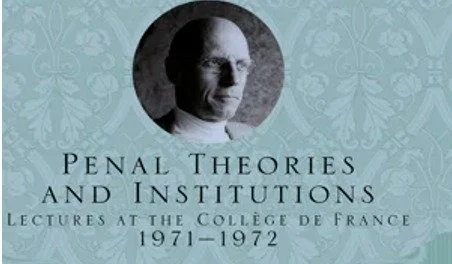
A Critical Genealogy of Punishment and Its Chilling Effect on Medical Practice

jyungar October 17, 2025

A Critical Genealogy of Punishment and Its Chilling Effect on Medical Practice

The modern physician practices under a panopticon of potential criminal liability. Federal prosecutors target doctors for "overprescribing" opioids (5,6). State legislatures threaten felony charges for providing abortions, gender-affirming care, or reproductive health services (7–9). Medical boards revoke licenses for recommending "unproven" alternative therapies (10). Insurance companies flag "suspicious" prescribing patterns (11). Electronic health records create permanent audit trails accessible to law enforcement (12). Prescription drug monitoring programs (PDMPs) track every controlled substance prescription (5,6). In this environment, the physician internalizes the gaze of the law enforcement apparatus, and this internalization produces a fundamental transformation of clinical consciousness—what I term "carceral subjectivity" in medical practice.

Tags HE5
Comment

Applying Anarchist Principles to Healthcare

jyungar October 16, 2025

Applying Anarchist Principles to Healthcare

My work on revisioning healthcare has consistently emphasized the sacred-profane dialectic, hermeneutic approaches to medicine, and the necessity of transforming hierarchical medical structures. This article demonstrates how these concepts find their natural political expression in anarchist philosophy. Through extensive analysis of anarchist intellectual history—from Proudhon through the Spanish Revolution—I show that the structural transformations my framework requires align most closely with anarchist principles of mutual aid, anti-coercion, decentralization, and horizontal organization. My critiques of mechanistic medicine, Cartesian dualism, and hierarchical authority in healthcare are not merely philosophical but demand the political reorganization that anarchism provides. By wedding my theological and phenomenological insights to anarchist praxis, we can envision medicine organized around sacred presence, interpretive engagement, and genuine healing relationships rather than institutional power and profit extraction.

Tags HE5
Comment

Contextual Errors in Medical Decision Making

jyungar October 12, 2025

Contextual Errors in Medical Decision Making

William Osler's attributed assertion that "the good physician treats the disease; the great physician treats the patient who has the disease" captures an enduring tension in clinical practice: the distinction between addressing pathophysiology and attending to the person who embodies it. Despite widespread recognition that effective care requires understanding patients' life circumstances—their contexts—the implications of failing to do so remain understudied. Weiner and Schwartz's concept of "contextual errors" names a form of medical failure that occurs when clinicians overlook patient circumstances essential to appropriate care planning, even when their biomedical reasoning is sound. This article explores contextual errors as both ethical failures and practical obstacles to effective care, examining their cognitive origins, health equity implications, educational dimensions, and systemic enablers. Drawing on empirical evidence from unannounced standardized patient studies and real patient encounters, alongside theoretical insights from narrative medicine and virtue ethics, this analysis argues that contextualization represents not an adjunct to evidence-based medicine but its necessary corrective—the means by which medicine reclaims its human center.

Tags HE5
Comment

The Placenta as Sacred Interface

jyungar October 12, 2025

The Placenta as Sacred Interface

The placenta represents a profound convergence of biological, mythological, and theological significance that remains largely unexplored in contemporary medical practice. Recent advances in placental research (2023-2025) reveal this organ as a dynamic neuroendocrine, immunological, and metabolic interface that governs maternal-fetal communication and shapes lifelong health trajectories. Concurrently, cross-cultural anthropological evidence demonstrates that diverse ancient civilizations recognized the placenta as a living entity worthy of reverence, conceptualizing it variously as twin soul, guardian angel, and cosmic creative force. This discursive essay synthesizes cutting-edge placental science with ancient mythological wisdom and the embodied theological framework of tzimtzum (divine contraction) to propose a transformative model for clinical practice.

Tags HE5
Comment

Disease as Dis-ease

jyungar October 9, 2025

Disease as Dis-ease

This essay examines the medieval pairing of disease with dis-ease—somatic pathology with spiritual rupture—through Augustinian and kabbalistic frameworks, proposing their relevance for contemporary clinical practice. Augustine's anti-Pelagian theology articulates original sin as transmissible morbus requiring therapeutic grace rather than moral correction, dignifying suffering while risking stigmatization when divorced from its medical metaphor.

Tags HE5
Comment

When the Healer Mourns: Physician Grief After a Patient’s Death

jyungar September 29, 2025

When the Healer Mourns: Physician Grief After a Patient’s Death

Physician grief following patient death represents more than a psychological phenomenon—it constitutes a fundamental theological crisis that challenges the very foundations of healing practice. Drawing from post-Holocaust theology and embodied spirituality, this analysis reframes physician grief as a sacred encounter with divine absence that paradoxically enables unprecedented human responsibility for healing.

This discursive exploration synthesizes psychological scholarship on physician grief with theological insights from Jewish mysticism, particularly the concepts of tzimtzum (divine contraction), shevirat ha-kelim (breaking of vessels), and tikkun olam (world repair). The analysis integrates attachment theory with embodied theology to develop a comprehensive framework for understanding physician grief as both occupational exposure and sacred vocation.

Tags HE5
Comment

Healthcare Without Profit

jyungar September 25, 2025

Healthcare Without Profit

Healthcare systems worldwide face a fundamental tension between profit maximization and healing. In the United States, market-driven healthcare has created systemic inequities, operational inefficiencies, and what recent scholarship identifies as physician moral injury—the psychological distress experienced when economic pressures compromise ethical medical practice.

This article examines what healthcare might look like without profit motivation and explores how such transformation aligns with embodied theological understandings of healing as covenant, justice, and divine presence.

We conducted comparative analysis of international healthcare models, integrated findings from health economics literature, and synthesized theological scholarship from Jewish mystical and ethical traditions. The analysis draws extensively from contemporary work on physician moral injury, pharmaceutical industry practices, and institutional coercion in medical settings.

Tags HE5
Comment

The Efficacy of Prayer in Medical Outcomes

jyungar September 25, 2025

The Efficacy of Prayer in Medical Outcomes

This discursive analysis examines the empirical evidence on the efficacy of prayer—both personal and intercessory—in influencing medical outcomes, while weaving together scientific methodology with Jewish theological understanding. Drawing from randomized controlled trials, meta-analyses, and systematic reviews published between 1999 and 2025, this exploration reveals the complex interplay between spiritual practice and measurable health outcomes. Rather than seeking definitive answers, this essay navigates the tensions between empirical evidence and faith-based healing, proposing that prayer's efficacy may lie not merely in quantifiable medical improvements but in its capacity to transform the experience of illness itself. Through integration of Jewish textual sources and modern rabbinic thought, the analysis suggests that prayer functions as a complementary dimension of healing that enhances rather than replaces medical intervention. The review encompassed 35 studies, with findings suggesting that while direct physiological impacts remain inconsistent, prayer's psychological and spiritual benefits offer meaningful contributions to patient care and recovery processes.

Tags HE5
Comment

The MCQ Monopoly

jyungar September 25, 2025

The MCQ Monopoly

Contemporary medical education has undergone a radical transformation from the traditional apprenticeship model to a standardized, MCQ-dominated system that prioritizes measurable knowledge fragments over clinical wisdom and humanistic care. This critique examines how the systematic replacement of tutorial-based learning with multiple-choice question formats has contributed to the current healthcare crisis, producing technically competent but clinically impoverished physicians. Through analysis of educational research, outcome studies, and integration with our revolutionary framework of therapeutic relationships as sacred encounters, this paper argues that the MCQ-centric approach represents a fundamental misunderstanding of medical knowledge and practice. Drawing on "patient as sacred text" and the hermeneutic approach to healing, we propose a revolutionary reimagining of medical education that integrates traditional mentorship with sacred-profane dialectics to restore medicine's humanistic foundation while addressing contemporary healthcare challenges.

Tags HE5
Comment
  • Essays on Healing
  • Older
  • Newer

Julian Ungar-Sargon

This is Julian Ungar-Sargon's personal website. It contains poems, essays, and podcasts for the spiritual seeker and interdisciplinary aficionado.​