Julian Ungar-Sargon

  • Home
  • Theological Essays
  • Healing Essays
  • Podcast
  • Poetry
  • Daf Ditty
  • Deep Dive Ditty
  • Videos
  • Publications
  • Military Service
  • Dominican University
  • Home
  • Theological Essays
  • Healing Essays
  • Podcast
  • Poetry
  • Daf Ditty
  • Deep Dive Ditty
  • Videos
  • Publications
  • Military Service
  • Dominican University
Julian Ungar-Sargon copy 3.jpg

Daf Ditty

A wide-ranging commentary on the daily page of Talmud.

The Lovesick Old Man, 1553 is a painting by Lucas The Elder Cranach

Sanhedrin 75: דּוּן מִינַּהּ וּמִינַּהּ

jyungar March 2, 2025

For the source text click/tap here: Sanhedrin 75

To download, click/tap here: PDF

On yesterday’s daf we learned that there are only three mitzvot that are so severe that a person should give up his life rather than perform the forbidden acts: Avoda zara (idol worship), gilui arayot (forbidden sexual activities) and shefikhut damim (murder).

As a continuation of the discussion regarding gilui arayot the Gemara relates the following story.

Rav Yehuda quoted Rav as telling of a man who fell in love with a certain woman and became love-sick in his desire for her. After consulting physicians he was told that he would only be cured if he engaged in sexual relations with her.

We explore the literary structure of the story and its the history of its commentators.

Tags 60th
Comment

Sanhedrin 74: אֲפִילּוּ לְשַׁנּוֹיֵי עַרְקְתָא דִּמְסָאנָא

jyungar March 1, 2025

For the source text click/tap here: Sanhedrin 74

To download, click/tap here: PDF

According to Rabbi Yoḥanan quoting Rabbi Shimon ben Yehotzadak there are only three mitzvot that are so severe that a person should give up his life rather than perform the forbidden acts. Those mitzvot are:

avoda zara (idol worship)

gilui arayot (forbidden sexual relations)

shefikhut damim (murder)

The Gemara presents Biblical passages as the source for this rule regarding Avoda Zara and Gilui Arayot. When it comes to Shefikhut Damim the Gemara argues that no proof-text is necessary, as it is a sevara – a logical argument – that murder cannot be permitted to save a life.

We explore different authors on self-sacrifice and just war theory.

Tags 60th
Comment

Sanhedrin 73: רוֹאֶה אֶת חֲבֵרוֹ שֶׁהוּא טוֹבֵעַ בַּנָּהָר

jyungar February 28, 2025

For the source text click/tap here: Sanhedrin 73

To download, click/tap here: PDF

On yesterday’s daf we mentioned the concept of a rodef – someone who is chasing after another person to kill him, who can be killed by anyone. The Mishna on today’s daf teaches the law of a rodef, and in explaining the law that allows a rodef to be killed uses the terminology matzilin otan be-nafshun – “these people are saved by their lives.”

Our daf argues that most obvious source – lo ta’amod al dam re’ekhah – neither shall you stand idly by the blood of your neighbor (see Lev 19:16) – cannot be used to teach this law, since it is needed to teach the simpler rule that a person cannot ignore his neighbor’s needs if he is drowning, for example. Rather the source is a passage that connects the laws of murder with the laws of a woman who is raped in a field (see Deut 22:26-27) where the Torah frees her of any culpability, since there was no one around to come to her defense.

We apply these rulings to terrorism today.

Tags 60th
Comment

Sanhedrin 72: כֹּל דְּאָתֵי עֲלַאי בְּמַחְתַּרְתָּא – קָטֵילְנָא

jyungar February 27, 2025

For the source text click/tap here: Sanhedrin 72

To download, click/tap here: PDF

We learn on our that ha-ba le-horgekha, hashkem le-horgo – if someone comes planning to kill you, you should hurry to kill him first.

This rule is applied by our Gemara to the case of a ba ba-maḥteret – someone who comes at night to rob someone. According to the Mishna, he can be killed al shem sofo – because of what will happen in the end. Rava explains this to mean that people do not willingly allow others to take their money, so the robber knows that the person he is robbing will defend his property. We assume, therefore, that the robber will be prepared to kill him. Recognizing this, Rava teaches that the Torah instructs ha-ba le-horgekha, hashkem le-horgo.

We explore recent events that make use of these principles.

Tags 60th
Comment

‘Gluttony,’ circa 1642, by Jacques de l'Ange (1631–1642)

Sanhedrin 71: סוֹף סוֹף אֲבוּהּ אֲבוּהּ נִיהוּ, וְאִמֵּיהּ אִמֵּיהּ נִיהִי!

jyungar February 26, 2025

For the source text click/tap here: Sanhedrin 71

To download, click/tap here: PDF

It should be noted that the ben sorer u’moreh – the stubborn and rebellious son who is “a glutton and a drunkard” (see Devarim 21:18-21) – has not committed any capital crimes. According to the Mishna on our daf the death sentence that he receives is al shem sofo, yamut zakkai ve-al yamut ḥayyav – he is killed because of where he will end up if he is allowed to continue in his present path.

The Torah’s perspective is that he should die while still innocent rather than die when he is already guilty.

This understanding of the underlying reasons for the laws of ben sorer u’moreh notwithstanding, according to the traditions of the Sages, the rules and regulations associated with ben sorer u’moreh are to be understood in such a limited manner that they cannot be practically applied or will apply only in very unusual circumstances. In fact it appears likely that the laws of ben sorer u’moreh were never carried out.

Tags 60th
Comment

Sanhedrin 70: זוֹלֵל וְסֹבֵא

jyungar February 25, 2025

For the source text click/tap here: Sanhedrin 70

To download, click/tap here: PDF

When discussing the ben sorer u’moreh – a stubborn and rebellious son who is “a glutton and a drunkard” (see Devarim 21:18-21) – the Mishna on our daf teaches that he must have eaten a measure of meat and drunk a log (a unit of volume) or, perhaps, half a log of wine.

This statement leads to a lengthy discussion in the Gemara of the ramifications in Jewish law of drinking, opening with Rav Ḥanan’s teaching that wine was created for the purpose of consoling those who are in mourning and to offer a reward in this world to evildoers.

We explore the effects of wine from Noah on.

Tags 60th
Comment

Sanhedrin 69: בַת שֶׁבַע אוֹלִידָא בְּשֵׁית

jyungar February 24, 2025

For the source text click/tap here: Sanhedrin 69

To download, click/tap here: PDF

Our daf discusses the relations of a boy who is nine years old and one day to be considered relations. If he is less than eight years old, his relations are not considered relations. The argument is regarding an eight year old.

Beis Shamai says: We derive from the earlier generations. Beis Hillel says: We do not derive from the earlier generations.

The Gemora asks: How do we know that the children of earlier generations fathered children at this age?

You might suggest it is from the following combination of verses. Bas Sheva the daughter of Eliam, the wife of Uryah the Chitite...Eliam the son of Achitofel the Golani...And he sent in the hands of Nasan the prophet and he called his name Yedidyah for Hashem...and it was for two years and they were shearing for Avshalom...And Avshalom ran away and left to Geshurah, and was there for three years...And Avshalom sat in Yerushalayim for two years and never saw the face of the king...And it was at the end of forty years, and Avshalom said to the king, “I will go and fulfill my vow, the vow that I had vowed to Hashem in Chevron…”

We explore the character of Bat-Sheva in different traditions.

Tags 59th
Comment

Sanhedrin 68: יֵשׁ לוֹ וְאֵינוֹ מוֹלִיד

jyungar February 23, 2025

For the source text click/tap here: Sanhedrin 68

To download, click/tap here: PDF

Our new Mishnah contains a Mitzvah that is one of the most difficult commandments to understand – the laws concerning the Wayward and Rebellious Son (Ben Sorer U’Moreh). This young boy does not listen to his parents.

The gemarah describes the crimes involved. By today’s standards, they do not sound like terrible crimes. The boy is somewhat gluttonous. He engages in small acts of thievery; he eats too much meat; he drinks too much wine.

The Torah tells us that the Ben Sorer U’Moreh [Wayward and Rebellious Son] is brought to Beis Din [Jewish Court]. If the evidence is upheld, he is put to death, based on the principle “better he should die innocent now, than have to be executed as a guilty party somewhere down the road.”

We explore this mysterious law applying only to boys…

Tags 59th
Comment

Sanhedrin 67: ״מֵסִית זֶה הֶדְיוֹט״, לְהַכְמָנָה

jyungar February 22, 2025

For the source text click/tap here: Sanhedrin 67

To download, click/tap here: PDF

A subverter (of a city) is one who says, “Let us go and serve idols.” The sorcerer is one who performs sorcery and is liable (to be stoned), and not one who creates illusions. Rabbi Akiva says in the name of Rabbi Yehoshua: If two gather cucumbers (through sorcery) - one gathers and is exempt, and one gathers and is liable. The one who performs an action is liable, but the one who deceives the eye (by creating an allusion that he is gathering) is exempt.

We continue to explore witches and subverters and the influence of gender.

Tags 59th
Comment

Sanhedrin 66: בָּאוּ עָלֶיהָ עֲשָׂרָה בְּנֵי אָדָם

jyungar February 21, 2025

For the source text click/tap here: Sanhedrin 66

To download, click/tap here: PDF

One who cohabits with a young maiden is not liable to be stoned unless she is young (naarah), virgin, betrothed, and still in her father's house. A naarah is a girl of twelve years old who has sprouted two pubic hairs; she remains a naarah until she is twelve and a half. Virgin - but if she had intimate relations, their punishment is standard - strangulation.

Betrothed - the first stage of marriage (kiddushin) has been performed, but there was no hupah, so she is yet not allowed to live with her husband. If two men cohabited with her (anally), the first one is liable to stoning, and the second one - to strangulation.

We explore intimacy within marriage and without.

Tags 59th
Comment

Sanhedrin 65: מקטר לשד – עובד עבודה זרה

jyungar February 20, 2025

For the source text click/tap here: Sanhedrin 65

To download, click/tap here: PDF

Our daf teaches that a witch is someone who seems to speak words from the dead through his/her armpit. A wizard is one who apparently speaks the words of the dead through his/her mouth. Both of these acts are punishable by stoning. One who asks for this service is liable to bring an offering.

The Gemara discusses why these two acts might be considered separately when they are mentioned in the Torah together.

The rabbis discuss whether or not there is a difference between these small actions and other small actions, including blasphemy. The rabbis question what "action" means. For example, is a spoken voice an action? This is particularly import in a system that relies on actions to define numerous legal realities.

We explore divination and necromancy.

Tags 59th
Comment

Sanhedrin 64: כל חדא וחדא רווחא לחבירתה שביק

jyungar February 19, 2025

For the source text click/tap here: Sanhedrin 64

To download, click/tap here: PDF

Steinsaltz "We are well aware that the longing for avoda zara that we find in the stories of the first Temple period in Tanakh, does not affect our community today.

What happened to this yearning for idol worship? In today’s world it is difficult to understand the attraction that biblical idol worship held for the Jewish people. The Gemara on our daf attempts to answer this question by means of a metaphor.

In doing so the rabbis claimed the yetzer ha-ra of avoda zara – the lust and desire for idol worship – still remained.

We review the sin of baal Peor from its sitz im leben in the ancient near east.

Tags 59th
Comment

Sanhedrin 63: כל המשתף שם שמים ודבר אחר

jyungar February 18, 2025

For the source text click/tap here: Sanhedrin 63

To download, click/tap here: PDF

As we learned in the Mishna (60b), while various types of idol worship are punishable by death, other interactions with idols are merely lavin – negative commandments – whose perpetrators are liable for lashes.

One example of the latter type is someone who uses the name of such a deity to take an oath or to fulfill an oath that was taken.

According to the Gemara on our daf the source for this law is the passage in Sefer Shemot (23:13) ve-shem elohim aḥerim lo tazkiru, lo yishama al pikhah – and the name of a foreign god you should not mention, it should not be heard on your mouth.

Rabbi Shimon ben Yoḥai to him: But isn’t anyone who links the name of Heaven and something else, a euphemism for an idol, uprooted from the world? As it is stated:

“He who sacrifices to the gods, save to the Lord only, shall be utterly destroyed” (Exodus 22:19). The fact that the Jewish people included God in their idolatrous statement could not have saved them from destruction.

We explore the idea of linking the divine with other deities or syncretism in antiquity.

Tags 59th
Comment

Winslow Homer - Camp fire

Sanhedrin 62: פוק תני לברא!

jyungar February 17, 2025

For the source text click/tap here: Sanhedrin 62

To download, click/tap here: PDF

If someone performs several different acts of avoda zara and he was unaware that they were forbidden – will he be obligated to bring a single sin-offering or one for each act that he performed?

The Gemara on our daf relates that Rabbi Yoḥanan was presented with a baraita that discusses this question in the context of a similar discussion regarding Shabbat. Hearing the baraita, Rabbi Yoḥanan responded pok teni libara – “go teach that outside” – please do not bring unreliable baraitot into the study hall.

We continue our analysis of avodah zarah and the way it transformed over time.

Tags 59th
Comment

Sanhedrin 61: דיבורא מילתא היא

jyungar February 17, 2025

For the source text click/tap here: Sanhedrin 61

To download, click/tap here: PDF

As we have seen on the previous dapim, avoda zara is a serious prohibition, one that could make one liable to receive a death penalty. The Gemara on today’s daf raises a question about someone who performs idol worship me-ahavah u’me-yirah – because of love or because of fear.

According to the Gemara, Abaye believes that such worship is considered to be ordinary worship for which a person would be held liable, while according to Rava he would not be held responsible.

Many approaches are offered to explain what worship me-ahavah u’me-yirah might mean.

We explore concepts of biblical idolatry and later iterations thereof in Kabbalah.

Tags 59th
Comment

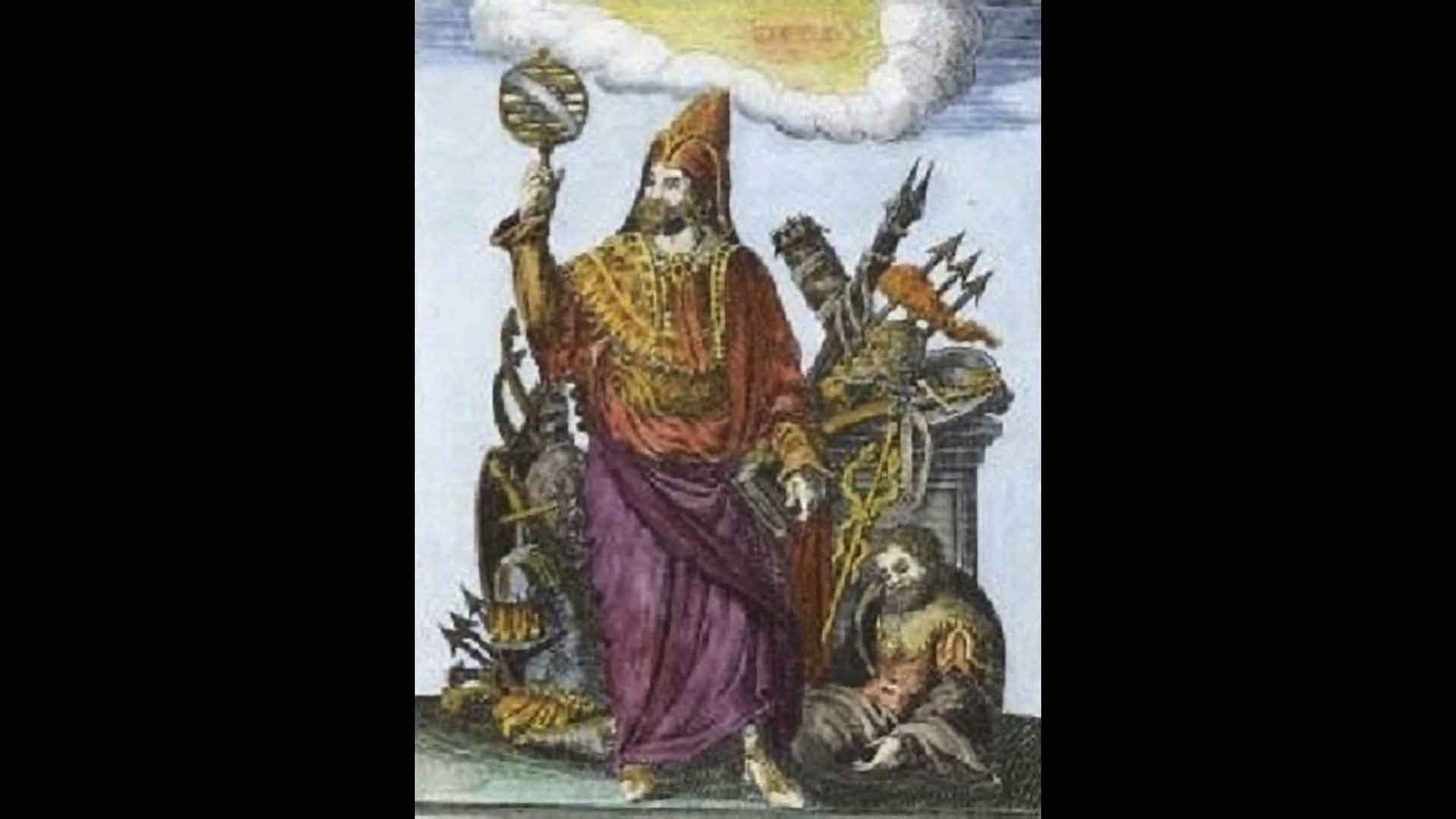
Mercurius Trismegistus from Pierre Mussard's Historia Decrum

Sanhedrin 60: הזורק אבן למרקוליס – זו היא עבודתה

jyungar February 15, 2025

For the source text click/tap here: Sanhedrin 60

To download, click/tap here: PDF

When discussing idol worship, there are certain activities that are considered to be objectively an act of worship and will be forbidden, while other activities may be specific and limited to a certain type of idol. According to the Mishna on our daf a person will be held liable for avoda zara – the prohibition against idol worship – when he performs any one of a number of acts of worship.

These activities include commonly used methods of veneration including sacrificing or burning incense, offering a libation or bowing down, and even simply saying “you are my god.” Other types of obsequiousness, such as hugging and kissing the idol, washing or cleaning it and so on would be forbidden, but would not serve as true idol worship.

Markulis is the name given by the Sages for the Roman god Mercury, who was also known as the Greek deity, Hermes. Among his many responsibilities, Mercury was the patron of the highways and travelers. This position led many to erect statues of him on crossroads. Oftentimes, these representations presented just the head of the idol and passersby would place stones at the foot of the statue. On occasion the representation was simply a pile of rocks, and travelers who passed by the pile would toss their own stone on it as an offering to the god.

Tags 59th
Comment

Sanhedrin 59: והיו מלאכי השרת צולין לו בשר ומסננין לו יין

jyungar February 14, 2025

For the source text click/tap here: Sanhedrin 59

To download, click/tap here: PDF

Rav Yehudah says in the name of Rav: Adam was not permitted to eat meat. This is as the verse states: for you it (the vegetation) will be yours for food, and for all the animals of the land.

This implies that the animals are not given for man to eat. When the sons of Noach arrived, Hashem permitted this, as the verse says: I have given you everything (including animals) to be like the stalks of grass. One would think they did not have to keep the prohibition against eating a limb of a live animal.

We explore the possibility of a return to vegetarianism in light of torah values.

Tags 59th
Comment

Sanhedrin 58: אין לו תקנה אלא קבורה

jyungar February 13, 2025

For the source text click/tap here: Sanhedrin 58

To download, click/tap here: PDF

While the Torah anticipates that non-Jews will also follow a legal code of behavior consisting of the sheva mitzvot benei Noaḥ – the seven Noachide laws – the Torah neither requires nor condones non-Jews mimicking the behaviors of Jews.

A number of rabbis speak about physical discipline or hitting in anger in other circumstances. It is said that Rav Huna cut off the hand of a person who habitually hit others.

Tags 59th
Comment

Sanhedrin 57: אזהרה שלהן – זו היא מיתתן

jyungar February 12, 2025

For the source text click/tap here: Sanhedrin 57

To download, click/tap here: PDF

Gentiles are killed for participating in forbidden sexual relationships, for murder, and for blasphemy. The rabbis argue about whether these three crimes are always punishable by death. They also argue about whether these are the only three crimes punishable by death. A large part of this conversation focuses on different acts of theft and how those acts might be punished if not with capital punishment.

We explore the noachide laws and their application in Jewish Gentile relations in antiquity.

Tags 59th
Comment

Sanhedrin 56: כישוף – בן נח מוזהר עליו

jyungar February 11, 2025

For the source text click/tap here: Sanhedrin 56

To download, click/tap here: PDF

We usually think of the Torah as commanding the Jewish People to live according to its laws. What responsibilities and obligations do the Torah command non-Jews to perform?

The Gemara on our daf quotes a baraita that teaches the laws of the sheva mitzvot benei Noaḥ – the seven Noachide laws.

We explore the Siniatic vs Noachide legal system.

Tags 59th
Comment
  • Daf Ditty
  • Older
  • Newer

Julian Ungar-Sargon

This is Julian Ungar-Sargon's personal website. It contains poems, essays, and podcasts for the spiritual seeker and interdisciplinary aficionado.​