Julian Ungar-Sargon

  • Home
  • Theological Essays
  • Healing Essays
  • Podcast
  • Poetry
  • Daf Ditty
  • Deep Dive Ditty
  • Videos
  • Publications
  • Military Service
  • Dominican University
  • Home
  • Theological Essays
  • Healing Essays
  • Podcast
  • Poetry
  • Daf Ditty
  • Deep Dive Ditty
  • Videos
  • Publications
  • Military Service
  • Dominican University
Julian Ungar-Sargon copy 3.jpg

Daf Ditty

A wide-ranging commentary on the daily page of Talmud.

Bava Batra 67: וְאֶת הָרֵיחַיִם הַתַּחְתּוֹנוֹת

jyungar August 31, 2024

For the source text click/tap here: Bava Batra 67

To download, click/tap here: PDF

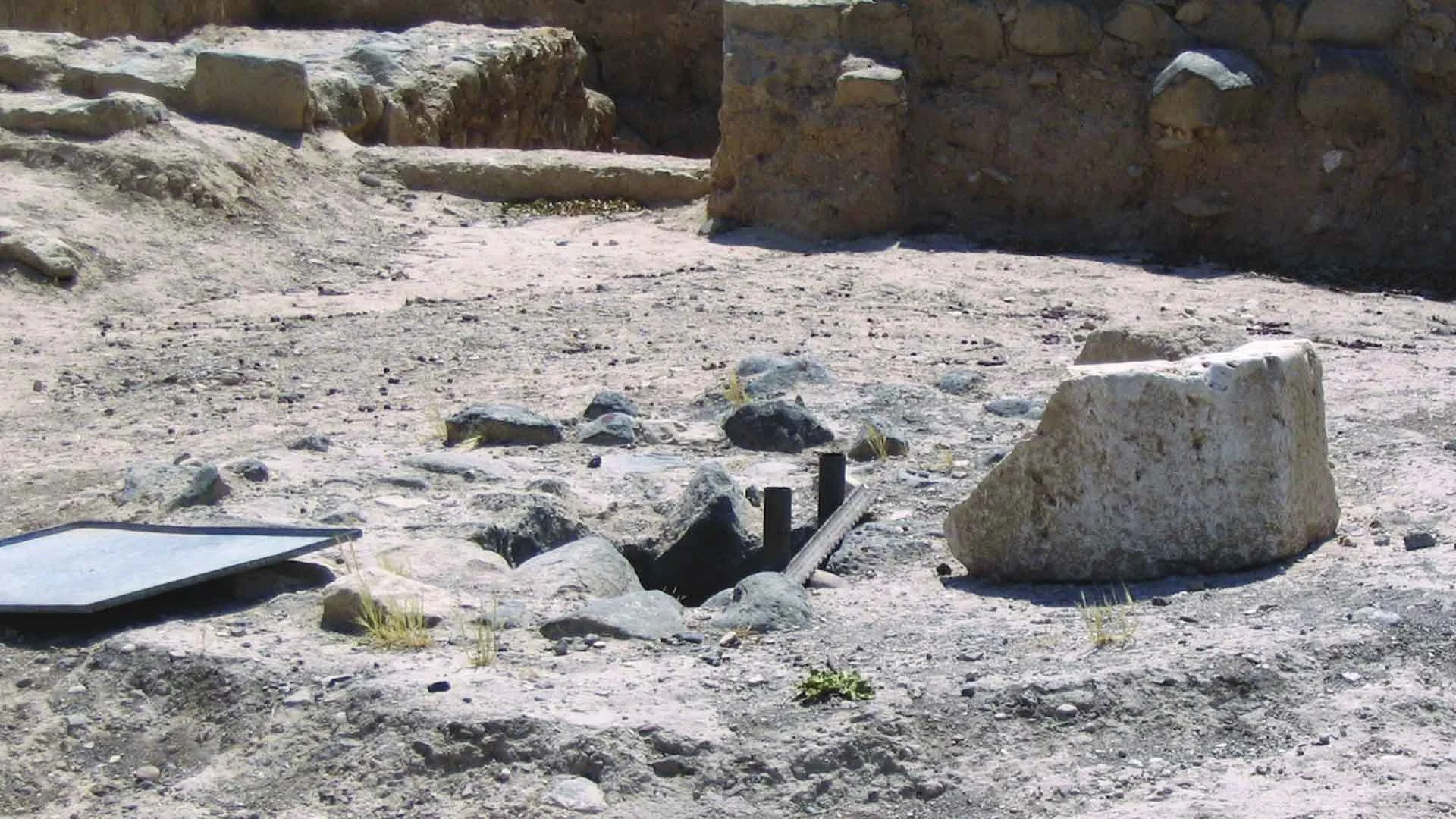
According to the Mishna, when a person sells an olive press – a beit habad – it includes the yam, the memel and the betulot, but not the avirim, the galgal or the kora. When the seller specified that he was selling the entire contents of the beit habad, then all are included. According to Rabbi Eliezer, the kora is included in all situations.

Although the Gemara asks for definitions of all of these terms, their actual meanings remain unclear to us today.

We explore the use of the olive press and its cultural and ritual valence in antiquity.
Tags 54th
Comment

Ancient Well in Israel

Bava Batra 66: כּל הַמְחוּבָּר לַקַּרְקַע

jyungar August 30, 2024

For the source text click/tap here: Bava Batra 66

To download, click/tap here: PDF

The Gemora cites a braisa: If a man sells a house (and he does not specify what is included), he has sold the door, the bolt, and the lock (that are all attached to the house), but not the key (for it is movable). He has sold the mortar that has been hollowed out from something that was attached to the ground, but not one that has been hollowed out from something that was not attached to the ground, and afterwards, it was fixed to the ground. He sold the mill-ring, but not the hopper (for it is movable). He has not sold the oven, the stove or the millstones (for they are movable).

Rabbi Eliezer, however, says that everything attached to the ground (even if it was only fixed to the ground afterwards) is regarded as the ground. When he said to him, “I am selling you the house and all that is in it,” - all of the utensils (mentioned above) are sold. In either case, he has not sold the well, the cistern, or the annex.

We explore the wells of antiquity and the complex engineering in exotic places.

Tags 54th
Comment

στρόβιλος vortex

Bava Batra 65: στρόβιλος

jyungar August 29, 2024

For the source text click/tap here: Bava Batra 65

To download, click/tap here: PDF

The general assumption of our Mishnah is that everything that is permanently attached to a building is included in a standard sale, while removable objects are not.

The Mishna on today’s daf teaches that when someone sells a house, things like the oven (tanur ve-kirayim) are not included in the sale. Similarly only the permanently connected parts of a domestic mill for grinding flour are included in the sale (the itzterobil); the moveable parts (the kelet) are not.

We explore the world of locks and keys in antiquity then the curious find in the Geniza of spells to open locks!

Tags 54th
Comment

Joseph’s Well at Dothan, Palestine 1900

Bava Batra 64: מוֹכֵר בְּעַיִן יָפָה מוֹכֵר

jyungar August 28, 2024

For the source text click/tap here: Bava Batra 64

To download, click/tap here: PDF

The Gemara on our daf continues the discussion of what rights are included in a standard sale agreement of a house or a piece of land. The Mishna teaches that someone who sells a house does not include the bor (pit) or dut (cistern), even if he included the terms umka ve-ruma – to the depths and heights – in the contract. These structures are considered to be separate from the house, and are, therefore, not included in its sale.

We explore the archeology of Tel Dothan and the purported references to Joseph’s passage there in Gen 37:

The man said, “They have traveled on from here, for I heard them say, ‘Let us go to Dotan.’” Yosef went after his brothers and found them in Dotan.

Tags 54th
Comment

Yamin Cisterns; Negev, Israel

Bava Batra 63: אֵין אָדָם מַקְנֶה דָּבָר שֶׁלֹּא בָּא לָעוֹלָם

jyungar August 27, 2024

For the source text click/tap here: Bava Batra 63

To download, click/tap here: PDF

But what does it mean if a person says that another should have a portion of his/her property?

Ravina bar Kisi said: Come and hear: it has been taught in a braisa: If a man says, “Give so-and-so a share in (the water of) my pit,” Sumchos says that he is to receive not less than a quarter. [The share may mean either a half or a mere fraction. Being in doubt, therefore, we strike the balance.]

[If the man says], “Give him a share [in the pit] for a barrel (for watering animals),” he is to receive not less than an eighth. [Since, at the utmost, only half the pit is required, the gift is at the utmost only half of a half, and we strike the balance between this and a fraction.]

We explore the world of cisterns in antiquity.

Tags 53rd
Comment

Bava Batra 62: בְּסֵירוּגִין, מַהוּ

jyungar August 26, 2024

For the source text click/tap here: Bava Batra 62

To download, click/tap here: PDF

Our daf discusses a variety of cases where the field is described by means of neighboring fields. Among them are cases where the Gemara itself is unable to reach a clear conclusion about how to rule.

What if the seller specified what the corners of the field are? Should we assume that recognizing each of the four corners indicates that the entire field is to be sold, or might it indicate that only a limited area of the field is being sold?

We explore the notion of nation borders and the myths that justify territorial integrity and conflict.

Tags 53rd
Comment

Bava Batra 61: וְהַצְּלָעוֹת֩ צֵלָ֨ע אֶל־צֵלָ֜ע

jyungar August 25, 2024

For the source text click/tap here: Bava Batra 61

To download, click/tap here: PDF

It is clear that when two parties sign a detailed contract in which the owner agrees to sell and the buyer agrees to purchase a particular house or piece of land, they can write in any conditions or specifics that they please, and the agreement is valid. The Mishnayot of this perek deal with situations where agreements are made using less specific terms. How should the general statements be understood?

Rav Yosef taught: A small structure attached to a building has three names in the Bible: Gallery [yatzia], side chamber [tzela], and cell [ta]. Such a structure is called a gallery, as it is written: “The bottommost gallery [hayyatzia] was five cubits wide” (I Kings 6:6). It is also called a side chamber, as it is written: “And the side chambers [vehatzelaot] were one over another, thirty-three times” (Ezekiel 41:6).

We explore Ezekiel’s vision of the third Temple.

Tags 53rd
Comment

Bava Batra 60: וַיַּרְא אֶת יִשְׂרָאֵל שֹׁכֵן לִשְׁבָטָיו

jyungar August 24, 2024

For the source text click/tap here: Bava Batra 60

To download, click/tap here: PDF

The Gemara asks: From where are these matters, i.e., that one may not open an entrance opposite another entrance, or a window opposite another window, derived? Rabbi Yoḥanan says that the verse states:

“And Balaam lifted up his eyes, and he saw Israel dwelling tribe by tribe; and the spirit of God came upon him” (Numbers 24:2).

The Gemara explains: What was it that Balaam saw that so inspired him? He saw that the entrances of their tents were not aligned with each other, ensuring that each family enjoyed a measure of privacy. And he said: If this is the case, these people are worthy of having the Divine Presence rest on them.

We explore the issues of privacy learned from this pericope and some added dimensions with the discovery of the Deir Alah inscriptions.

Tags 53rd
Comment

Bava Batra 59: לֵימָא בְּהֶיזֵּק רְאִיָּה קָמִיפַּלְגִי

jyungar August 23, 2024

For the source text click/tap here: Bava Batra 59

To download, click/tap here: PDF

A person should not open his windows towards a yard owned by partners. If he bought a house in a different yard, he should not make an opening towards a yard of partners. If he built a second floor onto his house, he should not make another opening to a yard owned by partners.

Rather, if he wants, he can build a room in his house, build his second floor, and the people who will live on the second floor can go through the entrance of his house (to the yard).

We explore the rights to privacy in halacha and secular law.

Tags 53rd
Comment

Cappadocia is an area in Central Anatolia in Turkey best known for its unique moon-like landscape, underground cities, cave churches and houses carved in the rocks

Bava Batra 58: Καππαδοκία אַפִּיתְחָא דְקַפּוֹטְקְיָא

jyungar August 22, 2024

For the source text click/tap here: Bava Batra 58

To download, click/tap here: PDF

As we learned in yesterday's daf, Torah scholars organize their desks carefully. Ignoramuses leave a food in the middle of their desks surrounded by dishes. Torah scholars sleep with their sandals or shoes under their beds. Ignoramuses sleep with a hodgepodge of items under their beds.

Having related that incident, the Gemara notes that at the entrance of Kapotekiyya it was written: Anpak, anbag, antal, which are all names for the same measurement. And what is antal? It is the quarter-log of the Torah.

We explore this ancient city that was home to a Jewish diaspora in Talmudic times as well as the privilege of eastern over western diaspora.

Tags 53rd
Comment

fMRI during visual stimulation

Bava Batra 57: וְעֹצֵם עֵינָיו מֵרְאוֹת בְּרָע

jyungar August 21, 2024

For the source text click/tap here: Bava Batra 57

To download, click/tap here: PDF

The Gemara cites the verse in Isa. (33:15) which praises a person who "closes his eyes from viewing evil." Rebbi Chiya bar Aba explains that this refers to a person who does not gaze at women while they are standing at the wash pool washing clothes (when they have to expose parts of their legs to enter the pool).

The Gemara asks what situation Rebbi Chiya bar Aba is discussing. If he is discussing a situation in which there is another route to take, then even if the person closes his eyes, he is considered a Rasha for taking this route in the first place! If there is no other route to take, then why does he need to close his eyes? He is an "Ones," and the Torah exempts him!

The Gemara answers that, indeed, there is no other route to take, and nevertheless he is required to force himself not to look at the forbidden sites and to turn his head away and close his eyes.

We explore the nature of visual stimulation and addiction.

Tags 53rd
Comment

The Mikado

My object all sublime I shall attain in time to let the punishment fit the crime; the punishment fit the crime. All people who have to do sewing and don't use Coats'coats' six cord thread will be punished with cotton that's snarly and rotten and kinks. Till they wish they were dead.

Bava Batra 56: וְהֵן עֵדוּת אַחַת לַהֲזָמָה

jyungar August 20, 2024

For the source text click/tap here: Bava Batra 56

To download, click/tap here: PDF

If two witnesses testified on behalf of a person that he used a property for three years, and they were found to be false witnesses, they pay the original owner everything.

In our case, they sought to deprive the original owner of the field by falsely testifying that the occupant had established a chazakah. Accordingly, they must pay the field's value to the owner, who receives these punitive damages in addition to the field itself, which he retrieves from the occupant.

We explore the legal notion of the punishment fitting the crime in light of theodicy.

Tags 53rd
Comment

Bava Batra 55: פַּרְדָּכְתְּ – מְסַיַּיע מָתָא

jyungar August 19, 2024

For the source text click/tap here: Bava Batra 55

To download, click/tap here: PDF

All tax and civil laws that prevail in a country have legal force in Jewish court, since the country's citizenry voluntarily accepts upon itself to abide by the government's laws. Thus, a Jew who takes possession of property according to the provisions of local law is not guilty of theft even if the Torah law would consider the property belonging to another Jew.

This applies, however, only to the laws sanctioned by the constitution of the country but not when monarchy appropriates property by force.

We explore Taxation in Palestine under roman hegemony and how it affected Jewish Christian relations through the eyes of Hyam Maccoby.

Tags 53rd
Comment

View of a model of the Dura-Europos Synagogue with narrative wall paintings and Torah shrine as it may have appeared between 244 and 256 C.E. The paintings are based on photographs taken prior to 1967

Bava Batra 54: דִּינָא דְמַלְכוּתָא דִּינָא

jyungar August 18, 2024

For the source text click/tap here: Bava Batra 54

To download, click/tap here: PDF

Abaye said to Rav Yosef: Did Shmuel actually say this? But doesn’t Shmuel say that the law of the kingdom is the law, i.e., the halakha obligates Jews to observe the laws of the locale in which they reside, and the king said that land may not be acquired without a document? Therefore, taking possession should not be effective for acquisition.

Rav Yosef said to him: I do not know how to reconcile this contradiction, but there was an incident in the village of Dura that was founded by shepherds, where there was a Jew who purchased land from a gentile by giving money, and in the interim another Jew came and plowed it a bit.

We explore the law of "Dina d'Malchusa Dina” as applied to the modern state of Israel then go on to explore the city of Dura and the amazing archeological finds.

Tags 53rd
Comment

Set in the heart of Akko‘s old city, behind Al-Jazzar Mosque and next to the ‘Knights’ Halls, ‘‘Hammam al- Basha’ is a classic Turkish-style bathhouse. Built by Akko’s governor, Al-Jazzar Pasha, it operated continuously from 1804 to 1947. Together with Al-Jazzar Mosque, the Hammam marks a period of prosperity in Akko after defeating Napoleon in 1799

Bava Batra 53: הַבּוֹנֶה פַּלְטֵרִין גְּדוֹלִים πραιτώριον, prætorium

jyungar August 17, 2024

For the source text click/tap here: Bava Batra 53

To download, click/tap here: PDF

If a convert has a palace and no heirs, a person can acquire that home by putting doors on the house. Similarly, one acquires the property of a convert without heirs if he applies plaster and even just one tile on his home. Does the tile have to be at the entrance of the house, where it is easily seen?

Rav Amram share wisdom from a baraita: One who spreads out mattresses on the property of a convert who died without heirs has acquired it.

We explore the notion of squatting as means of acquisition with review of recent world cities dealing with slums, as well as the infamous Wadi Salib riots and their roots.

Tags 53rd
Comment

Bava Batra 52: בַּחֲזָקָה שֶׁיֵּשׁ עִמָּהּ טַעֲנָה

jyungar August 16, 2024

For the source text click/tap here: Bava Batra 52

To download, click/tap here: PDF

The rabbis discuss what should happen when the inheritance claimed is indirect and not automatic. Who should have to bring proof in these cases? The Gemara suggests that the Mishna is incomplete and that it is teaching that possession that is accompanied by a disputed claim is settled if one can claim chazaka based on three years of ownership. Possession not accompanied by a claim, because there is no argument, or one has been given a gift, or brothers who have divided their property, or where one possesses the property of a confer who has died - in these cases, the propriety is acquired without having to establish chazaka.

We explore inheritance laws in Halacha and secular courts.

Tags 53rd
Comment

Bava Batra 51: יַעֲשֶׂה לוֹ סְגוּלָּה

jyungar August 15, 2024

For the source text click/tap here: Bava Batra 51

To download, click/tap here: PDF

As we have learned, in order to transfer property from one person to another, a kinyan must take place. A kinyan is an act that indicates a final decision on the part of the owner to sell and the purchaser to buy.

The Gemara on our daf discusses a kinyan that is done by means of a shtar – a contract or legal document. Rav Hamnuna quotes a baraita that teaches that a shtar is valid if it was written on paper or on clay, even if it is not worth a peruta – a small sum of money.

The baraita stated that if the bailee took a deposit from a minor, he must make a “segulah” a safe investment for him.

The Gemara asks: What is meant by a “suegulah” a safe investment? Rav Ḥisda says: The bailee should purchase a Torah scroll for the minor. Rabba bar Rav Huna says: He should purchase a date palm, from which the minor will consume dates.

We explore the term “segulah” as used on its biblical context and the notion of chosenness….as applied to Am Yisrael.

Tags 53rd
Comment

Hannah prays and makes a vow, from Die Bibel in Bildern, Julius Schnorr von Carolsfeld, 1860.

Bava Batra 50: אֵין מַחֲזִיקִין בְּנִכְסֵי אֵשֶׁת אִישׁ

jyungar August 14, 2024

For the source text click/tap here: Bava Batra 50

To download, click/tap here: PDF

The Gemara attempts to differentiate the current assertion - that a woman can void the sale of her field even if she previously consented in certain situations - from other rulings that suggest that such a sale is always valid. There are a number of statements describing the use of usufruct property, the property that belongs to a woman because she brought it into her marriage.

We explore the laws of usufruct halachic and secular.

Tags 53rd
Comment

Fragment from the front of a sarcophagus; relief in blueveined marble with large crystals (probably Proconnesian), showing a Roman marriage ceremony (dextratrum iunctio, literally joining of hands). Between the bride and groom was a figure (now missing) of the god Hymenaeus, who carried the torch used in wedding processions, the flame of which remains against the bride's robes. Rome, 2nd century CE.

Bava Batra 49: ״נַחַת רוּחַ עָשִׂיתִי לְבַעְלִי״!

jyungar August 13, 2024

For the source text click/tap here: Bava Batra 49

To download, click/tap here: PDF

According to Jewish law, what are some of the mutual responsibilities of husbands and wives?

This question is discussed by the Gemara in response to the Mishna’s teaching (see daf 42a) that ba’al be-nikhsei ishto – a husband working his wife’s property – will not gain a ḥazaka (presumption of ownership) on the field. Since the husband has legitimate reason to be on the field – he has rights to the produce – there is no reason for his wife to complain about his presence there, so his being there cannot support a claim that the field had been purchased by him.

The Gemara suggests: By inference, the husband has the ability to bring proof that he purchased the field from his wife or received it as a gift from her and consequently be regarded as the owner of the field.

The Gemara asks: Why is this proof decisive? Let her say: I did it, i.e., I gave or sold the field to my husband, only to please my husband, but I did not mean it.

We explore marriage in Greece and Rome and the modern concept of co-dependance and “husband pleasing”!

Tags 53rd
Comment

Bava Batra 48: אַגַּב אוּנְסֵיהּ גָּמַר וּמַקְנֵה

jyungar August 12, 2024

For the source text click/tap here: Bava Batra 48

To download, click/tap here: PDF

While discussing the validity of a sale when the original owner was coerced to sell, the Gemara suggests comparing it to a case of divorce.

According to Torah law only the husband can act to divorce his wife; the wife does not have the power to create a divorce. The Gemara in Gittin (88b) teaches that there are exceptions. If a beit din forces the husband to give a get (write of divorce), the divorce will take effect. If it is a non-Jewish court that forces him to give a get, no divorce takes place. If, however, the Jewish court rules that the husband should divorce his wife, but they do not have the power to force him to give a get, they can turn to the secular courts and arrange for them to force him to follow their ruling.

We explore the legal ramification of coercion (Hobbes) with a review of the work of Rabbi Emanuel Rackman.

Tags 53rd
Comment
  • Daf Ditty
  • Older
  • Newer

Julian Ungar-Sargon

This is Julian Ungar-Sargon's personal website. It contains poems, essays, and podcasts for the spiritual seeker and interdisciplinary aficionado.​