Julian Ungar-Sargon

  • Home
  • Theological Essays
  • Healing Essays
  • Podcast
  • Poetry
  • Daf Ditty
  • Deep Dive Ditty
  • Videos
  • Publications
  • Military Service
  • Dominican University
  • Home
  • Theological Essays
  • Healing Essays
  • Podcast
  • Poetry
  • Daf Ditty
  • Deep Dive Ditty
  • Videos
  • Publications
  • Military Service
  • Dominican University
Julian Ungar-Sargon copy 3.jpg

Daf Ditty

A wide-ranging commentary on the daily page of Talmud.

Bava Metzia 108: דְּקָא כָּתְבִי פָּרְסָאֵ

jyungar June 15, 2024

For the source text click/tap here: Bava Metzia 108

To download, click/tap here: PDF

One of the general commandments in the Torah is Ve-asitah ha-yashar ve-ha-tov lifnei haShem – that you should do what is right and good before God (Devarim 6:18). This mitzva is understood by the Sages as requiring the Jewish people to behave appropriately towards others even when there is no specific monetary obligation to do so. One example is the rule of bar mitzrah – a neighbor. Someone who owns an adjoining field has the first rights to purchase it in the event that his neighbor decides to sell it. Since there are obvious advantages to owning two fields that are right next to each other, the Sages established a number of enactments that give the neighbor preferential treatment when the field is being sold.

We explore the this exhortation is used in different scenarios as a kind of meta-halachic ethic.

Tags 50th
Comment

A 17th century icon of Zephaniah

Bava Metzia 107: שְׁאֵרִית יִשְׂרָאֵל לֹא יַעֲשׂוּ עַוְלָה

jyungar June 14, 2024

For the source text click/tap here: Bava Metzia 107

To download, click/tap here: PDF

MISHNA: With regard to one who receives a field from another in order to plant it with barley, he may not plant it with wheat, as wheat weakens the field more than barley does. But if he receives it in order to plant wheat, he may plant it with barley if he wishes, but Rabban Shimon ben Gamliel forbids it.

Rav Ḥisda said: What is the reason of the ruling of Rabban Shimon ben Gamliel? The landowner has apparently suffered no loss from the cultivator’s actions. His reasoning is as it is written:

“The remnant of Israel shall not do iniquity, nor speak lies, neither shall a deceitful tongue be found in their mouth” (Zephaniah 3:13).

In other words, one may not retract from an obligation accepted upon oneself, even if no one suffers as a result.

We explore the book of Zephaniah as well as the technical term “She’erit Yisrael.”

Tags 50th
Comment

Phytophthora infestans caused the potato famine in the nineteenth century Martin et al. sequence the nuclear genomes of five archival samples of the pathogen and compare these to extant specimens allowing the reconstruction of the evolutionary history of P. infestans

Bava Metzia 106: לָקְתָה נוֹתֵן לוֹ מִתּוֹכָהּ

jyungar June 13, 2024

For the source text click/tap here: Bava Metzia 106

To download, click/tap here: PDF

According to the last Mishna on our daf, if the agreement was to plant barley he cannot plant wheat, but if the agreement was to plant wheat, he would be allowed to plant barley. Similarly, if the agreement was to plant grain, he cannot plant legumes (kitnit), but if they had agreed that he would plant kitnit, he can choose to plant grain. In both of these cases Rabban Shimon ben Gamliel disagrees, ruling that no change can be made.

The Gemora records an incident: A man leased a field to grow aspasta for kors of barley (which he would buy and pay the landowner with). The field produced a crop of aspasta, and he plowed and replanted it with barley (instead of aspasta), which grew stunted.

We explore the physiology of the Irish potato famine as well as the politics and genocide resulting.

Tags 50th
Comment

Bava Metzia 105: כְּדֵי לְהַעֲמִיד בָּהּ כְּרִי

jyungar June 12, 2024

For the source text click/tap here: Bava Metzia 105

To download, click/tap here: PDF

The Mishna on our daf discusses the case of a sharecropper who agrees to work the field in exchange for a certain percentage of the harvest and finds that the field does not produce enough to make it worth his while. According to the Tanna Kamma, if it will produce enough to make a keri – a pile of grain – he is obligated to work the field. Rabbi Yehuda rules that if it will produce the amount of grain that he used for seed, he will have to work the field.

Steinsaltz claims "There is much evidence in the Gemara – particularly in the Talmud Yerushalmi – that the fertility of the land of Israel dropped precipitously during the period of the amora’im.

We find that even during Rabbi Yohanan’s time – in the first generation of amora’im – he mentions a change in the land’s produce. This stemmed, apparently, from a worsening of economic conditions in the Jewish community in Israel, which led to improper use and maintenance of agricultural land at that time. This led to over farming the land, whose consequence was a drop in its ability to support crops.”

We examine the Halachot of silent investors and Dina demalchuta Dina.

Tags 50th
Comment

Cats represent the cat goddess Bastet or Bast, also known as Baset, Baast or Ubaste. The goddess while known as Bastet represents protection, family, music, love, joy and dance. Bast, her earlier form, was the goddess of Warfare. She is often confused with Sekhmet, the lion goddess of Warfare and other related topics.

Bava Metzia 104: הַכֹּל כְּמִנְהַג הַמְּדִינָה

jyungar June 11, 2024

For the source text click/tap here: Bava Metzia 104

To download, click/tap here: PDF

The ninth perek of Massekhet Bava Metzia, which is entitled hamekabel sadeh me-havero – “Someone who receives a field from his friend” – began on yesterday’s daf and its focus is the relationship between the owner of a field and the person who commits to working the field.

We return to 97 to explore the world of cats in antiquity.

Tags 50th
Comment

Tomb of Rabbi Yehuda HaNasi (Judah the Prince), Beit Shearim

Bava Metzia 103: חַיָּיב לְהַעֲמִיד לוֹ בַּיִת

jyungar June 10, 2024

For the source text click/tap here: Bava Metzia 103

To download, click/tap here: PDF

Our last mishna of the perek states:

In the case of one who rented out a house to another, and then the house fell, the landlord is obligated to provide the renter with another house. If the original house was small, the landlord may not construct a large house as a replacement, and if the original was large, he may not construct a small house as a replacement. If the original had one room, he may not construct the replacement with two rooms, and if the original had two rooms, he may not construct the replacement with one. He may not reduce the number of windows, nor add to them, except with the agreement of both of them.

We explore the halachot of landlord responsibility for home upkeep and condemned properties.

Tags 50th
Comment

Bava Metzia 102: תְּפוֹס לשָׁוֹן אחַרֲוֹן

jyungar June 9, 2024

For the source text click/tap here: Bava Metzia 102

To download, click/tap here: PDF

Our Gemara quotes a baraita that asks why the markets of Beit Hino were destroyed three years prior to the destruction of Jerusalem. Its answer was that they were careful only with regard to the biblical requirements of tithes, saying that the passage in Sefer Devarim (14:22-23) discusses harvest and subsequent consumption of one’s own harvested fruit, thereby excluding a seller or a buyer from the obligation of separating terumot and ma’aserot.

Beit Hino was, apparently, the village that is referred to by the name Bethania, or Beit Ḥanan, just outside of Jerusalem, not far from the Mount of Olives. This village was destroyed in the very first days of the Great Revolt, while the siege and battle for Jerusalem lasted a lengthy period of time, explaining the baraita‘s contention that Beit Hino fell three years prior to Jerusalem.

We explore the connection between Bet Hino and Bethany.

Tags 50th
Comment

An Irish Eviction', 1850 (1906) From Cassell's Illustrated History of England, Vol. V.

Bava Metzia 101: כַּאֲשֶׁר עָשָׂה כֵּן יֵעָשֶׂה לּוֹ

jyungar June 8, 2024

For the source text click/tap here: Bava Metzia 101

To download, click/tap here: PDF

Beginning with the Mishnayot on our daf, the theme of the perek switches to renting houses or apartments.

The first Mishna lists protections that are offered to tenants to ensure that they will not find themselves homeless. According to the Mishna, there are differences between houses in rural areas and those in the city, and between different times of the year.

We explore the law of eviction in antiquity.

Tags 50th
Comment

Bava Metzia 100: זֶה אוֹמֵר: ״אֵינִי יוֹדֵעַ״

jyungar June 7, 2024

For the source text click/tap here: Bava Metiza 100

To download, click/tap here: PDF

If someone exchanged a cow for a donkey and the owner of the cow did Meshichah on the donkey and the cow remains in his house and the owner of the cow claims that it gave birth before the Meshichah, while the owner of the donkey claims that it gave birth after the Meshichah

and so too if someone sells a maidservant and he received payment and the seller claims it gave birth before he received payment and the buyer claims it gave birth after he paid even if the buyer is certain and the seller is uncertain

the buyer must bring proof even if the cow or maidservant is not in the Reshus of the seller and it is in a swamp.

We explore the psychology-pathology behind excessive litigation.

Tags 50th
Comment

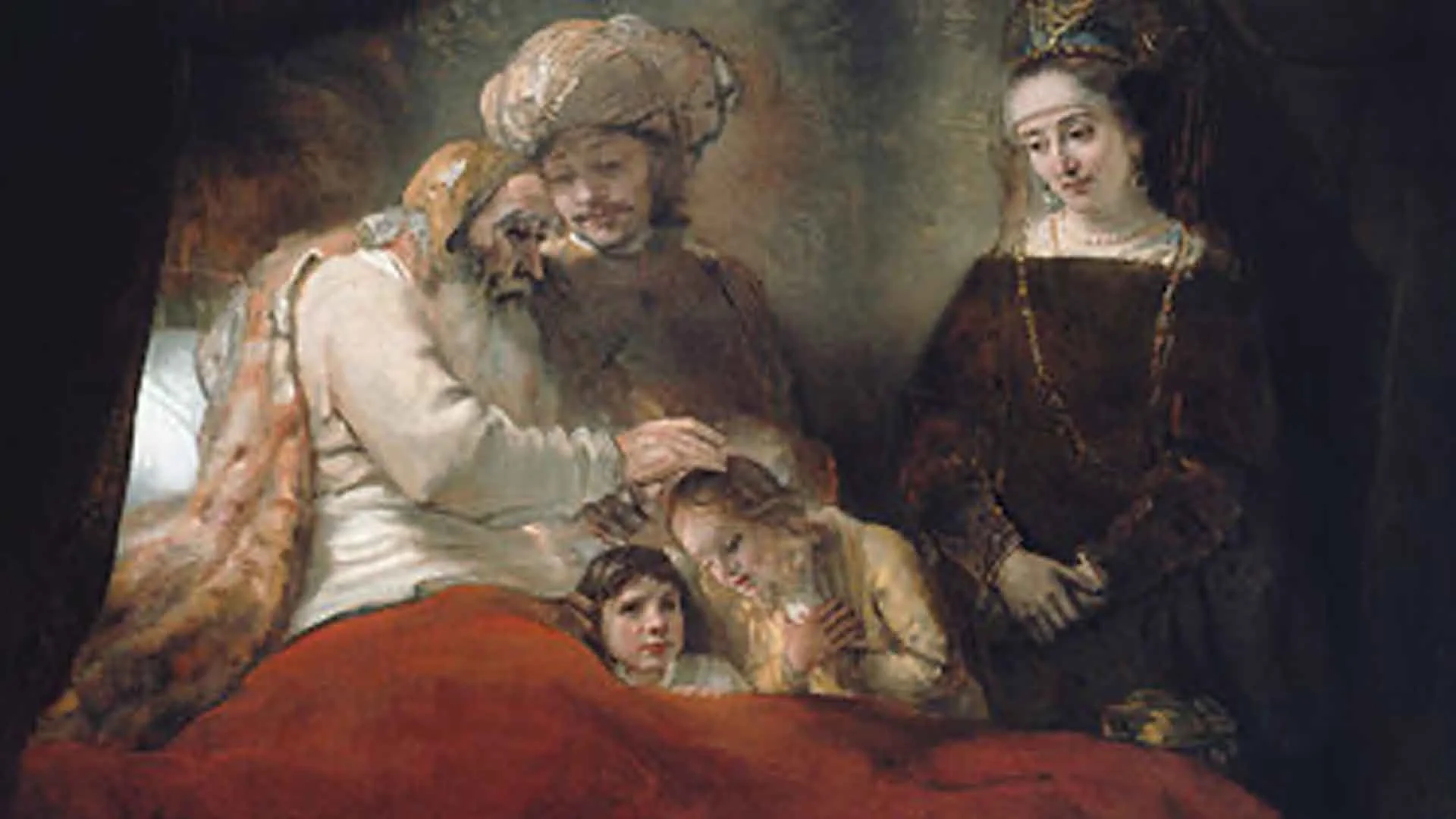
Jacob Blessing the Sons of Joseph (Rembrandt)

Bava Metzia 99: בְּדָבָר שֶׁאֵין הָעַיִן שׁוֹלֶטֶת בּוֹ

jyungar June 6, 2024

For the source text click/tap here: Bava Metzia 99

To download, click/tap here: PDF

The Gemara cites another ruling concerning differing rates of compensation: Rava says: With regard to these porters who broke a shopkeeper’s barrel of wine, which on market day sells for five dinars and on other days sells for four dinars, if they restore its value to him on market day, then it is sufficient if they compensate him with a barrel of wine, which he could then sell for five dinars. If they wish to repay him on other days, i.e., on a non-market day, they must compensate him with five dinars. They cannot discharge their debt by giving him a barrel of wine, as on those days it is worth only four dinars.

Apropos blessings, Rabbi Yitzḥak said: A blessing is found only in an object that is hidden [samui] from the eye, not in an item visible to all, as public miracles are exceedingly rare. As it is stated: 

 “The Lord will command His blessing upon you in your barns [ba’asamekha]” (Deut 28:8). 

Rabbi Yitzḥak’s exposition (Taanit 7) is based on the linguistic similarity (pun?) between samui and asamekha. Likewise, the school of Rabbi Yishmael taught: A blessing is found only in an object that is not exposed to the eye, as it is stated: “The Lord will command His blessing upon you in your barns.”

Tosafos there cites a Gemara in Chullin (105) where the same porters \ who carried a barrel of wine wanted to rest. They rested it under a gutter pipe. The barrel broke; how come they were not protected by the hidden blessing?

The Gemara explains there that this was due to a Mazik (Shed) that was there. Mar bar Rav Ashi forced it to pay.

We explore the personality of Asenath and the blessing she was (although hidden from the eye) and revealed in Rembrandt’s Blessings of the sons of Jacob.

Tags 50th
Comment

Elizabeth I The Darnley Portrait, c. 1575

Bava Metzia 98: הַכִּישָׁהּ בְּמַקֵּל וְהִיא תָּבֹא

jyungar June 5, 2024

For the source text click/tap here: Bava Metzia 98

To download, click/tap here: PDF

The Mishna discusses cases of a mixed custodianship, with part rental, and part lending. The custodianship is split either in time (some time rental, some time lending), or in items (one item rented, one item lent). The Mishna detailed the rules when a cow of such a custodianship dies, and the owner and custodian dispute whether it fell under the rental or borrowing section. The Gemora quotes a statement of Rava to explain this case. Rava says that if one claims that someone owes him 100 zuz, and the defendant responds that he is certain that he owes 50, but doesn’t know about the other 50, he must pay the full 100.

In light of recent events I was watching Sir Simon Schama’s historical view (BadChaps, Jews and the Failure of British Decency: Antisemitism in Historical Perspective) and came across the life of Dr Roderigo Lopez the physician to Queen Elizabeth I.

Tags 50th
Comment

The prisoner's dilemma as a briefcase exchange

Bava Metzia 97: הַשּׁוֹאֵל אֶת הַפָּרָה

jyungar June 4, 2024

For the source text click/tap here: Bava Metzia 97

To download, click/tap here: PDF

As we have learned (daf 95), a borrower will not be obligated to pay damages for an animal as long as the owner is with him. Furthermore we learned that this rule applies only if the owner was hired before the animal was borrowed or if both relationships were created simultaneously. If, however, the animal was borrowed first and the owner was only hired later on, then the borrower will be held liable for anything that happens to the animal, even if the owner is working for the borrower at that point in time.

We explore Uri Weiss’ review of the new area of scholarship, that of Talmud and game theory.

Tags 50th
Comment

Bava Metzia 96: הַשּׁוֹאֵל אֶת הַפָּרָה

jyungar June 3, 2024

For the source text click/tap here: Bava Metzia 96

To download, click/tap here: PDF

If one borrowed an item, not to use it but to be seen with it, so that people will assume that he is wealthy, what is the halakha? In order for him to be liable, do we require that he borrow an item of monetary worth, and that exists in this case? Or, perhaps we require that he borrow an item of monetary worth from which he also derives tangible benefit, and that does not exist in this case.

We explore the attitude to poverty in the Talmud as well as how women were able through their wits to support their children if not employ subterfuge as in a close (feminist) reading of Eyshes Chayil.

Tags 50th
Comment

Bava Metzia 95: וְנִשְׁבַּ֣ר אוֹ־מֵ֑ת בְּעָלָ֥יו

jyungar June 2, 2024

For the source text click/tap here: Bava Metiza 95

To download, click/tap here: PDF

One of the most intriguing payment exemptions is the rule of “ba'alav imo.” If the owner of a deposited item HIMSELF services the shomer (watchman) of the item, the latter is excused from all payments in cases of loss. This de-oraita petur is a sweeping exemption that applies to all shomrim, and potentially even to cases of gross negligence (see the two opinions in our daf)

The gemara dictates certain parameters to this rule, but never articulates the logic of it. In fact, its basis is so elusive that Tosafot (Bava Metzia 97a) claim that it is a non-logical gezeirat ha-katuv (which therefore cannot be independently applied to broader contexts).

We explore the ramifications of Ex 22:13 as part of civil laws from Sinai and the halachot of bringing suit in a secular courts of law.

Tags 50th
Comment

Bava Metzia 94: עַל מְנָת שֶׁתַּעֲלִי לָרָקִיעַ

jyungar June 1, 2024

For the source text click/tap here: Bava Metzia 94

To download, click/tap here: PDF

The eighth perek of Masechet Bava Metzia, ha-Sho’el et ha-parah, begins on our daf, and its focus is on the responsibilities of someone who rents (socher) or borrows (sho’el) an animal or an object from his friend.

Borrowing and renting are qualitatively different than acting as a guard whose job is to watch something for his friend, since the borrower or the renter receives the object with the understanding that he will use it. Thus the owner accepts the fact that there will be normal wear-and-tear on the object. At the same time, the level of responsibility that the borrower or the renter takes upon himself will be greater than that accepted by a normal guard or watchman.

The Torah law with regard to a socher is unclear (see Shemot 22:14), and the tanna’im disagree as to his level of responsibility, although all agree that the Torah intends to free the socher from the high level of responsibility that rests on a sho’el.

We explore the notion of Rabbinic Authority as well as “Da’as Torah” in light of recent pronouncements on the Gaza War.

Tags 50th
Comment

Bava Metzia 93: אַרְבָּעָה שׁוֹמְרִים הֵן

jyungar May 31, 2024

For the source text click/tap here: Bava Metzia 93

To download, click/tap here: PDF

According to the Torah (Shemot 22:6-12), the level of responsibility for which a shomer – someone who accepts responsibility to guard his friend’s object – is liable, depends on the personal gain that the shomer receives. The Mishnah on our daf enumerates four types of shomrim and their level of responsibility.

We explore the legacy of Reb Aharon Lichtenstein through the lens of his talmud Elyakim Krumbein.

Tags 49th
Comment

Ancient Manuscript – Megilat Setarim by Rabbi Avraham

Galanti Manuscript of Sefer Megilat Setarim, kabbalist commentary on Megilat Eicha, by Rabbi Avraham Galanti, disciple of the Ramak. 1637.

The book is also titled "Kol Bochim" – "Kinat Setarim". Printed in Venice (1589) and in Prague (1621). Many additions by Rabbi Ya'akov Ben Yechezkel Moshe appear in the Prague edition, and they are presented in this manuscript, so it seems that this is a copying of the Prague edition. The copyist signs on title page and in colophon at the end of this manuscript: "Aharon… son of Yehudah…".

Bava Metzia 92: מָצָאתִי מְגִילַּת סְתָרִים

jyungar May 30, 2024

For the source text click/tap here: Bava Metzia 92

To download, click/tap here: PDF

The Gemara also quotes a discovery made by Rav, who found a megillat setarim in Rabbi Hiyya‘s house, where the opinion of Isi ben Yehuda appears.

Basing himself on the simple reading of the passage in Sefer Devarim (23:25)

Isi rules that anyone who passes a field is allowed to eat from it. Rav objects to this ruling, saying that no farmer would be able to function under those circumstances.

Steinsaltz claims:

A megillat setarim – hidden scroll – is a collection of notes taken by students during Talmudic times. For generations it was accepted practice that Torah she-ba’al peh – the oral tradition – was not set in writing, and only later was writing allowed due to difficult circumstances (i.e. there was a fear that the oral traditions would be forgotten). Nevertheless, students did take notes on the lectures and discussions for their own use. Since these notes were not publicized, they were referred to as megillat setarim.

We explore instances of the term including the recently discovered hidden scroll of Rebbe nachman by Prof Zvi Mark.

Tags 49th
Comment

Bava Metzia 91: ״אֶתְנַן״ אָסְרָה תּוֹרָה, וַאֲפִילּוּ בָּא עַל אִמּוֹ

jyungar May 29, 2024

For the source text click/tap here: Bava Metiza 91

To download, click/tap here: PDF

The Sages taught: One who muzzles a cow and threshes with it is flogged, and in addition he must pay the owner of the cow four kav for a cow, the usual amount it consumes while threshing, and three kav for a donkey.

The Gemara asks: But isn’t there a principle that an offender is not flogged and also punished by death, and likewise he is not flogged and rendered liable to pay? One who transgresses a prohibition is liable to receive only one punishment for a single offense.

Rava said that there is a difference between the transgression itself, which is between the offender and God, for which he is liable to be flogged, and the loss he caused the owner of the cow, for which he must pay restitution.

The Torah prohibits one from bringing as an offering an animal given as the payment to a prostitute for services rendered: (Deuteronomy 23:19); and this prohibition applies even if the man in question engaged in intercourse with his own mother, which is a capital offence.

Although this man would certainly not be rendered liable to pay compensation by a court, as he is liable to receive court-imposed capital punishment, nevertheless, since he is technically liable to pay compensation, the money is subject to the prohibition as well.

In this case too, despite the fact that the court cannot compel one to pay for the produce his cow ate, he does owe this sum. Furthermore, if the owner of the produce were to seize this sum from him, the court would not force him to return the money.

Tags 49th
Comment

The Two Mothers by Giovanni Segantini 1889

Bava Metzia 90: בְּנֵי נֹחַ מְצֻוִּוין עַל הַסֵּירוּס

jyungar May 28, 2024

For the source text click/tap here: Bava Metzia 90

To download, click/tap here: PDF

They sent to Shmuel’s father a halakhic inquiry with regard to these oxen which gentiles steal and castrate. Since it is prohibited for Jews to castrate animals, they would sometimes arrange for a gentile to pretend to steal the animal and subsequently return it after castrating it, as it is easier to handle a castrated animal.

What is the halakha with regard to a case of this kind? Shmuel’s father sent to him: They used artifice; therefore, you should use artifice with them and make them sell it as a punishment. This shows that it is prohibited to instruct a gentile to perform a prohibition on one’s behalf.

Rav Pappa said: This provides no conclusive proof, as the inhabitants of the West, i.e., Eretz Yisrael, who are the ones who raised this question, hold in accordance with the opinion of Rabbi Ḥideka, who says: The descendants of Noah are commanded with regard to castration. They too are prohibited from performing this practice.

We explore the Noachide laws and their application.

Tags 49th
Comment

Bava Metzia 89: לֹא תַחְסֹם שׁוֹר בְּדִישׁוֹ

jyungar May 27, 2024

For the source text click/tap here: Bava Metzia 89

To download, click/tap here: PDF

More on laborers rights to eat on the job:

All matters, i.e., all animals, are included in the halakha of muzzling, as we derive a verbal analogy between the term “an ox” stated here and the term “an ox” stated with regard to Shabbat. Just as the prohibition against having one’s animal perform labor on Shabbat applies not only to oxen but to all animals, as explicitly stated in the Torah: (Deuteronomy 25:4),

לֹא תַחְסֹם שׁוֹר בְּדִישׁוֹ״

You shall not thresh while muzzling; why do I need the word “ox” that the Merciful One writes?

It serves to juxtapose and compare the one who muzzles to the muzzled animal, and likewise to compare the muzzled animal to the one who muzzles: Just as the one who muzzles, a person, may eat from produce attached to the ground, so too the muzzled animal may eat from attached produce. And just as the muzzled animal may eat from detached produce, so too the one who muzzles may eat from detached produce.

We explore the ethics of animal pain and halachic parameters of muzzling.

Tags 49th
Comment
  • Daf Ditty
  • Older
  • Newer

Julian Ungar-Sargon

This is Julian Ungar-Sargon's personal website. It contains poems, essays, and podcasts for the spiritual seeker and interdisciplinary aficionado.​